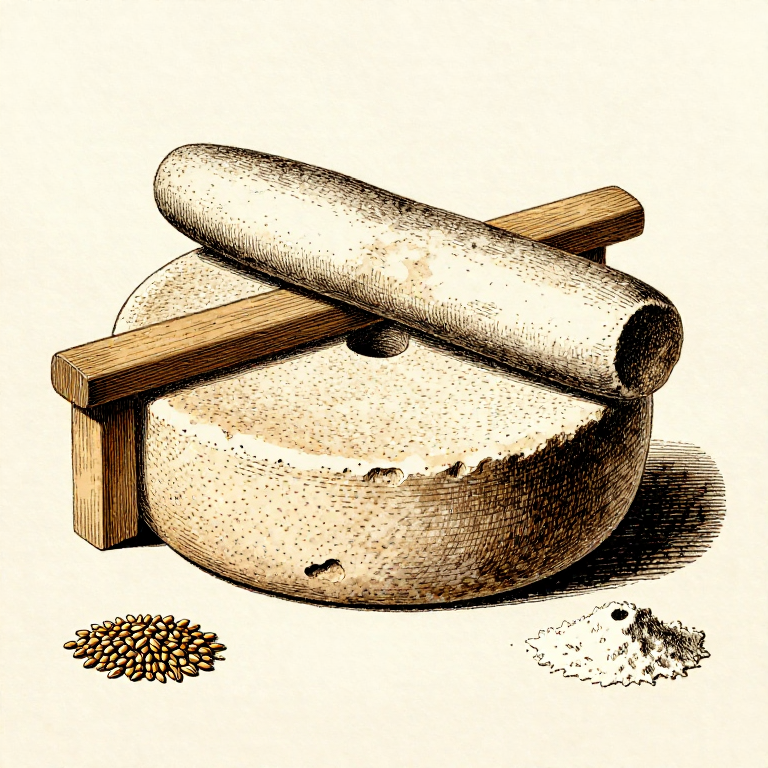


Shaping a Saddle Quern Grinding Stone — Grain Processing Tool
Hướng dẫn
Select the Base Stone
Select the Base Stone
Choose a flat slab of coarse-grained stone — sandstone is ideal because its natural grit provides the abrasive surface needed to shear grain kernels apart. Granite and gneiss also work well. The slab should be roughly rectangular, 40-60 cm long and 25-35 cm wide, and at least 5 cm thick for durability. Avoid fine-grained or very hard stones like basalt, which produce a surface too smooth to grip grain effectively. The stone should sit flat and stable on the ground without rocking. If necessary, peck the bottom surface flat with a hammerstone to create a stable base.
Vật liệu cho bước này:
 Sa thạch (mài mòn)1 piece, 40-60 cm long, 25-35 cm wide cm
 Cuội dài1 piece, 15-25 cm long cm
Công cụ cần thiết:
 Đá đập (hòn ghè)Sa thạch (mài mòn)
Peck the Grinding Surface
Peck the Grinding Surface
Using a hammerstone, peck a shallow concave depression into the top surface of the slab. The depression should be about 3-5 cm deep at its lowest point, running lengthwise along the stone. This concavity — the saddle shape that gives the quern its name — contains the grain during grinding and channels it toward one end where the flour accumulates. Peck the entire grinding surface uniformly rough; the rough texture catches individual grain kernels and holds them in place while the handstone crushes them. Archaeological saddle querns show deep wear grooves from years of daily use.
Shape the Handstone
Shape the Handstone
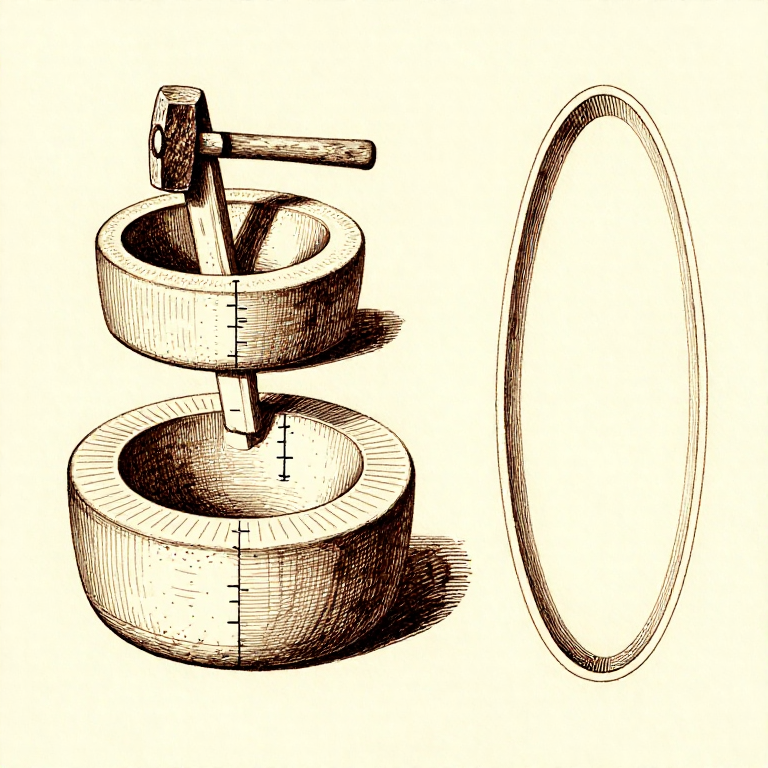
Select an elongated river cobble that fits naturally in both hands — about 15-25 cm long and 8-12 cm wide. The working surface (the bottom, which contacts the quern) should be flat or slightly convex to match the quern's concavity. If the cobble is not naturally the right shape, peck and grind it to fit. The handstone should be heavy enough to crush grain with moderate pressure but light enough to use for extended periods without fatigue. Sandstone handstones wear down faster but grip grain better; granite handstones last longer but may need periodic roughening.
Grinding Technique
Grinding Technique
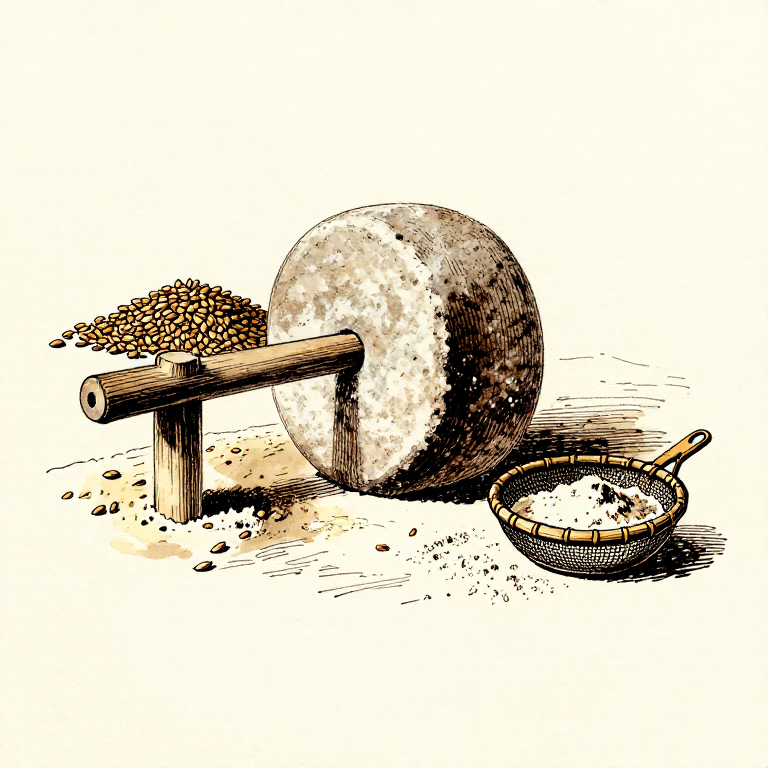
Place a handful of dry grain at the higher end of the quern's concave surface. Push the handstone forward over the grain with a firm, sweeping stroke, crushing the kernels between the two rough surfaces. Pull the handstone back and repeat. The ground material moves gradually toward the lower end of the quern, where it falls off the edge as flour. This back-and-forth action is why the tool is called a saddle quern — the operator kneels at one end and rocks forward and back as if riding. Re-roughen the grinding surfaces periodically by pecking with a hammerstone when they become too smooth to grip grain.
Processing and Flour Quality
Processing and Flour Quality
A single pass produces coarse meal suitable for porridge. For finer flour suitable for flatbread, pass the meal through the quern 2-3 additional times, or sift through a woven grass or horsehair sieve to separate fine flour from coarse bran. Saddle quern flour inevitably contains small amounts of stone grit from the grinding surfaces — this is a documented cause of severe tooth wear in Neolithic populations. Processing approximately 1 kg of grain into flour takes 30-60 minutes of continuous grinding. Despite this labour-intensive process, the saddle quern was the foundation of all cereal-based diets from the Mesolithic through the Iron Age.
Vật liệu
2- 1 piece, 40-60 cm long, 25-35 cm wide cmTạm thời
- 1 piece, 15-25 cm long cáiTạm thời
Công cụ yêu cầu
2- Tạm thời
- Tạm thời
CC0 Phạm vi công cộng
Bản thiết kế này được phát hành theo CC0. Bạn tự do sao chép, sửa đổi, phân phối và sử dụng cho bất kỳ mục đích nào mà không cần xin phép.
Hỗ trợ nhà sáng tạo bằng cách mua sản phẩm qua bản thiết kế, nơi họ nhận Hoa hồng nhà sáng tạo do nhà bán hàng đặt, hoặc tạo phiên bản mới và kết nối trong bản thiết kế riêng để chia sẻ doanh thu.