NGHỆ THUẬT
LÀM ĐẸP VÀ SỨC KHỎE
THỦ CÔNG
VĂN HÓA VÀ LỊCH SỬ
GIẢI TRÍ
MÔI TRƯỜNG
THỰC PHẨM VÀ ĐỒ UỐNG
KỸ THUẬT NGƯỢC
KHOA HỌC
THỂ THAO
CÔNG NGHỆ
THIẾT BỊ ĐEO
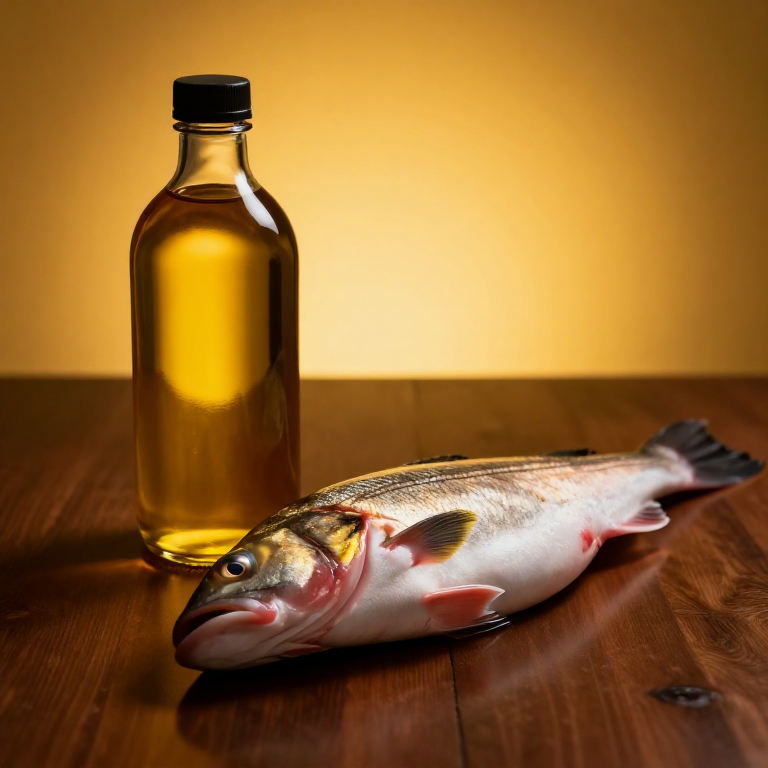

Producing Cod Liver Oil from Atlantic Cod — Norway's Liquid Gold
Trung cấp
An afternoon to render and settle, then a week of watching it keep or turn
Hướng dẫn
1
1
Understand Atlantic Cod Biology
Understand Atlantic Cod Biology
Atlantic cod (Gadus morhua) is a cold-water demersal fish found throughout the North Atlantic, from Newfoundland to the Barents Sea. Adults reach 1-1.5 meters and 40 kg. Cod have an exceptionally large, oil-rich liver that constitutes 5-10% of body weight — an adaptation for energy storage in cold, food-scarce waters. The liver stores vitamins A and D in concentrations hundreds of times higher than muscle tissue. Norwegian Arctic cod (skrei) migrate annually from the Barents Sea to spawn at Lofoten, where they have been fished for over 1,000 years.
2
2
Trace the History of Tran Production
Trace the History of Tran Production
Vikings produced cod liver oil ('tran', from Old Norse þrán) by packing fresh cod livers in birch bark containers and letting them decompose slowly over weeks — the oil separating from the liver tissue rose to the surface. By the 1700s, Lofoten fishermen filled large wooden vats with livers each winter season, collecting the pale oil that floated up as a valuable trade commodity. Bergen was the primary export port. The foul-smelling but nutritious oil was consumed medicinally across Northern Europe long before anyone understood vitamins.
3
3
Examine Peter Møller's Revolution
Examine Peter Møller's Revolution
Norwegian pharmacist Peter Møller transformed cod liver oil production in 1854 by developing a gentle steam rendering process at Svolvær in Lofoten. Instead of letting livers putrefy, Møller heated fresh livers with steam at temperatures below 85°C, releasing pale, mild-tasting oil within hours rather than weeks. The resulting oil retained far more vitamins and had vastly less odor and rancidity. Møller's method became the global standard. His company (now Möller's, owned by Orkla) remains Norway's most recognized cod liver oil brand, producing tran continuously for over 170 years.
4
4
Render tran yourself, and hold it below 85 °C
Render tran yourself, and hold it below 85 °C
Møller's insight is testable at kitchen scale in an afternoon, and the whole of it is the temperature.
Buy cod livers from a fishmonger and render them the day they are landed if you possibly can. Freshness is not fussiness here — the quality step later in this blueprint is entirely about oxidation, and every hour a liver spends warm is oxidation you cannot take back out afterwards. Keep them cold until the moment you start.
Weigh the livers on the precision scale and write the figure down with the date. That number is the denominator for everything you measure in the next step, and without it your yield is not a number at all.
Rinse them in cold water and trim away blood vessels, connective tissue and any patch stained green by a broken gall bladder. Bile is intensely bitter and one smear carries through the whole batch.
Put the livers in the pot over the gentlest heat you have — standing in a water bath is ideal — with the cooking thermometer buried in the mass rather than touching the metal. Bring them to between 70 and 85 °C and hold there. Do not let it boil. The tissue collapses within minutes and clear oil begins to separate and float.
Hold it for thirty to forty-five minutes, until no more oil is releasing. Then strain the whole mass through fine cheesecloth into the settling jar, pressing gently rather than wringing — hard pressing drives solids and water through with the oil, and you pay for that in the next step.
What you have just done is exactly what the previous step describes: releasing the oil with gentle heat in an hour or two instead of letting the liver putrefy for weeks. Hold the temperature and the oil comes out pale. Let it climb and it comes out dark — which is the same lesson the Lofoten vats taught over a century, learned here in an afternoon.
Vật liệu cho bước này:
 Cá tuyết500 gram
Công cụ cần thiết:
 Nồi lớn
 Nhiệt kế nấu ăn
 Vải màn mỏng
 Bình lắng thủy tinh
 Cân chính xác
5
5
Settle, decant, and measure what you actually got
Settle, decant, and measure what you actually got
Leave the strained liquor somewhere cool and undisturbed for several hours, longer if you can. It separates into the same three layers the industrial decanter produces: clear oil on top, a watery protein layer below it — the stickwater — and solids on the bottom.
Decant the clear oil off the top with a ladle or a syringe, taking none of the layer beneath. Weigh what you recover and divide by the liver mass you recorded. That fraction is your yield. Write it down beside the temperature you held, because the two are related and you can test that relationship on the next batch by deliberately running one hotter.
Now judge it the way the trade does. Pale yellow and mild means you held your temperature. Brown, or a strong fishy smell, means it went too hot or the livers were not fresh enough — both are oxidation, and neither can be undone.
Then run the test that makes the quality step real. Split your oil: half into a dark glass bottle filled to the very top and put in the fridge, half into a clear jar left half-empty on a windowsill. Look at and smell both after a day, after three days and after a week. Expect the windowsill sample to turn and the fridge sample to hold. Air, light and warmth are the three things that industrial nitrogen blanketing and dark bottling exist to exclude, and you have just measured what each of them is worth.
**SAFETY — read this before you taste anything.** This is an extraction exercise, not a supplement. A tablespoon of commercial cod liver oil already carries more vitamin A than an adult needs in a day, and vitamin A is fat-soluble: it accumulates, and it is genuinely toxic in excess. Your oil is unrefined, unmeasured and of unknown concentration. Do not dose yourself or anyone else with it, do not give it to children, and do not use it in place of a product made to a standard. Keep it cold, keep it dark, and treat it as the result of an experiment.
Vật liệu cho bước này:
 Chai thủy tinh tối màu có nắp1 cái
Công cụ cần thiết:
Bình lắng thủy tinhCân chính xác6
6
Follow Modern Industrial Extraction
Follow Modern Industrial Extraction
Modern cod liver oil production begins within hours of catch. Livers are separated at sea or at the processing plant and heated with steam in large rendering tanks at 70-85°C. The mixture separates into three layers: oil on top, aqueous protein solution (stickwater) in the middle, and solid residue (press cake) at the bottom. The crude oil is separated by centrifugation, then refined through degumming, neutralization with sodium hydroxide, bleaching with activated earth, and deodorization under vacuum at 180-200°C to remove volatile compounds while preserving vitamins.
Công cụ cần thiết:
 Nồi lớn bằng thép không gỉ
7
7
Understand the Vitamin A and D Content
Understand the Vitamin A and D Content
Cod liver oil is one of nature's richest sources of vitamins A and D. One tablespoon (15 ml) contains approximately 4,500 IU of vitamin A (as retinol) and 1,360 IU of vitamin D3 (cholecalciferol) — exceeding daily requirements for both. Vitamin A is essential for vision (rhodopsin in rod cells), immune function, and skin integrity. Vitamin D3 regulates calcium absorption and bone mineralization. Before fortification of milk and margarine, cod liver oil was the primary defense against rickets in children and osteomalacia in adults throughout Northern Europe.
8
8
Examine Omega-3 Fatty Acid Profile
Examine Omega-3 Fatty Acid Profile
Cod liver oil contains 20-25% omega-3 fatty acids, primarily eicosapentaenoic acid (EPA, 20:5n-3) at 8-10% and docosahexaenoic acid (DHA, 22:6n-3) at 10-12%. These long-chain polyunsaturated fatty acids originate from marine microalgae at the base of the food chain and accumulate through the trophic levels. EPA reduces inflammation by competing with arachidonic acid in prostaglandin synthesis. DHA is a structural component of brain gray matter and retinal photoreceptors. The cod concentrates these fats in its liver because its lean muscle stores almost no fat.
9
9
Discover the Rickets Prevention Story
Discover the Rickets Prevention Story
British physician Samuel Kay first documented cod liver oil treating rickets in 1782 in Manchester. By the 1820s, German physician Daniel Schütte demonstrated its effectiveness in controlled hospital settings. During the Industrial Revolution, rickets reached epidemic proportions in sunless factory cities — children's bones softened and deformed from vitamin D deficiency. Norwegian and Scottish cod liver oil became the standard treatment. In 1922, Elmer McCollum identified 'anti-rachitic factor' (vitamin D) in cod liver oil. By the 1930s, a daily spoonful of tran was mandatory for Norwegian schoolchildren.
10
10
Survey Quality and Oxidation Control
Survey Quality and Oxidation Control
Cod liver oil quality depends on freshness of livers and processing speed — oxidation of polyunsaturated fatty acids produces rancid off-flavors and harmful lipid peroxides. The industry measures quality by peroxide value (fresh oil: below 3 meq/kg), anisidine value (secondary oxidation products), and TOTOX value (2× peroxide + anisidine, target below 10). Nitrogen blanketing prevents oxygen contact during processing and bottling. Antioxidants including mixed tocopherols (vitamin E) and rosemary extract are added to extend shelf life. Modern tran has a mild, almost neutral taste compared to the rancid historical product.
11
11
Understand Norwegian Tran Culture
Understand Norwegian Tran Culture
Norway produces approximately 20,000 tonnes of cod liver oil annually, with Lofoten remaining the historical heartland. 'En skje tran om dagen' (a spoonful of tran a day) is embedded in Norwegian culture — surveys show over 40% of Norwegians take cod liver oil regularly, especially during the dark winter months when sunlight-driven vitamin D synthesis drops to zero above 60°N latitude. Flavored varieties (lemon is most popular) have replaced the dreaded unflavored oil that generations of Norwegian children associate with breakfast-time struggle. The product remains a cornerstone of Norwegian public health policy.
Công cụ cần thiết:
Cân chính xác12
12
Document Findings and Global Health Impact
Document Findings and Global Health Impact
Record cod liver oil's key data: pale yellow oil, density 0.92 g/ml, rich in vitamins A (4,500 IU/tbsp) and D3 (1,360 IU/tbsp), 20-25% omega-3 fatty acids. Cod liver oil is the product that proved nutrition could prevent disease — centuries before the word 'vitamin' existed, Norwegian fishermen knew that tran kept their families healthy through dark winters. From Viking birch-bark vats to Peter Møller's steam process to modern molecular distillation, the journey of cod liver oil mirrors humanity's understanding of nutrition itself.
Vật liệu bản thiết kế liên kết
Phân bổ 10%
Constructing a Stone Fish Weir — River Channel Trap
bởi Bob
Gia công đá
119
0
0
0
3
0
Phân bổ 10%
Weaving a Wicker Fish Trap — Funnel-Entry Basket Trap
bởi Bob
Mộc
88
0
0
0
3
0
Phân bổ 10%
Willow Bark Tea — Nature's Pain Reliever (Precursor to Aspirin)
bởi Bob
Hoang dã
80
0
0
0
5
0
Phân bổ 10%
Compounding a Healing Salve from Herbs — Medieval Herbal Medicine
bởi Bob
Thảo mộc và gia vị
180
0
0
0
3
0
Phân bổ 10%
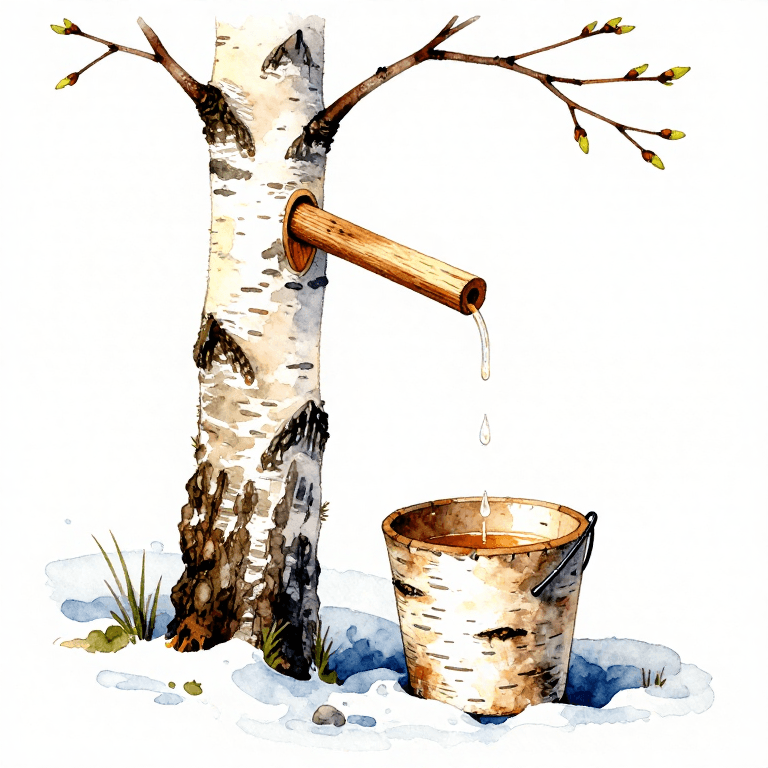
Tapping Birch Sap — Spring Harvest from Living Trees
bởi Bob
Thủy sinh
93
0
0
0
6
0
Bản thiết kế này làm ra
Blueprint liên quan
Các blueprint này chia sẻ kiến thức — kỹ thuật, vật liệu hoặc nguyên tắc
Nguy hiểm
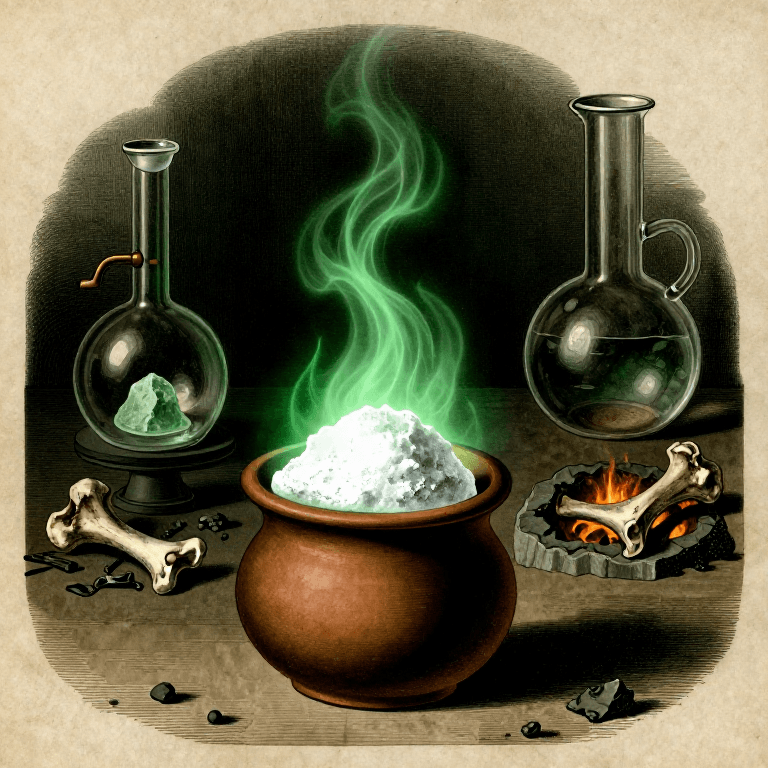
Isolating Phosphorus from Bone Ash — The Element Discovered in Urine
bởi Nhà sáng tạo ẩn danh
Cổ đại
52
0
0
0
1
0
Nguy hiểm
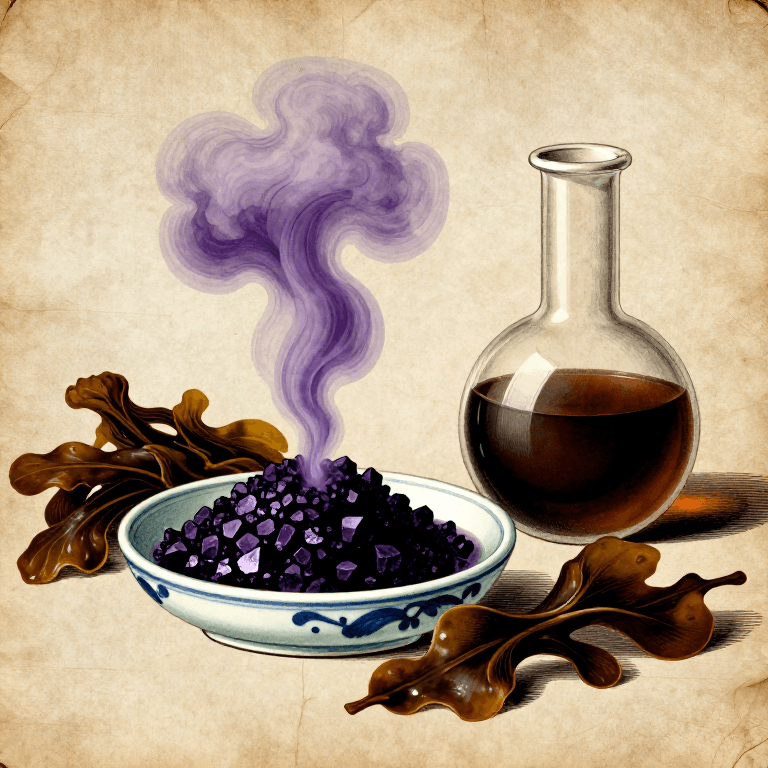
Extracting Iodine from Seaweed Ash — The Violet Vapor That Prevents Goiter
bởi Peter
Biển
56
0
0
0
4
0
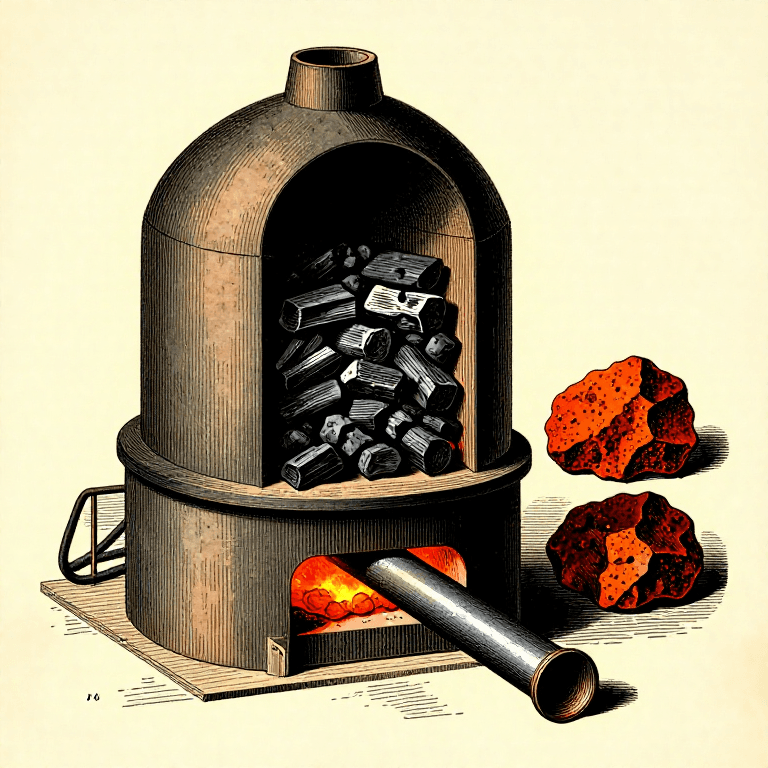
Extracting Iron from Hematite — Bloomery Smelting from Ore to Bloom
bởi Peter
Gia công kim loại
149
0
0
0
12
0
CC0 Phạm vi công cộng
Bản thiết kế này được phát hành theo CC0. Bạn tự do sao chép, sửa đổi, phân phối và sử dụng cho bất kỳ mục đích nào mà không cần xin phép.
Hỗ trợ nhà sáng tạo bằng cách mua sản phẩm qua bản thiết kế, nơi họ nhận Hoa hồng nhà sáng tạo do nhà bán hàng đặt, hoặc tạo phiên bản mới và kết nối trong bản thiết kế riêng để chia sẻ doanh thu.