NGHỆ THUẬT
LÀM ĐẸP VÀ SỨC KHỎE
THỦ CÔNG
VĂN HÓA VÀ LỊCH SỬ
GIẢI TRÍ
MÔI TRƯỜNG
THỰC PHẨM VÀ ĐỒ UỐNG
KỸ THUẬT NGƯỢC
KHOA HỌC
THỂ THAO
CÔNG NGHỆ
THIẾT BỊ ĐEO
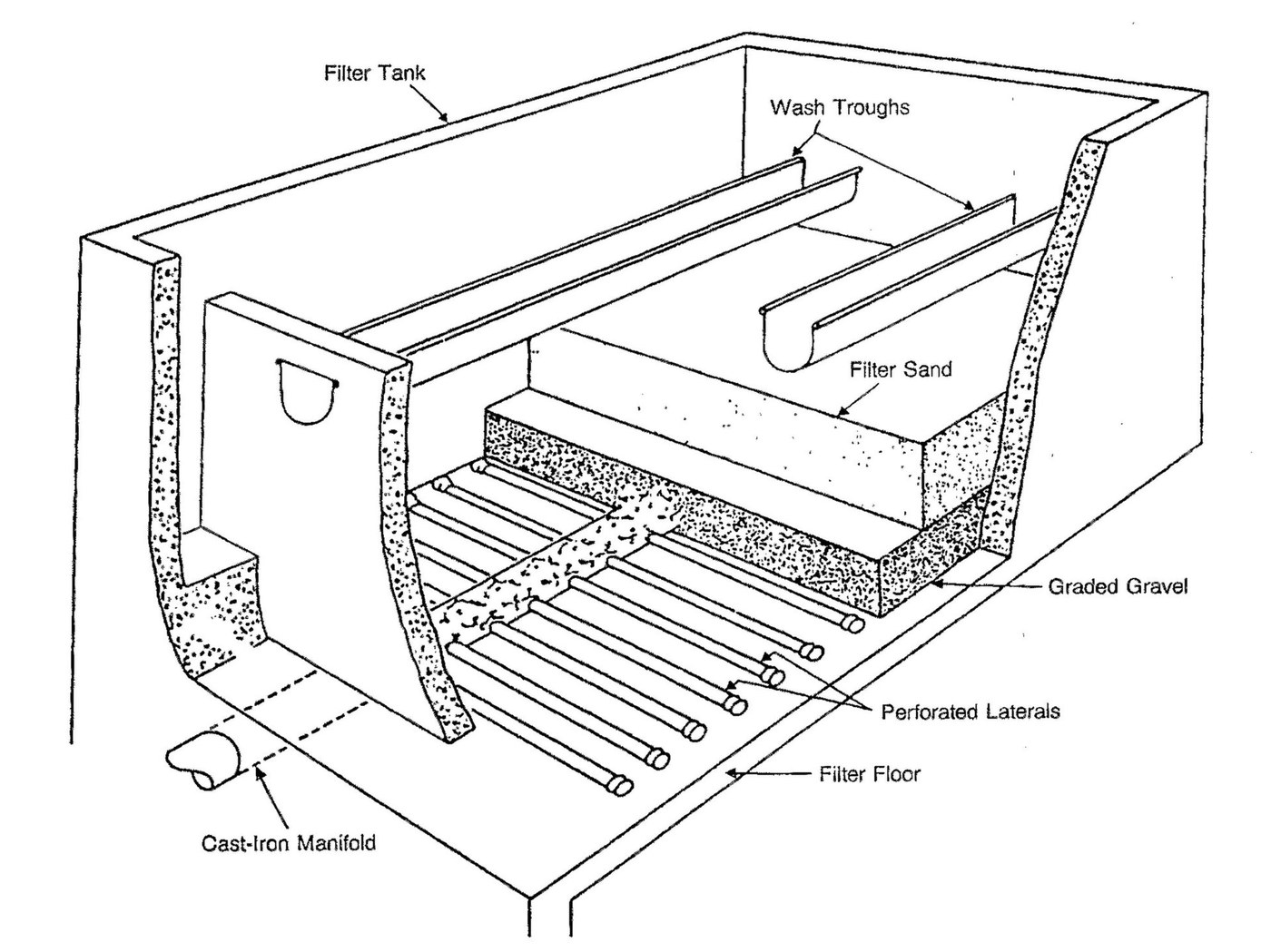


Rapid Gravity Sand Filter with Backwash
The slow sand filter, already published here, cleans water with a living skin of microbes on its surface, and it does it at about 0.1 to 0.3 metres an hour. To supply a city that way you need acres of it.
The rapid filter runs at five to fifteen metres an hour — fifty times faster — through coarser sand, and it has no living skin at all. It cannot: nothing survives being scoured daily. It works only because the water reaching it has already been coagulated, so the particles arrive as flocs that stick to the grains instead of passing between them. And because it clogs in hours rather than months, it needs the invention that actually made it practical — reversing the flow to blow the bed clean. Build one in a clear pipe so you can watch the dirt go in, and watch it come back out.
Trung cấp
1 day
Hướng dẫn
1
1
Build the column
Build the column
Stand a 1-metre length of wide pipe upright, closed at the bottom with an outlet and a valve, and a second valve and inlet near the base for the backwash. A clear pipe is worth hunting for: half the lesson here is visible.
Fit a false floor 5 cm above the bottom — a perforated disc under a circle of mesh — so water can leave evenly across the whole area. Without it the flow funnels to the outlet and you filter through a cone of sand while the rest sits idle.
Vật liệu cho bước này:
 Ống PVC1 length
 Van bi2 cái
2
2
Grade the bed, coarse at the bottom
Grade the bed, coarse at the bottom
Lay 10 cm of gravel on the false floor, then 5 cm of coarse grit, then 50 cm of washed sand of about 0.6 to 1.0 mm grain. Wash each layer until the rinse runs clear before the next goes in.
Coarse at the bottom, fine at the top is deliberate: the gravel supports the sand without letting it escape into the outlet. Unwashed sand is the classic first failure — the fines wash straight through and your first filtrate is muddier than what you put in.
Vật liệu cho bước này:
 Sỏi10 lít
 Cát30 lít
Công cụ cần thiết:
 Xô
Xô3
3
Feed it coagulated water, not raw water
Feed it coagulated water, not raw water
Treat your raw water with alum first and let the floc form. Feed the column from a header bucket so the water level above the sand stays roughly constant, and open the outlet valve until you get a steady stream.
Run raw, uncoagulated water through it once, deliberately, and watch what happens: it comes out nearly as cloudy as it went in. Rapid sand on its own is a strainer with gaps far bigger than the clay it is meant to catch. Coagulation is not an optional pre-step, it is the half of the process that does the removing.
Công cụ cần thiết:
Xô Ống đong
4
4
Watch the head loss build
Watch the head loss build
Mark the water level above the sand every ten minutes. As the bed loads with floc, the resistance climbs and the level rises — that rise is head loss, and it is how a works knows the filter is full.
Keep going and you will see the second failure mode. When head loss gets high enough the trapped floc is pushed straight through and the filtrate goes cloudy again: breakthrough. A real plant washes on head loss OR on turbidity, whichever comes first, and never waits for breakthrough.
Công cụ cần thiết:
 Đồng hồ bấm giờỐng đong
5
5
Backwash — the invention that made it work
Backwash — the invention that made it work
Shut the inlet, open the bottom valve to the mains or to a raised bucket, and push clean water UP through the bed until it lifts and boils. Send the dirty overflow to waste. Two or three minutes usually does it; stop when the water running off is clear.
You should see the bed expand by 20 to 30 per cent and the grains tumble. Too gentle and the dirt stays put; too fierce and you wash your sand down the drain with it. Then shut it off and watch the sand settle: it grades itself, fine on top, coarse below, every single time. That self-sorting is why the filter works the same way after the hundredth wash as after the first.
Công cụ cần thiết:
Xô6
6
Filtration rate, run length and the cost of speed
Filtration rate, run length and the cost of speed
Đang tải sổ tay Jupyter…
Công cụ cần thiết:
Ống đongĐồng hồ bấm giờ7
7
Know what you have and have not removed
Know what you have and have not removed
Compare raw, settled and filtered water side by side in clear jars against a white sheet. A working rapid filter fed coagulated water should give you a visibly clear filtrate.
Clear is not safe. Rapid filtration removes turbidity and a good share of the larger microbes attached to it, but it leaves plenty behind — and unlike slow sand, it has no biological layer doing quiet extra work. Every rapid filter plant in the world is followed by a disinfection step. That is the next rung.
Công cụ cần thiết:
 Lọ thuỷ tinh
Blueprint liên quan
Các blueprint này chia sẻ kiến thức — kỹ thuật, vật liệu hoặc nguyên tắc


CC0 Phạm vi công cộng
Bản thiết kế này được phát hành theo CC0. Bạn tự do sao chép, sửa đổi, phân phối và sử dụng cho bất kỳ mục đích nào mà không cần xin phép.
Hỗ trợ nhà sáng tạo bằng cách mua sản phẩm qua bản thiết kế, nơi họ nhận Hoa hồng nhà sáng tạo do nhà bán hàng đặt, hoặc tạo phiên bản mới và kết nối trong bản thiết kế riêng để chia sẻ doanh thu.