NGHỆ THUẬT
LÀM ĐẸP VÀ SỨC KHỎE
THỦ CÔNG
VĂN HÓA VÀ LỊCH SỬ
GIẢI TRÍ
MÔI TRƯỜNG
THỰC PHẨM VÀ ĐỒ UỐNG
KỸ THUẬT NGƯỢC
KHOA HỌC
THỂ THAO
CÔNG NGHỆ
THIẾT BỊ ĐEO
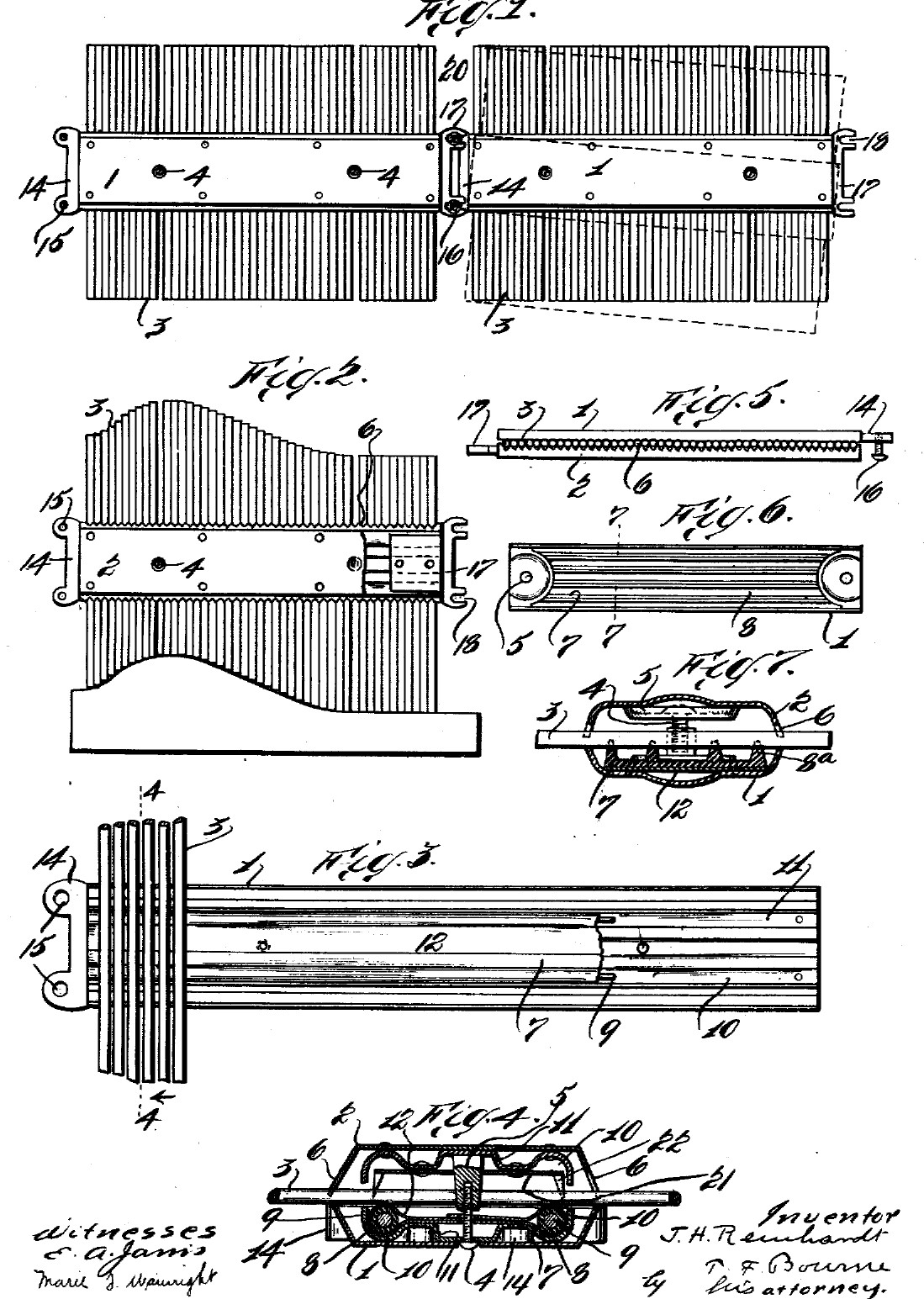


Profile Gauge: Sliding Pins Held by Cloth-Wrapped Rubber Tubes (Reinhardt, 1918)
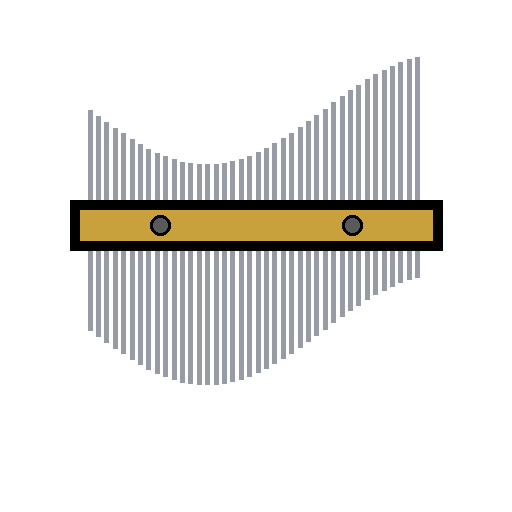
James H. Reinhardt of East Orange, New Jersey, received US 1,261,438, dated 2 April 1918, for a profile gauge: a row of pins clamped between two thin metal members. Rubber tubes wrapped in cloth press on the pins, so each one slides when pushed and stays where it is left. Pressed against an object, the pin ends take its outline, and a pencil drawn along them copies it, so the shape can be made again.
We build his single gauge from brass sheet and steel wire. All sizes are ours.
Trung cấp
About 5 hours
Hướng dẫn
1
1
How many pins
How many pins
Đang tải sổ tay Jupyter…
2
2
Read US 1,261,438
Read US 1,261,438
"The rods or pins 3 of the respective gages may be pushed against the surface of the object, as required, to obtain its outline along the ends of the rods or pins, whereby a pencil may be drawn along the ends of the pins to trace such outline or contour of the object. From such outlines objects corresponding to the master object may be reproduced either in relief or concave according to which way the outline drawn from the ends of the rods is used."
3
3
Make the two members
Make the two members
Cut two strips of 0.8 mm brass sheet 200 x 32 mm (ours) with tin snips and file the edges. Bend 4 mm down along each long side in the vice, so each strip becomes a shallow channel 24 mm wide: his "gutter-like form". Clamp them together, open sides facing, and drill a 3.5 mm hole through both, 50 mm from each end, on the middle line.
Vật liệu cho bước này:
 Tấm đồng thau2 cái
Công cụ cần thiết:
 Kéo cắt tôn
 Bộ giũa
 Ê tô bàn nguội
 Mũi vạch dấu
 Khoan tay
4
4
Make the gutters
Make the gutters
Cut two strips of the same brass 180 x 14 mm and bend each round a 6 mm rod into a U that will hold the rubber tube, his gutters 10. Rivet them inside one member, one near each long side, with copper rivets, keeping clear of the screw holes.
Vật liệu cho bước này:
Tấm đồng thau1 cái Đinh tán đồng6 cái
Công cụ cần thiết:
Kéo cắt tôn Thanh thép mềmÊ tô bàn nguộiKhoan tay
 Búa đầu tròn
5
5
Make the retainers
Make the retainers
Cut two pieces of 6 mm rubber tubing 170 mm long and push a 2 mm wire through each, his cores 9, "to somewhat stiffen them". Wrap each in a strip of cotton cloth, lap its edges and glue them with contact cement, his protecting cloth 12, so the rubber does not touch the metal. Lay one in each gutter.
Vật liệu cho bước này:
 Ống cao su1 cái
 Dây thép1 cái
 Vải cô tông1 cái
 Keo dán tiếp xúc1 cái
Công cụ cần thiết:
 Kìm cắt
 Kéo
6
6
Cut the pins
Cut the pins
Cut 1 mm steel wire into pins 120 mm long, as many as the notebook gives. Straighten any that are bent and file both ends flat and smooth, so they slide easily and do not mark the work.
Vật liệu cho bước này:
Dây thép1 cáiCông cụ cần thiết:
Kìm cắt Bộ giũa kimÊ tô bàn nguội
7
7
Assemble
Assemble
Lay the member with the retainers open side up. Lay the pins across it side by side, touching, centred so equal lengths stick out on both sides; leave a gap at each screw hole (ours). Put the other member on top and pass a machine screw through each hole with a nut. Tighten them evenly until each pin slides when pushed but does not fall.
Vật liệu cho bước này:
 Vít máy2 cái
 Đai ốc lục giác2 cái
Công cụ cần thiết:
 Bộ tua vít
 Mỏ lết
8
8
Take a profile
Take a profile
Push all the pins level with a flat board. Press the gauge square against the object until the pins have taken its shape. Lift it off, lay it on paper or on the stock to be cut, and draw a pencil along the pin ends.
Công cụ cần thiết:
 Bút chì
9
9
Troubleshooting
Troubleshooting
Pin profile gauge troubleshooting.
Flow
Loading...
10
10
History and honest limits
History and honest limits
**James H. Reinhardt** of East Orange, New Jersey, US 1,261,438, dated 2 April 1918, filed 20 June 1914. He claimed "a profile gage comprising a pair of opposed members, rods or pins located between and transversely with respect to said members, means for clamping said members together" and "a resilient retainer comprising spaced rubber tubes". His members can have teeth along their edges, and his patent also covers end castings that join several gauges in a line or at an angle, a smaller gauge clamped between them, a toothed spacer strip and a rubber-mat retainer: none of those are built here. He gives no sizes: the brass, the 200 mm length, the 1 mm pins, the tube and core sizes, the cement, the rivets and the screws are ours.
Vật liệu
8- 2 cáiTạm thời
- 6 cáiTạm thời
- 1 cáiTạm thời
- 2 cáiTạm thời
- 1 cáiTạm thời
- 1 cáiTạm thời
- 2 cáiTạm thời
- 2 cáiTạm thời
Công cụ yêu cầu
13- Tạm thời
- Tạm thời
- Tạm thời
- Tạm thời
- Tạm thời
- Tạm thời
- Tạm thời
- Tạm thời
- Tạm thời
- Tạm thời
- Tạm thời
- Tạm thời
- 1 vendor sell this, none ship to you yetTạm thời
Bản thiết kế này làm ra
Blueprint liên quan
Các blueprint này chia sẻ kiến thức — kỹ thuật, vật liệu hoặc nguyên tắc

CC0 Phạm vi công cộng
Bản thiết kế này được phát hành theo CC0. Bạn tự do sao chép, sửa đổi, phân phối và sử dụng cho bất kỳ mục đích nào mà không cần xin phép.
Hỗ trợ nhà sáng tạo bằng cách mua sản phẩm qua bản thiết kế, nơi họ nhận Hoa hồng nhà sáng tạo do nhà bán hàng đặt, hoặc tạo phiên bản mới và kết nối trong bản thiết kế riêng để chia sẻ doanh thu.