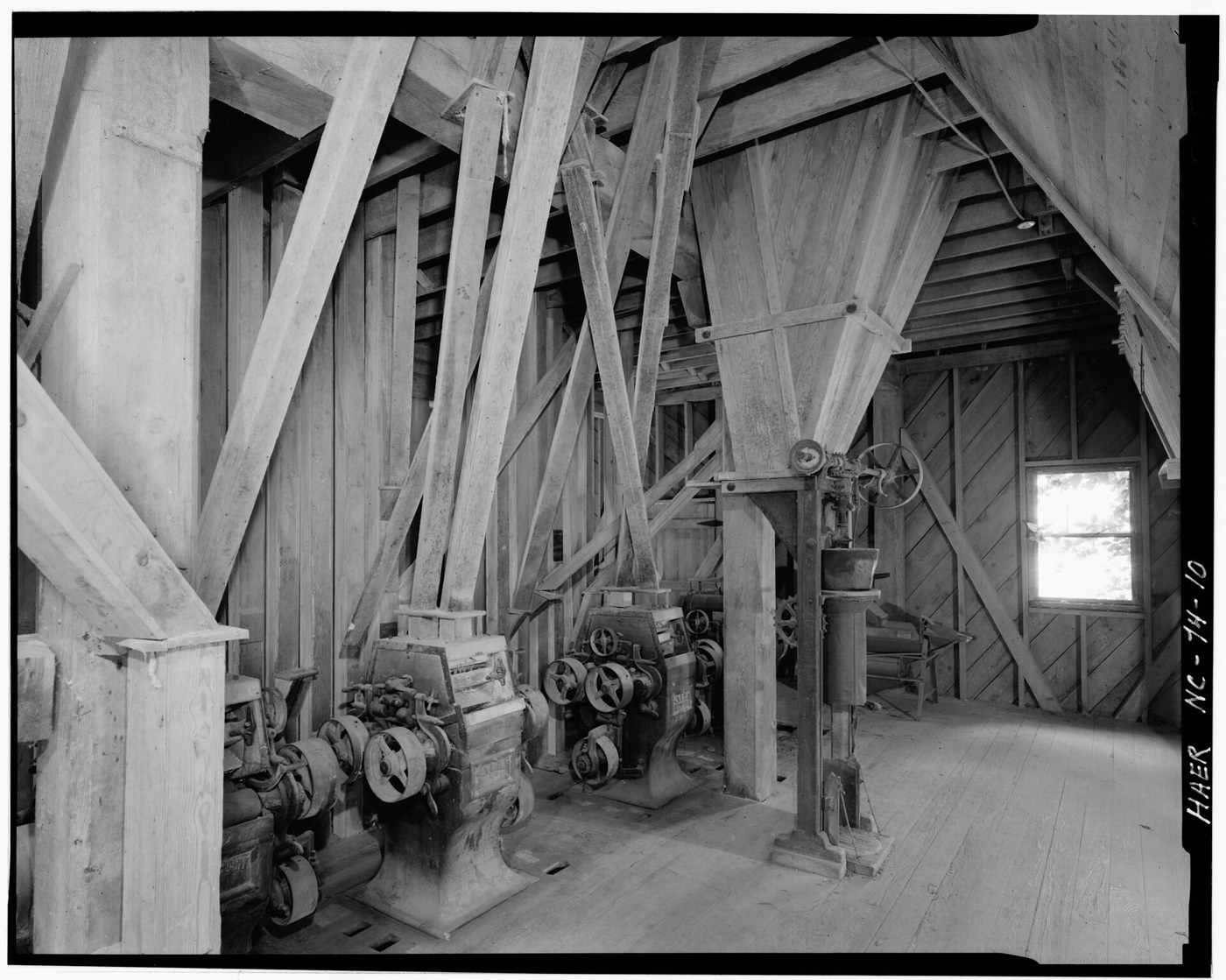


Roller Mill
Hướng dẫn
Look at the grain first
Look at the grain first
Everything about milling follows from the structure of the kernel.
- Split a few wheat berries and examine them.
- Identify the tough outer bran, the small oily germ at one end, and the starchy endosperm filling the rest.
- Note the crease running the length of the kernel.
Vật liệu cho bước này:
 Hạt lúa mì nguyên500 g
Crush, and see the problem
Crush, and see the problem
Reproduce what a millstone does, so the comparison is real.
- Crush a spoonful of berries with a pestle until uniformly fine.
- Sieve it.
- Look at what passes through and what stays behind.
Vật liệu cho bước này:
 Rây lưới thép mịn1 cái
Shear instead, with rollers
Shear instead, with rollers
Two rollers at different speeds tear the kernel open rather than squashing it.
- Pass berries through a hand grain mill or pasta roller set to a coarse gap.
- Set the gap so kernels are broken open, not pulverised.
- Examine the output.
Sieve, then reduce again
Sieve, then reduce again
Gradual reduction is the actual system: break, sift, break the fraction again.
- Sieve the broken grain into coarse, medium and fine fractions.
- Set the bran flakes aside.
- Pass the coarse endosperm — the semolina — back through at a tighter gap.
- Sieve again and repeat.
Weigh the fractions
Weigh the fractions
Extraction rate is the number the whole industry runs on.
- Weigh the grain you started with.
- Weigh the white flour recovered.
- Extraction % = flour mass / grain mass × 100
Vật liệu cho bước này:
 Cân nhà bếp điện tử1 cái
History and context
History and context
Roller milling was assembled rather than invented. Swiss engineer Jacob Sulzberger built early roller mills, and the system was developed into its mature form in Budapest through the 1860s and 70s — Hungarian mills, working with the hard wheats of the plains, produced flour so much finer and whiter than anyone else's that Hungarian flour won prizes across Europe and the method was copied everywhere. American mills at Minneapolis adopted it in the 1870s.
Why it won so completely: higher throughput, steel that does not need dressing the way millstones do, and above all flour that keeps. Removing the germ removes the oil that goes rancid, so roller flour could be shipped across an ocean and stored for months. That is a logistics victory as much as a culinary one.
The nutritional cost was real and took decades to admit. Bran and germ carry the fibre, most of the B vitamins and the vitamin E. White flour is starch with protein. Deficiency diseases in populations living largely on refined grain led, from the 1940s, to mandatory enrichment in many countries — iron, thiamine, riboflavin and niacin added back, and folic acid later. Enrichment restores specific added nutrients; it does not restore fibre or the full original composition.
What did not change: stoneground flour never disappeared, and it is still preferred where flavour matters more than shelf life. The two methods make genuinely different products, and the difference is visible in step 2 versus step 3 on your own bench.
Vật liệu
3- 500 gTạm thời
- 1 cáiTạm thời
- 1 cáiTạm thời
Bản thiết kế này làm ra
CC0 Phạm vi công cộng
Bản thiết kế này được phát hành theo CC0. Bạn tự do sao chép, sửa đổi, phân phối và sử dụng cho bất kỳ mục đích nào mà không cần xin phép.
Hỗ trợ nhà sáng tạo bằng cách mua sản phẩm qua bản thiết kế, nơi họ nhận Hoa hồng nhà sáng tạo do nhà bán hàng đặt, hoặc tạo phiên bản mới và kết nối trong bản thiết kế riêng để chia sẻ doanh thu.