

Building a Safety Bicycle — Chain Drive, Equal Wheels, and Personal Freedom
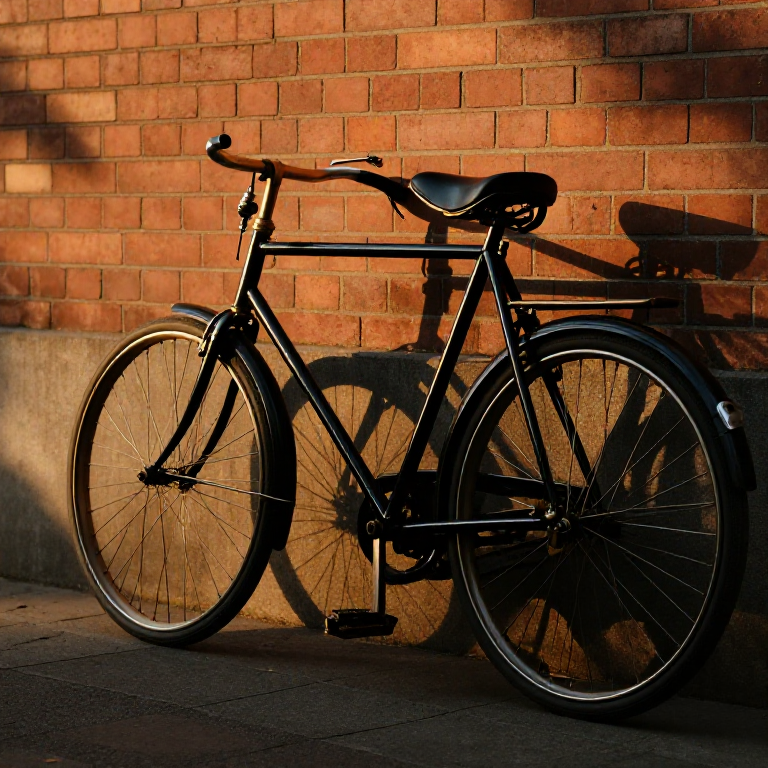
The bicycle that everyone rides today was settled in the 1880s and is still called, in the trade, the safety bicycle — to distinguish it from the terrifying high penny-farthing it replaced. Two equal wheels, a diamond frame, a chain driving the rear wheel, and soon air-filled tyres made cycling safe, fast, and available to ordinary people.
Each feature solves a problem. Equal wheels and a low frame mean you can put a foot down and cannot be pitched over the handlebars. The chain and gearing let a small wheel travel fast without the giant front wheel of the penny-farthing. The diamond frame, built of brazed steel tubes, is astonishingly light and strong for its weight. And Dunlop's pneumatic rubber tyres turned a bone-shaking ride into a smooth one.
The safety bicycle was more than transport. Cheap, simple, and needing no horse or fuel, it gave working people and especially women a freedom of movement they had never had — which is why it is often credited with as much social change as mechanical.
Hướng dẫn
Understand the safety design
Understand the safety design
Braze the diamond frame
Braze the diamond frame
Vật liệu cho bước này:
 Ống thép định hình4 mét
Công cụ cần thiết:
 Đèn khò hàn đồng
Build the wheels
Build the wheels
Vật liệu cho bước này:
 Nan hoa thép72 cái
 Vành xe đạp (nhôm)2 cái
Công cụ cần thiết:
 Cờ lê nan hoa
Fit pneumatic tyres
Fit pneumatic tyres
Vật liệu cho bước này:
 Lốp cao su2 cái
Build the chain drive
Build the chain drive
Vật liệu cho bước này:
 Xích con lăn1 cái
 Đĩa xích1 bộ
 Đĩa xích1 bộ
Fit the bottom bracket and cranks
Fit the bottom bracket and cranks
Vật liệu cho bước này:
 Vòng bi1 bộ
Set up the steering
Set up the steering
Vật liệu cho bước này:
 Ghi đông1 cái
Fit brakes
Fit brakes
Vật liệu cho bước này:
 Càng phanh2 cái
Fit the saddle
Fit the saddle
Vật liệu cho bước này:
 Yên da1 cái
Assemble and true
Assemble and true
Công cụ cần thiết:
 Mỏ lết răng
Test and tune
Test and tune
Công cụ cần thiết:
Mỏ lết răngAppreciate the freedom it gave
Appreciate the freedom it gave
Vật liệu
11- 4 métTạm thời
- 72 cáiTạm thời
- 2 cáiTạm thời
- 2 cáiTạm thời
- 1 cáiTạm thời
- 1 bộTạm thời
- 1 bộTạm thời
- 1 bộTạm thời
- 1 cáiTạm thời
- 2 cáiTạm thời
- 1 cáiTạm thời
Công cụ yêu cầu
3- Tạm thời
- Tạm thời
- Tạm thời
Bản thiết kế này làm ra

Blueprint liên quan
Các blueprint này chia sẻ kiến thức — kỹ thuật, vật liệu hoặc nguyên tắc

CC0 Phạm vi công cộng
Bản thiết kế này được phát hành theo CC0. Bạn tự do sao chép, sửa đổi, phân phối và sử dụng cho bất kỳ mục đích nào mà không cần xin phép.
Hỗ trợ nhà sáng tạo bằng cách mua sản phẩm qua bản thiết kế, nơi họ nhận Hoa hồng nhà sáng tạo do nhà bán hàng đặt, hoặc tạo phiên bản mới và kết nối trong bản thiết kế riêng để chia sẻ doanh thu.