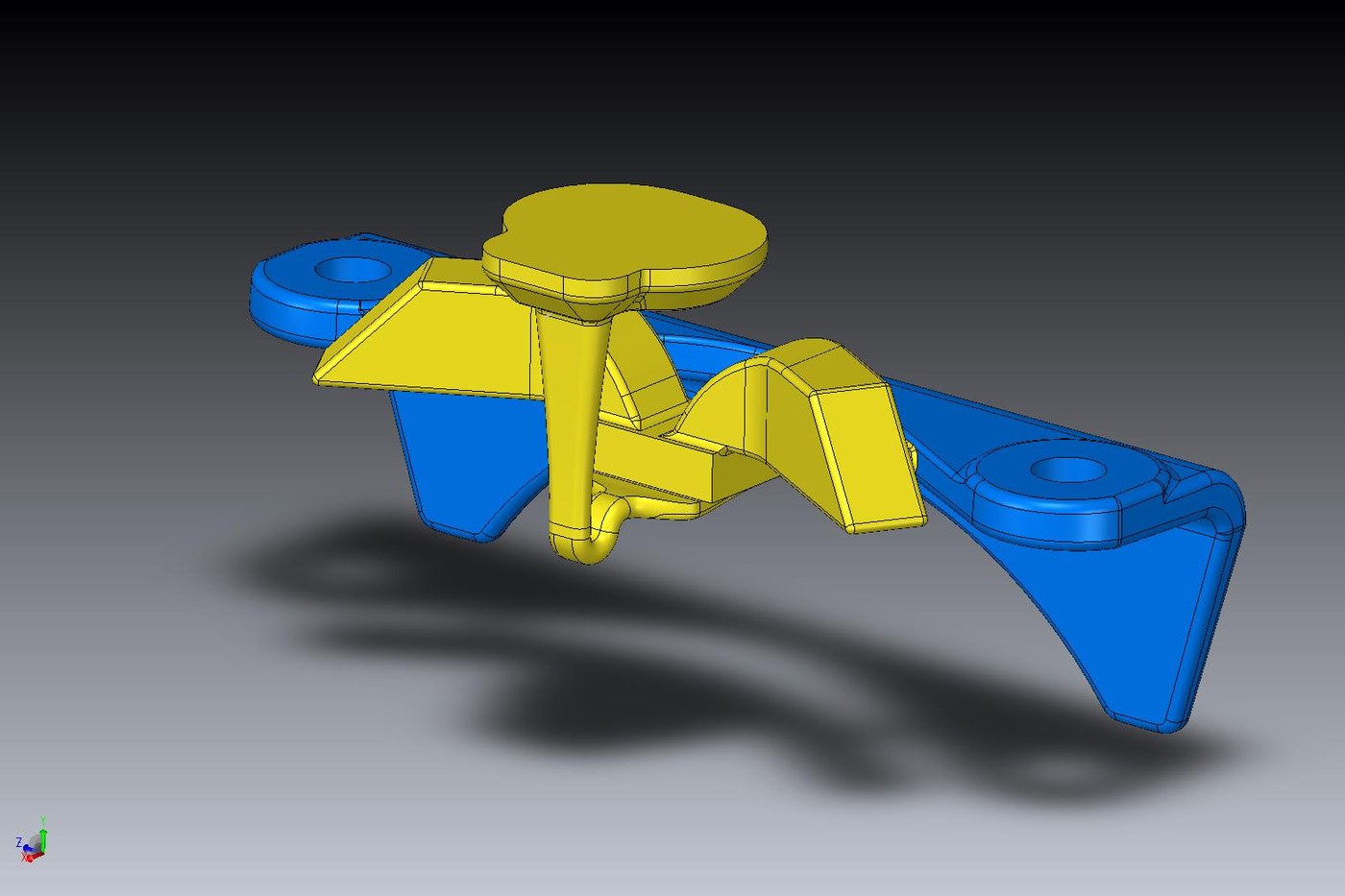


Sand Casting
Hướng dẫn
Temper the sand
Temper the sand
Green sand is silica sand, clay and water — and the water content is everything.
- Mix casting sand and squeeze a handful into a ball.
- It should hold its shape and break cleanly in half without crumbling or smearing.
- Too dry: it collapses. Too wet: it smears and will steam.
Vật liệu cho bước này:
 Cát đúc5 kg
Ram up the two halves
Ram up the two halves
The flask splits at the parting line so the pattern can come out.
- Set the pattern on a flat board and place the bottom half of the flask around it.
- Ram sand firmly and evenly, then level it off and turn it over.
- Dust the parting surface, set the top half on and ram again.
Vật liệu cho bước này:
 Ván sồi trắng1 board
Cut the running system
Cut the running system
Metal needs a way in, and air needs a way out.
- Cut a sprue down to the cavity for pouring.
- Cut risers — open reservoirs standing above the heaviest sections.
- Cut fine vents with a wire to let gas escape from the cavity.
Melt, pour and break out
Melt, pour and break out
Low-melting alloy only. Full face protection, gloves, dry everything, clear floor.
- Melt pewter in a crucible and skim the dross.
- Pour steadily into the sprue until the risers stand full — do not stop and restart.
- Let it freeze completely, then break the sand away.
Vật liệu cho bước này:
 Thỏi hợp kim thiếc chì1 ingot
 Nồi nấu bằng đất, lòng sâu1 cái
 Nhiệt kế đọc nhanh1 cái
History and context
History and context
Sand casting is ancient — recognisable moulding sand and flasks are documented in China well before the common era, and the technique underlies bronze and iron work across the world. It has never been displaced because it scales from a one-off in a garden foundry to an engine block, and the tooling cost is a wooden pattern rather than a steel die.
Why it beat die casting for large work: a steel die for an engine block would cost a fortune and could not open around the internal passages. Sand can be broken out of anywhere, and cores of bonded sand can be placed inside the mould to form cavities — which is how a water jacket or an exhaust port is made at all.
The trade's vocabulary is worth knowing because it is still in use: the two halves of the flask are the cope (top) and drag (bottom), the metal left in the feeding channels is the runner and riser, and cleaning it off is fettling. A casting arrives at the machine shop with all of it attached.
Modern variants use resin-bonded sand cured chemically, lost-foam patterns that vaporise as the metal arrives, and 3D-printed sand moulds that need no pattern at all — which returns sand casting to the one-off economics it started with, but with the geometry of a computer model.
Safety, without hedging: molten metal plus any moisture is an explosion. Everything entering the melt must be preheated and dry, the floor must be clear, and there must be no concrete directly under the pour — trapped moisture in concrete spalls violently. Pewter at a few hundred degrees is a reasonable teaching temperature; aluminium and bronze are not, without proper equipment and training.
Vật liệu
5- 5 kgTạm thời
- 1 boardTạm thời
- 1 ingotTạm thời
- Tạm thời
- 1 cáiTạm thời
Blueprint liên quan
Các blueprint này chia sẻ kiến thức — kỹ thuật, vật liệu hoặc nguyên tắc
CC0 Phạm vi công cộng
Bản thiết kế này được phát hành theo CC0. Bạn tự do sao chép, sửa đổi, phân phối và sử dụng cho bất kỳ mục đích nào mà không cần xin phép.
Hỗ trợ nhà sáng tạo bằng cách mua sản phẩm qua bản thiết kế, nơi họ nhận Hoa hồng nhà sáng tạo do nhà bán hàng đặt, hoặc tạo phiên bản mới và kết nối trong bản thiết kế riêng để chia sẻ doanh thu.