NGHỆ THUẬT
LÀM ĐẸP VÀ SỨC KHỎE
THỦ CÔNG
VĂN HÓA VÀ LỊCH SỬ
GIẢI TRÍ
MÔI TRƯỜNG
THỰC PHẨM VÀ ĐỒ UỐNG
KỸ THUẬT NGƯỢC
KHOA HỌC
THỂ THAO
CÔNG NGHỆ
THIẾT BỊ ĐEO
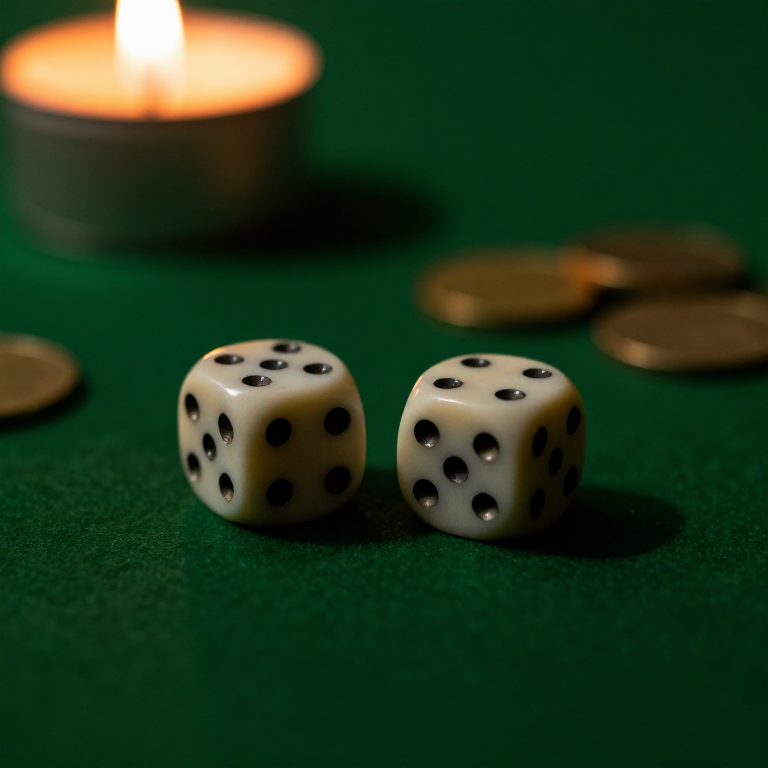

The Birth of Probability — Roll the Dice and Find the Odds
A hands-on maths project: roll two dice fifty times, tally the totals, and discover that 7 comes up most often -- the start of probability, born from a gambler's question to Pascal and Fermat in 1654. A Python cell gives the exact odds and simulates thousands of rolls, and a compendium reaches from dice to modern statistics.
Cơ bản
30 minutes
Hướng dẫn
1
1
A gambler's question
A gambler's question
In 1654 a gambler asked Blaise Pascal how to split the stakes in an unfinished game. Pascal and Pierre de Fermat worked out the answer in a famous exchange of letters -- and invented the mathematics of chance. You will rediscover its first lesson with two dice.
2
2
Roll and tally
Roll and tally
Take two dice. On paper, make a tally chart with a row for each possible total from 2 to 12. Now roll the two dice fifty times, and each time add a tally mark next to the total you rolled. Take your time and be honest with every roll.
Vật liệu cho bước này:
 Xúc xắc (sáu mặt, bộ 5 viên)1 cái
 Giấy1 tờ
Công cụ cần thiết:
 Bộ bút chì than chì
3
3
Which total wins?
Which total wins?
Turn your tallies into a little bar chart. You should find the middle totals -- especially 7 -- came up far more often than 2 or 12. Why? Because there are six ways to make 7 (1+6, 2+5, 3+4, 4+3, 5+2, 6+1) but only ONE way to make 2 (1+1) or 12 (6+6). More ways means more likely.
4
4
Compare with the exact odds
Compare with the exact odds
Đang tải sổ tay Jupyter…
Công cụ cần thiết:
 Máy tính để bàn
5
5
Compendium: the mathematics of uncertainty
Compendium: the mathematics of uncertainty
What your dice teach. (1) When outcomes are equally likely, a probability is just favourable outcomes divided by all outcomes -- 6 ways out of 36 for a seven, so one in six. (2) Your fifty rolls wobble around the true odds; a thousand rolls hug them tightly -- the 'law of large numbers'. (3) The counts of ways to make each total are hidden in Pascal's triangle, tying chance to counting. (4) The reasoning Pascal and Fermat invented for a gambling dispute now underlies insurance, weather forecasts, medical trials, quantum physics and the machine-learning behind modern AI. A question about dice became the mathematics of uncertainty itself.
Công cụ yêu cầu
2- Tạm thời
- Tạm thời
Blueprint liên quan
Các blueprint này chia sẻ kiến thức — kỹ thuật, vật liệu hoặc nguyên tắc
CC0 Phạm vi công cộng
Bản thiết kế này được phát hành theo CC0. Bạn tự do sao chép, sửa đổi, phân phối và sử dụng cho bất kỳ mục đích nào mà không cần xin phép.
Hỗ trợ nhà sáng tạo bằng cách mua sản phẩm qua bản thiết kế, nơi họ nhận Hoa hồng nhà sáng tạo do nhà bán hàng đặt, hoặc tạo phiên bản mới và kết nối trong bản thiết kế riêng để chia sẻ doanh thu.