NGHỆ THUẬT
LÀM ĐẸP VÀ SỨC KHỎE
THỦ CÔNG
VĂN HÓA VÀ LỊCH SỬ
GIẢI TRÍ
MÔI TRƯỜNG
THỰC PHẨM VÀ ĐỒ UỐNG
KỸ THUẬT NGƯỢC
KHOA HỌC
THỂ THAO
CÔNG NGHỆ
THIẾT BỊ ĐEO
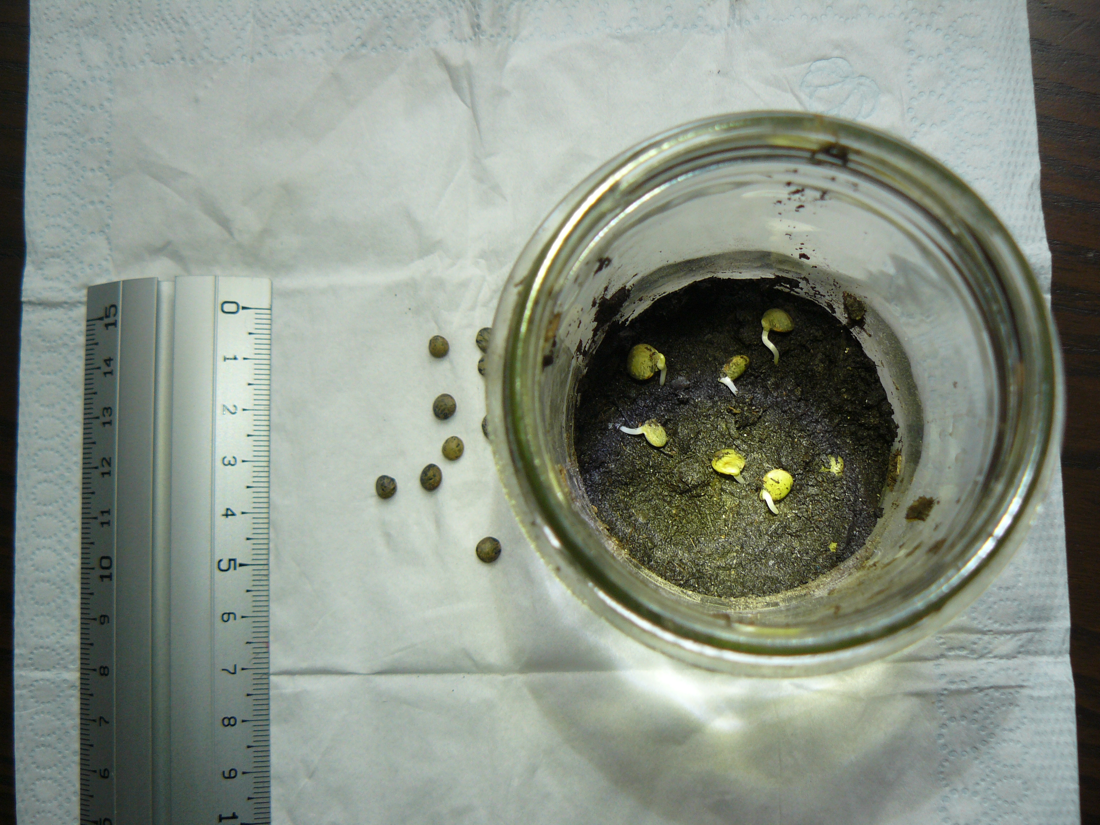
Cdang (Wikimedia Commons) · CC BY-SA 4.0


Testing Seed Viability — The Rag-Doll Germination Test
Before you trust saved or old seed, test it. Count out a sample, sprout it in a damp paper towel, and count how many come up — that percentage tells you whether to sow normally, sow thicker, or bin it. A buildable school project in germination, viability and how to turn a sprout count into a sowing rate.
Cơ bản
About a week (a few days to sprout)
Hướng dẫn
1
1
Why test before you sow
Why test before you sow
Seed does not live forever, and a packet that looks fine can be half dead. Rather than sow a whole bed and wait weeks to discover only a third came up, you sprout a small counted sample first. The share that germinates tells you exactly how alive the batch is — and how thickly to sow it.
2
2
Count out a sample
Count out a sample
Take a random, representative pinch from the batch and count out a round number — 10 seeds (each is worth 10%), or 20 or 100 for a more accurate figure. Don't hand-pick the biggest, best seeds; you want a fair sample of the whole lot.
Vật liệu cho bước này:
 Hạt giống đậu10 seed
3
3
Dampen a paper towel
Dampen a paper towel
Wet a paper towel (or coffee filter) so it is evenly DAMP but not dripping — squeeze out any excess. Too dry and the seeds won't sprout; waterlogged and they drown or rot.
Công cụ cần thiết:
 Bình xịt nước
 Khăn giấy
4
4
Roll the rag doll
Roll the rag doll
Space the counted seeds across one half of the towel, fold or roll it over them (this rolled bundle is the 'rag doll'), and slip it into a zip-lock bag to hold the moisture. Write the variety, count and date on the bag. Leave the bag ALMOST closed, not airtight — sprouting seeds must breathe.
Công cụ cần thiết:
 Bút dạ không xoá
 Túi zip
5
5
Keep it warm and wait
Keep it warm and wait
Put the bag somewhere warm (about 20-25°C — on top of the fridge is ideal) and check daily, re-misting if the towel dries. Give it the right time for the crop: fast seeds like beans, radish and brassicas sprout in 3-5 days; lettuce 5-7; tomato 7-14; carrot, parsley and celery can take 14-21 days.
6
6
Count and calculate
Count and calculate
A seed has germinated once it pushes out a little root (radicle). When the sprouting has run its course, count the germinated seeds. Germination % = germinated ÷ total tested × 100. So 7 of 10 sprouted = 70%; 82 of 100 = 82%.
7
7
Read the result and adjust your sowing
Read the result and adjust your sowing
Over 80-90% is excellent — sow as normal. Around 50-70% is still usable, just sow more thickly to make up for the blanks. Under 50% is poor: sow very thick or replace the seed. Near zero means the batch is dead — compost it. To hit a target, divide: want 30 plants at 60% germination? Sow about 50 seeds (30 ÷ 0.60).
8
8
Don't waste the sprouts
Don't waste the sprouts
The seeds that sprouted are alive and ready — if the season is right, gently pot up the healthy sprouts (handle them by the seed leaves, never the fragile root) instead of throwing them away. Your test doubles as an early start.
9
9
Compendium — viability, vigour and dormancy
Compendium — viability, vigour and dormancy
A germination test measures VIABILITY — the fraction of seeds still alive and able to sprout. Viability falls as seed ages and, above all, as it is stored badly: heat and damp are what kill seed, so a rough rule of thumb is that seed life roughly HALVES for every ~5°C warmer or every 1% more moisture — which is exactly why the seed-saver stores in a cool, dry, dark, airtight jar, and why a viability test is worth doing on anything more than a year or two old. To sprout at all, a seed needs three things together: MOISTURE to wake it and swell it, WARMTH to run its chemistry, and OXYGEN to burn its stored food — which is why the rag-doll works (damp towel, warm spot, bag left open a crack) and why drowning seed in water fails. Two subtleties are worth knowing. First, germination percentage is not the same as VIGOUR: a seed can just barely sprout weakly and late — a batch that comes up 90% but slowly and unevenly is lower-vigour than one that comes up 90% fast and together, so watch the SPEED and evenness, not just the final count. Second, a low count doesn't always mean DEAD — it can mean DORMANT. Many seeds (especially wild plants, trees and some herbs) deliberately refuse to germinate until they get a special cue: a cold-moist spell (stratification, mimicking winter), a nicked or abraded coat (scarification, for hard-shelled seeds), light, or simply time to after-ripen. Common vegetable annuals like beans, lettuce and tomato have had most dormancy bred out of them, so the test reads true for them — but if you test a dormant species and get zeros, the seed may be perfectly alive and simply waiting for its trigger. Master this one test and you never again gamble a whole season's bed on seed you haven't checked.
Vật liệu
1- 10 seedTạm thời
Blueprint liên quan
Các blueprint này chia sẻ kiến thức — kỹ thuật, vật liệu hoặc nguyên tắc
CC0 Phạm vi công cộng
Bản thiết kế này được phát hành theo CC0. Bạn tự do sao chép, sửa đổi, phân phối và sử dụng cho bất kỳ mục đích nào mà không cần xin phép.
Hỗ trợ nhà sáng tạo bằng cách mua sản phẩm qua bản thiết kế, nơi họ nhận Hoa hồng nhà sáng tạo do nhà bán hàng đặt, hoặc tạo phiên bản mới và kết nối trong bản thiết kế riêng để chia sẻ doanh thu.