Hợp tác
NGHỆ THUẬT
LÀM ĐẸP VÀ SỨC KHỎE
THỦ CÔNG
VĂN HÓA VÀ LỊCH SỬ
GIẢI TRÍ
MÔI TRƯỜNG
THỰC PHẨM VÀ ĐỒ UỐNG
KỸ THUẬT NGƯỢC
KHOA HỌC
THỂ THAO
CÔNG NGHỆ
THIẾT BỊ ĐEO
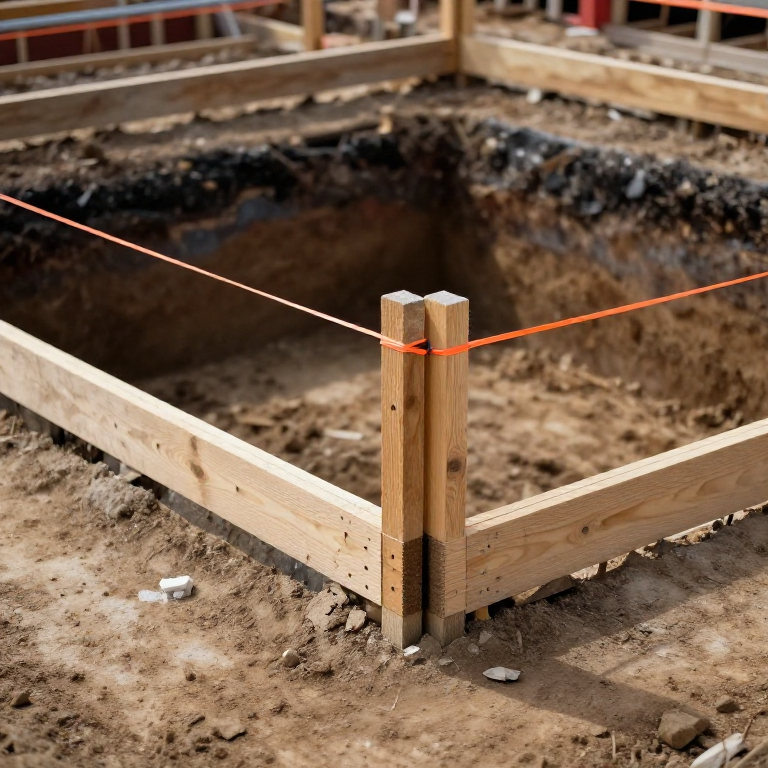


Setting Out a Building: Profiles and Batter Boards
You have pegged out a perfect rectangle. Now the digger arrives and removes every peg in the first ten minutes, because the pegs are exactly where the trench goes.
The answer is older than machinery and completely reliable: move the information OFF the building line. Batter boards — profiles — are horizontal rails set well outside the excavation, carrying saw-cuts or nails that mark where each line runs. Stretch a string between two matching marks and the line reappears, exactly where it was, as many times as you need it.
This rung is the one that turns a survey into a building, and it is the one most often improvised badly. It also carries the levels: the top of the board is usually set to a round height above datum, so a tape from the string gives depth without re-levelling.
Trung cấp
1 day
Hướng dẫn
1
1
Set the profiles well clear of the dig
Set the profiles well clear of the dig
Drive two stout posts at each corner region, at least a metre and a half outside the building line, and nail a horizontal rail across them.
A metre and a half is a minimum, not a target — an excavator's tracks and its spoil heap need more than people expect, and a profile knocked out of position is worse than no profile, because it still looks authoritative. Put them where the machine will not go, and brace them so a knock moves the whole assembly rather than twisting one post.
Vật liệu cho bước này:
 Dầm kết cấu gỗ thông Douglas8 length
 Đinh mạ kẽm50 cái
Công cụ cần thiết:
 Búa nhổ đinh
 Cưa tay
2
2
Set every rail to ONE level
Set every rail to ONE level
Using the water level or the optical level, set the top edge of every rail to the same height — ideally a round number above your datum, such as exactly one metre.
Now a single tape measurement down from a string gives you the depth of anything, anywhere on the site, with no arithmetic. Setting the rails at arbitrary heights works for the plan lines and throws away this entire second function, which is most of what profiles are worth.
Công cụ cần thiết:
 Máy thủy bình quang học (trắc địa)
 Mia thủy chuẩn
 Ống nhựa vinyl trong
3
3
Transfer the lines onto the rails
Transfer the lines onto the rails
Stretch a string along each building line from its corner pegs, extend it to the rails, and mark where it crosses with a saw-cut — not a pencil mark.
A saw-cut survives rain, mud, gloves and three months. A pencil line does not last a week outdoors. Cut a second mark for the outside of the foundation and a third for the trench edge, and label each one on the rail in paint or with a nailed tag, because by the time you need them you will not remember which is which.
Vật liệu cho bước này:
Đinh mạ kẽm30 cáiCông cụ cần thiết:
Cưa tay Dây dọi
 Dây bật mực xây dựng
4
4
Check the diagonals again, from the profiles
Check the diagonals again, from the profiles
String up all four building lines from the rails and measure the diagonals of the rectangle they form.
This checks the transfer, not the original layout — a saw-cut in the wrong place is easy and invisible. The diagonal check costs two minutes and catches it before anything is dug. Re-check the diagonals every time you re-string, for the whole life of the job, because a rail does get knocked eventually and nothing about a wrong string looks wrong.
Công cụ cần thiết:
 Thước dây cuộn
5
5
Working depths and the tolerance you actually have
Working depths and the tolerance you actually have
Đang tải sổ tay Jupyter…
Công cụ cần thiết:
Thước dây cuộn6
6
Leave a record on the site itself
Leave a record on the site itself
Paint the datum height and the rail height on one post, and note them in the book with a sketch showing which corner is which.
Sites change hands, work stops for winter, and the person who returns may not be you. A profile with no stated level is a piece of wood. Two painted numbers turn it back into a survey, and they cost thirty seconds at the moment you still remember what they are.
Vật liệu
2- 8 lengthTạm thời
- 80 cáiTạm thời
Công cụ yêu cầu
8- Tạm thời
- Tạm thời
- Tạm thời
- Tạm thời
- Tạm thời
- Tạm thời
- 1 vendor sell this, none ship to you yetTạm thời
Blueprint liên quan
Các blueprint này chia sẻ kiến thức — kỹ thuật, vật liệu hoặc nguyên tắc



CC0 Phạm vi công cộng
Bản thiết kế này được phát hành theo CC0. Bạn tự do sao chép, sửa đổi, phân phối và sử dụng cho bất kỳ mục đích nào mà không cần xin phép.
Hỗ trợ nhà sáng tạo bằng cách mua sản phẩm qua bản thiết kế, nơi họ nhận Hoa hồng nhà sáng tạo do nhà bán hàng đặt, hoặc tạo phiên bản mới và kết nối trong bản thiết kế riêng để chia sẻ doanh thu.