NGHỆ THUẬT
LÀM ĐẸP VÀ SỨC KHỎE
THỦ CÔNG
VĂN HÓA VÀ LỊCH SỬ
GIẢI TRÍ
MÔI TRƯỜNG
THỰC PHẨM VÀ ĐỒ UỐNG
TƯƠNG LAI XANH
KỸ THUẬT NGƯỢC
KHOA HỌC
THỂ THAO
CÔNG NGHỆ
THIẾT BỊ ĐEO
Driving Multiple LEDs — SIK Circuit 4
Ed

Tạo bởi

Ed

17. March 2026

Driving Multiple LEDs — SIK Circuit 4

Make eight LEDs dance! Learn about arrays, for loops, and multiple output patterns including chase, ping-pong, marquee, and random blink effects.

Hướng dẫn

1

Parts & Introduction

This experiment uses 8 LEDs to create light patterns. You'll learn about arrays (grouping related variables) and for loops (repeating actions efficiently). The sketch includes 6 different animation functions you can try.

Parts Needed

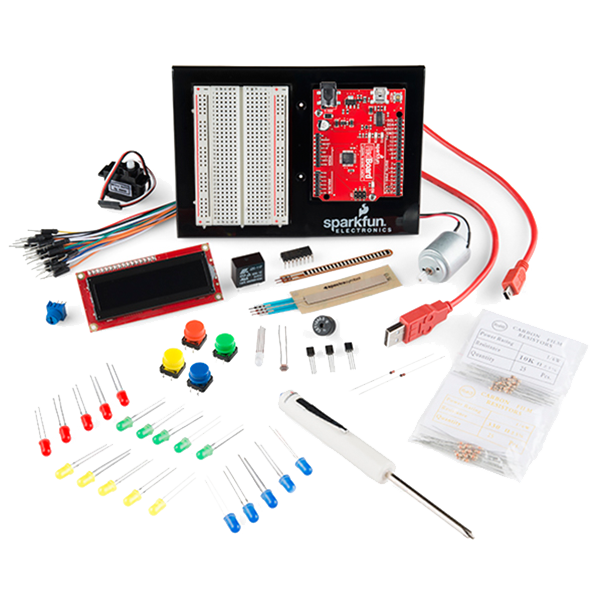
  • 1x Arduino Uno + USB cable
  • 1x Breadboard
  • 8x LEDs (any color)
  • 8x 330Ω Resistors
  • 9x Jumper Wires
2

Hardware Hookup

Wiring Instructions

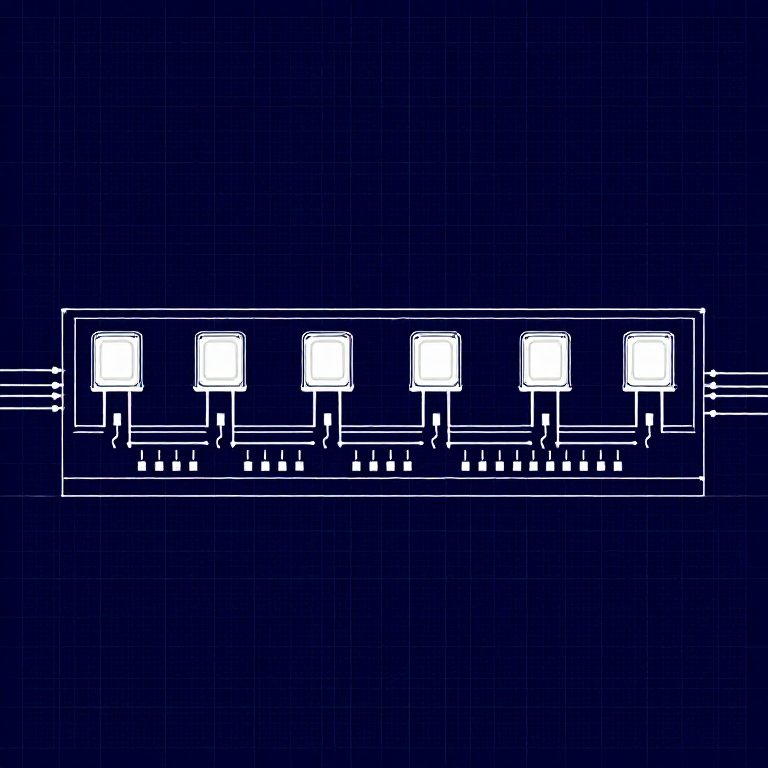
  1. Place 8 LEDs in a row on the breadboard.
  2. For each LED, connect the negative leg (shorter) through a 330Ω resistor to GND.
  3. Connect the positive leg (longer) of each LED to Arduino digital pins 2 through 9 (LED 1 = pin 2, LED 2 = pin 3, etc.).
  4. Connect the GND rail on the breadboard to Arduino GND.

Tip: Keep the LEDs neatly spaced for the best visual effect.

3

Arduino Code

Open the Arduino IDE and upload the following sketch to your Arduino board.

multiple_leds.inoarduino
/*
SparkFun Inventor's Kit
Example sketch 04 — MULTIPLE LEDs

Make eight LEDs dance. Dance LEDs, dance!

Hardware connections:
  8 LEDs with 330 ohm resistors on pins 2-9.
  Negative sides through resistors to GND.

This code is completely free for any use.
*/

int ledPins[] = {2,3,4,5,6,7,8,9};

void setup()
{
  int index;
  for(index = 0; index <= 7; index++)
  {
    pinMode(ledPins[index], OUTPUT);
  }
}

void loop()
{
  oneAfterAnotherNoLoop();

  //oneAfterAnotherLoop();
  //oneOnAtATime();
  //pingPong();
  //marquee();
  //randomLED();
}

void oneAfterAnotherNoLoop()
{
  int delayTime = 100;

  digitalWrite(ledPins[0], HIGH); delay(delayTime);
  digitalWrite(ledPins[1], HIGH); delay(delayTime);
  digitalWrite(ledPins[2], HIGH); delay(delayTime);
  digitalWrite(ledPins[3], HIGH); delay(delayTime);
  digitalWrite(ledPins[4], HIGH); delay(delayTime);
  digitalWrite(ledPins[5], HIGH); delay(delayTime);
  digitalWrite(ledPins[6], HIGH); delay(delayTime);
  digitalWrite(ledPins[7], HIGH); delay(delayTime);

  digitalWrite(ledPins[7], LOW); delay(delayTime);
  digitalWrite(ledPins[6], LOW); delay(delayTime);
  digitalWrite(ledPins[5], LOW); delay(delayTime);
  digitalWrite(ledPins[4], LOW); delay(delayTime);
  digitalWrite(ledPins[3], LOW); delay(delayTime);
  digitalWrite(ledPins[2], LOW); delay(delayTime);
  digitalWrite(ledPins[1], LOW); delay(delayTime);
  digitalWrite(ledPins[0], LOW); delay(delayTime);
}

void oneAfterAnotherLoop()
{
  int index;
  int delayTime = 100;

  for(index = 0; index <= 7; index++)
  {
    digitalWrite(ledPins[index], HIGH);
    delay(delayTime);
  }
  for(index = 7; index >= 0; index--)
  {
    digitalWrite(ledPins[index], LOW);
    delay(delayTime);
  }
}

void oneOnAtATime()
{
  int index;
  int delayTime = 100;

  for(index = 0; index <= 7; index++)
  {
    digitalWrite(ledPins[index], HIGH);
    delay(delayTime);
    digitalWrite(ledPins[index], LOW);
  }
}

void pingPong()
{
  int index;
  int delayTime = 100;

  for(index = 0; index <= 7; index++)
  {
    digitalWrite(ledPins[index], HIGH);
    delay(delayTime);
    digitalWrite(ledPins[index], LOW);
  }
  for(index = 7; index >= 0; index--)
  {
    digitalWrite(ledPins[index], HIGH);
    delay(delayTime);
    digitalWrite(ledPins[index], LOW);
  }
}

void marquee()
{
  int index;
  int delayTime = 200;

  for(index = 0; index <= 3; index++)
  {
    digitalWrite(ledPins[index], HIGH);
    digitalWrite(ledPins[index+4], HIGH);
    delay(delayTime);
    digitalWrite(ledPins[index], LOW);
    digitalWrite(ledPins[index+4], LOW);
  }
}

void randomLED()
{
  int index;
  int delayTime = 100;

  index = random(8);
  digitalWrite(ledPins[index], HIGH);
  delay(delayTime);
  digitalWrite(ledPins[index], LOW);
}
4

Test & Experiment

What You Should See

All 8 LEDs light up one after another, then turn off in reverse order. This repeats continuously.

Troubleshooting

  • Some LEDs don't light: Easy to insert an LED backwards. Check polarity.
  • Out of sequence: With 8 wires, it's easy to cross a couple. Verify LED 1 is on pin 2, then each pin in order.
  • Starting fresh: Sometimes pulling everything out and re-wiring is faster than debugging.

Experiments to Try

  • Uncomment the other functions in loop() to try: oneOnAtATime(), pingPong(), marquee(), randomLED().
  • Create your own animation pattern!
  • Modify the delay times to change the speed.

Vật liệu

  • SparkFun Inventor's Kit - V3.2 - 1 kitNOK 999.20
    Xem
  • Arduino Uno R3 - 1 pieceTạm thời
    Xem
  • Breadboard - 1 pieceTạm thời
    Xem
  • 5mm LED - 8 piecessTạm thời
    Xem
  • 330 Ohm Resistor - 8 piecessNOK 24.00
    Xem
  • Jumper Wires - 9 piecessNOK 39.20
    Xem

Công cụ yêu cầu

  • Computer with Arduino IDE

CC0 Phạm vi công cộng

Bản thiết kế này được phát hành theo CC0. Bạn tự do sao chép, sửa đổi, phân phối và sử dụng cho bất kỳ mục đích nào mà không cần xin phép.

Hỗ trợ nhà sáng tạo bằng cách mua sản phẩm qua bản thiết kế, nơi họ nhận Hoa hồng nhà sáng tạo do nhà bán hàng đặt, hoặc tạo phiên bản mới và kết nối trong bản thiết kế riêng để chia sẻ doanh thu.

Thảo luận

(0)

Đăng nhập để tham gia thảo luận

Đang tải bình luận...