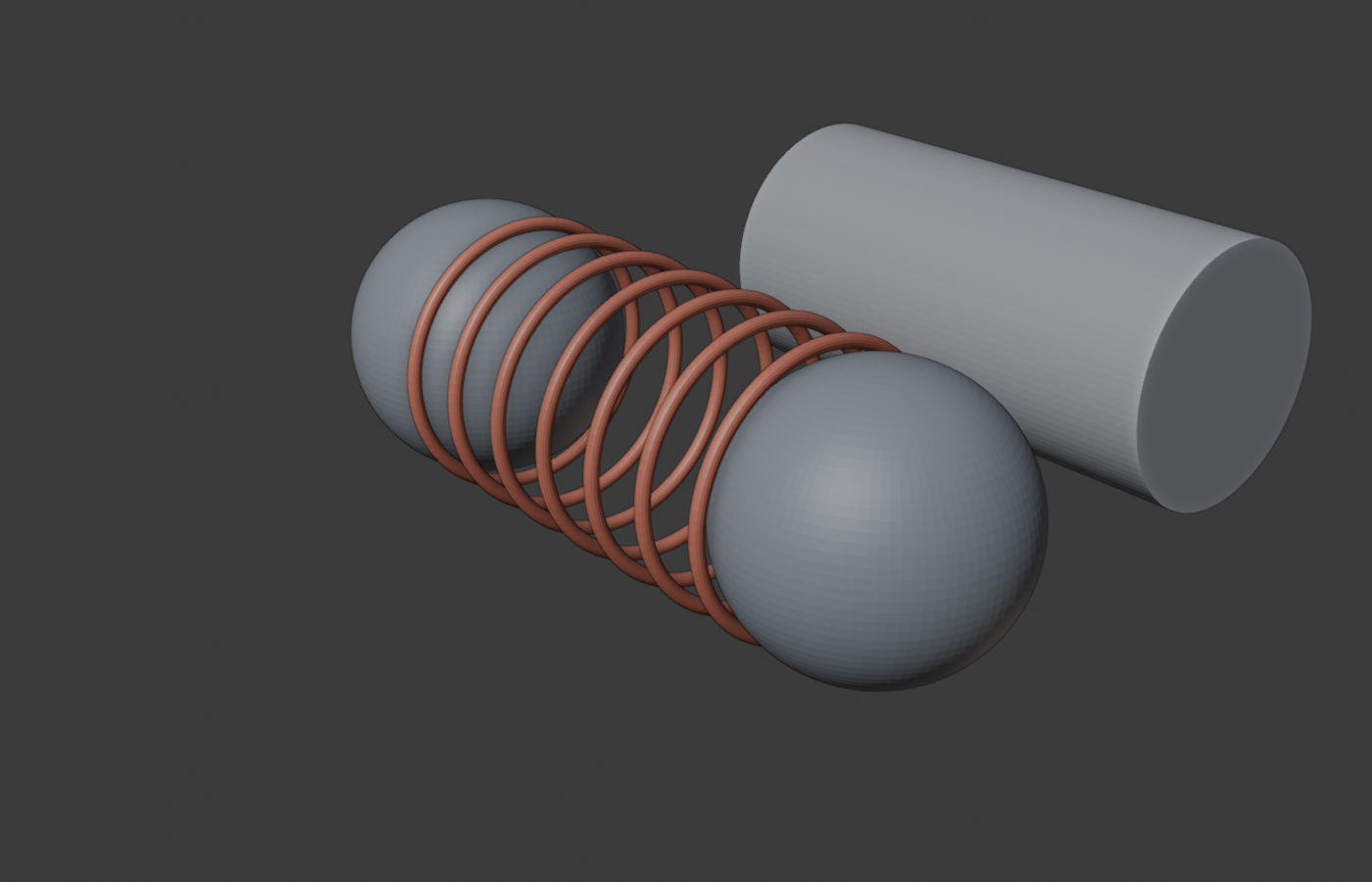


The Submarine Pressure Hull
Hướng dẫn
Crush a can and feel why compression is different
Crush a can and feel why compression is different
Two minutes with a drinks can teaches what a page of theory does not.
- Stand an empty aluminium can upright and press straight down evenly. Note how much load it carries.
- Now press down again while a helper dents the side very slightly with a fingernail.
- Separately, put a little water in a can, heat it, then invert it into cold water and watch it implode.
Undamaged, the can carries a surprising load; with the tiniest dent it collapses immediately at a fraction of it. That sensitivity to imperfection is the signature of buckling, and it is why the strength of a compression structure depends on how ACCURATELY it was built, not merely on how thick it is.
This is the opposite of tension. A tension member with a small dent is essentially as strong as one without. A compression shell with a small dent may have lost half its capacity — which is why submarine hull plating is checked for out-of-roundness to millimetres over metres, and why a hull that has been dented is a hull that must be assessed rather than simply inspected.Vật liệu cho bước này:
 Lon nước giải khát bằng nhôm (rỗng)4 cái
Công cụ cần thiết:
 Điện thoại thông minh quay chậm
 Cân lò xo
 Kính bảo hộ trong suốt
 Tấm che mặt
Compute collapse depth for sphere, cylinder and ring-framed cylinder
Compute collapse depth for sphere, cylinder and ring-framed cylinder
Công cụ cần thiết:
 Máy tính để bàn
Weld a test cylinder and pressure-test it to destruction
Weld a test cylinder and pressure-test it to destruction
Build small, test to failure, and see whether the arithmetic was honest.
- Roll and weld a thin steel cylinder, closed with domed ends, and make a second identical one with internal ring frames.
- Measure out-of-roundness at several stations — the deviation from a true circle — and record it.
- Pressure-test each externally, submerged in a shielded vessel, raising pressure until collapse.
- Compare collapse pressures with each other and with the notebook.
The framed cylinder will survive far higher pressure, and BOTH will collapse below the ideal theoretical value — by an amount that tracks their out-of-roundness. That gap between theory and reality is not experimental error; it is the imperfection sensitivity from step 1 showing up as a number.
An external pressure test is genuinely dangerous — implosion releases the stored energy of the surrounding water inward and then outward. Test remotely, behind a barrier, with the vessel fully submerged so the water absorbs the event. Never stand over a test in progress, and never test a vessel you have not calculated.Vật liệu cho bước này:
 Tấm thép2 tờ
 Ống thép 12 mm1 cái
Công cụ cần thiết:
 Máy hàn TIG
 Máy nén khí 30 gallon
 Đồng hồ áp suất
 Đồng hồ so
 Thước cặp điện tử 6 inchTấm che mặtKính bảo hộ trong suốt
Every hole is a stress concentration
Every hole is a stress concentration
A perfect hull is useless. It needs hatches, shafts, torpedo tubes, periscopes and cable glands, and each one is a hole in the thing you just optimised.
- Cut a small circular hole in a test cylinder and re-run the collapse test.
- Repeat with the hole reinforced by a welded doubler ring around its edge.
- Compare both against the unpierced result.
An unreinforced penetration cuts collapse pressure sharply, because the load that was flowing smoothly through the shell must now divert around the hole and crowds at its edges. A doubler restores most of it by giving that crowded load somewhere to go.
This is why the number of hull penetrations is minimised so aggressively in submarine design, why they are round rather than square — a corner is a far worse concentrator than a curve — and why every one is a compensated opening with material added back around it.
The same reasoning appears in the aircraft batch: the de Havilland Comet failures traced to fatigue cracks originating at window corners. Round the corner and the concentration falls dramatically. Pressure vessels and pressurised cabins are the same problem with the sign flipped, and both learned it the expensive way.Vật liệu cho bước này:
Tấm thép1 tờCông cụ cần thiết:
Máy hàn TIG Máy khoan bàn
 Bộ giũaĐồng hồ áp suấtTấm che mặtKính bảo hộ trong suốt
Vật liệu
3- Tạm thời
- Tạm thời
- 1 cáiTạm thời
Công cụ yêu cầu
12- Tạm thời
- Tạm thời
- Tạm thời
- Tạm thời
- Tạm thời
- Tạm thời
- Tạm thời
- Tạm thời
- Tạm thời
- Tạm thời
- Tạm thời
- Tạm thời
Blueprint liên quan
Các blueprint này chia sẻ kiến thức — kỹ thuật, vật liệu hoặc nguyên tắc




CC0 Phạm vi công cộng
Bản thiết kế này được phát hành theo CC0. Bạn tự do sao chép, sửa đổi, phân phối và sử dụng cho bất kỳ mục đích nào mà không cần xin phép.
Hỗ trợ nhà sáng tạo bằng cách mua sản phẩm qua bản thiết kế, nơi họ nhận Hoa hồng nhà sáng tạo do nhà bán hàng đặt, hoặc tạo phiên bản mới và kết nối trong bản thiết kế riêng để chia sẻ doanh thu.