NGHỆ THUẬT
LÀM ĐẸP VÀ SỨC KHỎE
THỦ CÔNG
VĂN HÓA VÀ LỊCH SỬ
GIẢI TRÍ
MÔI TRƯỜNG
THỰC PHẨM VÀ ĐỒ UỐNG
KỸ THUẬT NGƯỢC
KHOA HỌC
THỂ THAO
CÔNG NGHỆ
THIẾT BỊ ĐEO
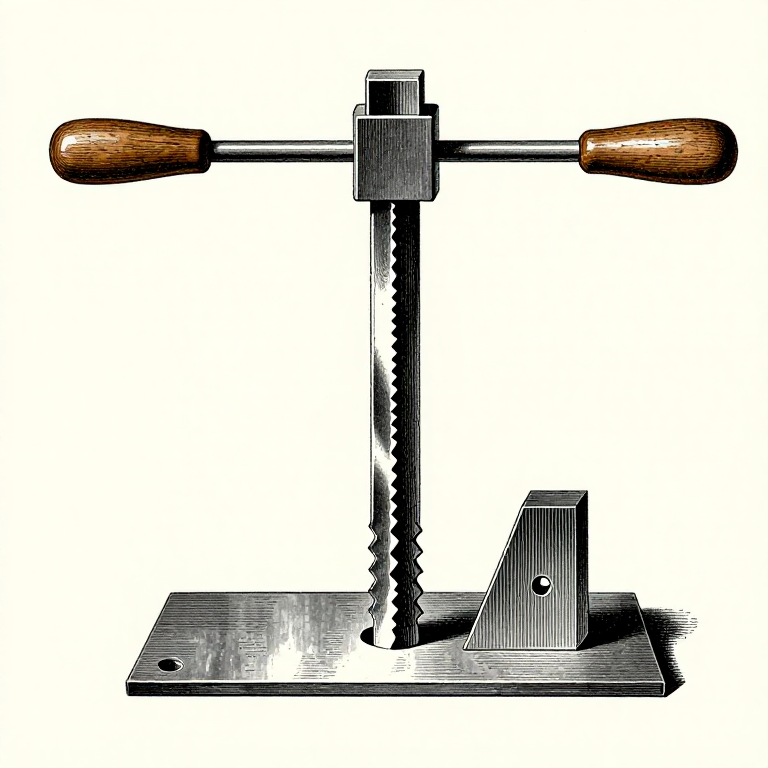


Tapping a Hole by Hand: The Drill Size Decides Everything
A tap cuts a thread into a hole you have already drilled, and the single thing that decides whether it works is the size of that hole.
Too small and the tap has to remove more metal than it can, binds, and snaps off inside the work — which is about the worst outcome in hand metalwork. Too large and the thread is shallow and strips under load. The correct drill is not the thread's diameter and not anything you can eyeball.
The rest is a short, unglamorous routine: start square, turn half a turn, back off a quarter, repeat. Doing that faithfully is the whole technique.
Trung cấp
3 hours
Hướng dẫn
1
1
The tapping drill: subtract the pitch
The tapping drill: subtract the pitch
For an ISO metric coarse thread the tapping drill is the nominal diameter minus the pitch. M6 has a 1.0 mm pitch, so it takes a 5.0 mm drill. M8 at 1.25 takes 6.75, rounded to the 6.8 mm drill that is sold for it.
That rule gives about 75 % thread engagement, which is the standard compromise: nearly all the strength of a full thread for a fraction of the cutting effort. Going to 100 % engagement adds only a few per cent of strength and roughly doubles the torque needed — which is how taps get broken.
Write the rule where you tap, or keep a chart. Almost every tapping failure traces back to the drill, and a 6.0 mm drill in place of a 6.8 for an M8 hole will break the tap rather than cut a better thread.
Vật liệu cho bước này:
 Tấm thép mềm1 cái
Công cụ cần thiết:
 Bộ mũi khoan
 Thước cặp
 Đục dấu tâm
2
2
Taper, second, plug — a set of three, used in order
Taper, second, plug — a set of three, used in order
A TAPER tap has a long lead of eight or ten tapering threads, so it enters easily and aligns itself. A SECOND (or intermediate) tap has a shorter lead. A PLUG (or bottoming) tap is threaded almost to its tip.
Through a hole that goes right through, the taper tap alone will do the whole job. In a BLIND hole all three are needed in order, because only the plug tap can cut threads close to the bottom — and starting with the plug tap in a fresh hole is very difficult to get square.
Drill a blind hole deeper than the thread needs to be, by three or four thread pitches. The chips have to go somewhere, and a hole drilled exactly to depth packs solid and jams the tap at the bottom.
Công cụ cần thiết:
 Bộ ta-rô và bàn ren
 Tay quay ta-rôBộ mũi khoan
3
3
Start it square — this is the step that decides the result
Start it square — this is the step that decides the result
Put the tap in the tap wrench, stand it in the hole, and press down while turning gently. After two turns, stop and check it against a square from two directions ninety degrees apart.
A tap started crooked cuts a crooked thread, and there is no recovering it — the bolt will go in at an angle and the part is scrap. Checking twice at two turns costs ten seconds; the alternative costs the workpiece. If it is leaning, back it out completely and start again rather than trying to lever it straight, which snaps taps.
Use a tap wrench, not a spanner or pliers on the square. A tap wrench applies balanced torque to both sides; anything one-sided pushes the tap off square at the exact moment squareness is being established.
Công cụ cần thiết:
Tay quay ta-rôBộ ta-rô và bàn ren Bột đánh dấu màu xanh
 Ê tô bàn nguội hạng nặng
4
4
Half a turn in, a quarter turn back — and oil
Half a turn in, a quarter turn back — and oil
Turn the tap half a turn forward, then a quarter turn back, then forward again. The reverse snaps the chip off and lets it fall clear.
Without it, the chip grows into a long spiral that jams between the tap and the thread it has just cut. Pressure builds with no warning, and the tap breaks. That back-quarter-turn is the single most important habit in this batch, and it is the one beginners leave out because it feels like it is undoing progress.
Use cutting oil on steel — it reduces torque substantially and gives a far cleaner thread. Aluminium wants paraffin or a proper aluminium cutting fluid; brass and cast iron are usually tapped dry, because oil turns their powdery chips into a packing paste.
Vật liệu cho bước này:
 Dầu cắt gọt1 cái
Công cụ cần thiết:
Tay quay ta-rôBộ ta-rô và bàn ren Vải cô tông
 Kính bảo hộ trong suốt
Vật liệu
2- 1 cáiTạm thời
- 1 cáiTạm thời
Công cụ yêu cầu
9- Tạm thời
- Tạm thời
- Tạm thời
- Tạm thời
- Tạm thời
- Tạm thời
- Tạm thời
- Tạm thời
- Tạm thời
Blueprint liên quan
Các blueprint này chia sẻ kiến thức — kỹ thuật, vật liệu hoặc nguyên tắc

CC0 Phạm vi công cộng
Bản thiết kế này được phát hành theo CC0. Bạn tự do sao chép, sửa đổi, phân phối và sử dụng cho bất kỳ mục đích nào mà không cần xin phép.
Hỗ trợ nhà sáng tạo bằng cách mua sản phẩm qua bản thiết kế, nơi họ nhận Hoa hồng nhà sáng tạo do nhà bán hàng đặt, hoặc tạo phiên bản mới và kết nối trong bản thiết kế riêng để chia sẻ doanh thu.