NGHỆ THUẬT
LÀM ĐẸP VÀ SỨC KHỎE
THỦ CÔNG
VĂN HÓA VÀ LỊCH SỬ
GIẢI TRÍ
MÔI TRƯỜNG
THỰC PHẨM VÀ ĐỒ UỐNG
KỸ THUẬT NGƯỢC
KHOA HỌC
THỂ THAO
CÔNG NGHỆ
THIẾT BỊ ĐEO
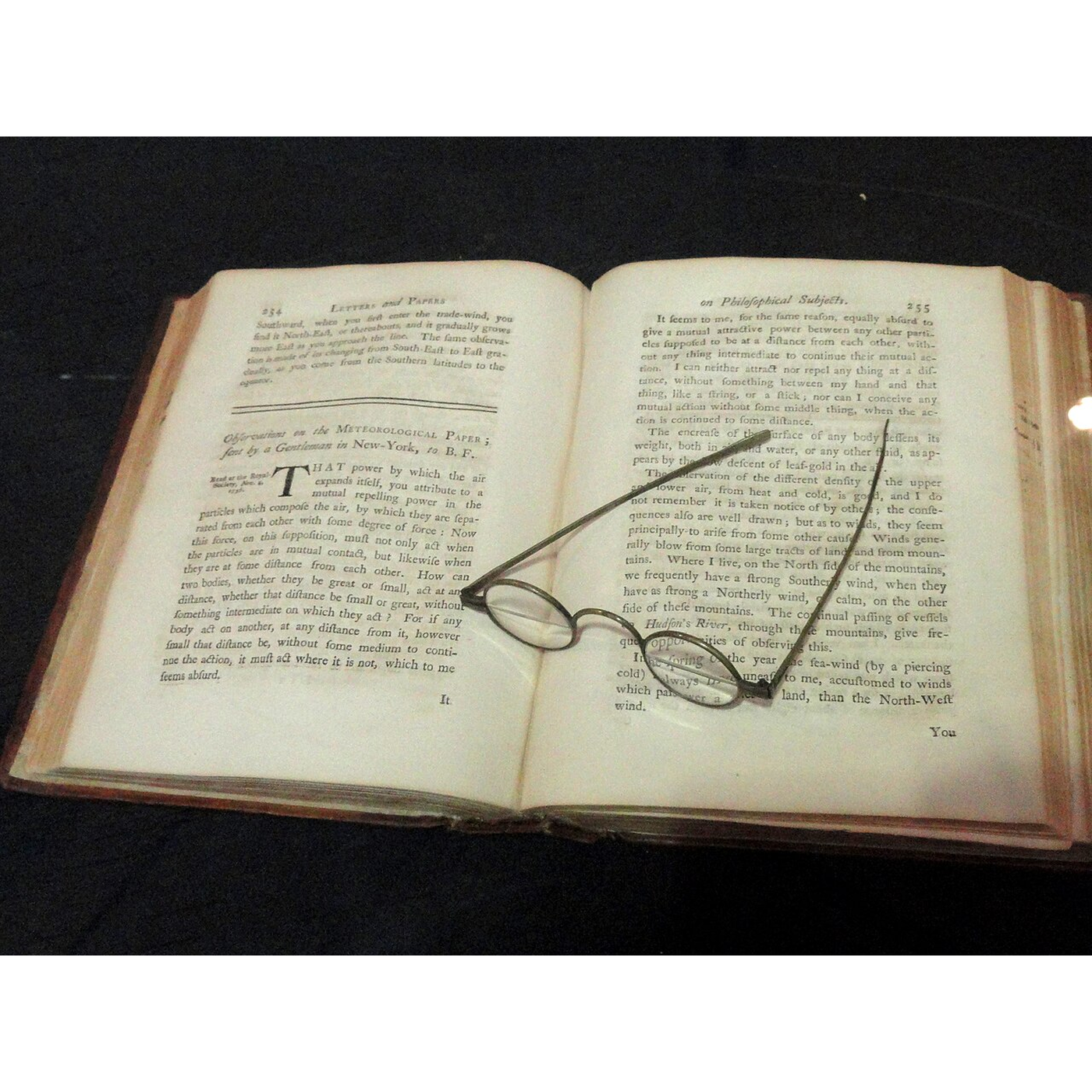


The Bifocal Lens: Two Pairs of Spectacles Cut in Half
With age the eye loses its power to focus near. Someone who already wears glasses for distance then needs a second pair for reading, and must swap them every time they look from the page to a face across the table.
Benjamin Franklin had his optician cut the lenses of his distance and reading spectacles in half and mount the halves together in one frame, distance on top and reading below. In a letter to George Whatley of 23 May 1785 he described these "double spectacles" and how useful he found them at dinner in France, where he could see both his food and the faces of those he talked to. He patented none of his inventions.
This rung works out why a reading addition is needed and how big, explains the image jump at a segment's edge, and builds a bench bifocal from two lenses and a camera.
Cơ bản
About 2 hours
Hướng dẫn
1
1
Accommodation, the reading add and image jump
Accommodation, the reading add and image jump
Đang tải sổ tay Jupyter…
2
2
The single lens it splits
The single lens it splits
A bifocal is two spectacle lenses in one frame. The embedded blueprint covers the single convex and concave lenses it is made from.
3
3
Build a bench bifocal
Build a bench bifocal
Stand a digital camera on a table with its focus locked at infinity: that is the aged eye, which can no longer focus near. Put a newspaper page 40 cm in front of it and a poster across the room behind.
From a convex lens set pick a weak lens for 'distance' — about +0.5 D (f = 2 m) — and for 'reading' a lens 2.5 D stronger than that, about +3.0 D (f ≈ 33 cm): the 2.5 D difference is the reading add for 40 cm. Cut a card frame, mount the weak lens in the top half of the window and the strong one in the bottom half, each masked with tape so only its half shows: Franklin's split.
Photograph through the top half: the distant poster is sharp, the page blurred. Lower the frame and shoot through the bottom half: the page is sharp. Move the frame slowly across the dividing line and watch whether the scene jumps.
Vật liệu cho bước này:
 Bộ thấu kính hội tụ1 cái
 Tấm bìa sóng1 cái
Công cụ cần thiết:
 Máy ảnh số
 Thước kẻ
 Thước dây cuộn
4
4
Bifocals that are hard to use
Bifocals that are hard to use
Common complaints with bifocals, and their usual causes.
Flow
Loading...
5
5
History and honest limits
History and honest limits
**Benjamin Franklin** described his "double spectacles" in a letter to **George Whatley** dated 23 May 1785. Fused and one-piece bifocals, in which the reading segment is melted into or ground from the main lens, replaced the split lens in the nineteenth and twentieth centuries, and progressive lenses later blended the zones together.
**Honest limits.** Hofstetter's formulas describe averages; an individual's amplitude varies widely, and prescribing is for an optometrist. The bench bifocal shows the principle with a camera, not a prescription for anyone's eyes.
Vật liệu
2- 1 cáiTạm thời
- 1 cáiTạm thời
Công cụ yêu cầu
3- Tạm thời
- Tạm thời
- 1 vendor sell this, none ship to you yetTạm thời
Blueprint liên quan
Các blueprint này chia sẻ kiến thức — kỹ thuật, vật liệu hoặc nguyên tắc

CC0 Phạm vi công cộng
Bản thiết kế này được phát hành theo CC0. Bạn tự do sao chép, sửa đổi, phân phối và sử dụng cho bất kỳ mục đích nào mà không cần xin phép.
Hỗ trợ nhà sáng tạo bằng cách mua sản phẩm qua bản thiết kế, nơi họ nhận Hoa hồng nhà sáng tạo do nhà bán hàng đặt, hoặc tạo phiên bản mới và kết nối trong bản thiết kế riêng để chia sẻ doanh thu.