NGHỆ THUẬT
LÀM ĐẸP VÀ SỨC KHỎE
THỦ CÔNG
VĂN HÓA VÀ LỊCH SỬ
GIẢI TRÍ
MÔI TRƯỜNG
THỰC PHẨM VÀ ĐỒ UỐNG
KỸ THUẬT NGƯỢC
KHOA HỌC
THỂ THAO
CÔNG NGHỆ
THIẾT BỊ ĐEO
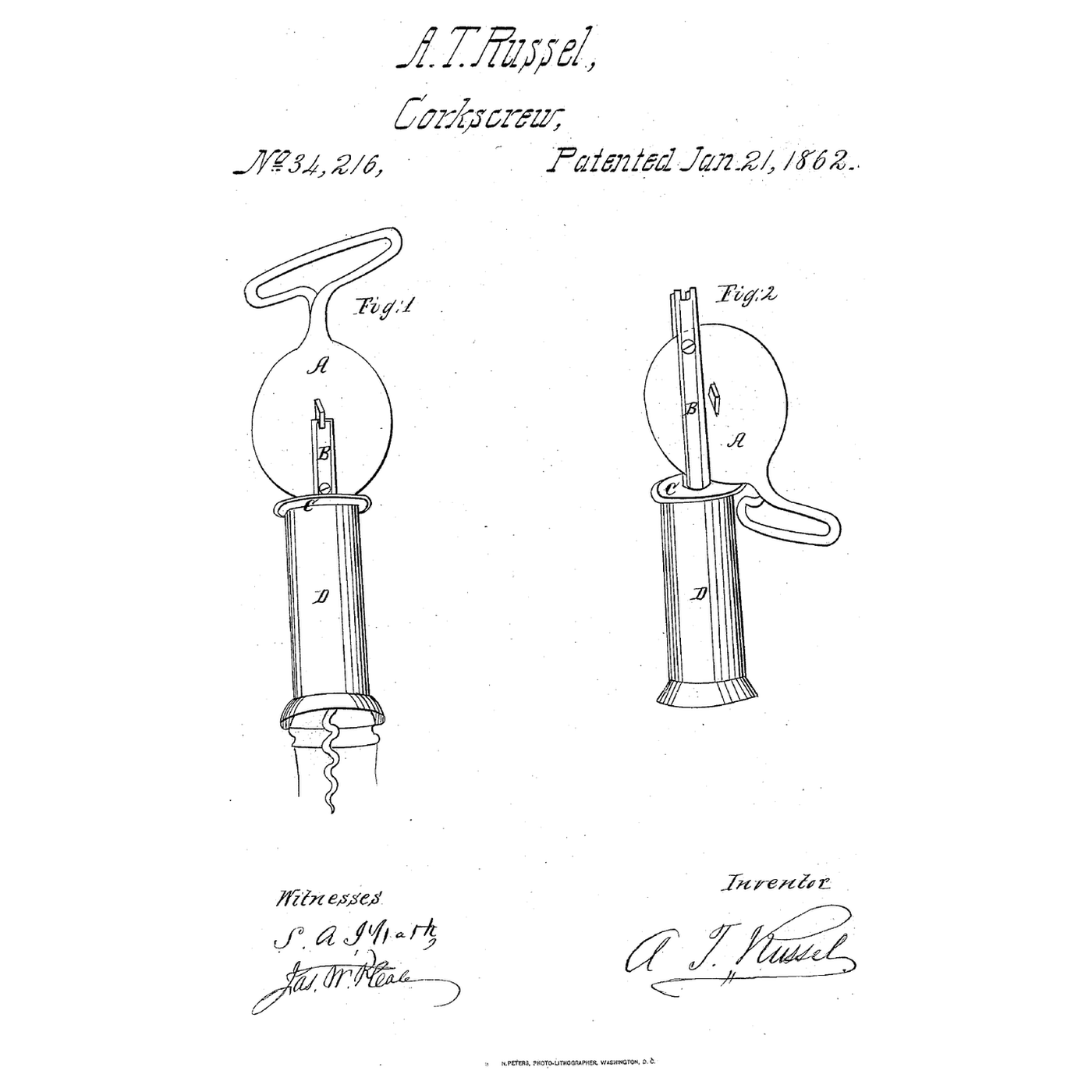

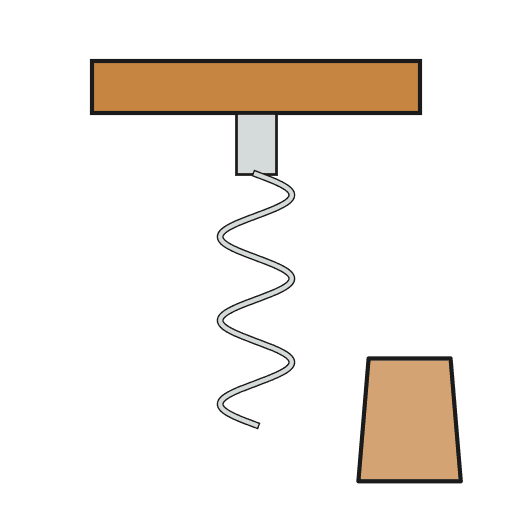
The Cam-Lever Corkscrew: Half a Turn of an Eccentric Lifts the Cork
Drawing a tight cork with a plain corkscrew takes a hard, steady pull with the bottle held between the knees.
Abraham T. Russel of New York received US 34,216, dated 21 January 1862, for a "Machine for Raising or Drawing Corks from Bottles": a cylinder whose head carries a piston, with a corkscrew fixed to the piston's lower end and a cam or eccentric pinned through the piston's slit top. The cylinder stands on the bottle, the screw is turned into the cork by the handle, and "By a half or part revolution of cam or eccentric the piston is raised with the corkscrew."
This rung works out the average lift of the cam, with a work check, then makes the cylinder, piston and eccentric and draws corks with it.
Nâng cao
About 5 hours
Hướng dẫn
1
1
The eccentric's lift
The eccentric's lift
Đang tải sổ tay Jupyter…
2
2
A corkscrew before it
A corkscrew before it
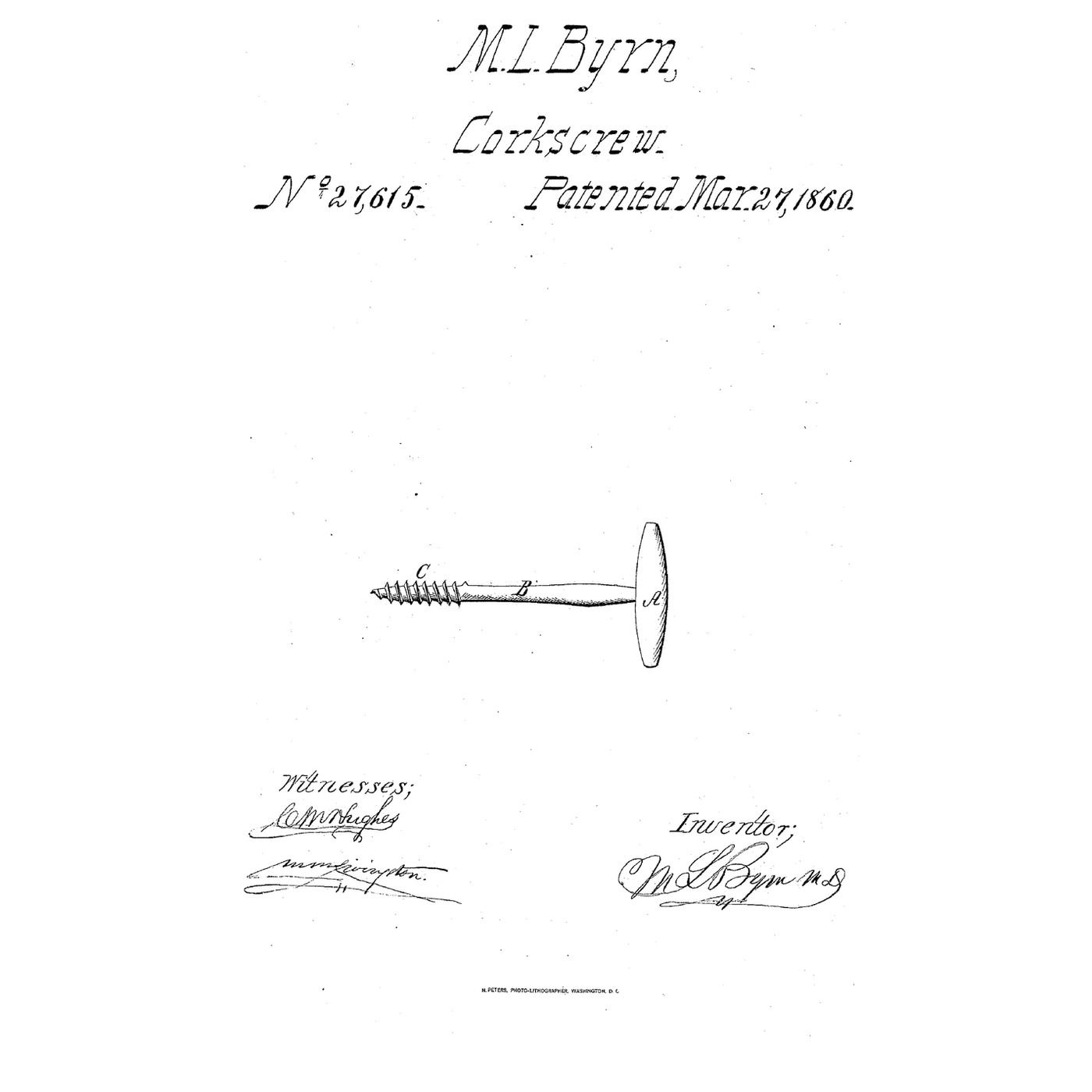
The embedded blueprint draws a cork with a strong screw and a T handle, by the arm's pull. Russel keeps a screw but lifts it with a cam, the cylinder bearing on the bottle.
3
3
Read US 34,216
Read US 34,216
"The machine is constructed of a cylinder with a head or cap through which passes a piston, to the lower end of which is secured a corkscrew. The upper end of the piston passes above the head or cap of the cylinder and is left free to turn and play up and down. To the upper part of piston is attached a cam or eccentric, which works through the upper part of said piston (being slit) resting on the cylinder head or cap, which is the bearing."
"It is operated by placing the lower end of the cylinder on the mouth of the bottle. The screw is then turned into the cork by the handle attached to the cam or eccentric, observing that the catch drops into the slots on the end of piston. The cam or eccentric is then turned with handle down, as in Fig. 2, which lifts or draws the cork out of the bottle."
4
4
Make the cam corkscrew and draw corks
Make the cam corkscrew and draw corks
**Cylinder.** Cut 12 cm of 30 mm aluminium tube and file its lower end to sit square on a bottle's mouth. Cut a hardwood disc to fit its top as the head, drill it for the piston and glue it in.
**Piston.** Cut 15 cm of 8 mm mild steel rod. Saw a 5 mm slit 3 cm deep into its top end and drill across the slit for the cam's pin.
**Screw.** Wind 2 mm steel wire into an open helix round a 6 mm rod, file its end to a point, and silver-solder its straight end into a hole drilled in the piston's lower end.
**Cam.** Cut a 5 mm disc of mild steel flat bar about 40 mm across, drill it 15 mm off centre for the pin, and rivet a flat-bar handle to its edge. Set it in the slit on a bolt, so its rim rests on the cylinder's head.
**Test.** Cork several bottles of water with the corking kit. Stand the cylinder on a bottle, turn the screw into the cork by the handle, then swing the handle down through half a turn, reading your push with the spring scale. Draw another cork with a plain corkscrew and the spring scale and compare.
Vật liệu cho bước này:
 Ống nhôm0.12 mét
 Khối gỗ cứng1 cái
 Keo dán gỗ1 cái
 Thanh thép mềm0.15 mét
 Dây thép0.4 mét
 Bộ que hàn bạc (mềm/vừa/cứng)1 cái
 Chất trợ chảy1 cái
 Thanh thép dẹt0.2 mét
 Bộ bu lông lục giác nhiều cỡ1 cái
 Đai ốc lục giác2 cái
 Chai thủy tinh (trong)4 cái
 Nút bần4 cái
 Nước3 lít
Công cụ cần thiết:
 Cưa sắt
 Giũa (giũa tay)
 Ê tô bàn nguội
 Đèn khò propan
 Máy khoan pin
 Bộ mũi khoan
 Búa
Búa Kìm mỏ tròn
 Bộ đóng nút chai rượu vang
 Lực kế (cân lò xo)
 Kính bảo hộ trong suốt
 Găng tay da bảo hộ
5
5
A cam corkscrew that jams, slips or lifts too little
A cam corkscrew that jams, slips or lifts too little
Cam-lever corkscrew troubleshooting.
Flow
Loading...
6
6
History and honest limits
History and honest limits
**Abraham T. Russel** of New York, New York, received US 34,216, dated 21 January 1862. His cam A worked in the slit top of the piston B, resting on the head C of the cylinder D, and a catch dropping into slots on the piston's end let the handle turn the screw in before the lift. His claim is the cam or eccentric and piston applied as leverage to corkscrews.
**Honest limits.** Aluminium tube, a steel rod and a flat-bar eccentric stand in for his made-up cylinder, piston and cam, and the catch is left out, so the pin turns the screw in. The notebook gives the average lift without friction; its forces and lengths are examples. Your drawn corks are the result.
Vật liệu
13- 0.12 métTạm thời
- 1 cáiTạm thời
- 1 cáiTạm thời
- 0.15 métTạm thời
- 0.4 métTạm thời
- Tạm thời
- 1 cáiTạm thời
- 0.2 métTạm thời
- Tạm thời
- 2 cáiTạm thời
- Tạm thời
- 4 cáiTạm thời
- 3 lítTạm thời
Công cụ yêu cầu
12- Tạm thời
- Tạm thời
- Tạm thời
- Tạm thời
- 1 vendor sell this, none ship to you yetTạm thời
- Tạm thời
- Tạm thời
- Tạm thời
- Tạm thời
- Tạm thời
- Tạm thời
- Tạm thời
Bản thiết kế này làm ra
Blueprint liên quan
Các blueprint này chia sẻ kiến thức — kỹ thuật, vật liệu hoặc nguyên tắc
The Gimlet Corkscrew: A Coarse Screw on a Solid Stem With a T Handle
bởi Forge
Gia công kim loại
36
0
0
0
0
0
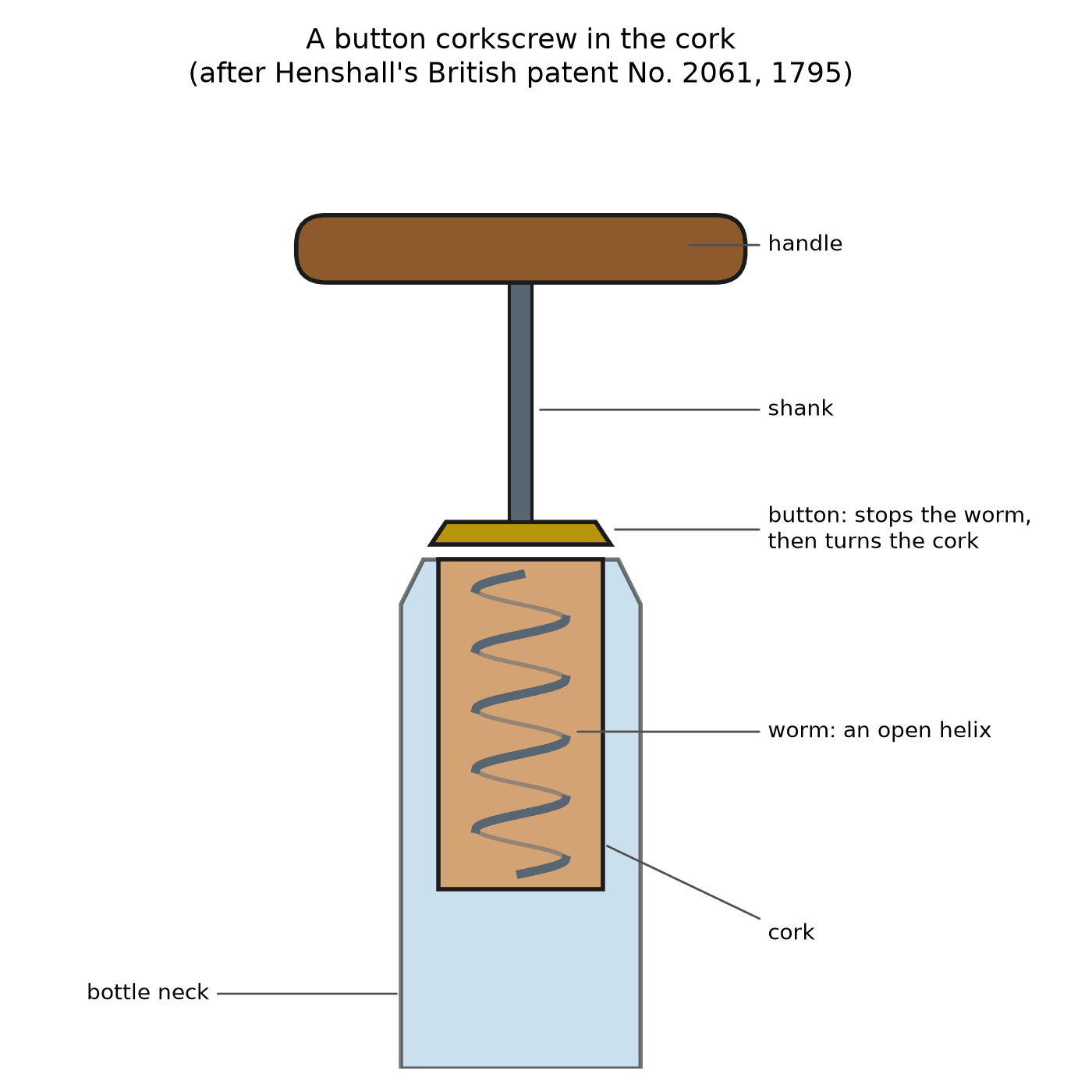
The Button Corkscrew: A Helix That Grips and a Disc That Stops It
bởi YourGrandma
THỰC PHẨM VÀ ĐỒ UỐNG
34
0
0
0
0
0

The Law of the Lever — Archimedes' Balance of Weight and Distance
bởi Martin
Vật lý học
60
0
0
0
1
0
CC0 Phạm vi công cộng
Bản thiết kế này được phát hành theo CC0. Bạn tự do sao chép, sửa đổi, phân phối và sử dụng cho bất kỳ mục đích nào mà không cần xin phép.
Hỗ trợ nhà sáng tạo bằng cách mua sản phẩm qua bản thiết kế, nơi họ nhận Hoa hồng nhà sáng tạo do nhà bán hàng đặt, hoặc tạo phiên bản mới và kết nối trong bản thiết kế riêng để chia sẻ doanh thu.