NGHỆ THUẬT
LÀM ĐẸP VÀ SỨC KHỎE
THỦ CÔNG
VĂN HÓA VÀ LỊCH SỬ
GIẢI TRÍ
MÔI TRƯỜNG
THỰC PHẨM VÀ ĐỒ UỐNG
KỸ THUẬT NGƯỢC
KHOA HỌC
THỂ THAO
CÔNG NGHỆ
THIẾT BỊ ĐEO
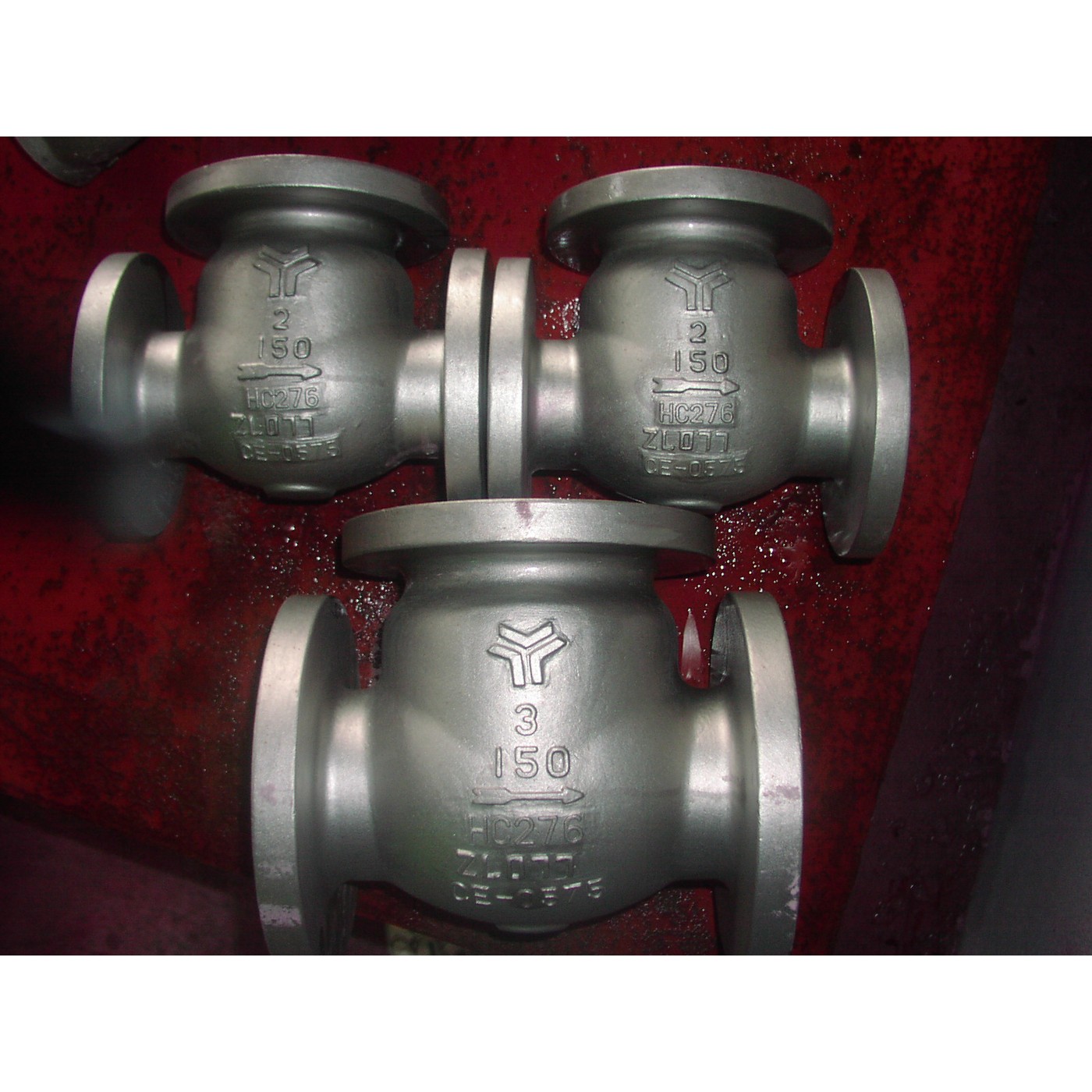


One Way Only: The Check Valve and the Bang It Makes
Every pump in the catalogue depends on one: Ctesibius' force pump has two, the hydraulic ram works by slamming one shut, and the backwater valve is one scaled up and buried. A check valve is the simplest active component in fluid power — it has no handle, no actuator and usually one moving part — and it is the one that most often causes a problem.
It has to open at almost no pressure, seal completely against reverse flow, and close at exactly the right moment. Close it too slowly and the flow reverses through it before it shuts; close it too fast and you stop a moving column of water dead, which generates a pressure spike four times your working pressure.
This rung builds one, measures its cracking pressure, and then makes the bang on purpose so the number stops being theoretical.
Trung cấp
About 3 hours
Hướng dẫn
1
1
Build three kinds and find their cracking pressure
Build three kinds and find their cracking pressure
Three geometries cover almost everything, and all three can be made or bought cheaply.
**A ball check.** A ball resting in a tapered seat. Flow lifts it, reverse flow drives it home. Make one: a short clear tube, a seat filed or turned into a fitting, a ball bearing or a glass marble, and a cross-pin above to stop the ball escaping. The clear tube is the whole point — you can watch it work.
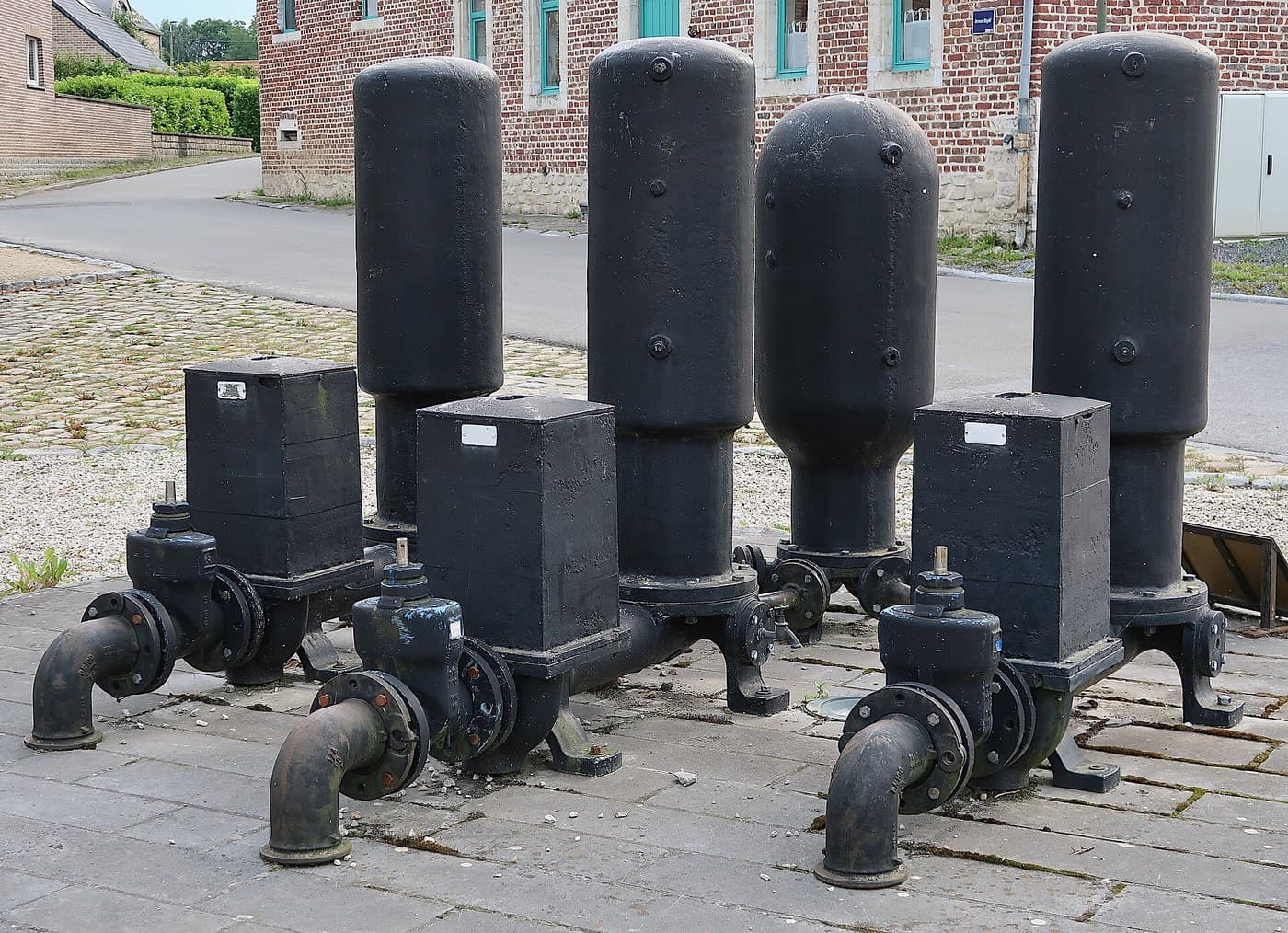
**A swing check.** A disc on a hinge at the top. It only has to *swing*, not lift, so it opens at almost nothing. The photograph on this page is three of these.
**A duckbill or flap.** A flat elastomer flap or a moulded rubber slit that pressure opens and back-pressure pinches shut. Cut one from silicone sheet and clamp it over a port.
Now measure **cracking pressure** for each. Stand the valve vertically with a clear tube above it, and add water slowly until flow just starts. The height of the column at that moment is the cracking pressure, in metres of water. Convert with 1 m ≈ 9.8 kPa.
You will find the ball check needs the most, the swing check far less, and the duckbill almost nothing. Step 4 shows why the numbers come out where they do — it is the closing element's own weight divided by the area it sits on, and geometry decides how much of that weight the flow has to lift.
Vật liệu cho bước này:
 Tấm cao su silicon1 cái
 Ống đồng Loại L 1/2"1 cái
 Bộ gioăng chữ O1 cái
Công cụ cần thiết:
 Van một chiều
 Ống silicon
 Ống đong chia vạch
 Ống thép mạ kẽm
 Ê tô bàn nguội
 Giũa (giũa tay)
 Dụng cụ gọt ba via
 Thước cặp điện tử 6 inch
 Đồng hồ bấm giờ
 Găng tay nitrile
 Kính bảo hộ trong suốt
2
2
Prove it leaks, and find out where
Prove it leaks, and find out where
A check valve that opens is only half a check valve. Test the other half.
Fit each valve **backwards** in a vertical clear tube, fill above it, and watch. Time how long a measured head takes to fall. A good valve holds indefinitely; a poor one weeps.
Then find out where it leaks, because there are only two places:
1. **Past the seat** — the sealing face is dirty, scored or not round. Clean it, look at it under the microscope, and try again. A single hair or a grain of grit across a seat will defeat it completely, which is why a check valve on a dirty system needs a strainer in front of it.
2. **Through the body** — a gasket or a threaded joint, not the valve function at all. Rung 7 covers that.
Now the important variation: test each valve **horizontally** as well as vertically. A ball check laid on its side loses the gravity that seats it and may not close at all. A swing check laid vertically with flow downward cannot close either — its disc hangs open.
**Orientation is part of the specification**, and this is the commonest way a correctly chosen check valve fails in service: somebody fitted it the way it fitted.
Công cụ cần thiết:
Van một chiềuỐng siliconỐng đong chia vạch Kính hiển vi sốĐồng hồ bấm giờ
 XôGăng tay nitrileKính bảo hộ trong suốt
3
3
Make the bang
Make the bang
Water hammer is the reason check valves are specified with such care, and hearing it once teaches more than the arithmetic.
Run a length of **rigid** pipe — copper or steel, not soft hose, because a flexible hose absorbs the surge and hides the effect — from a tap, through the valve, to an open end. Get a good flow going, then shut the tap **as fast as you can**.
You will hear and feel a knock through the pipe. That is a pressure wave travelling at about 1,200 m/s, reflecting off the closed end and coming back. Step 4 computes its magnitude: at two metres a second it is around twenty-four bar, four times a domestic system's working pressure.
Now do three things that change it, and note which help:
- **Close slowly.** The surge falls away almost completely. Stopping the column gradually never stores the energy in the first place.
- **Shorten the pipe.** The knock gets sharper and higher-pitched — the wave's round trip is shorter — but the peak pressure is unchanged, because the Joukowsky pressure does not depend on length at all. Only the *duration* does.
- **Add a cushion.** Cap a short vertical stub off the line and leave air trapped in it. The surge nearly disappears. That is an arrestor, and it is the same trick as the catalogue's hydraulic accumulator.
Keep the pressure domestic, use rigid pipe rated for it, secure every joint, and wear eye protection. A fitting that lets go under a surge does so without warning.
Vật liệu cho bước này:
Ống đồng Loại L 1/2"2 cái Băng làm kín ren PTFE1 cái
Công cụ cần thiết:
Van một chiều Đồng hồ áp suấtỐng thép mạ kẽm
 Phụ kiện ống ren
 Mỏ lết răng
 Mỏ lếtXôKính bảo hộ trong suốtGăng tay nitrile
4
4
Cracking pressure, and the size of the surge
Cracking pressure, and the size of the surge
Đang tải sổ tay Jupyter…
5
5
History and context
History and context
**Attribution, stated honestly.** No patent is claimed. The check valve is among the oldest machine elements there is: Ctesibius' force pump of the third century BC — already in the catalogue — has two of them, and they are the reason it works at all. A pump without check valves is a device for pushing water back and forth.
**Why it is the quiet foundation of fluid power.** Every positive-displacement pump, every compressor, every hydraulic circuit and every heart contains them. The hydraulic ram in the catalogue is the extreme case: it does not merely tolerate water hammer, it is **powered by** it, using the surge from one slamming check valve to lift water far above its source. The same phenomenon that bursts a domestic pipe is that machine's entire operating principle.
**The idea to keep.** A check valve is a component with no input but the flow itself — it decides what to do from the thing it is controlling. That class of device, where the controlled quantity is also the control signal, keeps recurring: the governor, the thermostat, the float valve, the pressure regulator two rungs from here. They are cheap, they need no power, and they fail in ways that are hard to see because nothing is instrumented.
**Honest limits.** Orientation matters and is frequently got wrong. Every check valve is a restriction even when fully open — step 4 of rung 1 puts a swing check at twenty times a ball valve's resistance. They are intolerant of dirt, because a single particle across the seat defeats them completely. And the slam problem has no free fix: a valve that closes fast enough to prevent reverse flow is a valve that closes fast enough to cause a surge, so the engineering is always a compromise between the two rather than a solution to either.
Vật liệu
4- 1 cáiTạm thời
- 2 cáiTạm thời
- 1 cáiTạm thời
- Tạm thời
Công cụ yêu cầu
17- Tạm thời
- Tạm thời
- Tạm thời
- Tạm thời
- Tạm thời
- Tạm thời
- Tạm thời
- Tạm thời
- Tạm thời
- Tạm thời
- Tạm thời
- Tạm thời
- Tạm thời
- Tạm thời
- Tạm thời
- Tạm thời
- Tạm thời
Blueprint liên quan
Các blueprint này chia sẻ kiến thức — kỹ thuật, vật liệu hoặc nguyên tắc

CC0 Phạm vi công cộng
Bản thiết kế này được phát hành theo CC0. Bạn tự do sao chép, sửa đổi, phân phối và sử dụng cho bất kỳ mục đích nào mà không cần xin phép.
Hỗ trợ nhà sáng tạo bằng cách mua sản phẩm qua bản thiết kế, nơi họ nhận Hoa hồng nhà sáng tạo do nhà bán hàng đặt, hoặc tạo phiên bản mới và kết nối trong bản thiết kế riêng để chia sẻ doanh thu.