NGHỆ THUẬT
LÀM ĐẸP VÀ SỨC KHỎE
THỦ CÔNG
VĂN HÓA VÀ LỊCH SỬ
GIẢI TRÍ
MÔI TRƯỜNG
THỰC PHẨM VÀ ĐỒ UỐNG
KỸ THUẬT NGƯỢC
KHOA HỌC
THỂ THAO
CÔNG NGHỆ
THIẾT BỊ ĐEO
The Incandescent Lamp: High Resistance, and a Vacuum
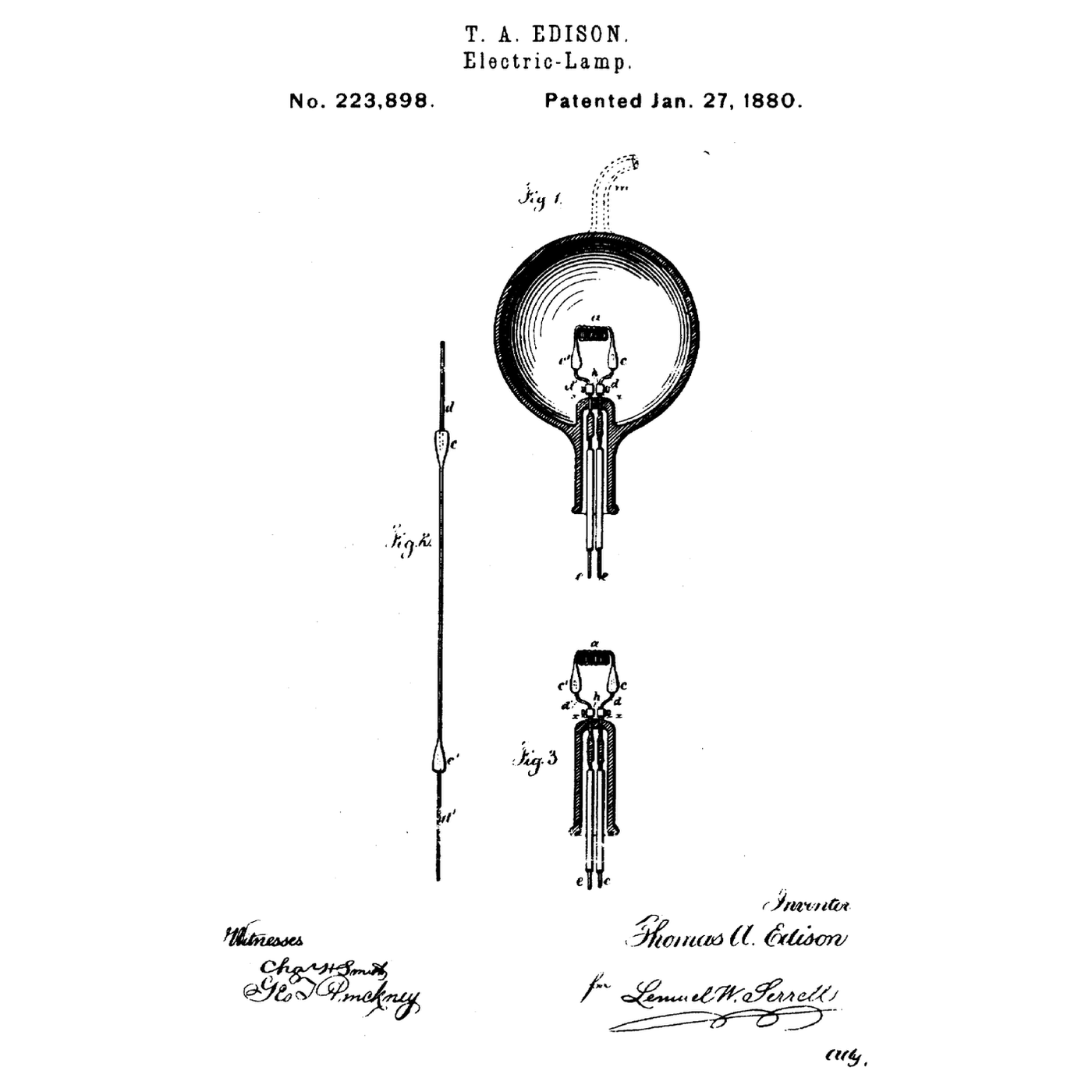
Many inventors made a wire or a carbon rod glow in a bulb. Thomas Edison's lamp of 1879–80 was designed backwards from the wiring: to light a city with lamps connected in parallel, each lamp needed a HIGH resistance, or the copper mains would have to be absurdly thick. His patent describes a thin carbon filament — even *"a cotton thread properly carbonized"* — in a glass bulb pumped down to one-millionth of an atmosphere, offering a hundred ohms or more and stable at white heat.
This rung works out the copper argument from his own figures and makes a carbonised-thread lamp in an evacuated jar to see why the vacuum matters.
Trung cấp
About 5 hours
Hướng dẫn
1
1
The copper argument
The copper argument
Đang tải sổ tay Jupyter…
2
2
Carbonise a cotton thread
Carbonise a cotton thread
Pack a few 30 mm lengths of cotton thread, stretched straight between two small copper wire loops, in graphite powder inside a small steel tin with a pinhole in the lid. Heat the tin outdoors with the propane torch until it glows red, and hold it there for twenty minutes — cellulose only turns into a well-conducting carbon at red heat. Let it cool completely before opening: air reaching hot carbon burns it.
The threads come out black, brittle and conducting. Measure one with the multimeter and compare with Edison's hundreds of ohms; a poorly heated thread reads far higher. Handle them with tweezers; they snap at a touch.
Vật liệu cho bước này:
 Chỉ cô tông1 cuộn
 Bột than chì50 g
 Dây đồng1 mét
Công cụ cần thiết:
 Đèn khò propan
 Đồng hồ vạn năng
 Găng tay da bảo hộ
 Kính bảo hộ trong suốt
3
3
Light it in air, then in a vacuum
Light it in air, then in a vacuum
Clamp one filament between two stiff copper wires passed through the lid of a thick glass jar and sealed with epoxy or silicone. In AIR, with the lid off, connect it briefly across a 12 V battery through a series resistor: it glows red for a moment and burns through.
Mount a fresh filament, close the jar, and pump it down with the vacuum pump through a fitting in the lid. Connect the battery again: the filament glows and lasts far longer, because there is almost no oxygen left to burn it. Your pump will not reach Edison's one-millionth of an atmosphere; the difference is still obvious.
Stand the jar behind a clear shield and wear goggles: an evacuated jar can implode.
Vật liệu cho bước này:
 Lọ thuỷ tinh1 cái
 Keo silicon1 cáiDây đồng1 mét
 Bộ điện trở1 bộ
Công cụ cần thiết:
 Bơm chân không
 Ắc quy chu kỳ sâu 12 VĐồng hồ vạn năngKính bảo hộ trong suốtGăng tay da bảo hộ
4
4
History and context
History and context
**US 223,898, 'Electric-Lamp', Thomas A. Edison, patented 27 January 1880.** The specification reports carbonising *"cotton and linen thread, wood splints, papers coiled in various ways"*; carbonised bamboo became the production filament soon after. Joseph Swan in England had been developing carbon lamps in parallel, and the two later merged their British interests.
Edison's lamp came with a whole system — parallel distribution, meters, fuses, generators — which is what made it change cities.
**Honest limits.** A carbon-filament lamp turns only a few per cent of its power into light; the rest is heat. The filament evaporates and blackens the bulb. Tungsten filaments, gas filling and later LEDs each improved on it many times over.
Vật liệu
6- 1 cuộnTạm thời
- 50 gTạm thời
- 2 métTạm thời
- 1 cáiTạm thời
- 1 cáiTạm thời
- từ$5.64
Công cụ yêu cầu
6- Tạm thời
- Tạm thời
- Tạm thời
- Tạm thời
- Bơm chân khôngHoa hồng 10%Magento Legacy Storeships internationallyTạm thời
- Ắc quy chu kỳ sâu 12 VHoa hồng 10%Tạm thời
Blueprint liên quan
Các blueprint này chia sẻ kiến thức — kỹ thuật, vật liệu hoặc nguyên tắc
Nguy hiểm
Sprengel Mercury Pump
bởi Charlie
CÔNG NGHỆ
34
0
0
0
0
0
Rotary Vane Vacuum Pump
bởi Emma
CÔNG NGHỆ
40
0
0
0
0
0
The Arc Lamp: Burning Carbons and Keeping the Gap
bởi Volt
Điện tử
4
0
0
0
0
0

Ohm's Law at the Bench: Picking the Resistor That Saves the LED
bởi Volt
Điện tử
23
0
0
0
0
0
The Fuse Protects the Wire, Not the Thing You Plugged In
bởi Volt
CÔNG NGHỆ
25
0
0
0
0
0
The Gramme Ring: A Continuous Winding for Steady Current
bởi Volt
Điện tử
2
0
0
0
0
0
CC0 Phạm vi công cộng
Bản thiết kế này được phát hành theo CC0. Bạn tự do sao chép, sửa đổi, phân phối và sử dụng cho bất kỳ mục đích nào mà không cần xin phép.
Hỗ trợ nhà sáng tạo bằng cách mua sản phẩm qua bản thiết kế, nơi họ nhận Hoa hồng nhà sáng tạo do nhà bán hàng đặt, hoặc tạo phiên bản mới và kết nối trong bản thiết kế riêng để chia sẻ doanh thu.