NGHỆ THUẬT
LÀM ĐẸP VÀ SỨC KHỎE
THỦ CÔNG
VĂN HÓA VÀ LỊCH SỬ
GIẢI TRÍ
MÔI TRƯỜNG
THỰC PHẨM VÀ ĐỒ UỐNG
KỸ THUẬT NGƯỢC
KHOA HỌC
THỂ THAO
CÔNG NGHỆ
THIẾT BỊ ĐEO
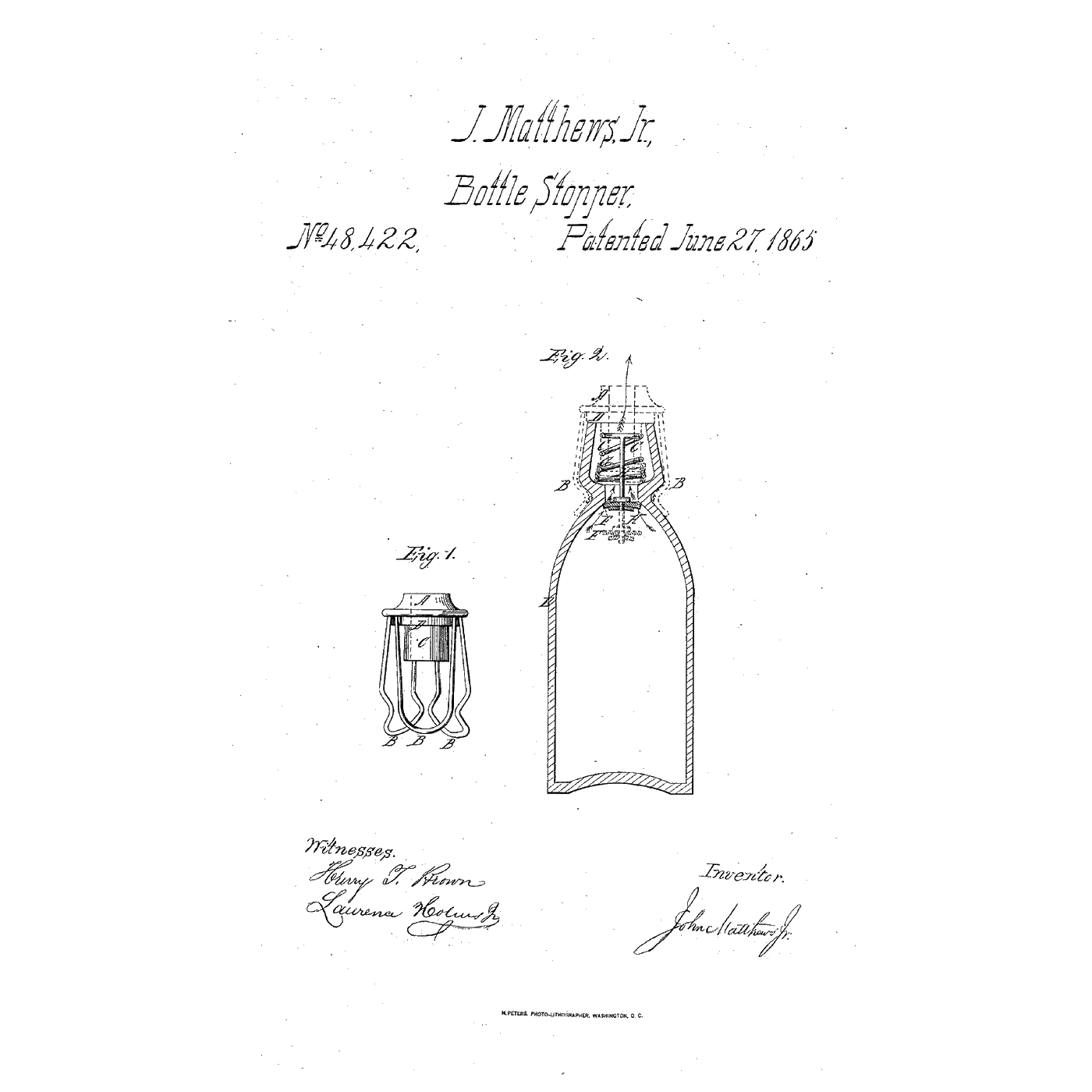


The Inner-Valve Bottle Opener: A Tube That Holds the Valve Open and Clasps That Hold the Tube
A bottle closed by a valve on the inside keeps its gas until something pushes the valve in, and a finger or a stick pushed down the neck has to stay there while the drink is poured past it.
John Matthews, Jr., of New York received US 48,422, dated 27 June 1865, for an instrument "to provide for the opening of such stoppers as are applied within bottles or other vessels and closed from the inside either by means of a spring or by the pressure of the gas evolved from the liquid contents of the vessel or with which the said contents have been mechanically charged, or by any other means." A cap carries a hollow tube of vulcanized india-rubber or gutta-percha that enters the neck and holds the valve open, a soft-rubber packing ring that seals against the mouth, and spring clasps that snap into a groove round the neck and hold it there while the liquid runs out through the tube.
This rung works out the push needed to open an inner valve, then makes the instrument from a tin lid, spring steel and rubber and tries it on a pressurised bottle closed by a tyre valve, which also opens inward.
Trung cấp
About 3 hours
Hướng dẫn
1
1
The push that opens the valve
The push that opens the valve
Đang tải sổ tay Jupyter…
2
2
Where the tube and the packing ring come from
Where the tube and the packing ring come from
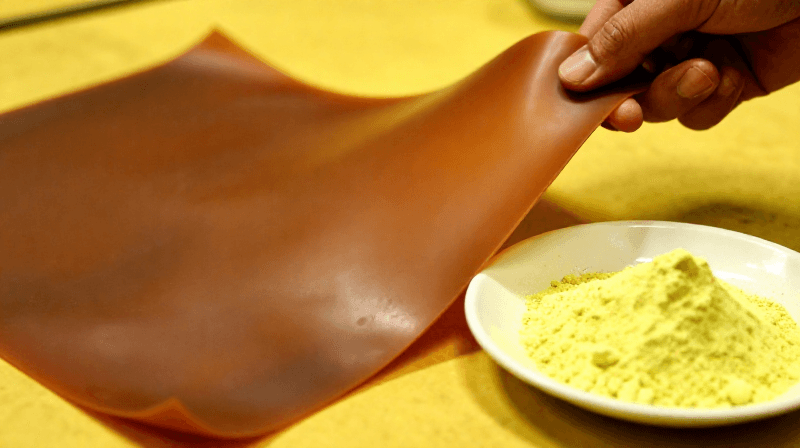
The embedded blueprint vulcanizes rubber. Matthews made the tube of vulcanized india-rubber or gutta-percha and sealed the mouth with a soft-rubber packing ring.
3
3
Read US 48,422
Read US 48,422
"The invention consists of a tube or other device of suitable size and form to enter the mouth of the bottle or other vessel and press the stopper inward away from its seat without interfering materially with the ingress or egress of the liquid, and one or more attached clasps or other devices to operate against the exterior of the bottle or other vessel in such manner as to serve both as a guide to keep the tube or other internally-acting device in place and as a means of holding it against the pressure by which the stopper is closed when the opening-instrument is removed from the bottle or vessel."
"In order to open a bottle closed by an inwardly-opening valve, such as is represented in section in Fig. 2, the instrument—the cap being uppermost—is forced downward over the neck of the bottle E, the clasps, clips, or springs B B B spring apart until they clear the upper portion of the neck of the bottle, and the portions of the springs which are bent toward the center enter the depression s of the bottle's neck and hold the valve F open by the hollow center pushing against the helical spring G′, which is fastened to the valve-stem H."
4
4
Make the instrument and open a pressurised bottle
Make the instrument and open a pressurised bottle
**Test bottle.** Drill the cap of a clean carbonated-drink PET bottle to take a snap-in tyre valve and pull the valve through from the inside so its rubber seals the hole. Half fill the bottle with water, screw the cap on and pump it to 2 bar with the floor pump, reading its gauge. The valve's spring and the air hold it shut from the inside, as Matthews' valve F was held.
**Cap and tube.** Cut a disc from a tin can's lid a little wider than the bottle cap and drill a hole in its centre. Cut 2 cm of aluminium tube that fits loosely over the valve's stem, file a notch across its end so the air and water can pass the valve pin, and fix it through the disc with epoxy, notched end out.
**Packing ring.** Cut a ring of rubber sheet to fit round the tube against the disc, where the tube will seal against the valve's mouth.
**Clasps.** Cut three strips of spring steel 6 cm long, bend the last centimetre of each inward as a hook, and rivet them round the disc's edge so the hooks spring over the bottle cap and catch beneath its lower edge.
**Test.** Measure the push needed to open the valve with the spring scale pressing the tube. Then, over a sink, hold the bottle upside down and push the instrument onto it until the clasps catch: the water runs out through the tube. Pull it off and the valve shuts again.
Vật liệu cho bước này:
 Chai PET (nước có ga)1 cái
 Van lốp1 cái
 Lon thiếc1 cái
 Ống nhôm0.02 mét
 Tấm cao su1 cái
 Băng thép lò xo0.2 mét
 Đinh tán rút3 cái
 Keo epoxy hai thành phần1 cái
 Nước0.5 lít
Công cụ cần thiết:
 Bơm đứng cho xe đạp
 Máy khoan pin
 Bộ mũi khoan
 Kéo cắt tôn
 Cưa sắt
 Giũa (giũa tay)
 Kìm mỏ dẹt
 Bộ súng tán đinh rút
 Dao bếp
 Lực kế (cân lò xo)
 Kính bảo hộ trong suốt
 Găng tay da bảo hộ
5
5
An opener that leaks, slips or will not open the valve
An opener that leaks, slips or will not open the valve
Inner-valve bottle opener troubleshooting.
Flow
Loading...
6
6
History and honest limits
History and honest limits
**John Matthews, Jr.,** of New York, New York, received US 48,422, dated 27 June 1865. His cap A carried the tube C, the springs B B B were of wire or steel plate, the packing ring D made a water-tight joint at the mouth, and the springs caught in a depression s round the bottle's neck. The same instrument let an empty bottle be filled through the valve.
**Honest limits.** A PET bottle, a tyre valve and a tin-lid cap stand in for his glass bottle with its inner valve and his metal cap; the clasps catch under the screw cap rather than in a groove in the glass. The notebook ignores friction; its pressures, seat sizes and spring force are examples. Your push and pour are the result.
Vật liệu
9- Tạm thời
- 1 cáiTạm thời
- 1 cáiTạm thời
- 0.02 métTạm thời
- 1 cáiTạm thời
- 0.2 métTạm thời
- 3 cáiTạm thời
- Tạm thời
- 0.5 lítTạm thời
Công cụ yêu cầu
12- Tạm thời
- 1 vendor sell this, none ship to you yetTạm thời
- Tạm thời
- Tạm thời
- Tạm thời
- Tạm thời
- Tạm thời
- Tạm thời
- Tạm thời
- Tạm thời
- Tạm thời
- Tạm thời
Bản thiết kế này làm ra

Blueprint liên quan
Các blueprint này chia sẻ kiến thức — kỹ thuật, vật liệu hoặc nguyên tắc


CC0 Phạm vi công cộng
Bản thiết kế này được phát hành theo CC0. Bạn tự do sao chép, sửa đổi, phân phối và sử dụng cho bất kỳ mục đích nào mà không cần xin phép.
Hỗ trợ nhà sáng tạo bằng cách mua sản phẩm qua bản thiết kế, nơi họ nhận Hoa hồng nhà sáng tạo do nhà bán hàng đặt, hoặc tạo phiên bản mới và kết nối trong bản thiết kế riêng để chia sẻ doanh thu.