NGHỆ THUẬT
LÀM ĐẸP VÀ SỨC KHỎE
THỦ CÔNG
VĂN HÓA VÀ LỊCH SỬ
GIẢI TRÍ
MÔI TRƯỜNG
THỰC PHẨM VÀ ĐỒ UỐNG
KỸ THUẬT NGƯỢC
KHOA HỌC
THỂ THAO
CÔNG NGHỆ
THIẾT BỊ ĐEO
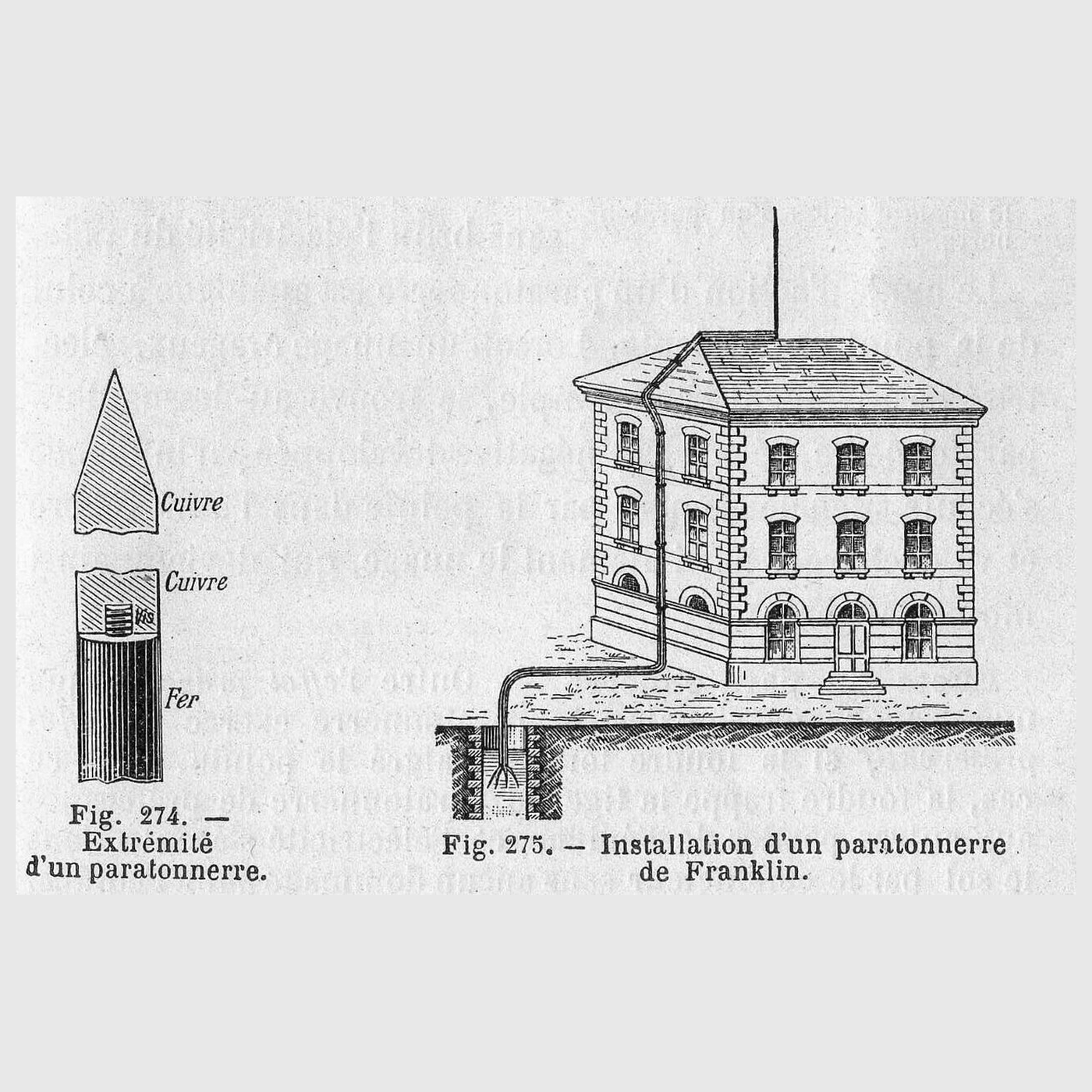


The Lightning Rod: Give the Strike a Path That Survives It
Benjamin Franklin proposed in 1750 that a pointed iron rod on a building, connected by a wire to the ground, would protect it from lightning; by 1752 rods were being put up. He took out no patent on it, or on any of his inventions.
A rod does not stop lightning. It gives the strike a place to land that is not the roof, and a path to earth thick enough to carry tens of thousands of amperes without melting. The sharp point — which Franklin showed would quietly draw charge off a conductor — matters much less than the thickness of the wire and the quality of the earth.
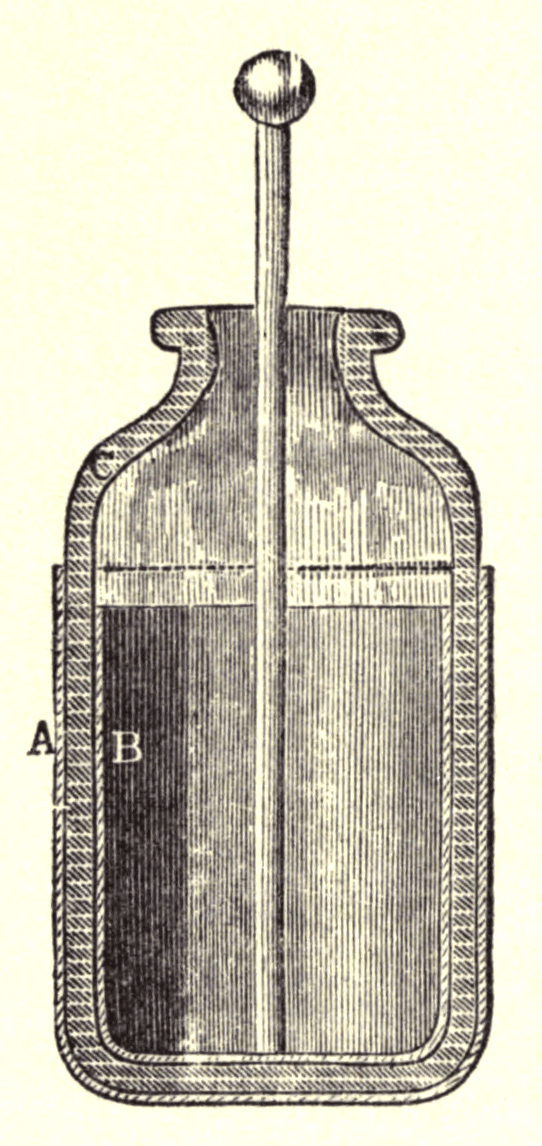
This rung works out both, and repeats Franklin's point-discharge experiment on a charged Leyden jar.
Cơ bản
About 2 hours
Hướng dẫn
1
1
The power of points, and the size of the conductor
The power of points, and the size of the conductor
Đang tải sổ tay Jupyter…
2
2
Charge a Leyden jar to test points
Charge a Leyden jar to test points
Franklin's experiments used a charged conductor and a Leyden jar. The embedded blueprint builds and charges one; the next step uses it.
3
3
Repeat Franklin's point-discharge experiment
Repeat Franklin's point-discharge experiment
Charge the Leyden jar. Bring a smooth ball — a metal ball on an insulated handle — slowly towards its terminal: nothing happens until it is close, then a single sharp spark jumps.
Charge the jar again and bring a needle, held on an insulated handle and wired to earth, slowly towards it, point first. In the dark you may see a faint glow at the point and hear a hiss; there is no big spark, and when you then test the jar with the ball, it is nearly discharged. The point drew the charge off quietly.
That is the 'power of points' Franklin reported. A modern rod works mainly by where it stands and how well it is earthed; the notebook shows why the wire matters more.
Vật liệu cho bước này:
 Dây đồng1 mét
Công cụ cần thiết:
 Dây thử có kẹp cá sấu
 Găng tay da bảo hộ
4
4
History and context
History and context
**Benjamin Franklin** proposed the pointed, earthed rod in a letter of 1750 and published it in *Poor Richard's Almanack* for 1753; rods were in use from 1752. No patent exists — Franklin declined to patent any of his inventions.
Modern lightning protection (IEC 62305 and its equivalents) keeps his three parts — air terminals, down-conductors, earth electrodes — and sizes them from the stroke statistics the notebook uses.
**Honest limits.** A rod protects a zone, not a whole landscape. It does not prevent surges entering along wires and pipes, which need their own protection. And it is only as good as its earth connection and its joints. **Never experiment with atmospheric electricity** — Georg Richmann was killed in 1753 repeating Franklin's experiment.
Công cụ yêu cầu
2- Tạm thời
- Tạm thời
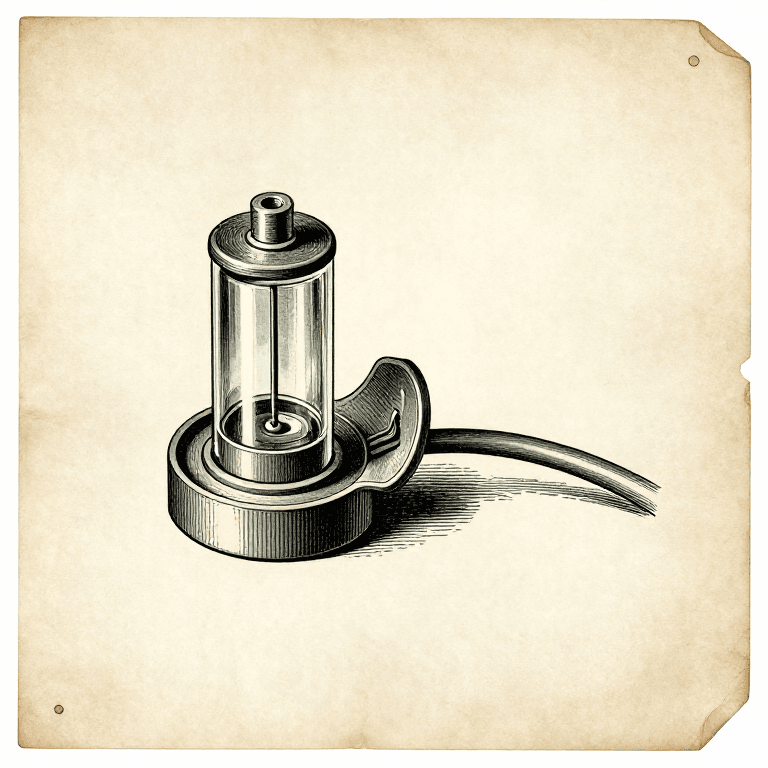
Blueprint liên quan
Các blueprint này chia sẻ kiến thức — kỹ thuật, vật liệu hoặc nguyên tắc


CC0 Phạm vi công cộng
Bản thiết kế này được phát hành theo CC0. Bạn tự do sao chép, sửa đổi, phân phối và sử dụng cho bất kỳ mục đích nào mà không cần xin phép.
Hỗ trợ nhà sáng tạo bằng cách mua sản phẩm qua bản thiết kế, nơi họ nhận Hoa hồng nhà sáng tạo do nhà bán hàng đặt, hoặc tạo phiên bản mới và kết nối trong bản thiết kế riêng để chia sẻ doanh thu.