NGHỆ THUẬT
LÀM ĐẸP VÀ SỨC KHỎE
THỦ CÔNG
VĂN HÓA VÀ LỊCH SỬ
GIẢI TRÍ
MÔI TRƯỜNG
THỰC PHẨM VÀ ĐỒ UỐNG
KỸ THUẬT NGƯỢC
KHOA HỌC
THỂ THAO
CÔNG NGHỆ
THIẾT BỊ ĐEO
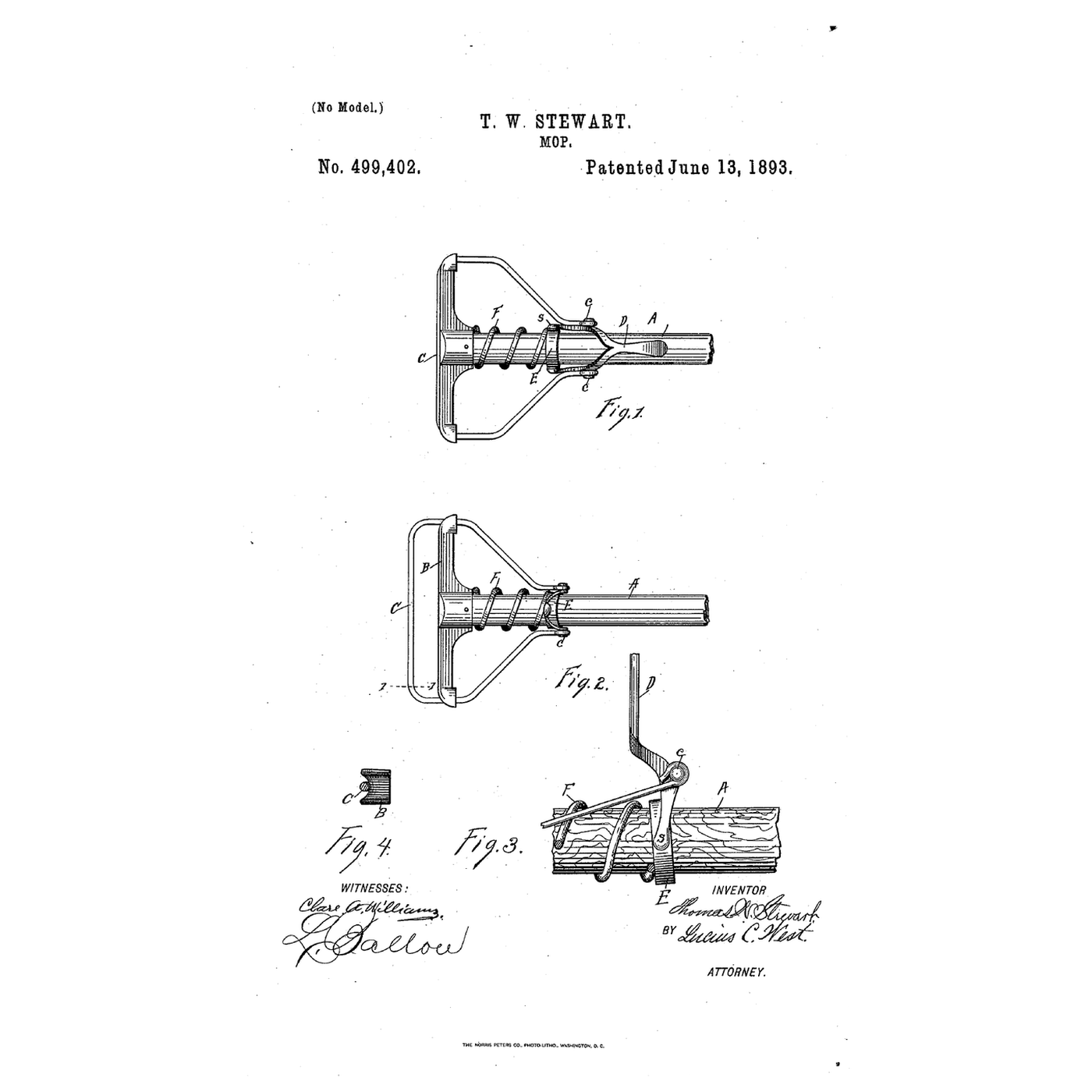


The Locking Mop Clamp: A Spring and an Over-Centre Lever
Mop rags tied or nailed to a stick are slow to change and fall off when wet and heavy.
Thomas W. Stewart of Detroit, Michigan, received US 499,402, dated 13 June 1893 (filed 26 September 1892), for a mop whose rags are held between a T-head and a rod, drawn tight by a lever against a spiral spring. When the lever is thrown back, its pivots pass "a little below the horizontal plane" of the others, "thus locking the clamp".
This rung works out why a lever just past centre holds itself shut, then builds the clamp on a mop stick and measures its grip.
Trung cấp
About 3 hours
Hướng dẫn
1
1
Hand force near dead centre
Hand force near dead centre
Đang tải sổ tay Jupyter…
2
2
A lever that stays where it is left
A lever that stays where it is left
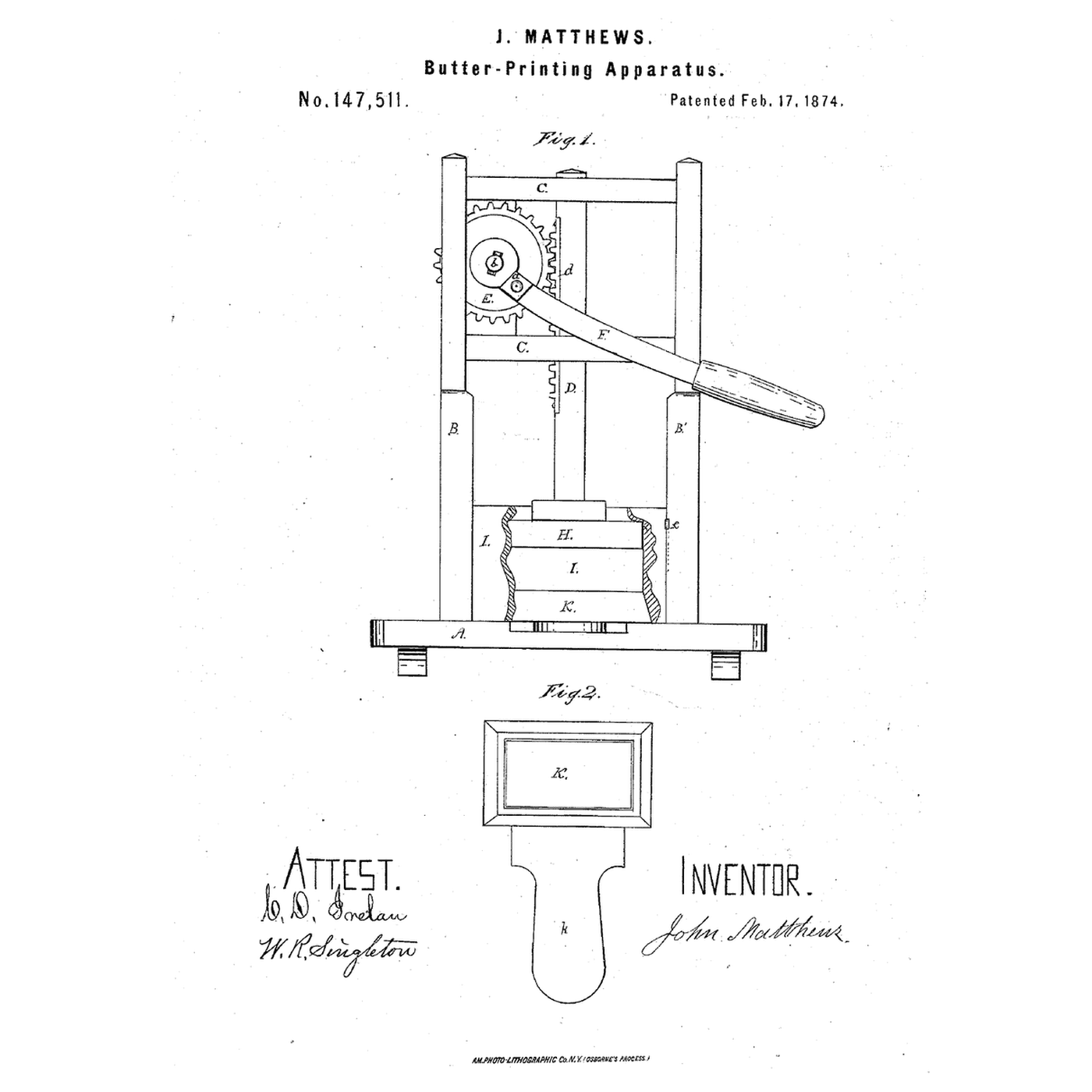
The embedded blueprint's lever holds the follower up once it passes the perpendicular. Stewart's lever uses the same dead centre to hold the clamp shut.
3
3
Read US 499,402
Read US 499,402
"Between the ring E and the T-head B, is a spiral spring, F, the expansive tendency of which holds the clamp firmly closed, as in the position shown in Fig. 1, when the lever D is thrown back."
"In the operation the rags, not here shown, are placed in the clamp, and since the ends of the rod C are pivoted between the ends of the lever D, the lever when carried back against the stick exerts a leverage on the rod C and compresses the spring F, thus firmly holding the rags, during which action the pivotal points c are carried a little below the horizontal plane of the pivoted ends s, of the lever D, thus locking the clamp."
4
4
Build the clamp and measure its grip
Build the clamp and measure its grip
Screw a hardwood cross-piece across the end of a broom handle as the T-head, with a groove in each end. Bend steel wire into the clamp rod: straight across the T-head, then back through the grooves to meet at the handle.
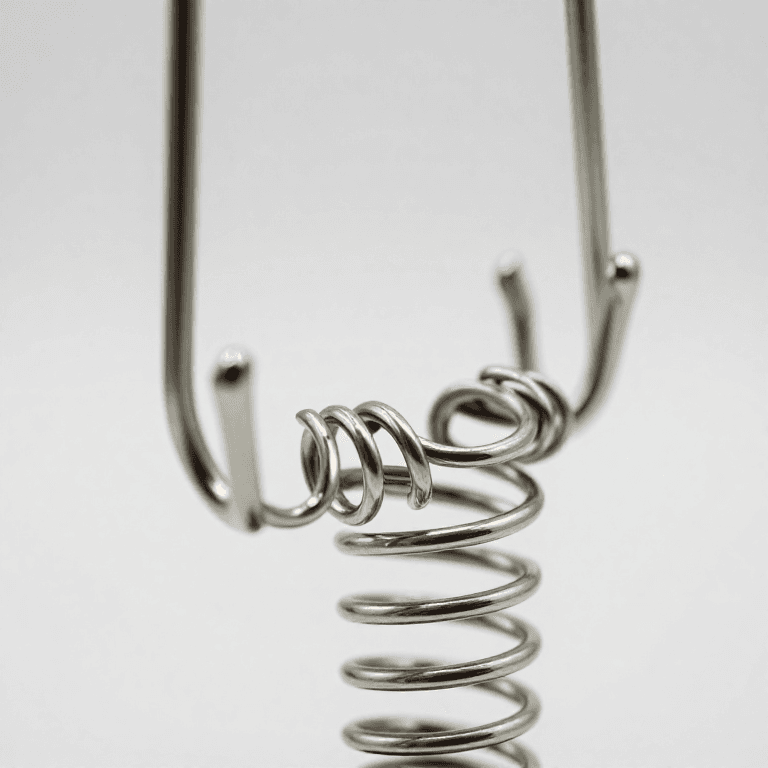
Slide a loose wooden ring or a short tube onto the handle, with a spring from the assortment between it and the T-head. Make a small lever from hardwood, pivot its forked end to the ring, and pin the rod's ends to it a little forward of that pivot.
Lay rags in the clamp and throw the lever back until it snaps past centre. Pull the rags with the force meter to measure the grip, then mop a floor. Compare with the notebook.
Vật liệu cho bước này:
 Tấm gỗ cứng1 cái
 Dây thép1 cái
 Bộ lò xo nén nhiều cỡ1 cái
 Vít gỗ6 cái
 Giẻ bông1 cái
Công cụ cần thiết:
 Cây lau nhà
 Chổi
Chổi Kìm mỏ nhọn
 Máy khoan pin
 Cưa tay
 Lực kế (cân lò xo)
 Xô
Xô5
5
A mop clamp that springs open, slips or will not close
A mop clamp that springs open, slips or will not close
Mop clamp troubleshooting.
Flow
Loading...
6
6
History and honest limits
History and honest limits
**Thomas W. Stewart** of Detroit, Wayne County, Michigan, filed US 499,402 on 26 September 1892; it is dated 13 June 1893. The patent is a clamp for holding the rags; it describes no wringer.
**Honest limits.** The notebook treats the linkage as an ideal toggle and the spring force as constant near centre, and ignores friction. Spring rate, compression and sizes are examples. Your force-meter reading is the measurement.
Vật liệu
5- 1 cáiTạm thời
- 1 cáiTạm thời
- Tạm thời
- 6 cáiTạm thời
- 1 cáiTạm thời
Blueprint liên quan
Các blueprint này chia sẻ kiến thức — kỹ thuật, vật liệu hoặc nguyên tắc


CC0 Phạm vi công cộng
Bản thiết kế này được phát hành theo CC0. Bạn tự do sao chép, sửa đổi, phân phối và sử dụng cho bất kỳ mục đích nào mà không cần xin phép.
Hỗ trợ nhà sáng tạo bằng cách mua sản phẩm qua bản thiết kế, nơi họ nhận Hoa hồng nhà sáng tạo do nhà bán hàng đặt, hoặc tạo phiên bản mới và kết nối trong bản thiết kế riêng để chia sẻ doanh thu.