NGHỆ THUẬT
LÀM ĐẸP VÀ SỨC KHỎE
THỦ CÔNG
VĂN HÓA VÀ LỊCH SỬ
GIẢI TRÍ
MÔI TRƯỜNG
THỰC PHẨM VÀ ĐỒ UỐNG
KỸ THUẬT NGƯỢC
KHOA HỌC
THỂ THAO
CÔNG NGHỆ
THIẾT BỊ ĐEO
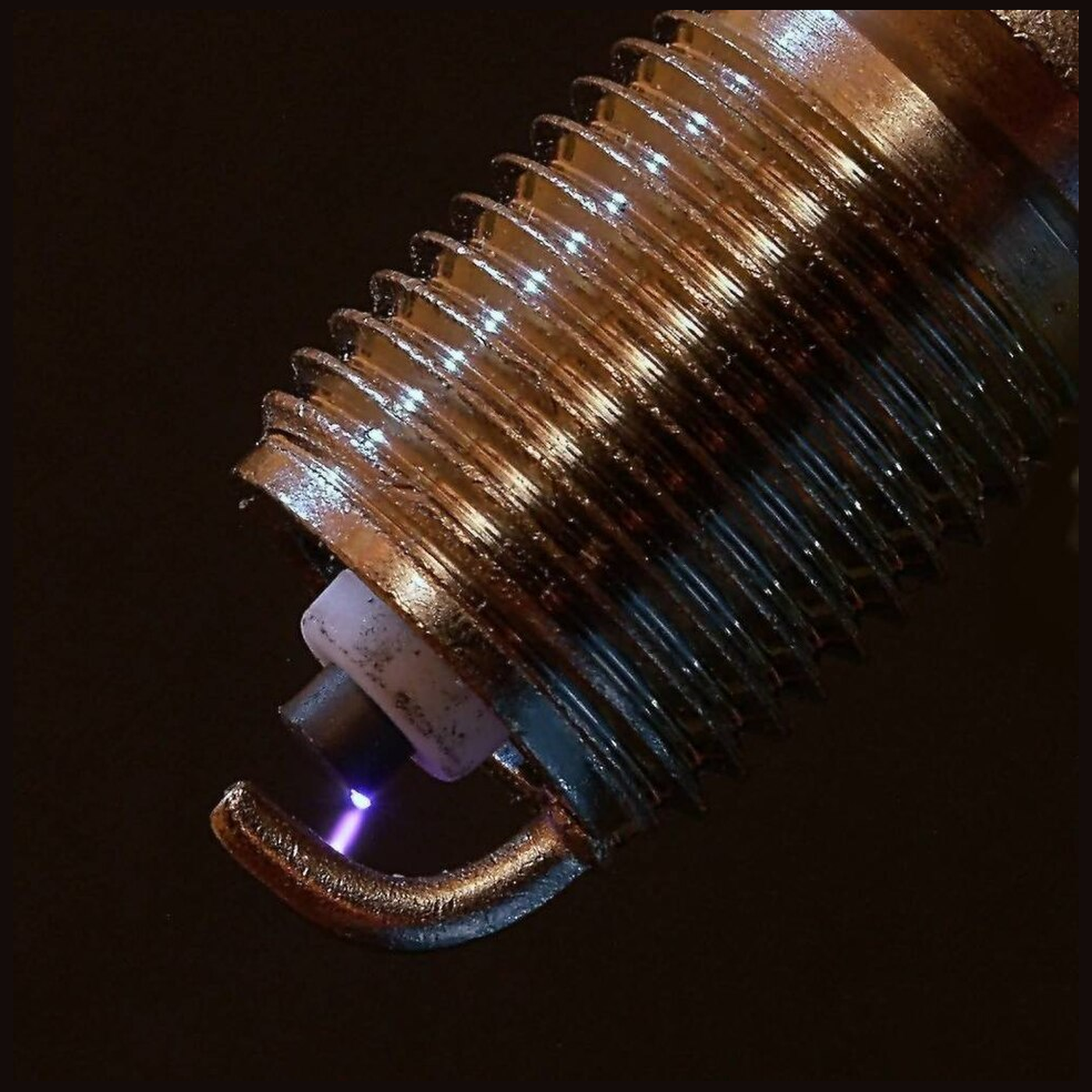


The Magneto and the Spark Plug: Thousands of Volts at the Right Moment
A petrol engine needs a spark in each cylinder at a precise moment, many times a second, inside a charge compressed to many times atmospheric pressure. Early engines used hot tubes or 'make-and-break' contacts inside the cylinder, which wore out fast.
In 1902 Gottlob Honold, an engineer at Robert Bosch's workshop in Stuttgart, produced the high-tension magneto with a fixed-gap spark plug: the engine itself turns a magnet past a coil, and when a contact breaker opens, the collapsing field drives the secondary winding to thousands of volts, which jump the plug's gap.
This rung works out why compressed gas needs so much voltage, gaps a real plug, and fires it from the induction coil built elsewhere in this catalogue.
Trung cấp
About 3 hours
Hướng dẫn
1
1
One spark, step by step
One spark, step by step
Không gian làm việc Blockly
Loading Blockly workspace...
2
2
Breakdown voltage: open air against compressed charge
Breakdown voltage: open air against compressed charge
Đang tải sổ tay Jupyter…
3
3
Read and gap a spark plug
Read and gap a spark plug
Look at a spark plug end-on: a central electrode through a ceramic insulator, and a ground electrode bent over it from the threaded steel shell. The ceramic must hold off tens of kilovolts while being heated and cooled every cycle.
Check the gap with the feeler gauges: the right blade should slide through with light drag. To close it, tap the ground electrode gently on a hard surface; to open it, lever it with a gapping tool — never lever against the central electrode, which cracks the insulator.
Read the colour of a used plug's insulator nose: light tan is right; black and sooty means too rich or too cold; white and blistered means too lean or too hot.
Vật liệu cho bước này:
 Bugi đánh lửa1 cái
Công cụ cần thiết:
 Bộ căn lá
 Thước cặp điện tử 6 inch
4
4
Fire the plug from an induction coil
Fire the plug from an induction coil
The magneto's secondary winding is an induction coil driven by the engine. The embedded blueprint builds one; connect its output across the spark plug's terminal and shell and watch the gap fire in open air — and remember from the notebook that it needs several times that voltage inside a compressed charge.
5
5
History and context
History and context
**Gottlob Honold for Robert Bosch, Stuttgart, 1902** — the high-tension magneto ignition with a fixed-gap spark plug, first patented in Germany. No US number is asserted here: it could not be read from a primary source.
Battery-and-coil ignition (Kettering, the self-starter rung of this batch) replaced the magneto in cars; magnetos stayed in aircraft engines and small engines, which need no battery to run. Electronic ignition replaced the contact breaker.
**Honest limits.** Contacts wear and pit; the timing drifts with them. A magneto's spark is weak at cranking speed. And ignition voltages are dangerous: never touch a plug lead or a coil output while it is energised.
Vật liệu
1- 1 cáiTạm thời
Blueprint liên quan
Các blueprint này chia sẻ kiến thức — kỹ thuật, vật liệu hoặc nguyên tắc

CC0 Phạm vi công cộng
Bản thiết kế này được phát hành theo CC0. Bạn tự do sao chép, sửa đổi, phân phối và sử dụng cho bất kỳ mục đích nào mà không cần xin phép.
Hỗ trợ nhà sáng tạo bằng cách mua sản phẩm qua bản thiết kế, nơi họ nhận Hoa hồng nhà sáng tạo do nhà bán hàng đặt, hoặc tạo phiên bản mới và kết nối trong bản thiết kế riêng để chia sẻ doanh thu.