NGHỆ THUẬT
LÀM ĐẸP VÀ SỨC KHỎE
THỦ CÔNG
VĂN HÓA VÀ LỊCH SỬ
GIẢI TRÍ
MÔI TRƯỜNG
THỰC PHẨM VÀ ĐỒ UỐNG
KỸ THUẬT NGƯỢC
KHOA HỌC
THỂ THAO
CÔNG NGHỆ
THIẾT BỊ ĐEO
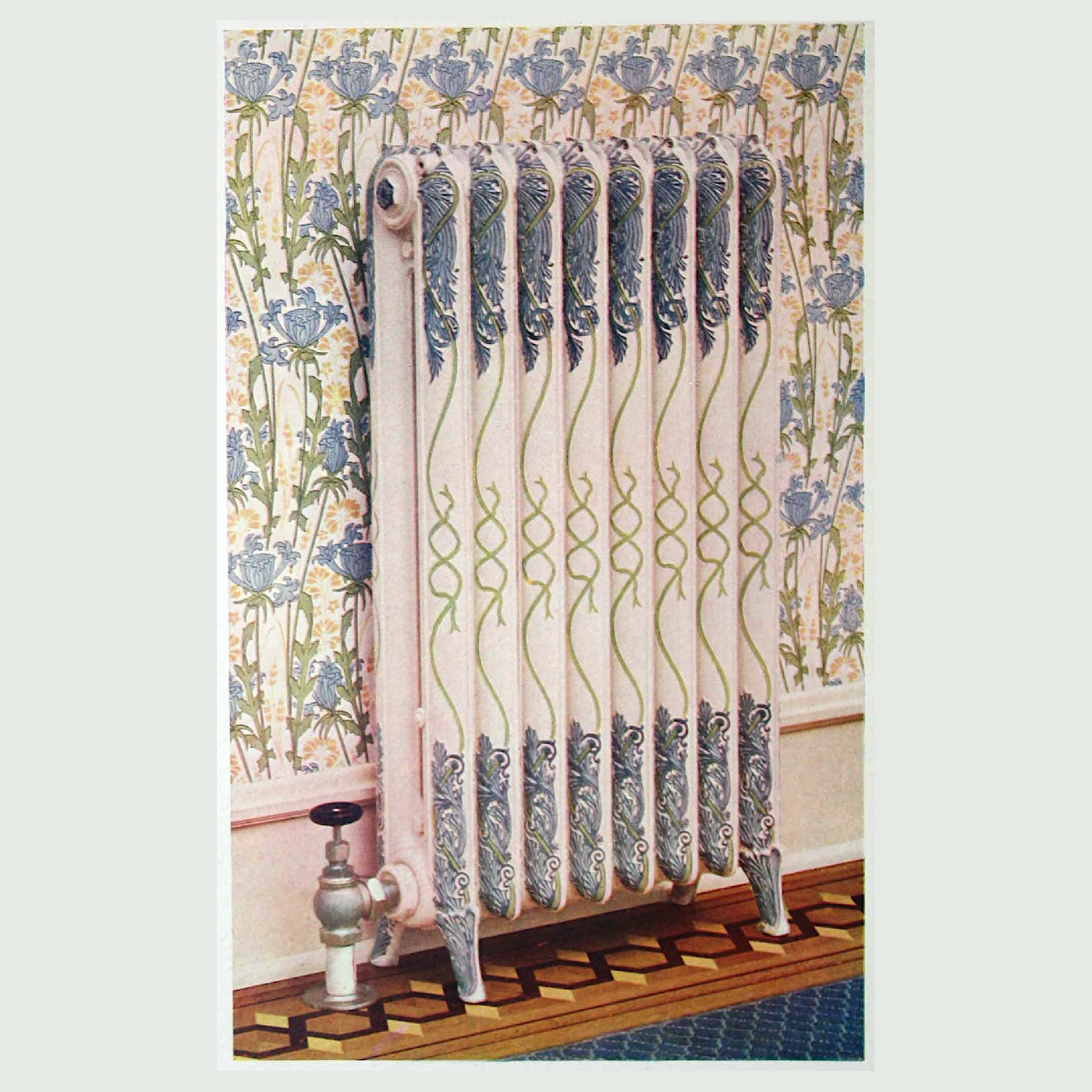

The Radiator: Mostly Convection, and Why Temperature Is Everything
Hot water from a boiler, pumped round a house, gives up its heat through radiators. The cast-iron sectional radiator — sections screwed or pinned together side by side, so one pattern could make any size — came out of the 1870s, the Bundy loop of 1872 among the first.
Two facts about radiators decide whether a heating system works. Their output depends steeply on water temperature, so a radiator sized for a hot boiler gives less than a third of its rating on the cooler water of a heat pump. And despite the name, even a flat face gives only about half its heat as radiation, and a column or finned panel radiator gives the larger part as rising warm air.
This rung works out both, measures a real radiator's output, and gives the fault tree for the radiator that stays cold.
Cơ bản
About 2 hours
Hướng dẫn
1
1
Output against temperature, and the radiation myth
Output against temperature, and the radiation myth
Đang tải sổ tay Jupyter…
2
2
Measure a working radiator
Measure a working radiator
Find the radiator's catalogue rating at ΔT 50 on its label or the maker's sheet, and its dimensions. With the heating running steadily, read with the infrared thermometer: the flow pipe where it enters, the return pipe where it leaves, the top and bottom of the radiator face, and the room air a metre away with the thermometer.
Work out ΔT from the flow and return readings and the room, and put it into the notebook's formula: that is what the radiator is actually giving now. Shiny pipes read low on an infrared thermometer — stick a piece of masking or electrical tape on them and read the tape.
Now hold a strip of tissue a hand's width above the top of the radiator: it lifts in the rising air. Hold it the same distance in front of the face: it barely moves, but your hand still feels the warmth. That is the two halves of the heat, separated.
Vật liệu cho bước này:
 Bộ sưởi nước nóng1 cái
Công cụ cần thiết:
 Nhiệt kế hồng ngoại
 Nhiệt kế nhà bếp
 Thước dây cuộn
3
3
Bleed it and balance it
Bleed it and balance it
A radiator that is warm at the bottom and cold at the top is full of air at the top. With the heating off and the system cool, hold a cloth under the bleed valve at the top corner and open it a quarter turn with a radiator key or a flat screwdriver: air hisses out, then water spits. Close it. On a sealed system, top the pressure back up at the boiler afterwards.
A system where the radiators nearest the boiler are hot and the far ones lukewarm needs **balancing**: the lockshield valve on each near radiator is closed down a little so that water is pushed on to the far ones. Balance for a temperature drop across each radiator of about 10 K — the flow and return readings from step 2.
Công cụ cần thiết:
 Tua vít dẹtNhiệt kế hồng ngoại
4
4
A radiator stays cold: find out why
A radiator stays cold: find out why
The usual causes, in the order to check them.
Flow
Loading...
5
5
History and context
History and context
Hot-water and steam heating with pipes and radiating surfaces grew through the nineteenth century; the cast-iron sectional radiator made it cheap enough for ordinary buildings, because one cast section could be assembled into any size. **Nelson H. Bundy's 'Bundy loop' of 1872** is one of the early, much-copied designs. No patent number is asserted here.
Steel panel radiators replaced cast iron in most new work in the twentieth century, and underfloor heating — a very large, very cool radiator — is the logical end of the notebook's first table.
**Honest limits.** Output collapses at low water temperature. A radiator under a window or behind furniture loses much of its convection. And a system is only as good as its balancing: an unbalanced system burns fuel to overheat the rooms nearest the boiler.
Vật liệu
1- 1 cáiTạm thời
Công cụ yêu cầu
4- Tạm thời
- Tạm thời
- 1 vendor sell this, none ship to you yetTạm thời
- Tạm thời
Blueprint liên quan
Các blueprint này chia sẻ kiến thức — kỹ thuật, vật liệu hoặc nguyên tắc
The Fire-Tube Boiler: Surface, Not Fire, Makes Steam
bởi Martin
Cơ học
3
0
0
0
0
0
The Water-Tube Boiler: Put the Water in the Tubes
bởi Martin
Cơ học
2
0
0
0
0
0
The Centrifugal Pump: Speed Squared, and Why It Cannot Lift Air
bởi Emma
Cơ học
1
0
0
0
0
0
Butz Thermostat
bởi Ed
Điện tử
39
0
0
0
0
0
Cork and Sawdust Insulation
bởi Mary
Vật liệu
42
0
0
0
0
0
CC0 Phạm vi công cộng
Bản thiết kế này được phát hành theo CC0. Bạn tự do sao chép, sửa đổi, phân phối và sử dụng cho bất kỳ mục đích nào mà không cần xin phép.
Hỗ trợ nhà sáng tạo bằng cách mua sản phẩm qua bản thiết kế, nơi họ nhận Hoa hồng nhà sáng tạo do nhà bán hàng đặt, hoặc tạo phiên bản mới và kết nối trong bản thiết kế riêng để chia sẻ doanh thu.