NGHỆ THUẬT
LÀM ĐẸP VÀ SỨC KHỎE
THỦ CÔNG
VĂN HÓA VÀ LỊCH SỬ
GIẢI TRÍ
MÔI TRƯỜNG
THỰC PHẨM VÀ ĐỒ UỐNG
KỸ THUẬT NGƯỢC
KHOA HỌC
THỂ THAO
CÔNG NGHỆ
THIẾT BỊ ĐEO


The Reversible Crochet Hook Holder: Collet Jaws Grip the Hook Either Way Round
A fine steel hook is hard to hold, and its point catches when carried.
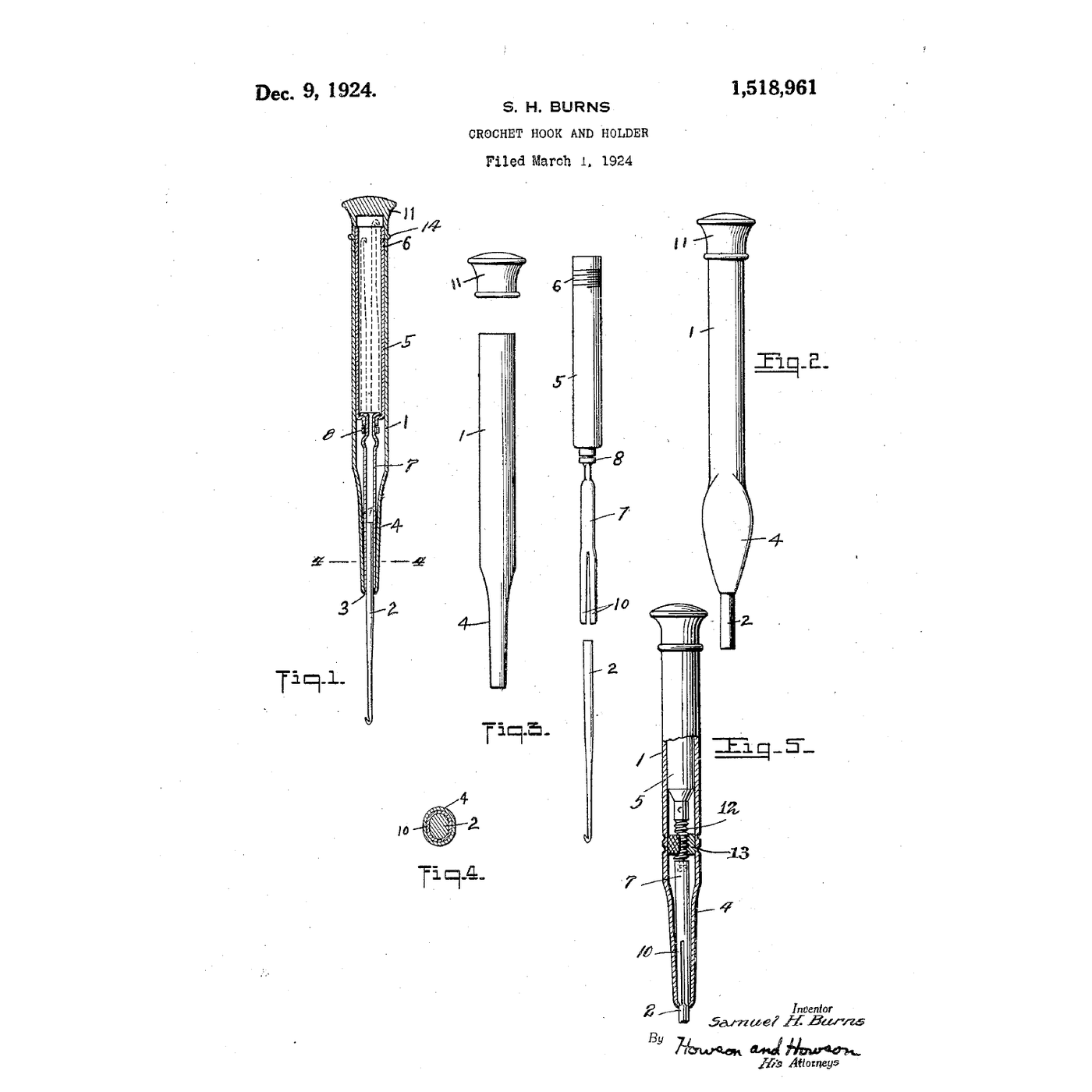
Samuel H. Burns of Brooklyn, New York, received US 1,518,961, patented 9 December 1924, for a crochet hook and holder "in which the needle can be reversed and left with the point inside the holder for protection when not in use": split jaws on a small tube are drawn into the handle's flattened, tapered end by a threaded inner shell and grip the hook's non-round shank; the hollow inner shell stores hooks of other sizes.
This rung works out how hard a taper squeezes the jaws, then builds a collet holder from brass, aluminium and an M4 screw and measures the pull it holds.
Nâng cao
About 4 hours
Hướng dẫn
1
1
Grip from the taper
Grip from the taper
Đang tải sổ tay Jupyter…
2
2
A hook protected in its handle before it
A hook protected in its handle before it
The embedded blueprint folds the hook into its handle. Burns takes the hook out, turns it round and clamps it point-in.
3
3
Read US 1,518,961
Read US 1,518,961
"The shank of the hook is then introduced into opening 3 of the tapered end and the jaws 10 until the desired length of the shank is left outside the holder when the inner shell 5 can be screwed into the outer shell and the clamping jaws 10 forced into the opening 3 of the tapered end thus gripping the shank of the hook."
"By making the inner shell 5 hollow, and of the proper length, I can use it as a reservoir for an assortment of needles for various sizes and kinds of crochet work."
4
4
Make the nose
Make the nose
Cut 30 mm of 12 mm aluminium rod. Drill 3.5 mm through on the axis, then 8.5 mm from the back 18 mm deep. Finish the bottom of the bore with the 8.5 mm bit's point, then file the front 15 mm to a flattened taper.
Vật liệu cho bước này:
 Thanh nhôm tròn1 cái
Công cụ cần thiết:
 Cưa sắt
 Ê tô bàn nguội
 Máy khoan pin
 Bộ mũi khoan
 Giũa (giũa tay)
 Thước cặp điện tử 6 inch
 Kính bảo hộ trong suốt
5
5
Make the jaws
Make the jaws
Cut 30 mm of 8 mm brass rod. Drill 3.3 mm through on the axis and tap the back 10 mm M4. File the front to a cone matching the bore's bottom, and saw two cuts across it 12 mm deep, making four jaws.
Vật liệu cho bước này:
 Thanh đồng thau1 cái
Công cụ cần thiết:
Cưa sắtÊ tô bàn nguộiMáy khoan pinBộ mũi khoan Bộ ta-rô và bàn ren
 Bộ giũa kim
6
6
Assemble the handle
Assemble the handle
Epoxy the nose into one end of 120 mm of 1/2" brass tube. Epoxy an M4 nut in a 20 mm hardwood plug, centred, and set it 50 mm behind the nose. Screw 90 mm of M4 threaded rod through the nut into the jaws.
Vật liệu cho bước này:
 Ống đồng thau đường kính ngoài 1/2 inch1 cái
 Keo epoxy hai thành phần1 cái
 Đai ốc lục giác1 cái
 Chốt gỗ cứng1 cái
 Ty ren1 cái
Công cụ cần thiết:
Cưa sắtMáy khoan pinBộ mũi khoan7
7
Clamp a hook both ways
Clamp a hook both ways
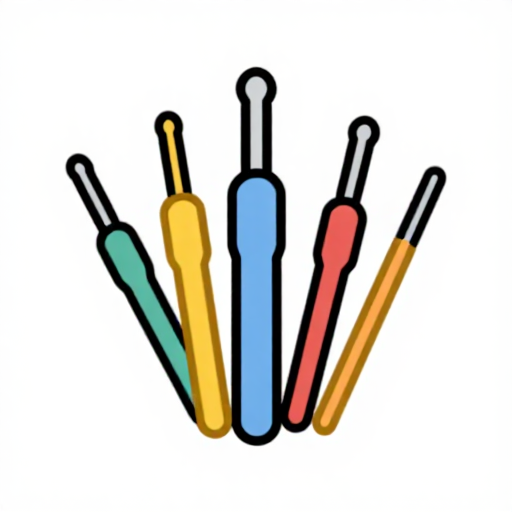
Choose a hook from the set with a shank under 3.3 mm and file two flats on it. Push it through the nose into the jaws and turn the rod's back end to draw the jaws in until it grips. Then reverse it, point inside, and clamp it again.
Vật liệu cho bước này:
 Bộ kim móc len1 cái
Công cụ cần thiết:
Bộ giũa kim8
8
Measure the grip
Measure the grip
Tie yarn to the hook's throat and pull along it with the force meter until it slips. Repeat at finger-tight and at firm; then twist the hook by hand and see if it turns.
Vật liệu cho bước này:
 Sợi1 cái
Công cụ cần thiết:
 Lực kế (cân lò xo)
9
9
A holder that slips, binds or will not open
A holder that slips, binds or will not open
Reversible crochet hook holder troubleshooting.
Flow
Loading...
10
10
History and honest limits
History and honest limits
**Samuel H. Burns** of Brooklyn, New York, filed US 1,518,961 on 1 March 1924, a continuation in part of his application of 5 June 1922; it was patented 9 December 1924. The flattened tapered end gives the thumb and forefinger a grip, and with a non-round shank the hook cannot turn in it. His small tube turns freely on the inner shell, so the jaws are drawn in without revolving; a cap on the inner shell turns it.
**Honest limits.** Our jaws turn with the screw, where his did not, and a threaded rod replaces his threaded inner shell. The drill point leaves a steep 118° cone, which grips less than a shallow taper would. Sizes are ours. Your pull forces are the result.
Vật liệu
9- 1 cáiTạm thời
- 1 cáiTạm thời
- Tạm thời
- Tạm thời
- 1 cáiTạm thời
- 1 cáiTạm thời
- 1 cáiTạm thời
- 1 cáiTạm thời
- 1 cáiTạm thời
Công cụ yêu cầu
10- Tạm thời
- Tạm thời
- 1 vendor sell this, none ship to you yetTạm thời
- Tạm thời
- Tạm thời
- Tạm thời
- Tạm thời
- Tạm thời
- Tạm thời
- Tạm thời
Blueprint liên quan
Các blueprint này chia sẻ kiến thức — kỹ thuật, vật liệu hoặc nguyên tắc


CC0 Phạm vi công cộng
Bản thiết kế này được phát hành theo CC0. Bạn tự do sao chép, sửa đổi, phân phối và sử dụng cho bất kỳ mục đích nào mà không cần xin phép.
Hỗ trợ nhà sáng tạo bằng cách mua sản phẩm qua bản thiết kế, nơi họ nhận Hoa hồng nhà sáng tạo do nhà bán hàng đặt, hoặc tạo phiên bản mới và kết nối trong bản thiết kế riêng để chia sẻ doanh thu.