NGHỆ THUẬT
LÀM ĐẸP VÀ SỨC KHỎE
THỦ CÔNG
VĂN HÓA VÀ LỊCH SỬ
GIẢI TRÍ
MÔI TRƯỜNG
THỰC PHẨM VÀ ĐỒ UỐNG
KỸ THUẬT NGƯỢC
KHOA HỌC
THỂ THAO
CÔNG NGHỆ
THIẾT BỊ ĐEO
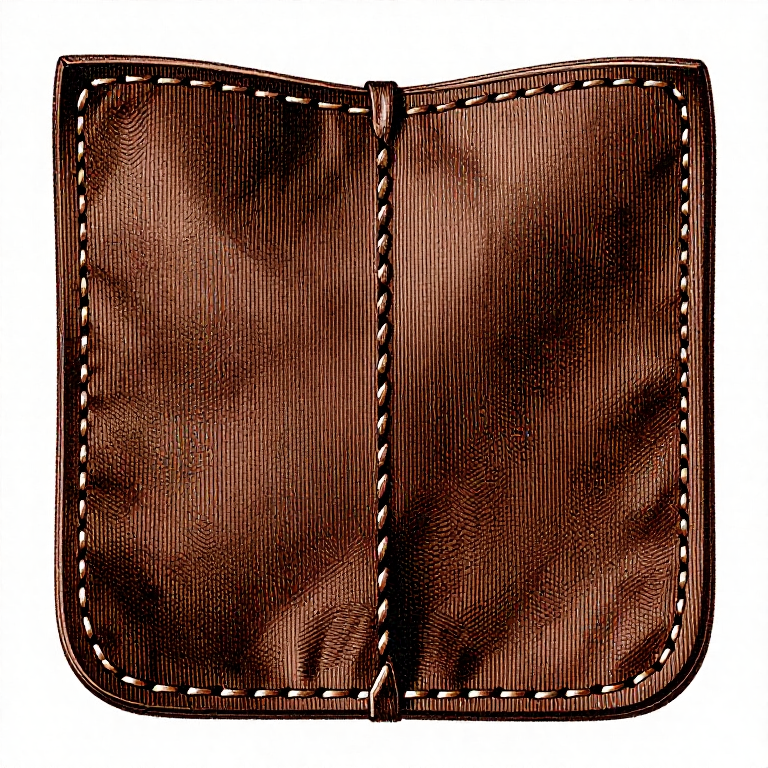


The Saddle Stitch: Cut It Anywhere and It Still Holds
A sewing machine makes a lockstitch: two threads knotted to each other inside the material. Cut it at one point and the stitches either side can unravel in turn.
A saddle stitch passes a single thread through every hole from both sides, so each hole carries two independent passes locked to nothing. Cut it and the neighbouring stitches stay exactly where they are. That is why harness, saddlery and serious bags are still sewn by hand, two hundred years after the sewing machine.
It is also slow, and it looks wrong if the holes are wrong — so most of this rung is about making the holes, not about passing the thread.
Trung cấp
4 hours
Hướng dẫn
1
1
Marking and making the holes
Marking and making the holes
**Mark the stitch line first**, parallel to the edge, with a wing divider or a stitching groover. A groover cuts a shallow channel that the thread then sits **below** the surface in, protected from abrasion — which is why a grooved seam on the sole side of a shoe lasts.
Distance from the edge: about **three to four times the leather thickness**, and never less than twice. Too close and the stitches tear out through the edge.
**Mark the hole positions with a pricking iron**, struck once with a mallet. The iron's job is to mark evenly spaced slanted slits, not to go all the way through.
**Open the holes with a diamond awl**, one at a time as you sew, pushing from the front so the slant is consistent. On thin leather the iron alone may go through; on anything thick the awl is what makes the hole.
**Keep the awl vertical across the seam and angled along it.** An awl that leans puts the back holes out of line with the front ones, and a seam that looks perfect from the front and drunk from the back is always this.
**Clamp the work in a stitching pony.** Both hands are needed for the needles.
Vật liệu cho bước này:
 Da thuộc thảo mộc2 cái
Công cụ cần thiết:
 Dùi
Dùi Vồ gỗ
Vồ gỗ Thước kẻ
 Thảm cắt tự liền
2
2
Thread, spacing and the numbers
Thread, spacing and the numbers
Đang tải sổ tay Jupyter…
Công cụ cần thiết:
 Máy tính để bàn
3
3
The stitch itself
The stitch itself
**Thread both ends** of one length, with a needle at each end. Linen thread is waxed with beeswax first: the wax stiffens the thread so it feeds, protects it from abrasion in the hole, and seals the finished seam a little.
**The cycle, and it never changes:**
1. Push the front needle through the hole
2. Pull it until the thread is even on both sides
3. Push the back needle through the SAME hole
4. Pull both tight together
5. Move to the next hole
**Always pass the second needle on the same side of the first thread.** Above or below — it does not matter which, but it must be the same every time. This is the single detail that makes a seam look even, and changing halfway is instantly visible.
**Do not pierce the thread already in the hole.** If the needle catches it, back out and go round. A pierced thread cannot be pulled tight and is a weak point.
**Tension the same every stitch.** Pull with the same firmness each time; the eye reads variation in tension as crookedness.
**Finish** by back-stitching two or three holes, then cut the thread flush and melt or burnish the end. Do not knot it: a knot is a lump, and the back-stitch is what actually holds.
Vật liệu cho bước này:
Da thuộc thảo mộc2 cái Sáp ong1 cái
Công cụ cần thiết:
 Bộ khâu da
 Hai kim khâu yênDùi
4
4
Lacing, and the other ways to join leather
Lacing, and the other ways to join leather
Stitching is not the only join, and several traditions in the catalogue use none.
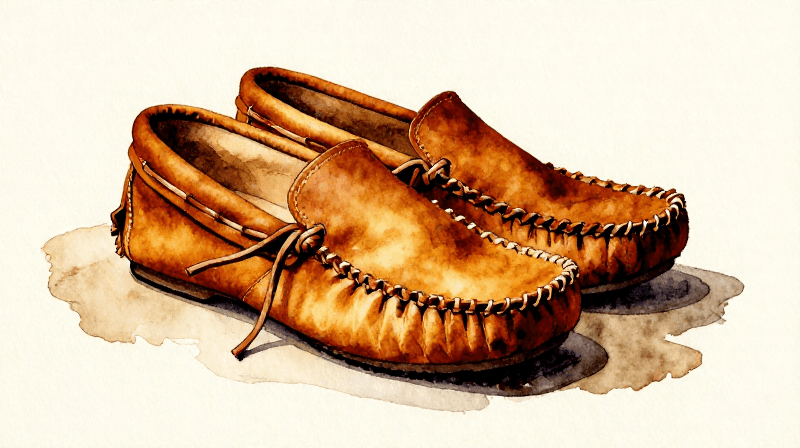
**Lacing.** A leather thong through punched holes. Fast, decorative, strong enough for a pouch or a moccasin, and it needs no needle and no waxed thread. It is the join on most of the prehistoric leatherwork here, and it is the right answer whenever the holes can be large.
**Rivets.** Instant, very strong in shear, and permanent. The hardware rung covers them. A rivet at each end of a stitched seam takes the load off the thread where it is highest.
**Adhesive.** Contact cement on both flesh surfaces. It is not a structural join on its own — it is what holds two pieces in position while they are stitched, and it stops the layers shifting under the awl. Nearly every professionally made piece is glued before it is sewn.
**Wet-formed and shrunk rawhide.** A rawhide lace put on wet shrinks as it dries and grips harder than anything else available without metal. That is how the parfleche and most hafted tools in the catalogue are held together.
Choose by the load and by whether it must be repairable. A stitched seam can be re-sewn; a riveted one cannot be taken apart without destroying the rivet.
Vật liệu cho bước này:
 Dải da thuộc thảo mộc1 cái
 Dải da để luồn1 cái
Công cụ cần thiết:
 Bộ đục lỗ da
 Đục lỗ daVồ gỗ
Vật liệu
4- 2 cáiTạm thời
- 1 cáiTạm thời
- Tạm thời
- 1 cáiTạm thời
Blueprint liên quan
Các blueprint này chia sẻ kiến thức — kỹ thuật, vật liệu hoặc nguyên tắc
CC0 Phạm vi công cộng
Bản thiết kế này được phát hành theo CC0. Bạn tự do sao chép, sửa đổi, phân phối và sử dụng cho bất kỳ mục đích nào mà không cần xin phép.
Hỗ trợ nhà sáng tạo bằng cách mua sản phẩm qua bản thiết kế, nơi họ nhận Hoa hồng nhà sáng tạo do nhà bán hàng đặt, hoặc tạo phiên bản mới và kết nối trong bản thiết kế riêng để chia sẻ doanh thu.