NGHỆ THUẬT
LÀM ĐẸP VÀ SỨC KHỎE
THỦ CÔNG
VĂN HÓA VÀ LỊCH SỬ
GIẢI TRÍ
MÔI TRƯỜNG
THỰC PHẨM VÀ ĐỒ UỐNG
KỸ THUẬT NGƯỢC
KHOA HỌC
THỂ THAO
CÔNG NGHỆ
THIẾT BỊ ĐEO
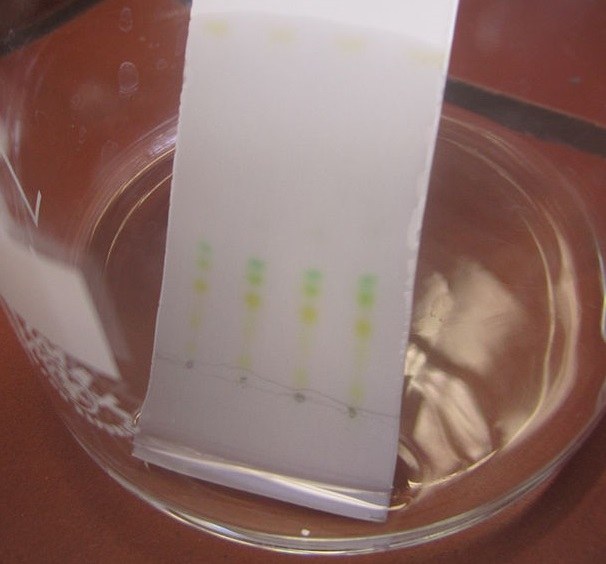


Thin-Layer Chromatography: Making Your Own Plates
Paper is cellulose, and cellulose is a mediocre stationary phase: its fibres are coarse, they run in one direction, and a spot spreads as it climbs. Egon Stahl's answer in 1956 was to throw the paper away and spread a thin layer of fine powder on a sheet of glass instead.
A silica layer a quarter of a millimetre thick, made of particles a few thousandths of a millimetre across, gives far less room for a spot to wander. Runs finish in fifteen minutes instead of hours, spots stay tight, and — because glass does not burn or dissolve — you can develop the plate with corrosive reagents or heat that would destroy paper.
Commercial plates are cheap and excellent. Make your own anyway, once: spreading the slurry is where you learn what an even layer is worth, and why the plate, not the chemistry, is usually what went wrong.
Trung cấp
1 day
Hướng dẫn
1
1
Clean the glass until water sheets off it
Clean the glass until water sheets off it
Wash microscope slides in hot detergent, rinse, and finish with a wipe of isopropyl alcohol. Handle them by the edges from now on.
Test them: water should spread into an unbroken film, not bead up. A bead means grease, and grease means the silica layer will lift away in a flake exactly there — usually halfway through a run, taking your sample with it. This is the least interesting step and the one that decides whether the plates work.
Vật liệu cho bước này:
 Lam kính kèm lamen20 cái
Công cụ cần thiết:
 Găng tay nitrile
 Cồn isopropyl 99 %
2
2
Mix the slurry: silica, gypsum binder, water
Mix the slurry: silica, gypsum binder, water
Stir 3 parts chromatography-grade silica gel and 1 part gypsum into about 2 parts water by weight, to the consistency of thin cream. Use it within a few minutes.
The gypsum is calcium sulfate — plaster — and it is the only thing holding the silica to the glass; a layer made without it dusts off at a touch. This is exactly the composition sold as 'silica gel G', where the G stands for gypsum. Work fast, because plaster starts setting as soon as it is wet and a slurry that has begun to go off spreads in ridges.
Vật liệu cho bước này:
 Silica gel (loại dùng cho sắc ký)30 g
 Thạch cao (canxi sunfat)10 g
Công cụ cần thiết:
 Cân điện tử chính xác
 Cốc thuỷ tinh borosilicat
3
3
Coat the plates evenly
Coat the plates evenly
The simplest method that works: hold two slides back to back, dip them into the slurry, withdraw them smoothly and steadily, separate them and stand them on edge to dry.
Steadily is the whole instruction. Any hesitation leaves a horizontal line in the layer, and a solvent front reaching that line slows, stalls, or jumps it — giving you an Rf value that is a property of your dipping technique rather than of the compound. A uniform thin layer is worth more than a thick careful one.
Công cụ cần thiết:
Cốc thuỷ tinh borosilicatGăng tay nitrile4
4
Activate the plates in an oven
Activate the plates in an oven
Air-dry the plates, then heat them at about 110 °C for half an hour and store them somewhere dry until use.
Silica holds water on its surface, and adsorbed water occupies exactly the sites your sample needs to stick to. A damp plate therefore behaves as a weaker stationary phase: everything runs faster and the separation compresses. This is the usual reason Rf values drift between a dry week and a humid one, and it is why published Rf figures always state the activation.
Công cụ cần thiết:
 Bếp điện phẳng
5
5
Spot, develop, and mark the front at once
Spot, develop, and mark the front at once
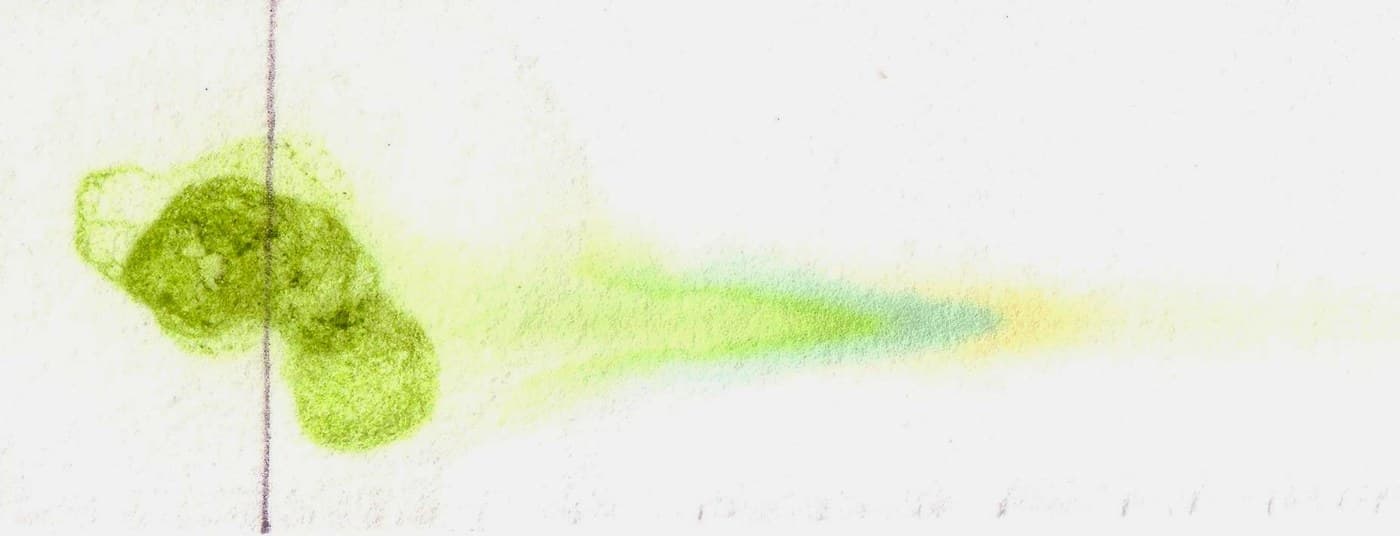
Mark a faint pencil origin line 1 cm from one end — press lightly, because a hard line scores through the layer. Spot as small as you can, then stand the plate in a closed jar with solvent below the origin line.
A thin layer develops fast: the front may reach the top in five to fifteen minutes. Take the plate out while the front is still a centimetre short of the top edge and mark it immediately with pencil, because it evaporates in seconds. A front that ran off the end means every Rf from that plate is unrecoverable.
Vật liệu cho bước này:
 Etanol phẩm cấp thí nghiệm, 95 %50 ml
 Axit axetic (băng)5 ml
 Rau chân vịt50 g
Công cụ cần thiết:
 Lọ thuỷ tinh
 Ống mao dẫn thủy tinh
6
6
Visualise: iodine first, then heat
Visualise: iodine first, then heat
Stand the dry plate in a closed jar with a few iodine crystals. Most organic spots turn brown within minutes. Circle them in pencil while they show.
Then use what glass allows and paper does not: spray the plate with dilute sulfuric acid and heat it, and every organic compound chars to a permanent black spot. It is destructive and utterly general — nothing organic escapes it. That trick is the real reason Stahl's layers displaced paper, and it needs a fume extract and full protection, so treat it as an optional advanced finish rather than a routine step.
Vật liệu cho bước này:
 Tinh thể iot2 g
Công cụ cần thiết:
Lọ thuỷ tinhGăng tay nitrile Kính bảo hộ kín
7
7
Why a thin layer beats paper
Why a thin layer beats paper
Đang tải sổ tay Jupyter…
Công cụ cần thiết:
 Thước kẻ
 Đồng hồ bấm giờ
8
8
Use it the way a chemist actually uses it
Use it the way a chemist actually uses it
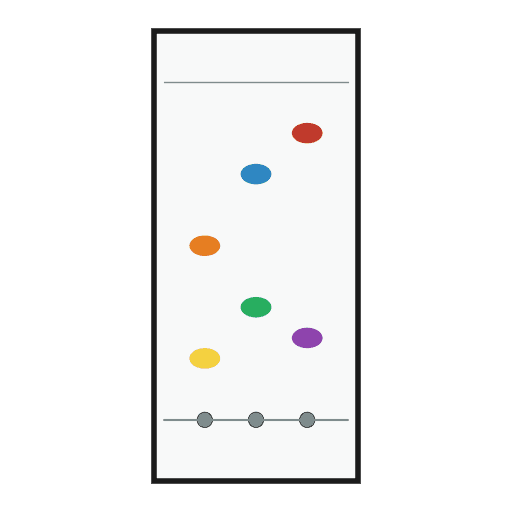
Spot three lanes on one plate: your unknown, a known reference compound, and a spot of BOTH together. Develop them side by side.
That third lane is the point. If the unknown and the reference are the same substance, the co-spot runs as a single round spot; if they merely have similar Rf values, it runs as an elongated or double spot that neither lane alone would have revealed. Matching Rf values is suggestive — a clean co-spot is evidence. This is how a bench chemist follows a reaction to completion, and it costs one extra capillary.
Công cụ cần thiết:
Ống mao dẫn thủy tinhLọ thuỷ tinhThước kẻVật liệu
7- 20 cáiTạm thời
- Tạm thời
- Tạm thời
- Tạm thời
- Tạm thời
- 50 gTạm thời
- 2 gTạm thời
Công cụ yêu cầu
10- Tạm thời
- Tạm thời
- Tạm thời
- Tạm thời
- Tạm thời
- Tạm thời
- Tạm thời
- Tạm thời
- Tạm thời
- Tạm thời
Bản thiết kế này làm ra
Blueprint liên quan
Các blueprint này chia sẻ kiến thức — kỹ thuật, vật liệu hoặc nguyên tắc

CC0 Phạm vi công cộng
Bản thiết kế này được phát hành theo CC0. Bạn tự do sao chép, sửa đổi, phân phối và sử dụng cho bất kỳ mục đích nào mà không cần xin phép.
Hỗ trợ nhà sáng tạo bằng cách mua sản phẩm qua bản thiết kế, nơi họ nhận Hoa hồng nhà sáng tạo do nhà bán hàng đặt, hoặc tạo phiên bản mới và kết nối trong bản thiết kế riêng để chia sẻ doanh thu.