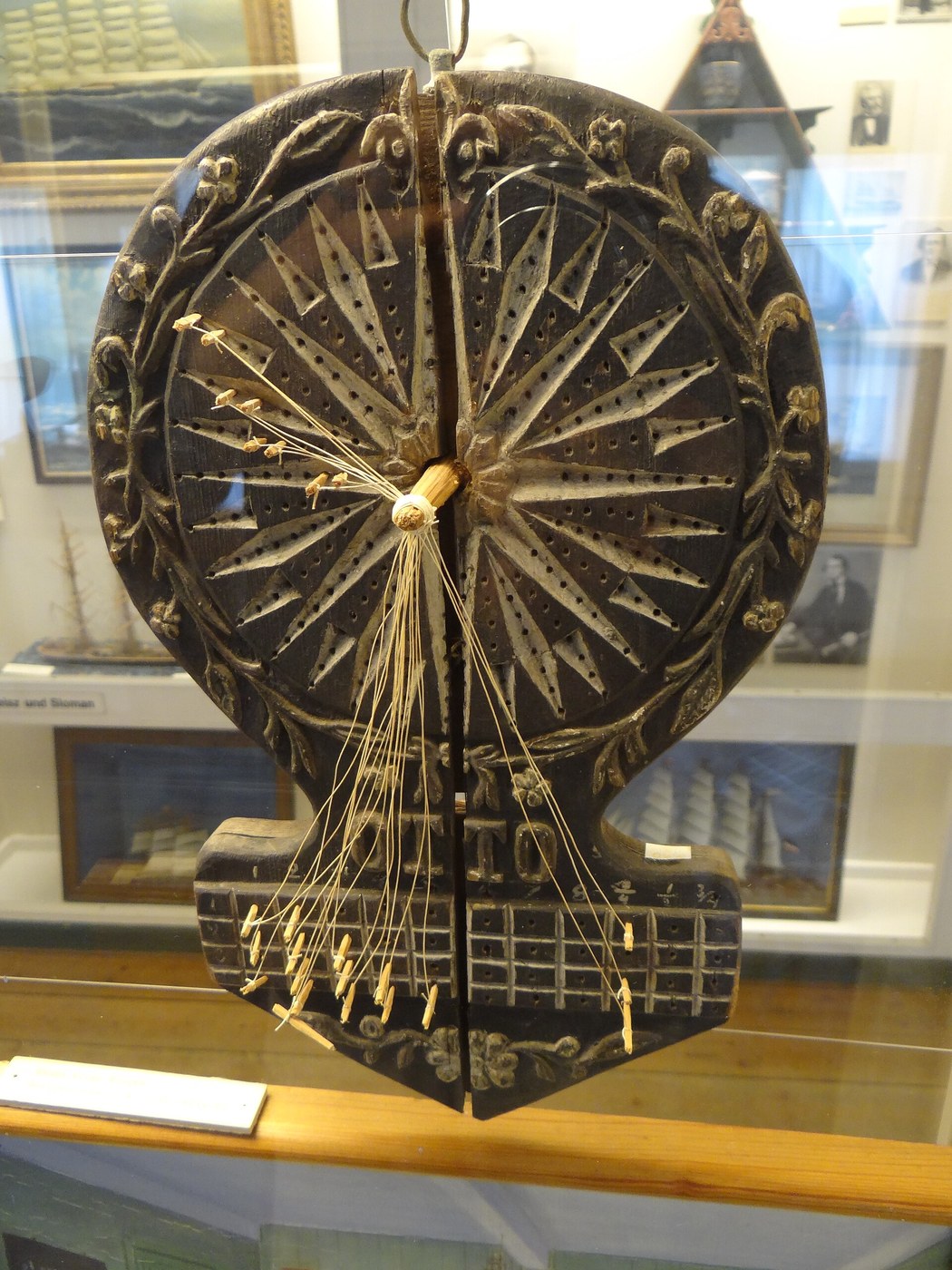


Traverse Board
Hướng dẫn
Lay out the compass rose
Lay out the compass rose
Thirty-two points, not 360 degrees.
- Draw a circle and divide it into 32 equal points — 11.25 degrees each.
- Label them in the traditional order: North, North by East, North-north-east, and so on.
- Drill eight holes along each radius, from centre outward.
Vật liệu cho bước này:
 Ván thông1 board
 Thước đo góc1 cái
Add the speed section
Add the speed section
A separate grid below the rose records what the log said.
- Rule a grid of rows and columns beneath the rose.
- Columns are speed in knots; rows are the successive half-hours.
- Drill a hole at each intersection and attach pegs on lanyards.
Vật liệu cho bước này:
 Dây bông1 cuộn
 Thanh chốt gỗ1 cái
Keep a watch
Keep a watch
Run a simulated watch and fill the board.
- Every half-hour, peg the heading actually steered.
- Peg the speed from your log reading.
- Work outward from the centre so the sequence is unambiguous.
Vật liệu cho bước này:
 La bàn1 cái
Work up the average course
Work up the average course
Turn eight headings and eight speeds into one position change.
- For each half-hour, resolve the run into north-south and east-west components.
- Sum each component over the watch.
- The totals give the distance made good and the course made good.
Vật liệu cho bước này:
 Bộ bút chì than chì1 bộ
History and context
History and context
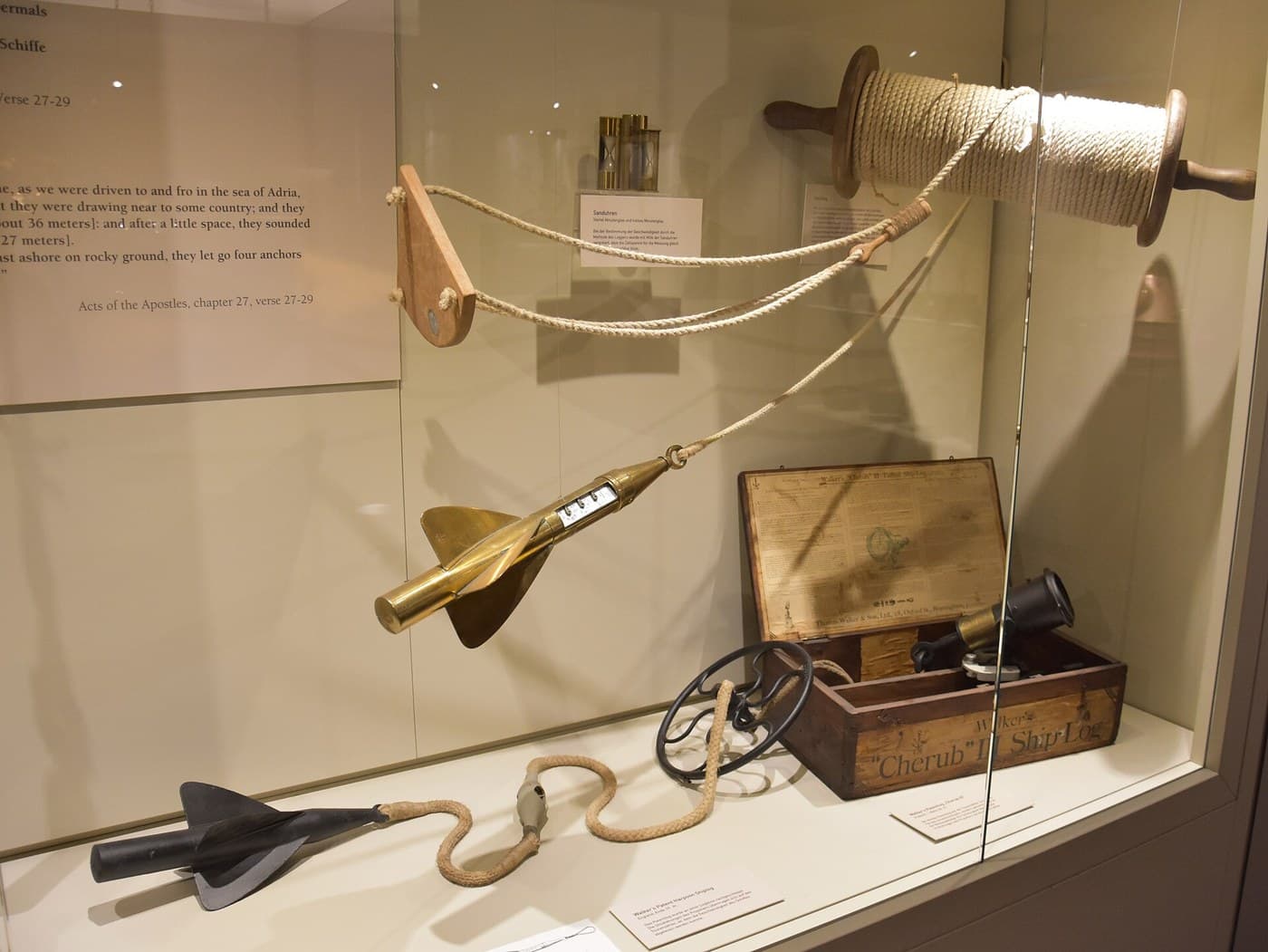
Traverse boards are documented from around the fifteenth century and were standard on European vessels for centuries. They belong to dead reckoning: from a known position, apply course and distance to get the next position. The chip log supplied speed, the compass supplied heading, the glass supplied time, and the board held the record between them.
The design assumes an illiterate user, deliberately. Ordinary seamen were often unable to read, and the helmsman was the only person who knew what had actually been steered. A pegboard lets that person record data accurately without writing, and lets the mate — who could write — read it off at the end of the watch. It is an interface designed around who is actually operating it, which is not a modern idea.
Errors accumulated relentlessly. Leeway from the wind pushing the hull sideways, currents, a helmsman's average error, and the chip log reading slightly low all compound over days out of sight of land. Dead reckoning was good enough for coastal work and terrifying for ocean crossings, which is the whole reason the longitude problem attracted a national prize.
Boxing the compass survives as a phrase, and the 32-point system persists in wind and swell descriptions. The board itself was displaced by the deck log book as literacy became general — and the underlying method, integrating heading and speed over time to update a position, is exactly what an inertial navigation system does now with gyroscopes and a processor.
Bản thiết kế này làm ra

Blueprint liên quan
Các blueprint này chia sẻ kiến thức — kỹ thuật, vật liệu hoặc nguyên tắc
CC0 Phạm vi công cộng
Bản thiết kế này được phát hành theo CC0. Bạn tự do sao chép, sửa đổi, phân phối và sử dụng cho bất kỳ mục đích nào mà không cần xin phép.
Hỗ trợ nhà sáng tạo bằng cách mua sản phẩm qua bản thiết kế, nơi họ nhận Hoa hồng nhà sáng tạo do nhà bán hàng đặt, hoặc tạo phiên bản mới và kết nối trong bản thiết kế riêng để chia sẻ doanh thu.