NGHỆ THUẬT
LÀM ĐẸP VÀ SỨC KHỎE
THỦ CÔNG
VĂN HÓA VÀ LỊCH SỬ
GIẢI TRÍ
MÔI TRƯỜNG
THỰC PHẨM VÀ ĐỒ UỐNG
KỸ THUẬT NGƯỢC
KHOA HỌC
THỂ THAO
CÔNG NGHỆ
THIẾT BỊ ĐEO
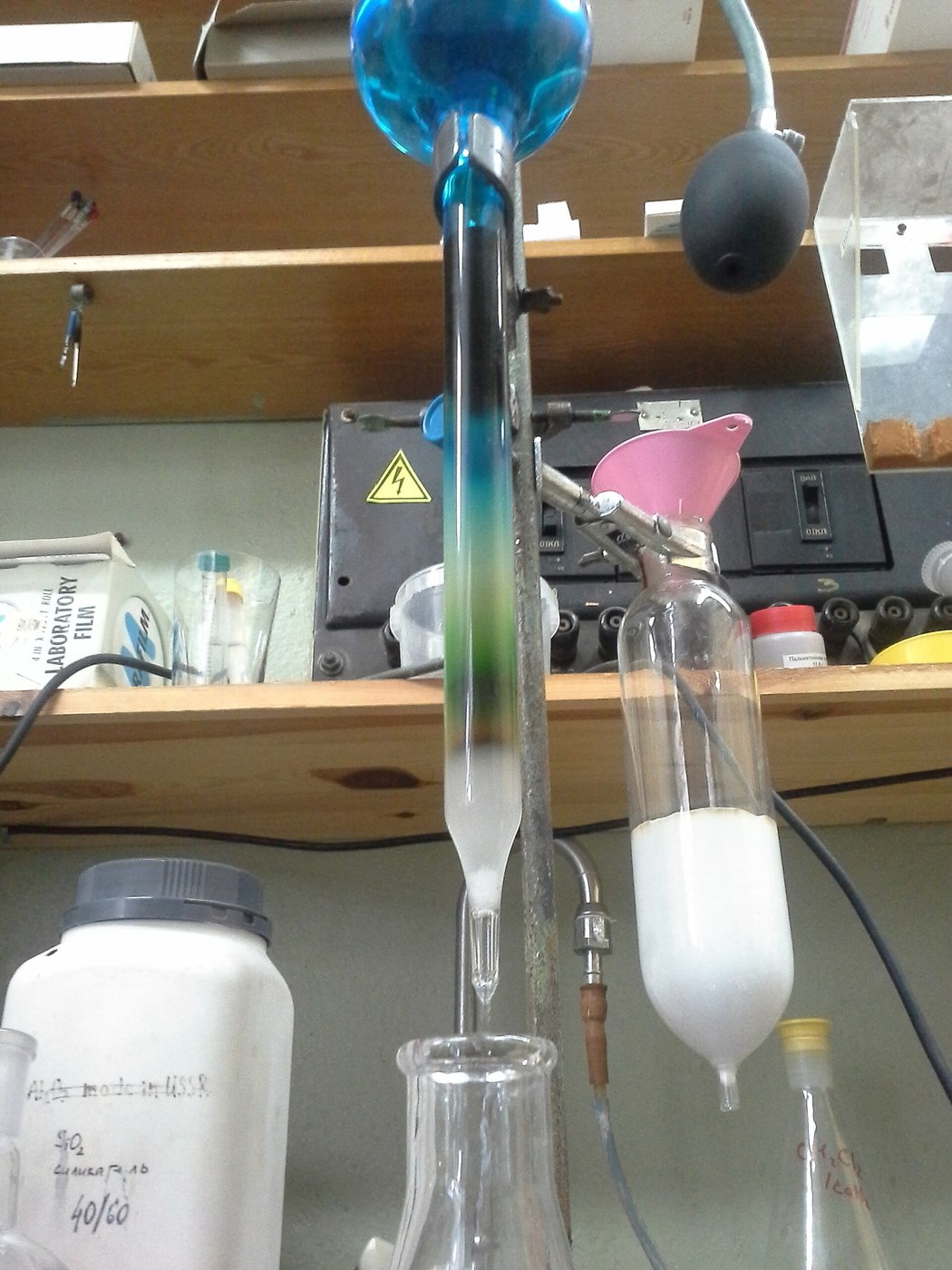


Tsvet's Column: The First Chromatogram
In 1903 a Russian-Italian botanist working in Warsaw poured an extract of green leaves into a glass tube packed with powdered chalk, washed it through with petroleum solvent, and watched the single green smear pull apart into separate coloured bands down the column.
Mikhail Tsvet called the result a *chromatogram* — a writing in colour — and it is the ancestor of every separation in this batch. His insight was that leaf green is not one substance: it is two chlorophylls and a family of yellow and orange carotenoids, and they stick to chalk with different strengths. The one that clings least travels furthest.
The technique was ignored for thirty years, partly because Tsvet published in Russian and partly because the leading plant chemist of the day insisted the bands were artefacts. You can settle that argument yourself in an afternoon with chalk and a glass tube.
Trung cấp
4 hours
Hướng dẫn
1
1
Get the pigments out of the leaf
Get the pigments out of the leaf
Grind a handful of fresh spinach in a mortar with a little clean sand and enough ethanol to make a slurry, then filter. You want a dark green extract, not a pale one.
The sand is doing real work: it tears the cell walls and the chloroplast membranes open so the solvent can reach pigments that are otherwise locked inside. Grinding without it gives a weak extract and a column with nothing to show. Keep the extract in the dark — chlorophyll bleaches in light, and a sunlit extract loses its top band before you have packed the tube.
Vật liệu cho bước này:
 Rau chân vịt100 g
 Etanol phẩm cấp thí nghiệm, 95 %50 ml
 Cát thạch anh20 g
Công cụ cần thiết:
 Cối và chày
 Phễu thuỷ tinh có cuống
 Giấy lọc
 Cốc thuỷ tinh borosilicat
2
2
Pack the column evenly, or it will run crooked
Pack the column evenly, or it will run crooked
Plug the bottom of a glass tube with a small wad of cotton wool, add a centimetre of sand, then pour in powdered chalk a little at a time, tapping the side constantly, to a depth of about 15 cm. Finish with another centimetre of sand on top.
Tapping is not fussiness. Any gap or crack in the packing becomes a channel the solvent races down, and the bands come out slanted, smeared or merged. The sand layers protect the chalk surface from being cratered when you pour, which does the same damage in a different way.
Vật liệu cho bước này:
 Canxi cacbonat (bột đá trắng)100 gCát thạch anh30 g
 Bông y tế1 gói
Công cụ cần thiết:
 Đũa thủy tinh borosilicat
3
3
Wet the column before you load it — never let it run dry
Wet the column before you load it — never let it run dry
Run solvent through until the whole packing is wetted and a few millimetres stand above the top sand. Keep it that way for the rest of the run.
A column that runs dry cracks, and a cracked column is finished — you cannot re-wet it back into a uniform bed. This is the single rule that decides whether the afternoon works. Set the solvent reservoir up so it keeps the level topped up rather than trusting yourself to notice.
Vật liệu cho bước này:
 Axeton100 ml
Công cụ cần thiết:
Cốc thuỷ tinh borosilicat4
4
Load a narrow band, and let it sink in
Load a narrow band, and let it sink in
Let the solvent drain to exactly the top of the sand, then pipette your extract gently down the inside wall so it forms a thin, level layer. Let THAT drain in before adding any solvent.
The width of the band you start with is the width you are stuck with. Every separation that follows has to pull the components further apart than this starting smear, so a 2 mm load separates where a 2 cm load never will. This is the same discipline as a narrow spot in paper chromatography, and it matters more here because the column is longer.
Công cụ cần thiết:
 Pipet chia độ (Mohr)
5
5
Develop, and watch the green come apart
Develop, and watch the green come apart
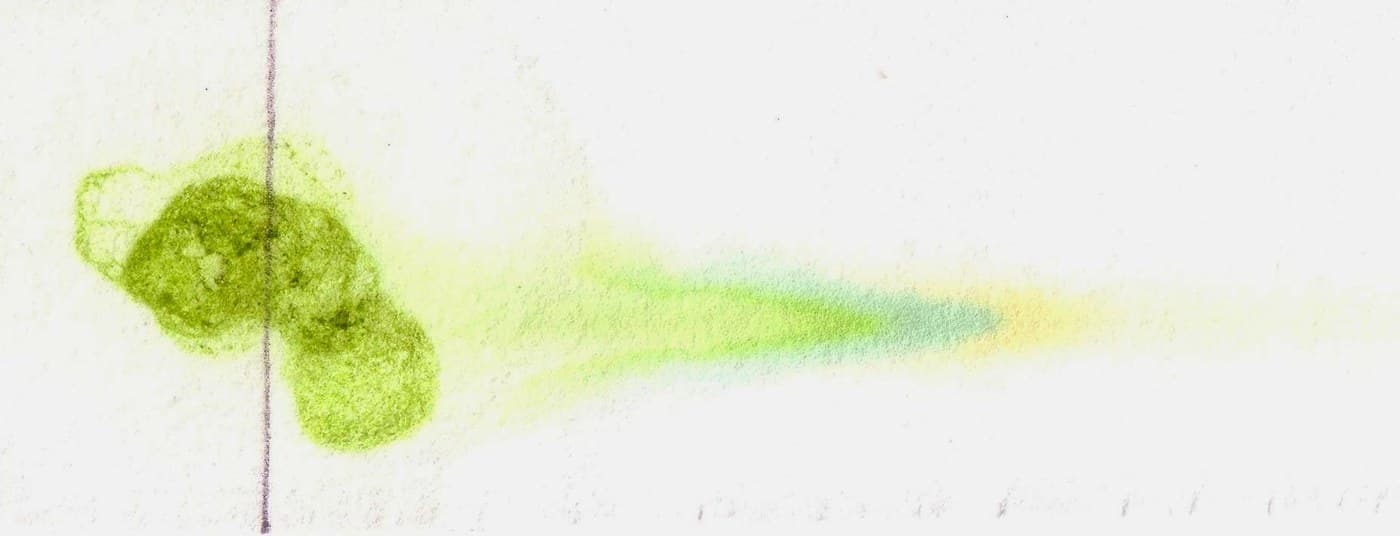
Add solvent steadily and let it run. Over twenty minutes or so the single green band stretches, then splits: a yellow-orange band running ahead, then yellow-green, then blue-green behind.
Ahead are the carotenes, which barely stick to the chalk. Behind them the xanthophylls, which carry oxygen atoms and hold on harder. Last come chlorophyll a and then chlorophyll b, the most strongly held of all. You are watching a mixture sort itself by how tightly each molecule grips a surface — and this is exactly the argument Tsvet lost for thirty years.
Vật liệu cho bước này:
Axeton200 mlCông cụ cần thiết:
Cốc thuỷ tinh borosilicat6
6
Collect the bands as separate fractions
Collect the bands as separate fractions
Put a fresh test tube under the outlet as each coloured band approaches, and change tubes as it passes. Cap and label each one.
This is the step that turns a pretty demonstration into chemistry. A band you watched is a picture; a band in a tube is a purified substance you can weigh, spectroscope, or run again. Tsvet's own word for the separated bands was 'zones', and collecting them is what earned the method its place when Kuhn and Lederer rediscovered it in the 1930s.
Công cụ cần thiết:
 Ống nghiệm (borosilicat)Pipet chia độ (Mohr)
7
7
Why the bands travel at different speeds
Why the bands travel at different speeds
Đang tải sổ tay Jupyter…
Công cụ cần thiết:
 Thước kẻ
8
8
Change the solvent and watch the order hold
Change the solvent and watch the order hold
Run the column again with a solvent of different polarity — swap some of the acetone for a less polar solvent, or the reverse — and note what changes.
The bands move faster or slower, sometimes dramatically, but their ORDER stays the same, because the order is set by how strongly each pigment grips the chalk relative to the others. Solvent strength is your speed control; the stationary phase decides the sequence. Understanding which knob does which is the difference between tuning a separation and guessing at one.
Vật liệu cho bước này:
 Cồn isopropyl 99 %100 mlAxeton100 ml
Công cụ cần thiết:
Cốc thuỷ tinh borosilicatVật liệu
7- 100 gTạm thời
- Tạm thời
- 30 gTạm thời
- Tạm thời
- 1 góiTạm thời
- 400 mlTạm thời
- 100 mlTạm thời
Blueprint liên quan
Các blueprint này chia sẻ kiến thức — kỹ thuật, vật liệu hoặc nguyên tắc

CC0 Phạm vi công cộng
Bản thiết kế này được phát hành theo CC0. Bạn tự do sao chép, sửa đổi, phân phối và sử dụng cho bất kỳ mục đích nào mà không cần xin phép.
Hỗ trợ nhà sáng tạo bằng cách mua sản phẩm qua bản thiết kế, nơi họ nhận Hoa hồng nhà sáng tạo do nhà bán hàng đặt, hoặc tạo phiên bản mới và kết nối trong bản thiết kế riêng để chia sẻ doanh thu.