NGHỆ THUẬT
LÀM ĐẸP VÀ SỨC KHỎE
THỦ CÔNG
VĂN HÓA VÀ LỊCH SỬ
GIẢI TRÍ
MÔI TRƯỜNG
THỰC PHẨM VÀ ĐỒ UỐNG
KỸ THUẬT NGƯỢC
KHOA HỌC
THỂ THAO
CÔNG NGHỆ
THIẾT BỊ ĐEO
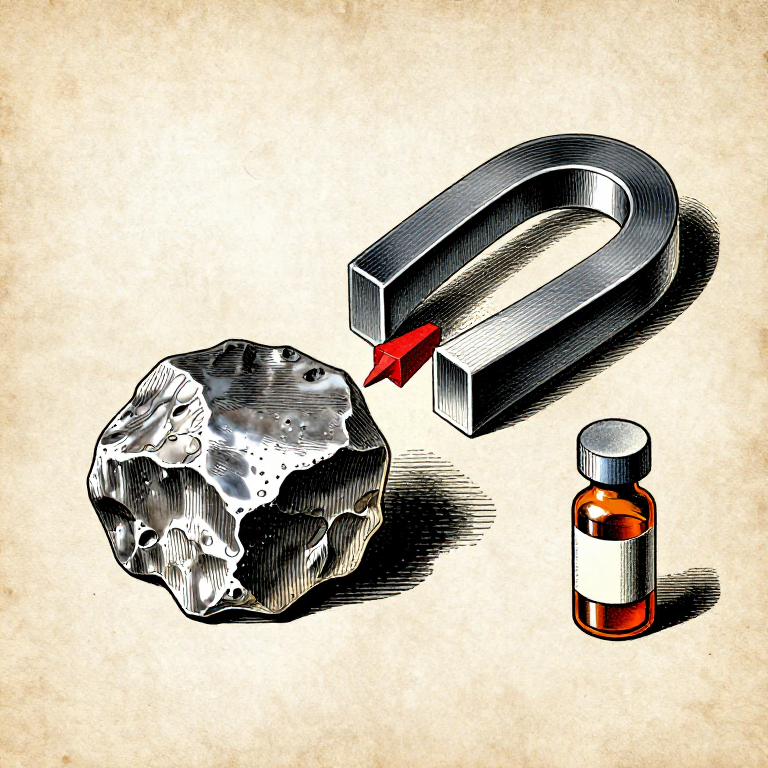
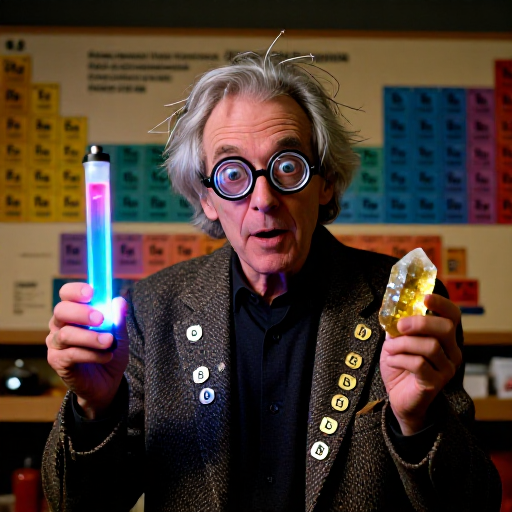
Understanding Gadolinium from Monazite — The MRI Contrast Agent Metal
Trung cấp
Hướng dẫn
1
1
Understand Gadolinium's Discovery
Understand Gadolinium's Discovery
Jean Charles Galissard de Marignac first observed gadolinium spectral lines in 1880 while studying didymium samples. Paul-Émile Lecoq de Boisbaudran isolated the pure oxide in 1886 and named it gadolinium after Johan Gadolin — the Finnish chemist who first studied rare earth chemistry from the Ytterby quarry mineral in 1794. Gadolinium sits exactly at the center of the lanthanide series with seven unpaired 4f electrons.
2
2
Identify Gadolinium Sources
Identify Gadolinium Sources
Gadolinium occurs at 6.2 ppm in Earth's crust, concentrated in both light rare earth minerals (bastnasite, monazite) and heavy rare earth minerals (xenotime). It sits at the dividing line between light and heavy rare earths, making separation particularly challenging. Bastnasite from Bayan Obo contains approximately 2% gadolinium oxide. Ionic adsorption clays in southern China are an important source for heavy rare earths including gadolinium.
Vật liệu cho bước này:
 Mẫu monazit
Công cụ cần thiết:
 Kính lúp cầm tay 10xKính lúp cầm tay 10x
 Bản vạch màu (sứ không tráng men)
 Bộ kim thử độ cứng Mohs
3
3
Examine Gadolinium's Magnetic Properties
Examine Gadolinium's Magnetic Properties
Gadolinium has the highest magnetic moment of any element — 7.94 Bohr magnetons from seven unpaired 4f electrons. It is ferromagnetic below 20°C (293 K), the only rare earth ferromagnetic at near-room temperature. Above this Curie temperature, it becomes strongly paramagnetic. This dramatic magnetic transition near room temperature is the foundation for magnetic refrigeration technology and makes gadolinium the most magnetically interesting lanthanide.
4
4
Understand MRI Contrast Agents
Understand MRI Contrast Agents
Gadolinium chelates (Gd-DTPA, Gd-DOTA) are injected intravenously in approximately 30% of MRI scans to enhance image contrast. The seven unpaired electrons create a powerful local magnetic field that shortens the T1 relaxation time of nearby water protons, making blood vessels and tumors appear bright white. Over 300 million doses of gadolinium contrast agents have been administered worldwide since their approval in 1988.
Công cụ cần thiết:
 Kính bảo hộ kín
5
5
Explore Gadolinium Safety Concerns
Explore Gadolinium Safety Concerns
Free Gd³⁺ ions are toxic because they block calcium channels in cells — the chelating agents that wrap the gadolinium are essential for safe medical use. In 2006, nephrogenic systemic fibrosis (NSF) was linked to gadolinium contrast in patients with severe kidney disease who could not clear the chelate quickly enough. This led to restricted use in renal patients and development of more stable macrocyclic chelates that hold gadolinium more tightly.
6
6
Discover Magnetic Refrigeration
Discover Magnetic Refrigeration
The magnetocaloric effect in gadolinium — heating when magnetized, cooling when demagnetized — enables refrigeration without compressed gases. A gadolinium alloy wheel spun between magnetic poles achieves 20°C temperature spans. This technology eliminates ozone-depleting and greenhouse-warming refrigerants (CFCs, HFCs). Prototype magnetic refrigerators demonstrate 60% of Carnot efficiency compared to 40% for conventional vapor-compression systems.
7
7
Understand Nuclear Applications
Understand Nuclear Applications
Gadolinium-157 has the highest thermal neutron absorption cross-section of any stable isotope — 259,000 barns, 65 times higher than boron-10. Gadolinium oxide is used as a burnable neutron absorber in nuclear fuel pellets: it absorbs excess neutrons in fresh fuel, then transmutes to non-absorbing isotopes as the fuel ages, maintaining constant reactivity throughout the fuel cycle. This eliminates the need for control rod adjustments during burnup.
8
8
Survey Phosphor and Scintillator Uses
Survey Phosphor and Scintillator Uses
Gadolinium oxysulfide doped with terbium (Gd₂O₂S:Tb) is the standard X-ray intensifying screen phosphor — it converts X-rays to green light that exposes film, reducing patient radiation dose by 50-75%. In CT scanners, gadolinium-based scintillators (GOS) detect X-rays in detector arrays. Gadolinium gallium garnet (GGG) was used as the substrate for magnetic bubble memory in early computers before silicon displaced it.
9
9
Examine Alloy and Electronic Applications
Examine Alloy and Electronic Applications
Gadolinium improves the workability and resistance to high temperature and oxidation of iron and chromium alloys. As little as 1% gadolinium improves the machinability of stainless steel. Gadolinium-iron-cobalt alloys exhibit giant magnetostrictive effects — changing shape in magnetic fields — used in sonar transducers and precision actuators. Gadolinium ethyl sulfate was the refrigerant in the first magnetic cooling experiments achieving temperatures below 1 K.
Công cụ cần thiết:
 Cân chính xác
10
10
Document Findings and Market Context
Document Findings and Market Context
Record gadolinium's key data: atomic number 64, density 7.90 g/cm³, melting point 1313°C, silvery-white metal that tarnishes in moist air. Gadolinium oxide production is approximately 4,000 tonnes annually, priced at $20-50 per kilogram. MRI contrast agents consume about 30% of supply, nuclear applications 20%, and phosphors 25%. Growing MRI use in developing countries and potential magnetic refrigeration commercialization may significantly increase demand.
11
11
Ore grade: how much monazite per kilogram
Ore grade: how much monazite per kilogram
Đang tải sổ tay Jupyter…
Vật liệu
1- 1 cáiTạm thời
Công cụ yêu cầu
5- Tạm thời
- Tạm thời
- Tạm thời
- Tạm thời
Vật liệu bản thiết kế liên kết
Phân bổ 10%
Understanding Europium from Monazite — The Red Phosphor That Colored Television
bởi Peter
Khai thác
18
0
0
0
5
0

Phân bổ 10%
Understanding Samarium from Monazite — The First Rare Earth Magnet
bởi Peter
Khai thác
16
0
0
0
4
0
Phân bổ 10%
Understanding Cerium from Bastnasite — The Self-Cleaning Rare Earth
bởi Peter
Khai thác
10
0
0
0
9
0

Nguy hiểm
Phân bổ 10%
Extracting Neodymium-Rich Rare Earth Oxide from Monazite — The Magnet Metal That Reshaped Technology
bởi Peter
Khai thác
37
0
0
0
11
0
Nguy hiểm
Phân bổ 10%
Understanding Yttrium from Xenotime — The Rare Earth That Lights Red Screens
bởi Peter
Khai thác
42
0
0
0
12
0
Blueprint liên quan
Các blueprint này chia sẻ kiến thức — kỹ thuật, vật liệu hoặc nguyên tắc

Extracting Iron from Hematite — Bloomery Smelting from Ore to Bloom
bởi Peter
Gia công kim loại
149
0
0
0
12
0
Understanding Lanthanum from Monazite — The Hidden Element That Bends Light
bởi Peter
Khai thác
19
0
0
0
8
0
Nguy hiểm
Understanding Uranium from Uraninite — The Element That Changed Everything
bởi Peter
Khai thác
73
0
0
0
8
0
CC0 Phạm vi công cộng
Bản thiết kế này được phát hành theo CC0. Bạn tự do sao chép, sửa đổi, phân phối và sử dụng cho bất kỳ mục đích nào mà không cần xin phép.
Hỗ trợ nhà sáng tạo bằng cách mua sản phẩm qua bản thiết kế, nơi họ nhận Hoa hồng nhà sáng tạo do nhà bán hàng đặt, hoặc tạo phiên bản mới và kết nối trong bản thiết kế riêng để chia sẻ doanh thu.