NGHỆ THUẬT
LÀM ĐẸP VÀ SỨC KHỎE
THỦ CÔNG
VĂN HÓA VÀ LỊCH SỬ
GIẢI TRÍ
MÔI TRƯỜNG
THỰC PHẨM VÀ ĐỒ UỐNG
KỸ THUẬT NGƯỢC
KHOA HỌC
THỂ THAO
CÔNG NGHỆ
THIẾT BỊ ĐEO
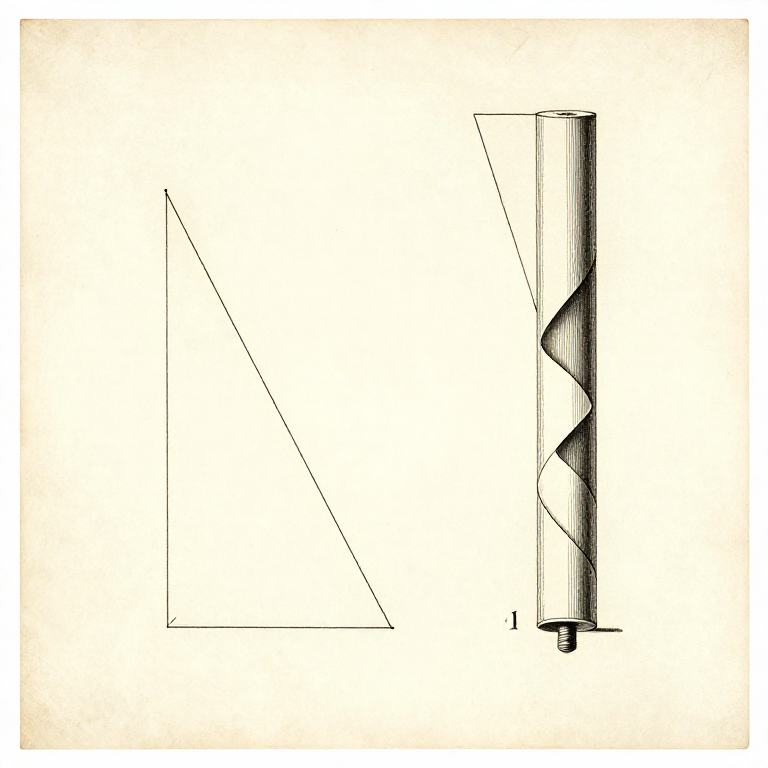


What a Screw Thread Is: A Ramp Wrapped Round a Cylinder
Unroll a screw thread and it is an inclined plane — a long shallow ramp, wrapped round a cylinder so it fits in your hand. Every property a screw has falls out of that one fact.
It explains the enormous force a small spanner produces, why a fine thread holds better and a coarse one assembles faster, why a screw does not undo itself under load, and why a jack can lift a car with one hand. None of it is mysterious once the ramp is visible.
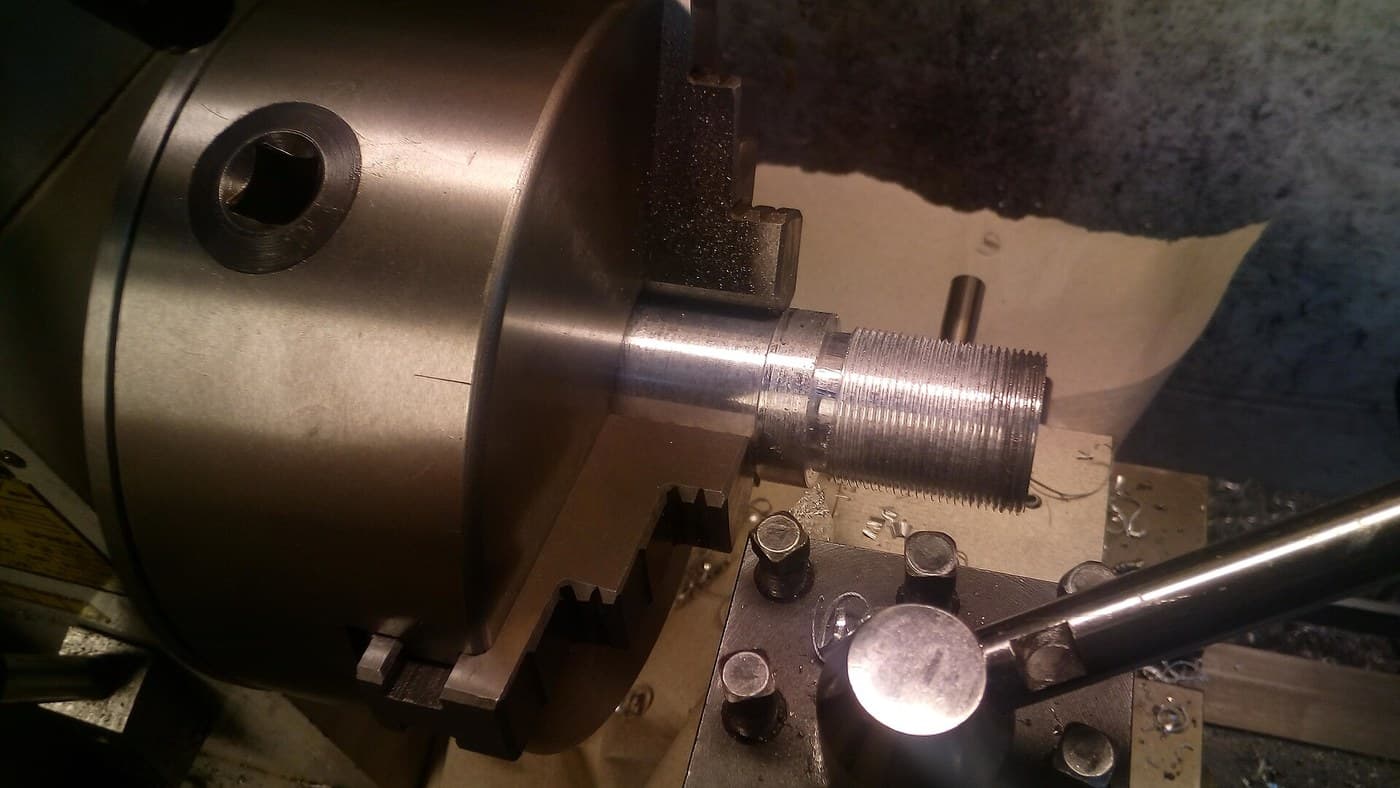
136 published blueprints on Youblob use screws, bolts, nuts or rivets. The lathe method of making a thread is published; this batch covers the way almost everyone actually does it, and starts with what the thing is.
Cơ bản
2 hours
Hướng dẫn
1
1
Wrap a paper triangle round a pencil
Wrap a paper triangle round a pencil
Cut a long right-angled triangle from paper — say 200 mm along the base and 20 mm high — and wind it round a pencil starting from the tall end, keeping the base edge square to the pencil.
The sloping edge traces a helix: exactly the shape of a screw thread. Wind a steeper triangle and the helix climbs faster, which is a coarse thread; a shallower one gives a fine thread. There is nothing else to it.
Hold the paper model next to a real bolt and the two match. This is worth doing rather than reading, because the helix is genuinely hard to picture and instantly obvious once it is in your hand.
Công cụ cần thiết:
 Bộ bu lông lục giác nhiều cỡ
2
2
Pitch, lead, and the words that get confused
Pitch, lead, and the words that get confused
PITCH is the distance from one thread crest to the next. LEAD is how far the screw advances in one full turn. On an ordinary single-start thread they are the same number, which is why the words get used interchangeably.
They part company on a multi-start thread, where two or more separate helices run side by side. A two-start thread has the same pitch but twice the lead, so it advances twice as fast per turn — which is how a bottle cap or a camera tripod screw comes off in half a turn.
MAJOR DIAMETER is measured across the crests, MINOR across the roots. An M8 bolt is 8 mm across the crests, and the tapping drill for an M8 hole is much smaller because it must leave metal for the thread to be cut into.
Công cụ cần thiết:
 Thước cặpBộ bu lông lục giác nhiều cỡ
 Dưỡng đo ren
3
3
The force a thread multiplies
The force a thread multiplies
Đang tải sổ tay Jupyter…
Công cụ cần thiết:
 Máy tính bỏ túi
4
4
Coarse or fine — the trade you are actually making
Coarse or fine — the trade you are actually making
A COARSE thread assembles fast, tolerates damage and dirt, cuts cleanly into soft material, and is far harder to cross-thread. It is the default, and it is right for most work.
A FINE thread has a shallower helix, so it holds a set position better under vibration, allows finer adjustment, and gives slightly more strength in thin material because more threads are engaged in the same depth. It is also fragile: one dinged crest and it will not start.
The practical rule is coarse unless something specifically demands fine — an adjustment screw, a thin-walled part, or a fastener that must resist vibration. Mixing them is the commonest workshop error: an M8 coarse bolt will start into an M8 fine nut for one turn and then jam solid.
Công cụ cần thiết:
Dưỡng đo renBộ bu lông lục giác nhiều cỡ Bộ đai ốc và long đen
Blueprint liên quan
Các blueprint này chia sẻ kiến thức — kỹ thuật, vật liệu hoặc nguyên tắc

CC0 Phạm vi công cộng
Bản thiết kế này được phát hành theo CC0. Bạn tự do sao chép, sửa đổi, phân phối và sử dụng cho bất kỳ mục đích nào mà không cần xin phép.
Hỗ trợ nhà sáng tạo bằng cách mua sản phẩm qua bản thiết kế, nơi họ nhận Hoa hồng nhà sáng tạo do nhà bán hàng đặt, hoặc tạo phiên bản mới và kết nối trong bản thiết kế riêng để chia sẻ doanh thu.