UBUCIKO
UBUHLE NEMPILO
UBUCIKO BEZANDLA
AMASIKO NOMLANDO
EZOKUZIJABULISA
IMVELO
UKUDLA NEZIPHUZO
REVERSE ENGINEERING
IZAYENSI
EZEMIDLALO
UBUCHWEPHESHE
IZINTO EZIGQOKWAYO
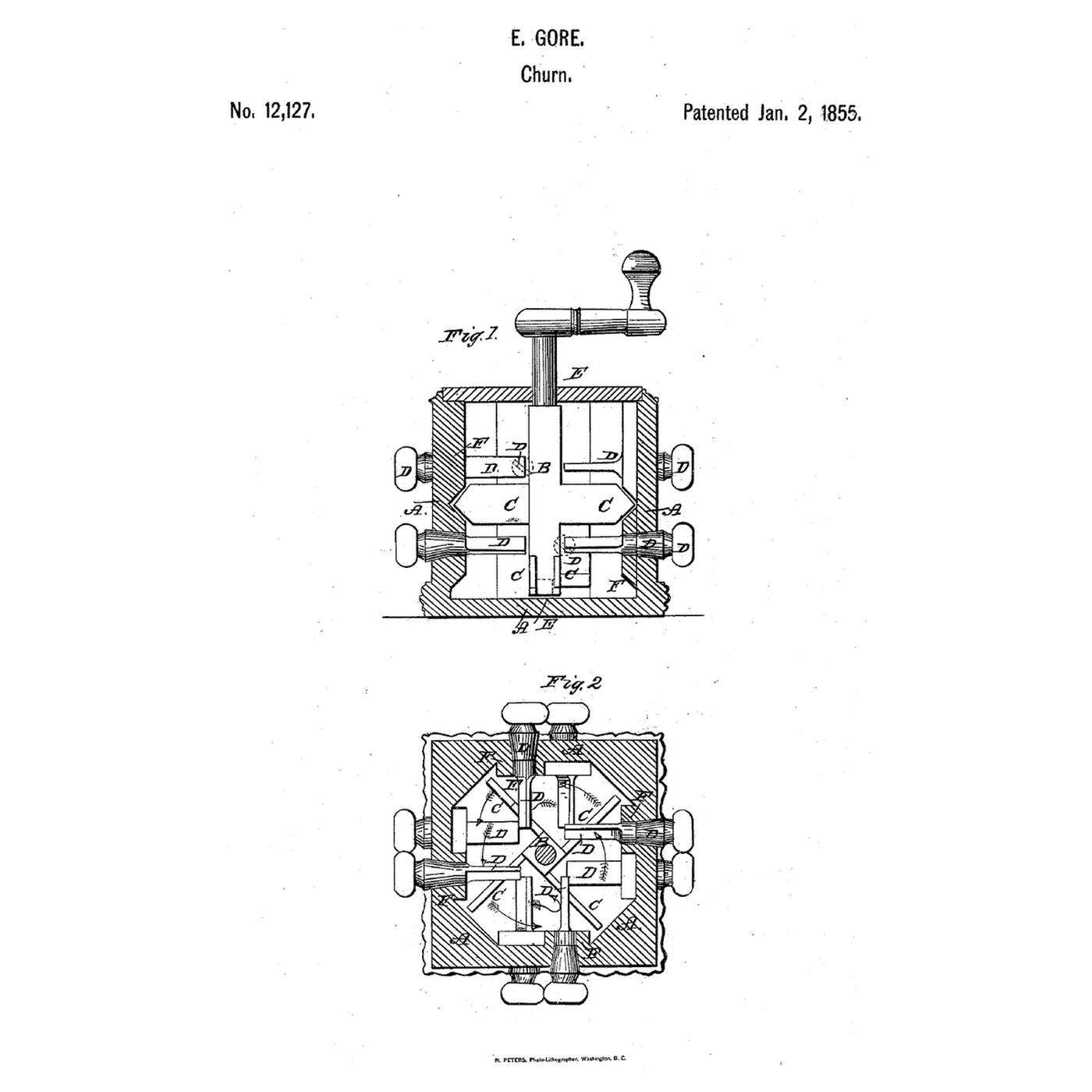


Adjustable-Pin Resistance Churn: Flat-Ended Pins Turned From Outside Set the Churn's Grip
Gore let the maker set, from outside, how hard the cream is worked.
Ezekiel Gore of Bennington, Vermont, received US 12,127, dated 2 January 1855, for a churn whose sides are pierced for "a series of adjustable pins, flattened at their inner extremities, which may be turned by the hand from the exterior of the churn, so as to present a greater or less surface of resistance to the cream." Thick cream gets the pins' edges, thin cream their sides; short ribs on the sides add agitation, and floats on the spindle sweep close past them. He wrote that the pins let the time of churning "be regulated to suit the pleasure of the operator."
This rung compares the pins' areas, then prints the pins, bushings, floats, ribs and step, builds the churn, and makes butter.
Ophakathi
About 4 hours, plus printing
Imiyalelo
1
1
Edge or side
Edge or side
Ilayisha incwadi ye-Jupyter…
2
2
Fixed breakers set for the job, before it
Fixed breakers set for the job, before it
The embedded blueprint lifts its breakers to gather the butter. Gore turns pins from outside to set how much the cream is resisted.
3
3
Read US 12,127
Read US 12,127
"It is manifest that the resisting surface exposed to the moving mass of cream within the churn, will be greater or less according as the flattened ends of the pins D are turned edge wise or side wise. When the cream is thick the pins are turned so that only their edges will oppose the cream. When the latter is thin, then their sides are presented."
4
4
Print the parts
Print the parts
Print eight pins with their flat blades and thumb balls, eight flanged bushings, two float hubs, eight ribs and the step. Print the pins on their side. Print in PETG at 0.2 mm layers, 30 % infill, 4 walls; wash before first use.
Izinto zokwakha zalesi sinyathelo:
 Ifilamenti ye-PETG1 ucezu
Amathuluzi adingekayo:
 Iphrinta ye-3D yentambo (i-FDM)
5
5
Print the pin
6
6
Print the bushing
Print the bushing
The bushing, printed as step 4 describes.
7
7
Print the float hub
Print the float hub
The float hub, printed as step 4 describes.
8
8
Print the rib
9
9
Print the step
10
10
Case and pins
Case and pins
Use a square food-grade container about 180 mm across and 200 mm deep. Drill 14 mm holes two to a side at two heights, offset from the floats' levels. Seat a bushing in each hole from inside with a leather washer under its flange and food-safe silicone round it. Push a pin through each from inside so its blade stands in the churn and its ball outside; a second leather washer pushed on outside gives the friction that holds its setting.
Izinto zokwakha zalesi sinyathelo:
 Isitsha sokugcina sezinga lokudla1 ucezu
 Ucezu lwesikhumba1 ucezu
 Isivalo Se-silicone1 ucezu
Amathuluzi adingekayo:
 Ibhola Elingenantambo
 Isethi yamasaha ezimbobo
 Iqoqo Lamakhanda Ebhola
 Iphepha Lokugaya
11
11
Ribs, spindle, floats and cover
Ribs, spindle, floats and cover
Seal the ribs upright to the walls between the pins with food-safe silicone. Stand the step in the bottom, a 10 mm square hardwood spindle in it, and slide the two float hubs on at levels that pass just above and below the pins. Cut the lid in half, fix one half with a hole for the spindle, and glue a crank arm and dowel handle on top.
Izinto zokwakha zalesi sinyathelo:
Isivalo Se-silicone1 ucezu Izikhonkwane zokhuni oluqinile1 ucezu
 Ipulangwe lomphayini1 ucezu
 Iglu Lokhuni1 ucezu
Amathuluzi adingekayo:
 Isaha SesandlaIbhola ElingenantamboIqoqo Lamakhanda Ebhola
12
12
The build in 3D
The build in 3D
FreeCAD model of this build, not of the patent: the square case cut away to show the spindle with two float hubs, the flat-ended pins at two levels with their thumb balls outside, and the ribs on the walls.
13
13
Set the pins and churn
Set the pins and churn
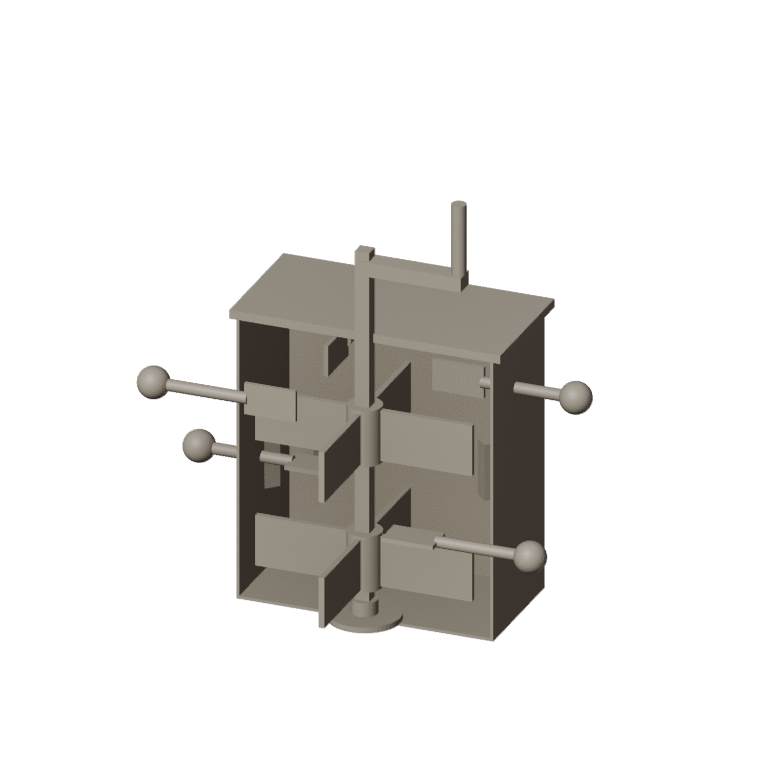
Let the heavy cream stand until it reaches about 15 °C, checked with the thermometer. Pour in 2 litres. Turn the pins side-on for thin cream or edge-on for thick, and crank steadily; time until the butter comes. Turn the pins edge-on and crank slowly to gather it. Pour off the buttermilk, add cold water, churn a little and pour off again until it runs clear; work in a pinch of salt and weigh the butter.
Izinto zokwakha zalesi sinyathelo:
 Ukhilimu ojiyile2000 ml
 Usawoti Wolwandle Omkhulu1 ucezu
 Amanzi1 ucezu
Amathuluzi adingekayo:
 Ithemomitha enenaliti eshiywa ngaphakathi
 Iwashi Lokumisa Isikhathi
 Isikali Sedijithali Sasekhishini
 Isitsha esikhulu sokuxuba sensimbi engagqwali
14
14
Pins that turn themselves, a case that drips
Pins that turn themselves, a case that drips
Adjustable-pin churn troubleshooting.
Flow
Loading...
15
15
History and honest limits
History and honest limits
**Ezekiel Gore** of Bennington, Vermont, received US 12,127, dated 2 January 1855 (the drawing sheet reads "E. Gore"). The specification names the spindle B and the floats C, then says the floats are attached "to the spindle C"; the spindle is meant. He said no particular novelty was claimed for the floats, and noted that some held butter made very quickly to be of poorer quality. He claimed making the pins with flat inner ends, turned right or left to present a large or small resisting surface.
**Honest limits.** A container, leather washers and printed parts stand in for his case; the notebook compares areas, not measured forces. FDM prints hold food in their layer lines, so wash well and replace when worn. Your times and weights are the result.
Izinto
10- 1 ucezuIsibambeli
- Isibambeli
- 1 ucezuIsibambeli
- 2 izicucuIsibambeli
- Isibambeli
- 1 ucezuIsibambeli
- 1 ucezuIsibambeli
- 2000 mlIsibambeli
- 1 ucezuIsibambeli
- 1 ucezuIsibambeli
Amathuluzi Adingekayo
10- Isibambeli
- 1 vendor sell this, none ship to you yetIsibambeli
- Isibambeli
- Isibambeli
- Isibambeli
- Isibambeli
- Isibambeli
- Isibambeli
Amafayela omklamo
6Le blueprint yenza
Ama-blueprint ahlobene
Lama-blueprint abelana ngolwazi — amasu, izinto noma izimiso
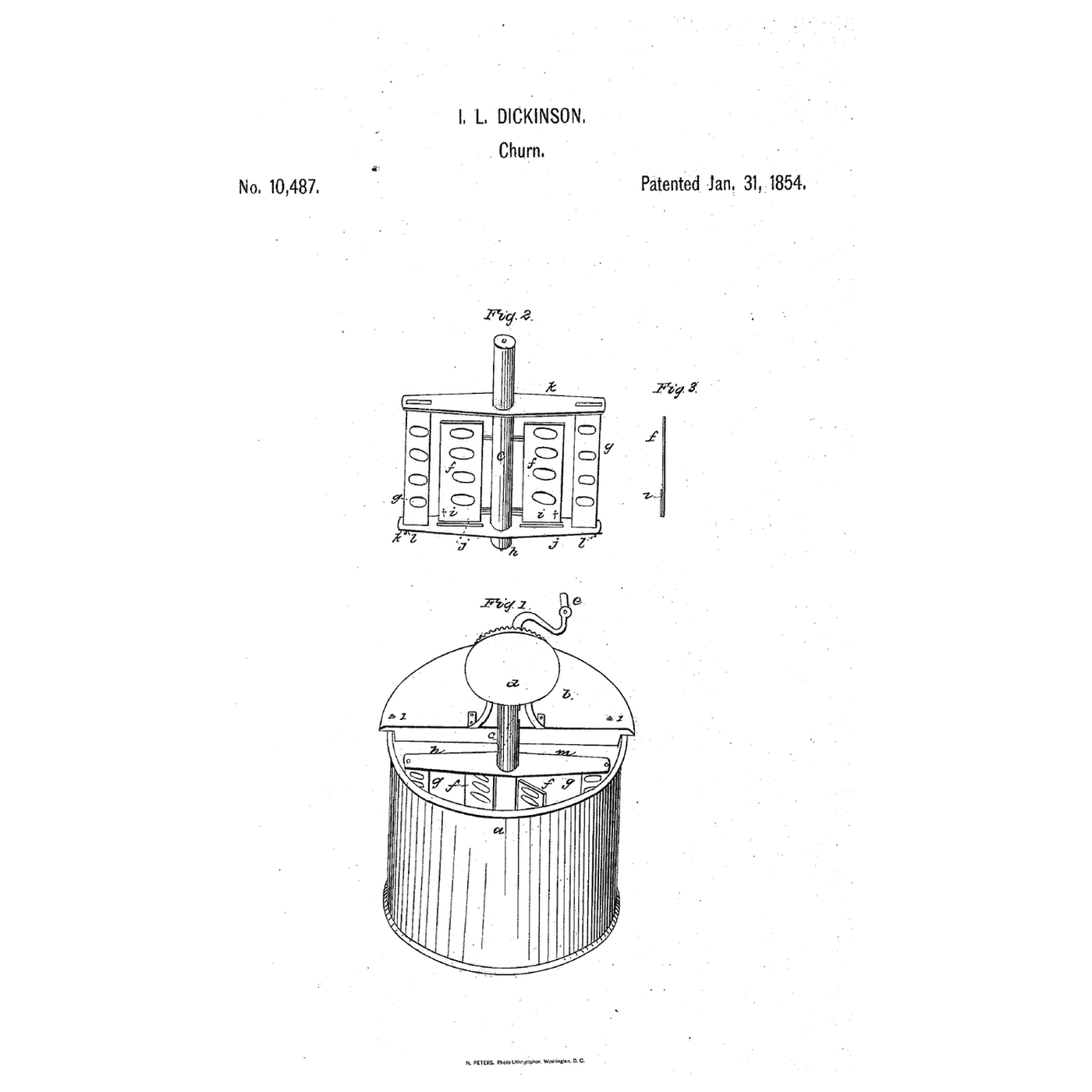
Liftable-Breaker Dasher Churn: Breakers Stand Still to Churn, Then Lift and Turn to Gather
ngu-Emma
UKUDLA NEZIPHUZO
26
0
0
0
0
0
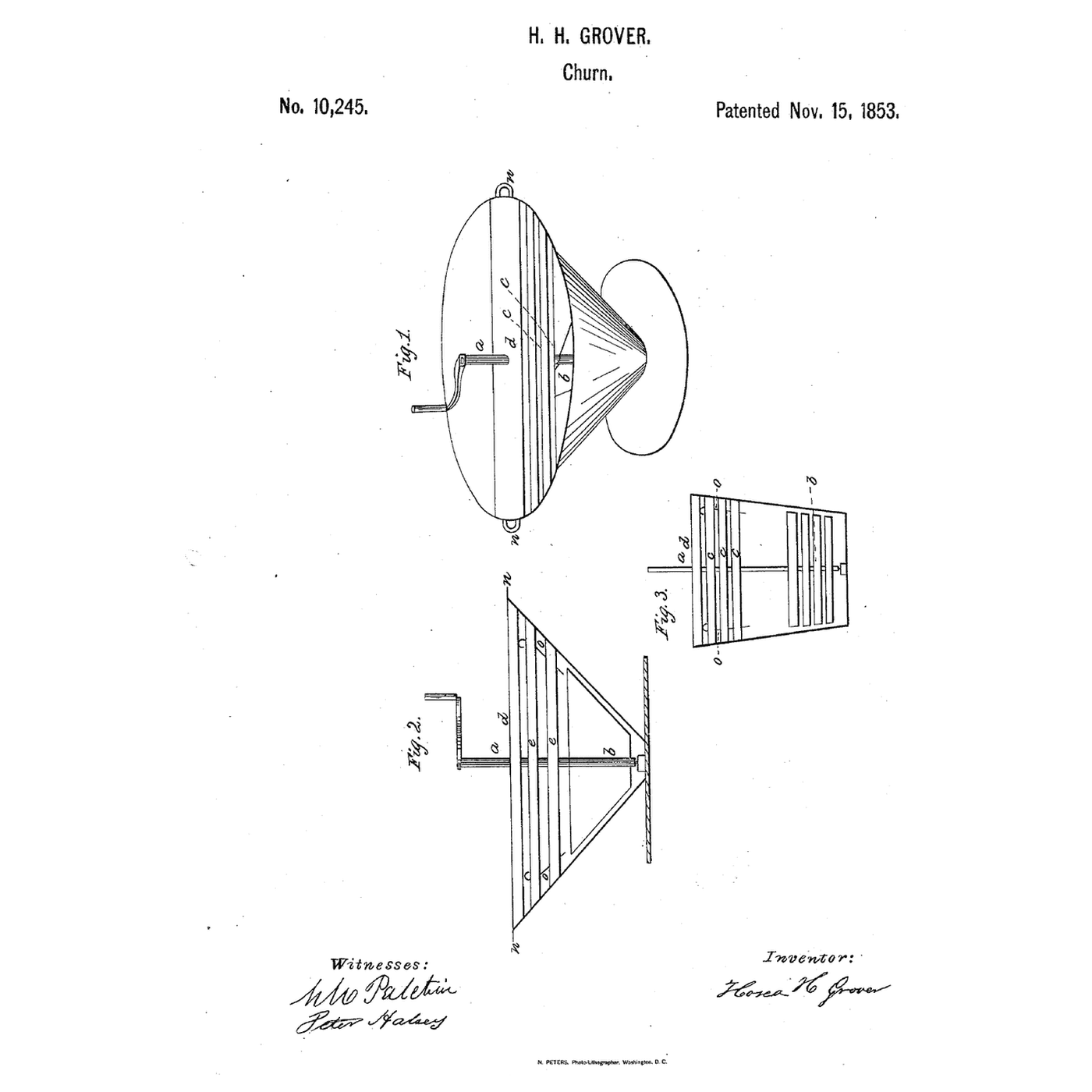
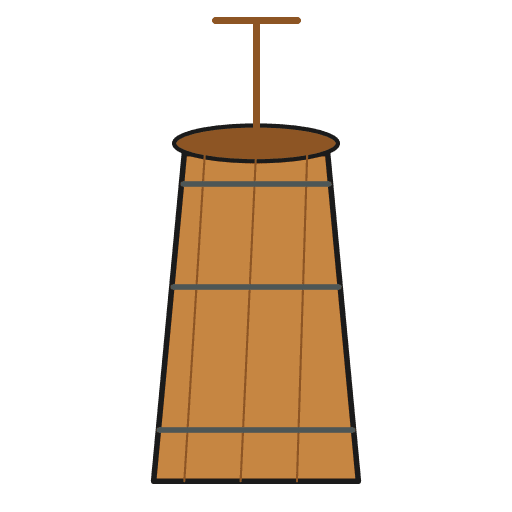
Flaring-Tub Slat-Reactor Churn: The Cream Climbs the Flare and Is Beaten Back by Slats
ngu-TheChef
UKUDLA NEZIPHUZO
17
0
0
0
0
0

Churning Butter from Cream — The 5,000-Year-Old Fat Separation
ngu-TheChef
UBUCIKO BEZANDLA
54
0
0
0
0
0
CC0 Isizinda Somphakathi
Le blueprint ikhishwe ngaphansi kwe-CC0. Ukhululekile ukukopisha, ukuguqula, ukusabalalisa, nokusebenzisa ngaphandle kwemvume.
Sekela uMenzi ngokuthenga imikhiqizo nge-Blueprint yabo IKhomishane Yomenzi kumiswe ngabathengisi, noma dala inguqulo entsha yale Blueprint bese uyifaka njengoxhumaniso ku-Blueprint yakho ukuze wabelane ngemali engenayo.