UBUCIKO
UBUHLE NEMPILO
UBUCIKO BEZANDLA
AMASIKO NOMLANDO
EZOKUZIJABULISA
IMVELO
UKUDLA NEZIPHUZO
REVERSE ENGINEERING
IZAYENSI
EZEMIDLALO
UBUCHWEPHESHE
IZINTO EZIGQOKWAYO
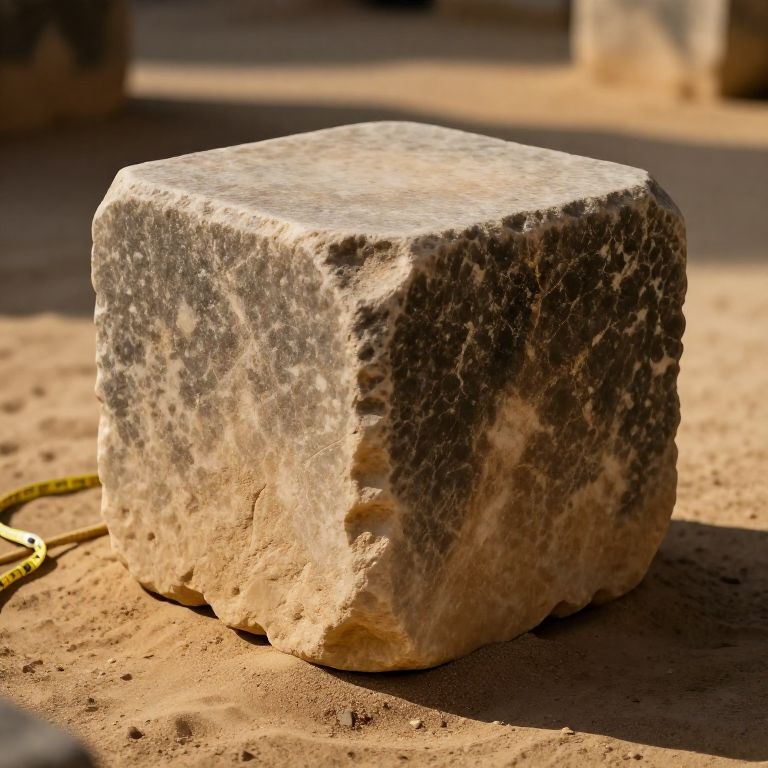


Heron's Square Roots — Fold a Rectangle Toward a Square
A hands-on maths project: draw a rectangle of a chosen area, then repeatedly average its sides to reshape it toward a perfect square -- and its side is the square root. This is Heron's 2,000-year-old averaging method; a Python cell shows how fast it converges, and a compendium reveals it is secretly Newton's method.
Oqalayo
30 minutes
Imiyalelo
1
1
The root of an awkward number
The root of an awkward number
What is the square root of 10? It has no neat answer. Over 2,000 years ago Hero of Alexandria found a way to close in on it by averaging. The square root of a number is the side of a square with that area -- so you will chase a square.
2
2
Draw a rectangle of the right area
Draw a rectangle of the right area
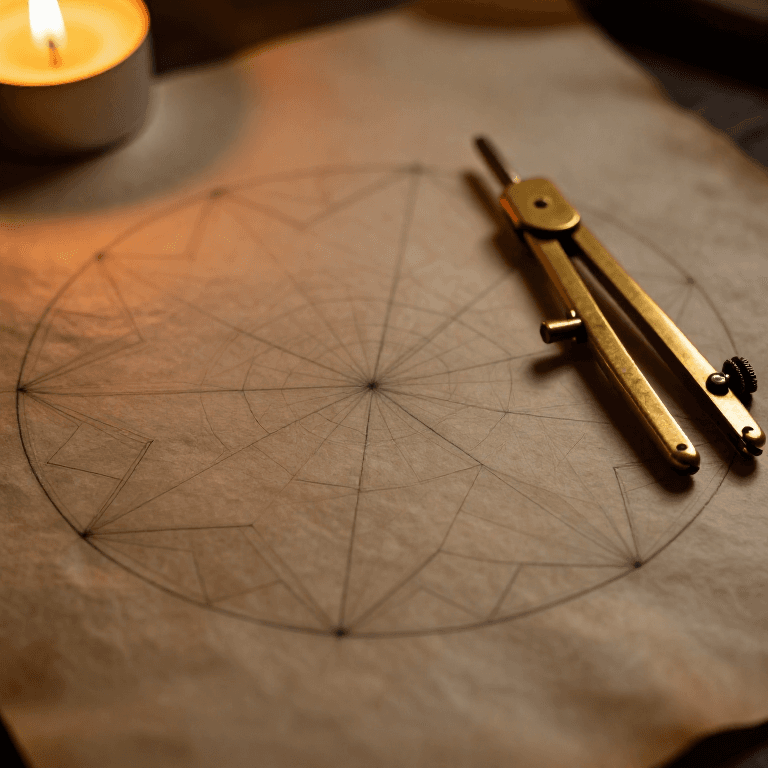
You want the square root of 10, so draw a rectangle with area 10 square units -- say 10 by 1, or 5 by 2. It is the wrong shape (a long thin rectangle), but it has the right area.
Izinto zokwakha zalesi sinyathelo:
 Iphepha Eliqinile1 ucezu
Amathuluzi adingekayo:
 Irula
Irula Iqoqo Lamapensela E-graphite
3
3
Average the sides, again and again
Average the sides, again and again
Take the two side lengths and AVERAGE them to get a new width; the new height is the area divided by that width (so the area stays 10). Draw the new, less lopsided rectangle. Repeat two or three times: 5 and 2 average to 3.5 (height 2.857), then 3.18 (height 3.14), then 3.162... The rectangle squares up, and its side is the square root of 10, about 3.162.
Amathuluzi adingekayo:
 Isibali
4
4
Watch it converge
Watch it converge
Ilayisha incwadi ye-Jupyter…
Amathuluzi adingekayo:
 Ikhompyutha YasetafuleniIsibali
5
5
Compendium: an ancient method that never left
Compendium: an ancient method that never left
What your squaring-up shows. (1) If a guess is too big, the area divided by it is too small, and the true root lies between -- so their average is a better guess. (2) The accuracy roughly DOUBLES each step ('quadratic convergence'), so about five rounds reach full calculator precision. (3) Start with a sensible guess, near the root, and it races in immediately. (4) Heron's averaging is exactly what you get by applying Newton's method to 'x squared minus S' -- but Hero found it about 1,600 years before Newton, and it is still how calculators and computer chips extract square roots today.
Izinto
2- 1 ucezuIsibambeli
- 1 ishidiIsibambeli
Ama-blueprint ahlobene
Lama-blueprint abelana ngolwazi — amasu, izinto noma izimiso

CC0 Isizinda Somphakathi
Le blueprint ikhishwe ngaphansi kwe-CC0. Ukhululekile ukukopisha, ukuguqula, ukusabalalisa, nokusebenzisa ngaphandle kwemvume.
Sekela uMenzi ngokuthenga imikhiqizo nge-Blueprint yabo IKhomishane Yomenzi kumiswe ngabathengisi, noma dala inguqulo entsha yale Blueprint bese uyifaka njengoxhumaniso ku-Blueprint yakho ukuze wabelane ngemali engenayo.