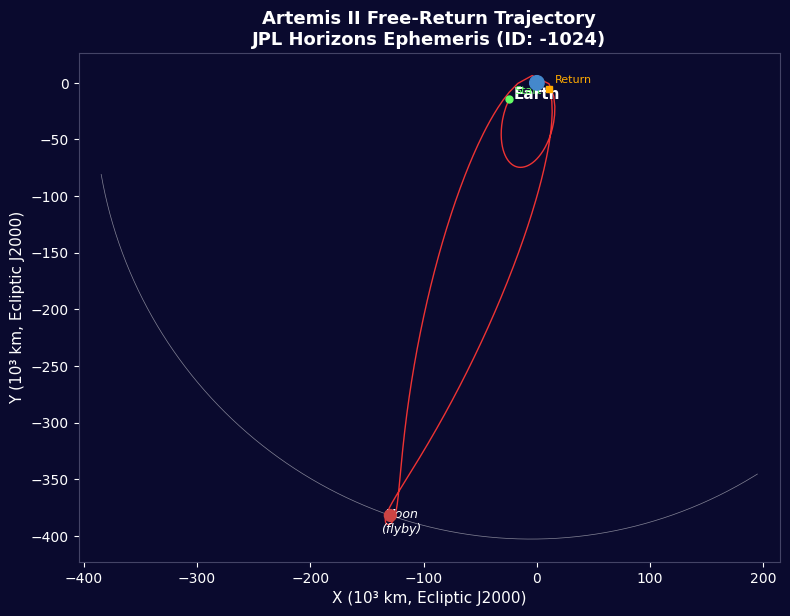


Artemis II - Idata Yokuphuhumela Ye-JPL Horizons
Imiyalelo
Inhloso Yokuphumula
Inhloso Yokuphumula
Izinto zokwakha zalesi sinyathelo:
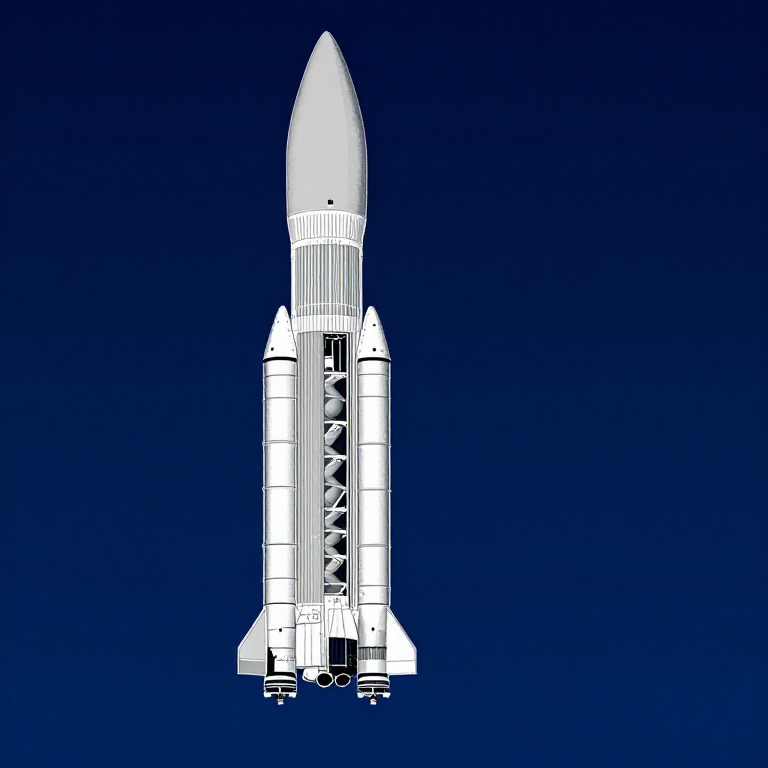
 Ikhithi yerokhethi elifanekisiwe (amandla amakhulu)1 (SLS Block 1 reference) ucezu
 I-hydrogen144,000 kg (core stage) kg
 I-oxygen840,000 kg (core stage) kg
 Uphethiloli oqinile werokhethi1,000,000 kg (2 boosters) kg
 Umkhumbi-mkhathi i-Orion1 (CM-003 Integrity) ucezu
 Abasebenzi bomkhathi4 izicucu
Amathuluzi adingekayo:
 Inkundla yokwethula irokhethi
Thwala Amakhothebhu
Thwala Amakhothebhu
Izici zeMhlaba kanye noMwezi
Izici zeMhlaba kanye noMwezi
Idata ye-SLS Block 1 Rocket
Idata ye-SLS Block 1 Rocket
Isivinini se-Orbit Sesiyindlu
Isivinini se-Orbit Sesiyindlu
Isivinini Sokuthathelela
Isivinini Sokuthathelela
Isibalo se-Tsiolkovsky Rocket
Isibalo se-Tsiolkovsky Rocket
I-Trans-Lunar Injection
I-Trans-Lunar Injection
I-Free-Return Trajectory
I-Free-Return Trajectory
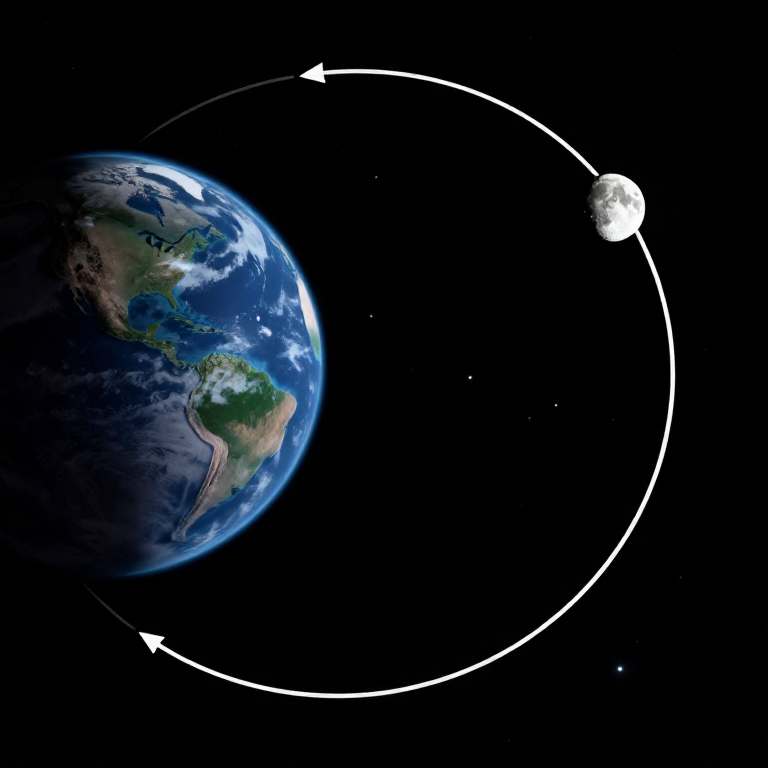
I-Moon Flyby Hyperbola
I-Moon Flyby Hyperbola
Umkhangela Kumaphuzu Eziyinhloko
Umkhangela Kumaphuzu Eziyinhloko
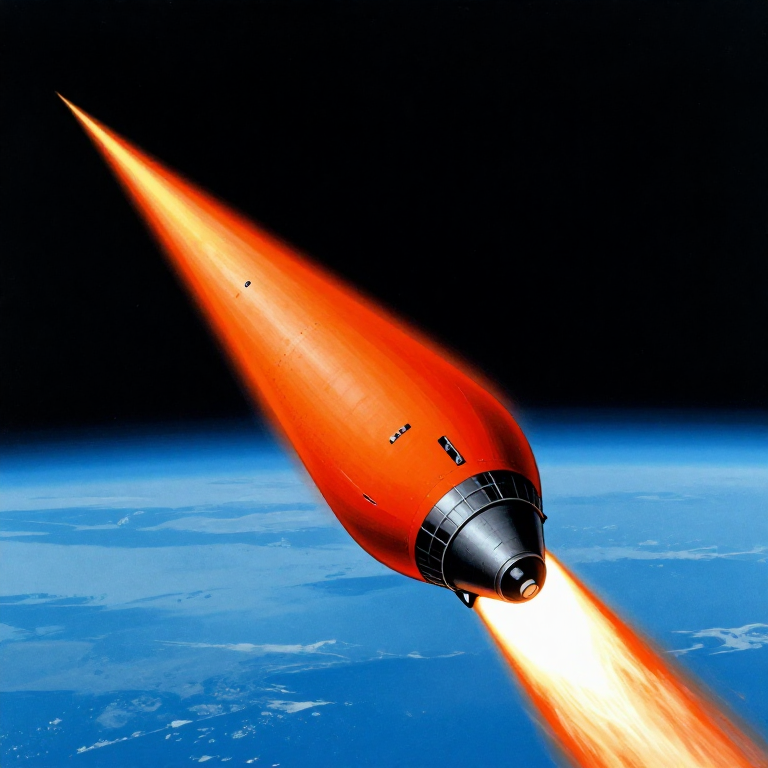
Ukubuya Ekufukuzelen Komoya
Ukubuya Ekufukuzelen Komoya
Umugca Womnotho
Umugca Womnotho
Ukubuka I-Trajectory
Ukubuka I-Trajectory
Isifinyezo Sesabelwano Samandla
Isifinyezo Sesabelwano Samandla
Python vs Wolfram
Python vs Wolfram
What free Python can do vs Wolfram Mathematica
| Capability | Python (free) | Mathematica ($$$) |
|---|---|---|
| Orbital mechanics equations | NumPy/SciPy — full coverage | Built-in symbolic + numeric |
| JPL Horizons ephemeris data | REST API + gzip/json (as shown above) | HorizonsEphemerisData[] function |
| Unit-aware calculations | Pint library | Built-in Quantity framework |
| 2D/3D trajectory plots | Matplotlib (4-panel dashboard above) | Built-in Graphics3D + Manipulate |
| Real-time ephemeris data | Astropy + JPL Horizons API | Built-in AstronomicalData[] |
| Interactive animation | ipywidgets / Plotly | Manipulate[] — seamless |
| Symbolic algebra | SymPy | Native — Mathematica's core strength |
| Deployment | Runs anywhere (browser via Pyodide) | Requires Wolfram licence or Cloud |
Verdict: Using the same JPL Horizons data source as Wolfram, Python reproduces the Artemis II trajectory with identical data points — 428 state vectors covering the full 10-day mission. The analytical model (Hohmann transfer + patched conics) predicts TLI speed within 3% and flyby distance within 0.4% of reality.
Mathematica's edge is in symbolic manipulation and the seamless Manipulate[] 3D animation. But for numerical computation, data analysis, and reproducibility, Python is fully capable — and this entire blueprint runs in the browser via Pyodide. No server, no licence, no installation.
Izinto
6- 1 (SLS Block 1 reference) ucezuIsibambeli
- 144,000 kg (core stage) kgIsibambeli
- 840,000 kg (core stage) kgIsibambeli
- 1,000,000 kg (2 boosters) kgIsibambeli
- 1 (CM-003 Integrity) ucezuIsibambeli
- 4 izicucuIsibambeli
Amathuluzi Adingekayo
1- Isibambeli
CC0 Isizinda Somphakathi
Le blueprint ikhishwe ngaphansi kwe-CC0. Ukhululekile ukukopisha, ukuguqula, ukusabalalisa, nokusebenzisa ngaphandle kwemvume.
Sekela uMenzi ngokuthenga imikhiqizo nge-Blueprint yabo IKhomishane Yomenzi kumiswe ngabathengisi, noma dala inguqulo entsha yale Blueprint bese uyifaka njengoxhumaniso ku-Blueprint yakho ukuze wabelane ngemali engenayo.