
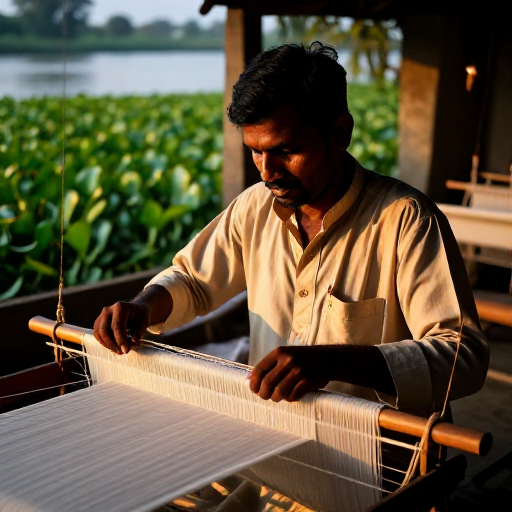

Ukunqunywa kwebhamboo nokuqophela - Ukuqokelela ibhamboo e-Bangladesh
Imiyalelo
Khomba iindlela zezinhlobo ze-bamboo
Khomba iindlela zezinhlobo ze-bamboo
Cishe izinhlobo ezingama-33 ze-bamboo ezitholakala e-Bangladesh. Izinhlobo ezintathu eziyinhloko zibalulekile ekwakhiweni nasekusetshenzisweni kwezandla. I-bamboo enkulu (Bambusa balcooa) — inomsebe omkhulu, inamandla, imiphetho emikhulu, ububanzi obungu-8-15 cm, ubude obungu-15-25 umetre, isetshenziswa kakhulu emsebenzini wokwakha. I-Muli bamboo (Melocanna baccifera) — imahlicane, inokuphenduka, ububanzi obungu-3-7 cm, ubude obungu-10-20 umetre, ifanele ekwenzeni amathwele namalembe, inengi e-Chittagong Hill Tracts. I-Mitinga bamboo (Bambusa tulda) — ingangatho elimele, ububanzi obungu-5-10 cm, isetshenziswa kwindustri yephepha nokwakha okuvuthululekile.
Khetha i-bamboo eluliwe
Khetha i-bamboo eluliwe
I-bamboo ngokuvamile iluliwa ngeminyaka engu-3-5. Ekwakhiweni, i-bamboo eneminyaka engu-3-4 ilungile kakhulu — ukuyigeba ngaphandle kwaleli likhasi kwenza i-bamboo ibulaleke futhi ibenakekele ekuhlaselweni yizinambuzane. Indlela yokubona i-bamboo eluliwe: umbala ushintsha uvela kuluhlaza okumnandi kuya kuluhlaza okubhalwe iyellowe, ipuludi eluhlaza (lichen) ivela kunodoli, izizwa ziluhlaza lapho zisongezwa, nokushaya ngenthakalo zakho uzwi isandi esicacile sezinto zensimbi (i-bamboo engaluliwe ikhiphi isandi esimbi). I-bamboo eneminyaka engaphezu kwengu-5 iba nobulaleko.
Thola isigwebo sokusika esifanele
Thola isigwebo sokusika esifanele
Isikhathi esingcono kakhulu sokuSika bamboo yisikhathi esomile — Novemba kuya kuFebruwari. Ngesikhathi sona, inani le-starch neswekela ebamboo liphakeme kakhulu, ngaleyo ndlela kunciphisa umngcele wezinsects (ikakhulukazi i-powder post beetles). I-bamboo esikwa ngesikhathi se-umlaza (June-September) ine-starch eningi futhi izinsects iziyiphakamise ngokushesha. Ukusika ekusuka emuva kwenyanga elungile (imvula) kubalikazi kwenyanga okusha kuveza ukuthi kukhona i-sap encane ebamboo — lona ulwazi lwesiko oluthandwa ubufakazi obuthile. Qala ukusika ngoMsombuluko ekuseni uma izinga lokushisa liliphansi.
Lungiselela izinsimbi zokusika
Lungiselela izinsimbi zokusika
I-daa ebukhali (isipeshuli sase-Bangladesh esisindo) iyithuluzi eliyinhloko lokusika i-bamboo. Iblade ye-daa kufanele ibe nde-30-45 cm ubude futhi inesisindo ukuze i-bamboo ikwazi ukusikwa kwistroke enye noma ezimbili. Sharpena i-daa kwi-sharpening stone ngaphambi kokusika. I-hand saw ingase futhi isetshenziswe kwe-bamboo ethile. Ngokuqinisekisa ukuphepha, xova imikhovu yezambatho ethile futhi izicathulo ezinokunetheza — amacala e-bamboo esikwayo aybukhali kakhulu.
Amathuluzi adingekayo:
 Da
Da Itshe Lokulola
 Amagilavu Esikhumba Anemikhono Emide
 Izicathulo eziqinile ezivaliwe phambili
Landela izimiso zokumisa ngendlela esingathathi noma engakhohlisi
Landela izimiso zokumisa ngendlela esingathathi noma engakhohlisi
Ungakwazi ukumisa kuphela u-30% kweculms evela ku-bamboo clump — lokhu kugcina impilo ye-clump kanye nangamandla okubuyela umuntu. Kusuka ku-bamboo clump esilungu, ama-culms 3-8 amodala angakhohlwa ngonyaka. Kuqala, susa ama-culms aomile, adetha, namatshitshisiwe. Bese ukhetha ama-culms amdala kakhulu. Siyeke ama-culms amancane (iminyaka engu-1-2, oluhlaza okwesibhakabhaka) kanye nezihlungu ezintsha.
Sika ngokuphakamelo okufanele
Sika ngokuphakamelo okufanele
Sika i-bamboo ngaphezulu kwenode yokuqala noma yesibili usuka emhlabeni. Ukusika ngaphansi kwenode kunganetheza i-rhizome (uhlelo lwemithi engaphansi komhlaba), okubhubhisa ukukhula kwesizathu. Lapho usika, sika nge-diagonal nge-angle ye-45-degree — lokhu kuvimbela amanzi enzalo anguvunguluka ekhanda elasikwe. Yenza umgamulelo onhlanzeko nge-machete ngestroke eyodwa noma ezimbili — amasulwa amaningi ayenza i-bamboo iphuke ihlakaze. Nikeza isikali ekuqondisweni i-bamboo izowela lipi lapho usika — i-bamboo ingaba nge-15-25 metres ubude.
Amathuluzi adingekayo:
DaSika amakela amagatsha
Sika amakela amagatsha
Sika amakela namaqabunga evumba elisikiwe. Amagatsha avela eminodini yevumba — sika lezi eduze kominodini usebenzisa imachete. Sika evumba ube ngebubude obusetshenzisekayo njengokufuna — ngokuvamile izigaba ezinobubude obungu-3-4 amitha ziyinto elula ekusebenzeni kwezakhiwo. Zenza insingano ngaphezu kwenodi ngayinye esikiwe, njengoba ukusika phakathi kwenodi kunengozi yokwahlukanisa. Shiya amagatsha amakela namaqabunga esisekelo sevumba elipundakwe — lokhu kuyahosha futhi kuba yisibhedlele sefemiki esiqondile esihlinzeka ngokondla kumpundakwe.
Amathuluzi adingekayo:
Da Isaha Sesandla
Ukuqokelela kanye Nokuthutha iKhoba
Ukuqokelela kanye Nokuthutha iKhoba
Gcina ikhoba eliseziwe elihlukile emhlabeni — ukuyibeka ngqo emhlabeni kuzosisulela okulahlwayo nokuvimba. Yibeka ngokuthi ibheke ohlangothini olunye kuma-pisi amabili okhuni noma ikhoba enomoya engaphansi. E-Bangladesh, ikhoba ngokwesiko ithutha ngokuyayofeza zitolo ezisikwele futhi iyiveze emfuleni — lokhu kuzohambisana nokusakhela ikhoba emnandi e-manzi. Ukuthuthwa kolwandle, sebenzisa van noma amatilakisi. Inqubo yokusakha emnandi kufanele iqale ngaphakathi kuma- hora angu-24 ngemuva kokuqhelwa ikhoba.
Izinto zokwakha zalesi sinyathelo:
 Izinduku zokusekela zobhambhu4 izicucu
Longiselele ngokugalela emanzini
Longiselele ngokugalela emanzini
Ukulungisa amanzi ngunye indlela elula kakhulu futhi ephumelele kakhulu yokulinda i-bamboo. Gcina i-bamboo ebaziwe ngokungenelela kuyo ngokugcwele emanzini entabeni, emfuleni noma esifulaneni. Uma i-bamboo ikhipha, sinisele phansi ngezitshalo ezimbi noma izinkuni. Yigcina icindezelwe emanzini ngama-lingana 4-8 emavikilanga — ngaleso sikhathi amanzi ayathola futhi ayesusa i-starch neswekile esikuphelele se-bamboo. Lapho i-starch isusiwe, izinambuzane aziyikuhlasela i-bamboo. Enye indlela: ukugalela ku-solution ye-borax-boric acid (i-borax engamagram angama-50 ne-boric acid engamagram angama-50 nge-litela elimodule) izolungisa ngezikhathi ezingama-2-3 emavikilanga futhi inikeza ukulungisa okwengeziwe kwe-insecticide.
Izinto zokwakha zalesi sinyathelo:
 Amatshe asindayo6 izicucu
Amathuluzi adingekayo:
 Ukufinyelela echibini ukuze kucwiliswe
Hlola ukuthi isizini siphelele
Hlola ukuthi isizini siphelele
Ngemva kuka-4-8 amaviki, susa i-bamboo emanzini futhi hlola. Imikhomba ye-bamboo eyenziwe indawo: umbala ushintsha usuka ku-light yellow-green uye ku-pale brown, awekho sticky sap ezindlunkulu zangaphakathi, awekho umoya omnonci osewuhlukile ezingceleni zeziwa nanamuhla. Uma kusala i-sticky sap noma umoya omnonci, yigcine emanzini kwangesinye isikhathi ku-1-2 amaviki. I-bamboo engeyenziwe indawo ngokuphelele izodliwa yizinambuzane ngaphakathi kokungu-few months.
Oma ngcwanye
Oma ngcwanye
Busa i-bamboo enobumba amanzi bese uyivumela ukuoma ngcwanye — ukuoma ngcwanye kwelanga okundirect kubangela ukuthi i-bamboo ipheke ngokushesha. Hlela i-bamboo ngokuvundlile ngokuphakamela phezu komhlaba ukuze umoya urhoke kuzo zonke izinhlangothi. Oma ngcwanye okwamaviki angu-4-6. Phinda i-bamboo kuvakashi ngesikhathi ukuloma ukuze iome ngokulinganayo. Qinisekisa ukuthi umsoco wewater uyakhe ngaphansi kuka-15%. I-bamboo eyesilisiwe ipheka nokwanda kalula; i-bamboo eomile ngokulungile iyanda, iyasimama, futhi ayikhathalelwa yizinambuzane.
Amathuluzi adingekayo:
 Ishalofu lokomisa eliphakamisiwe
Hlola ukoma
Hlola ukoma
Indlela yokuqinisekisa ukuthi i-bamboo iyomile ngokwanele: Isisindo — i-bamboo eyomile inzima kakhulu uma iqhathaniswa ne-bamboo eluhlaza. Umbuzo wesikali — lapho kuthintwa i-bamboo eyomile ngunwe, ikhipha isikali esobala, esihle; i-bamboo emanzini ikhipha isikali esibuku. Umbala — i-bamboo eyomile ngokuphelele inombala oluvuyo olufana nokhuni. Umkhakha oguqulwe — indonga yangaphakathi ikahlela futhi iqine, ngaphandle kweshushu noma i-fungus. Uma imeter yeshushu itholakala, ishushu lika-12-15% lilungile ngokusebenzisana nomsebenzi wokwakha.
Amathuluzi adingekayo:
 Imitha yomswakama
Hlukanisa ngokuya ngobukhwalithi
Hlukanisa ngokuya ngobukhwalithi
Hlukanisa i-bamboo eyomile ibe izigaba ezintathu. Isigaba sokuqala — esingqo, esinganabambi, ine-diameter efanayo, enganamangcolwane — efaneleka ekwakhiweni nezenzakalelweni zezitali, ithengisa emhlanganisweni ophakamileyo. Isigaba sesibili — esinokukhothalela kancane noma esinabambi abancane — efaneleka okufengeni, ekusebeliseni ezisekelo, imigoqo, njll. Isigaba sesithathu — esinokukhothalela, esinabambi noma esinobugwili — ingasetshenziswa ngokunye noma ekwenzeni izembe. Gcina i-bamboo yesigaba ngasinye ehlukene.
Ukulungiswa
Ukulungiswa
Ibamboo elungiselwe kahle futhi eomisiwe isikhathi eside ngesikhathi sokulikhaza ngendlela efanele. Hlala ubamboo uphakamiswe phansi—ezihlwaneni noma ezigcekeni zezinkuni. Likhazele ngaphansi kwesheluthi ukuze ulikhuse ekuseni namelanga okuqondile. Gcina umoya oqotho osizingela ibamboo—amafungazi akhula ezindaweni ezivaliwe. Gcina ibamboo elele, ungayilimi nguqo—ibamboo yagoba lapho ilinde. Kuvamile ukuhlola ngokuhlasela kwezinambuzane—izinqwaba ezincane zepulveri zibonisa umonakalo we-powder post beetle. Ibamboo elungiselwe kahle ngokuvamile iyaphakamisa izinambuzane.
Izinto zokwakha zalesi sinyathelo:
 Izitini zokweseka8 izicucu
Amathuluzi adingekayo:
 Indlu yokugcina enophahla
Izinto
3- 4 izicucuIsibambeli
- 6 izicucuIsibambeli
- 8 izicucuIsibambeli
Amathuluzi Adingekayo
9- Isibambeli
- Isibambeli
- Isibambeli
- Isibambeli
- Isibambeli
- Isibambeli
- Isibambeli
- Isibambeli
- Isibambeli
Le blueprint yenza

CC0 Isizinda Somphakathi
Le blueprint ikhishwe ngaphansi kwe-CC0. Ukhululekile ukukopisha, ukuguqula, ukusabalalisa, nokusebenzisa ngaphandle kwemvume.
Sekela uMenzi ngokuthenga imikhiqizo nge-Blueprint yabo IKhomishane Yomenzi kumiswe ngabathengisi, noma dala inguqulo entsha yale Blueprint bese uyifaka njengoxhumaniso ku-Blueprint yakho ukuze wabelane ngemali engenayo.