Ukusebenzisana
UBUCIKO
UBUHLE NEMPILO
UBUCIKO BEZANDLA
AMASIKO NOMLANDO
EZOKUZIJABULISA
IMVELO
UKUDLA NEZIPHUZO
REVERSE ENGINEERING
IZAYENSI
EZEMIDLALO
UBUCHWEPHESHE
IZINTO EZIGQOKWAYO
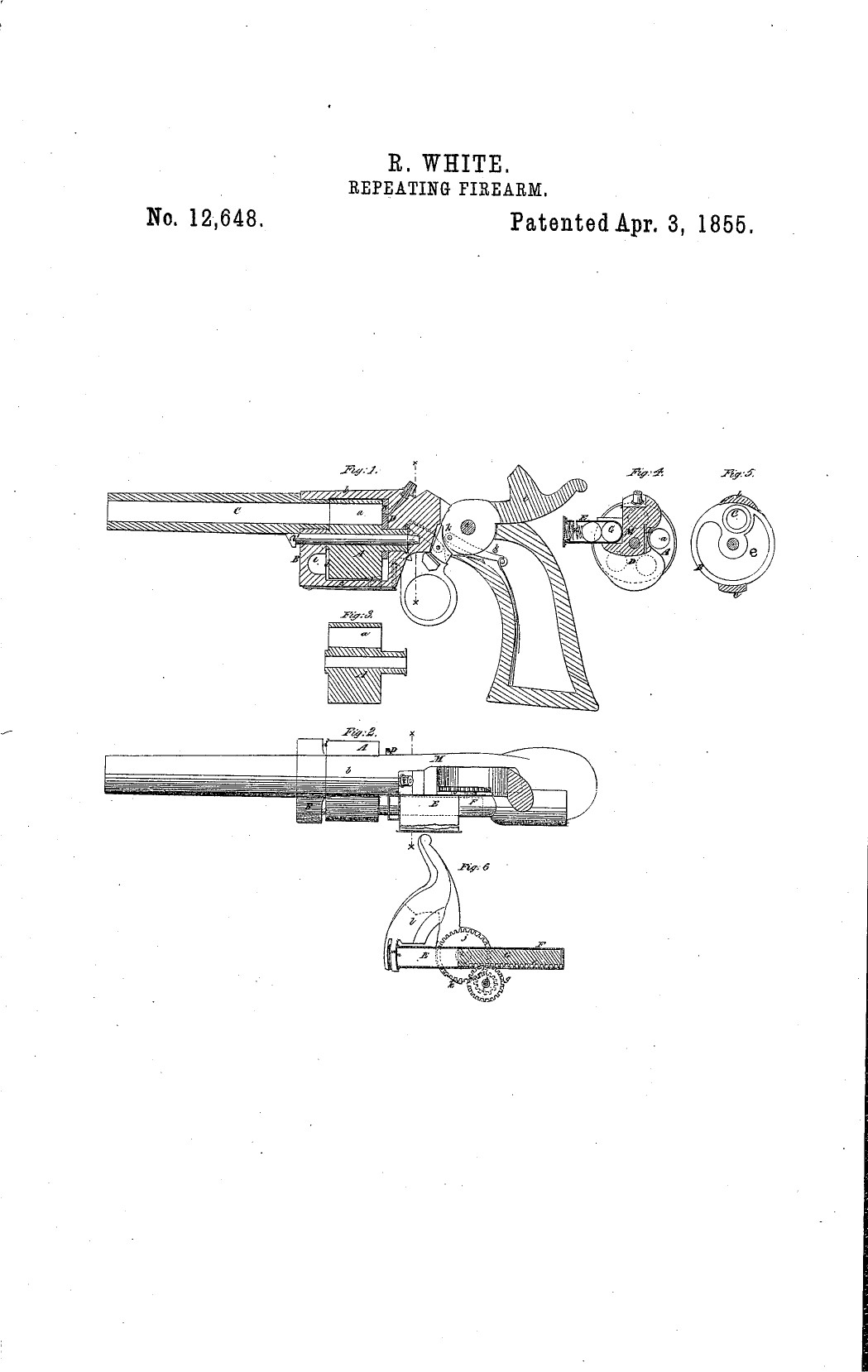

The Bored-Through Cylinder and the Self-Contained Cartridge (Rollin White, 1855) - History and How It Works
Oqalayo
About 15 minutes
Imiyalelo
1
1
Read White's patent
Read White's patent
His first claim: "Extending the chambers a a of the rotating cylinder A right through the rear of the said cylinder." (US 12,648, dated 3 April 1855.)
2
2
How it works, in principle
How it works, in principle
With the chambers open at both ends, a cartridge (powder and ball made up as one unit) goes in from the back instead of being loaded loose from the front. White made the chambers slightly conical, smallest at the front, "in order that a cartridge may be inserted easily at the back, but that the ball may fit tight when it arrives in its place".
3
3
What came of it
What came of it
Once cartridges carried their own powder, ball and ignition in a metal case, a revolver could be reloaded in seconds from the back. Smith & Wesson built their first cartridge revolvers under a licence of White's patent.
4
4
Honest limits
Honest limits
From the text of US 12,648 (1855). His patent also describes a magazine and charging piston not covered here. This page gives no dimensions, charges or making steps, by design.
Ama-blueprint ahlobene
Lama-blueprint abelana ngolwazi — amasu, izinto noma izimiso
Yingozi
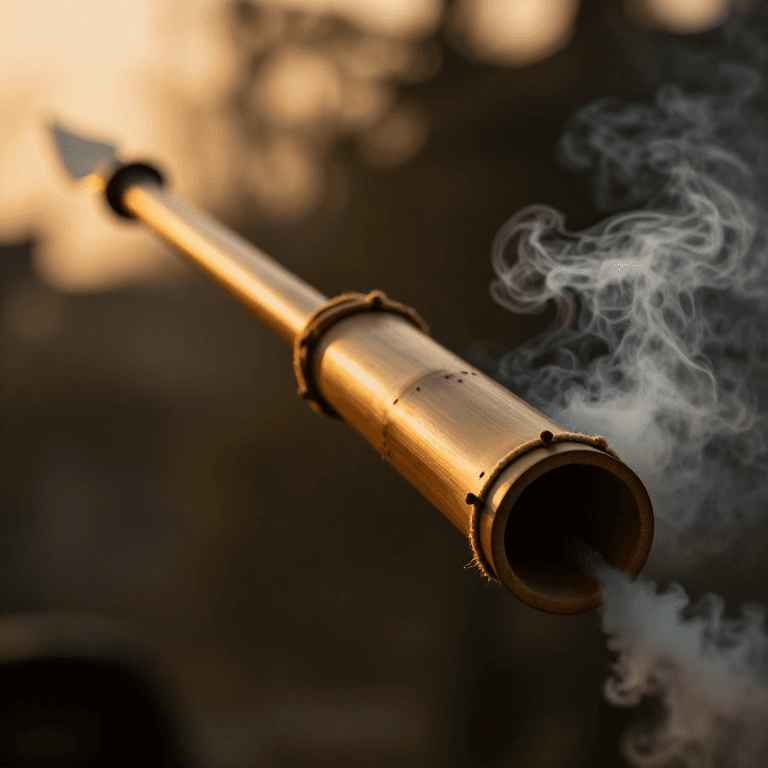
Building a Song Dynasty Fire Lance — The World's First Gunpowder Weapon
ngu-Charlie
Izikhali
116
1
0
0
4
0
Yingozi
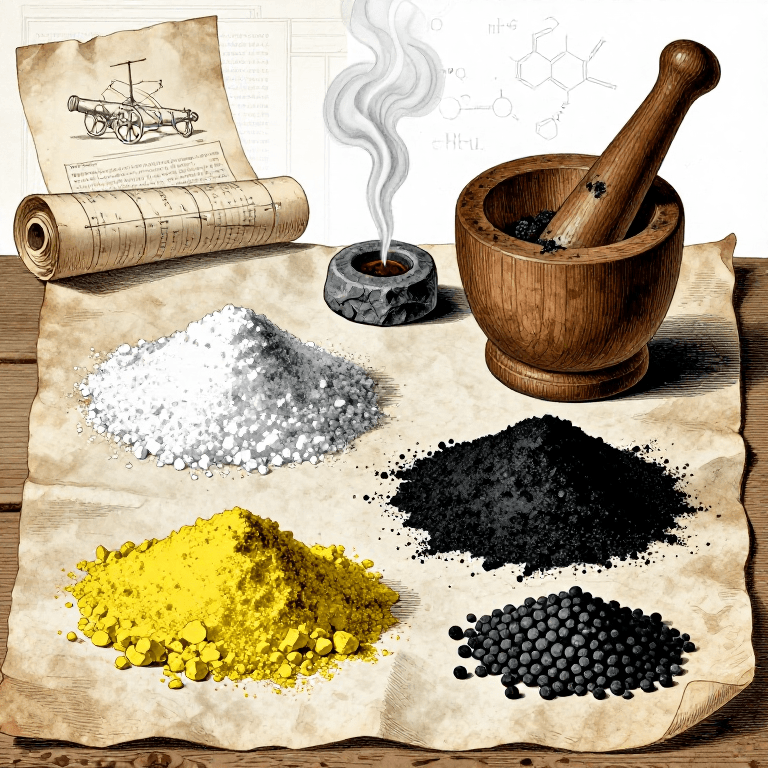
Making Black Powder from Saltpeter, Sulfur, and Charcoal — The Mixture That Changed the World
ngu-Charlie
Izikhali
197
0
0
0
7
0
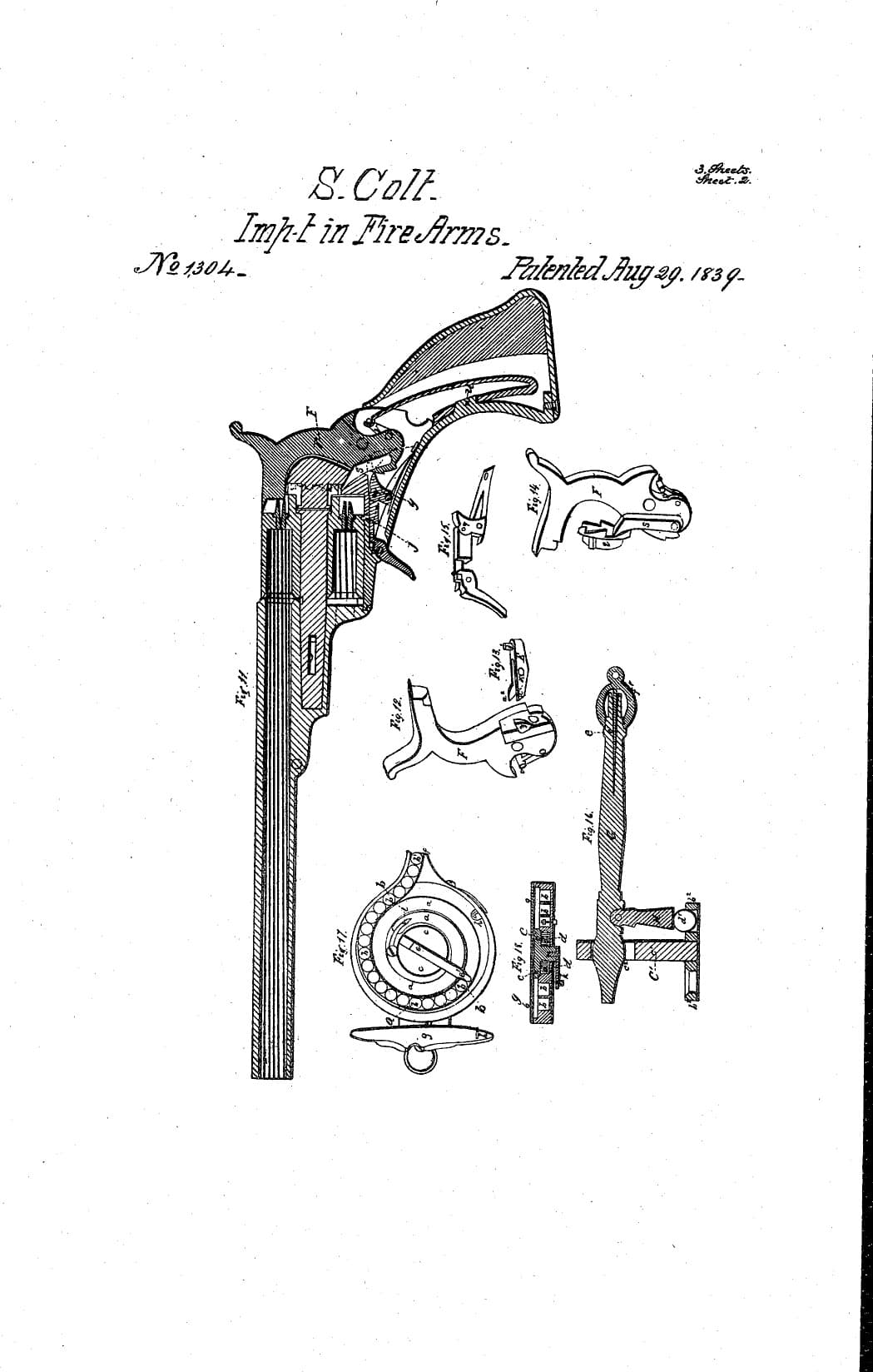
The Revolver: Several Chambers Turning Behind One Barrel (Colt, 1836 and 1839) - History and How It Works
ngu-Charlie
Izikhali
2
0
0
0
0
0
CC0 Isizinda Somphakathi
Le blueprint ikhishwe ngaphansi kwe-CC0. Ukhululekile ukukopisha, ukuguqula, ukusabalalisa, nokusebenzisa ngaphandle kwemvume.
Sekela uMenzi ngokuthenga imikhiqizo nge-Blueprint yabo IKhomishane Yomenzi kumiswe ngabathengisi, noma dala inguqulo entsha yale Blueprint bese uyifaka njengoxhumaniso ku-Blueprint yakho ukuze wabelane ngemali engenayo.