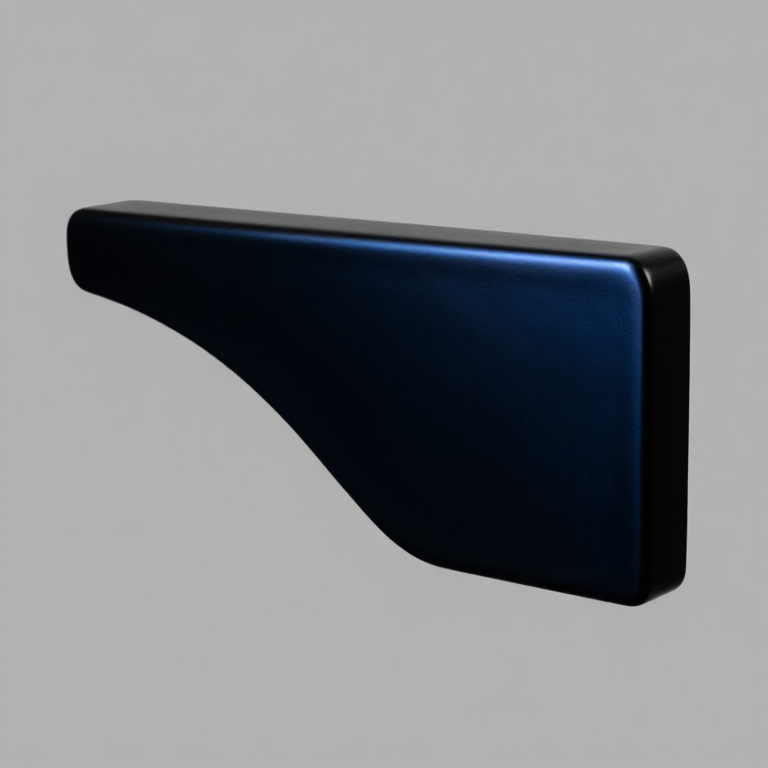


Bower-Barff Rustless Iron
Iron rusts because oxygen attacks it and the product, red iron oxide, is porous, loose and larger than the metal it came from. It flakes away and exposes fresh iron underneath, so rusting never stops.
But iron has another oxide. Magnetite, Fe₃O₄, is black, dense, hard and adherent, and it does not flake. The Bower-Barff process deliberately grows that oxide instead of the bad one — using superheated steam on red-hot iron, which oxidises the surface while giving off hydrogen, and controlling conditions so the black oxide forms rather than the red.
It is the same chemistry as the blue-black on a gun barrel or the surface of a well-used cast iron pan, done industrially and thickly. The finish was sold as "rustless iron" and used across late-Victorian architectural ironwork, railings, lamp standards and builders' hardware.
Frederick Settle Barff patented the superheated-steam method in 1876; George Bower, an ironfounder, added a producer-gas stage and made it commercially workable around 1880. The combined process carries both names. ⚠ We have not been able to pin either British patent number — the process is documented in contemporary trade pamphlets and in Popular Science Monthly (1886) rather than by a number we can verify, and this blueprint does not invent one.
Imiyalelo
Understand which oxide you are trying to make
Understand which oxide you are trying to make
Write the two down before you light anything:
Fe₂O₃ — red rust. Porous, flaky, larger in volume than the iron it replaced. Falls off and exposes fresh metal.
Fe₃O₄ — magnetite. Black, dense, hard, tightly adherent. Seals the surface.
Both are iron plus oxygen. The whole process is about steering the reaction to the second one — which means hot, and starved of free oxygen.
Clean the iron and load the retort
Clean the iron and load the retort
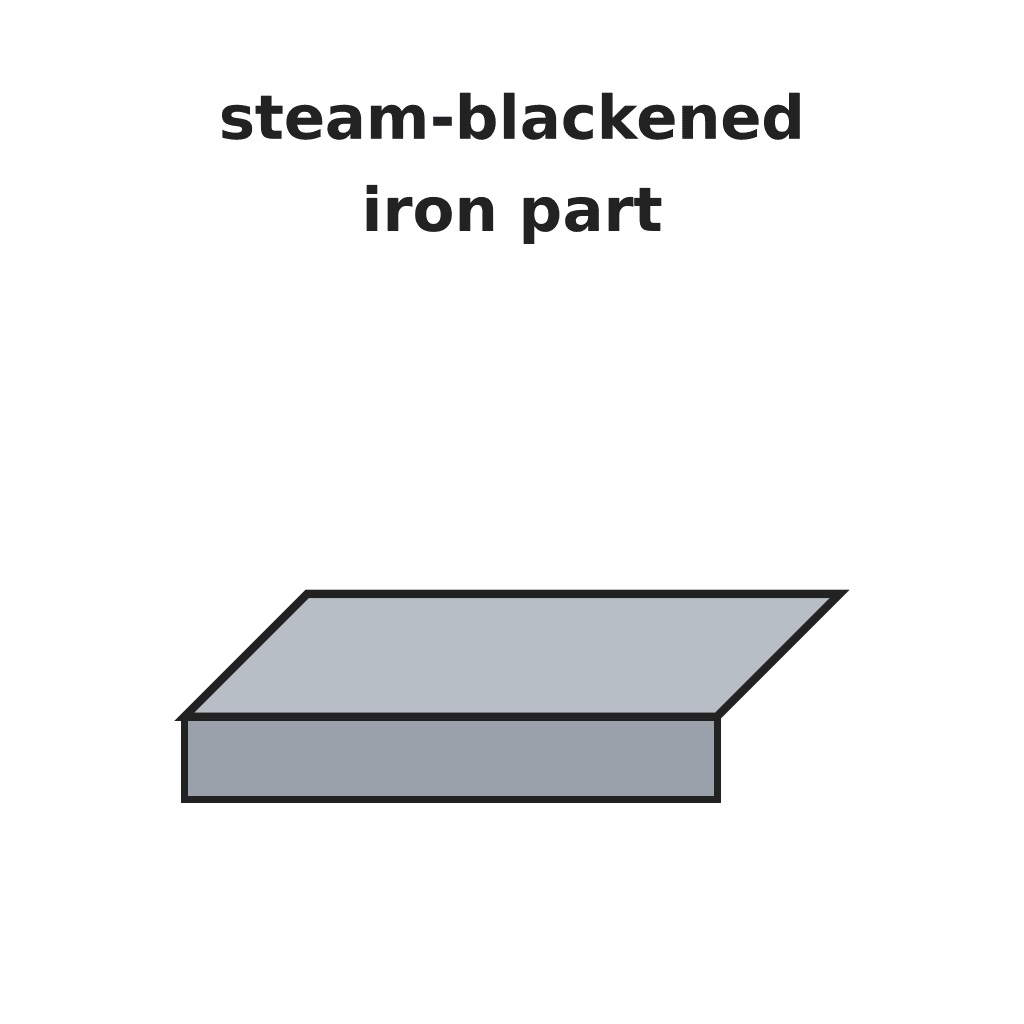
Wire-brush the iron part to bare metal and degrease. Place it in a closed retort or muffle — the chamber must seal well enough to exclude free air.
Air in the chamber is the failure mode: free oxygen at red heat gives red scale, which is exactly what you are trying not to make.
Izinto zokwakha zalesi sinyathelo:
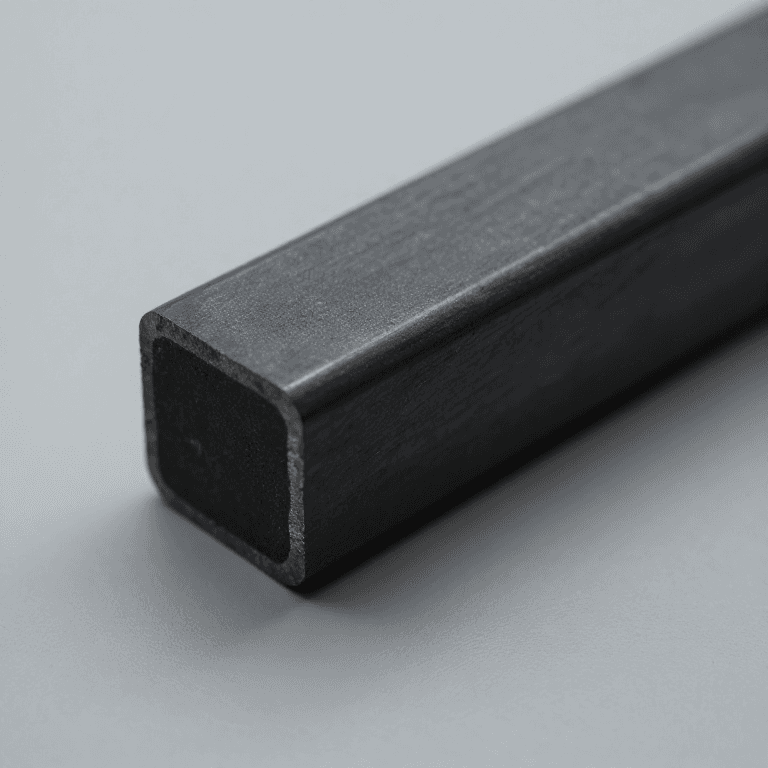
 Ibha Eyisicaba Yensimbi Ethambile1 ucezu
Amathuluzi adingekayo:
 Ibhodwe lokuncibilikisa lensimbi
Bring to red heat
Bring to red heat
Heat the sealed retort to a dull to bright red, roughly 500–650 °C.
Below about 500 °C the reaction is impractically slow; much above 650 °C and the coating grows thick, brittle and prone to spalling when it cools.
Amathuluzi adingekayo:
 Isithando Samalahle
 Udlawu Lwesitsha Sokuncibilikisa
 Ithemomitha Ye-Infrared
Admit superheated steam
Admit superheated steam
Pass superheated steam through the hot chamber for 20–40 minutes.
The reaction is 3 Fe + 4 H₂O → Fe₃O₄ + 4 H₂. Iron takes oxygen from the water and releases hydrogen.
Two things follow from that equation, and both matter. The oxygen is delivered bound in water, never as free O₂ — which is what selects magnetite over red rust. And the hydrogen given off fills the chamber and keeps air out, so the reaction protects its own conditions. Vent it safely; hydrogen burns.
Izinto zokwakha zalesi sinyathelo:
 Amanzi Acwengisisiwe500 ml
Cool sealed, then inspect and oil
Cool sealed, then inspect and oil
Cut the steam and let the retort cool closed. Opening it hot lets air onto hot iron and puts red scale over your black oxide at the last moment.
Expect a uniform matt to satin blue-black surface, hard, and firmly attached — it will not rub off on a cloth.
Oil it. As with phosphate, the magnetite layer is thin and slightly porous; it resists rust far better than bare iron and better still with oil in it.
Test it honestly
Test it honestly
Put the treated part and an untreated control somewhere damp for two weeks.
Expect the control to be orange within days and the treated part to stay black.
Then scratch the treated part through to bare metal and keep going. Rust will start at the scratch and creep under the coating. That is the honest result and the process's real limitation — magnetite is a barrier, not a sacrificial coating. Zinc protects a scratch because zinc corrodes instead of the iron; black oxide has no such mechanism and simply stops where it is broken.
History & Context
History & Context
Who did what. Frederick Settle Barff, a chemist, patented the superheated-steam method in 1876. George Bower, an ironfounder at St Neots, added a stage using producer gas — alternating reducing and oxidising atmospheres — which made the process faster and commercially viable around 1880. The hyphenated name reflects a genuine two-stage collaboration, not a courtesy.
On the missing numbers. We could not verify either British patent number from a primary source. The process is well documented otherwise — trade pamphlets from the Bower-Barff Rustless Iron Company, a Popular Science Monthly account of 1886, and surviving architectural ironwork. Rather than repeat a number we cannot check, this blueprint states the dates and names and leaves the numbers open. An unverified citation is worse than an acknowledged gap.
Where you have already seen it. The same magnetite chemistry, at different scales: gun bluing, the black finish on Victorian railings and lamp standards, and the seasoned surface of a cast iron pan — which is magnetite plus polymerised oil, exactly the coating-plus-oil combination step 5 describes.
Why it faded. It needs a sealed retort at red heat, so the part must survive that temperature and fit in the chamber — no good for anything hardened, thin, or large. Galvanizing protects a scratch and Bower-Barff does not. It survives today mainly as black oxide finishing on tools and fasteners, done in hot alkaline salt baths rather than steam retorts, and valued as much for appearance and lubricant retention as for corrosion resistance.
Izinto
2- Isibambeli
- 500 mlIsibambeli
Amathuluzi Adingekayo
4- Isibambeli
- Isibambeli
- Isibambeli
- Isibambeli
Izinto Zokwakha Ze-Blueprint Exhunyiwe


Le blueprint yenza
Ama-blueprint ahlobene
Lama-blueprint abelana ngolwazi — amasu, izinto noma izimiso

CC0 Isizinda Somphakathi
Le blueprint ikhishwe ngaphansi kwe-CC0. Ukhululekile ukukopisha, ukuguqula, ukusabalalisa, nokusebenzisa ngaphandle kwemvume.
Sekela uMenzi ngokuthenga imikhiqizo nge-Blueprint yabo IKhomishane Yomenzi kumiswe ngabathengisi, noma dala inguqulo entsha yale Blueprint bese uyifaka njengoxhumaniso ku-Blueprint yakho ukuze wabelane ngemali engenayo.