

Chlorination and the Residual
Filtration cleans water at the works. Then the water travels for miles through buried iron pipe, past joints, repairs, dead ends and pressure drops, and arrives at a tap that may not have been used for a week. Everything it touches on that journey is an opportunity to become contaminated again.
Disinfecting at the works therefore solves only half the problem. The half that killed people was the pipe.
The insight that fixed it is not "chlorine kills bacteria" — that was already known. It is that you should deliberately add more chlorine than the water needs, so that after everything reactive has been dealt with, a small measurable surplus is still circulating. That surplus is the residual, and it is a disinfectant that travels with the water, guarding it the whole way and remaining available at the tap.
It also turns water safety into something you can measure in the field. You cannot test every household for bacteria. You can test any tap for residual chlorine in thirty seconds, and if the residual is present, the water has been protected continuously since it left the plant. A cheap chemical test stands in for a microbiological one.
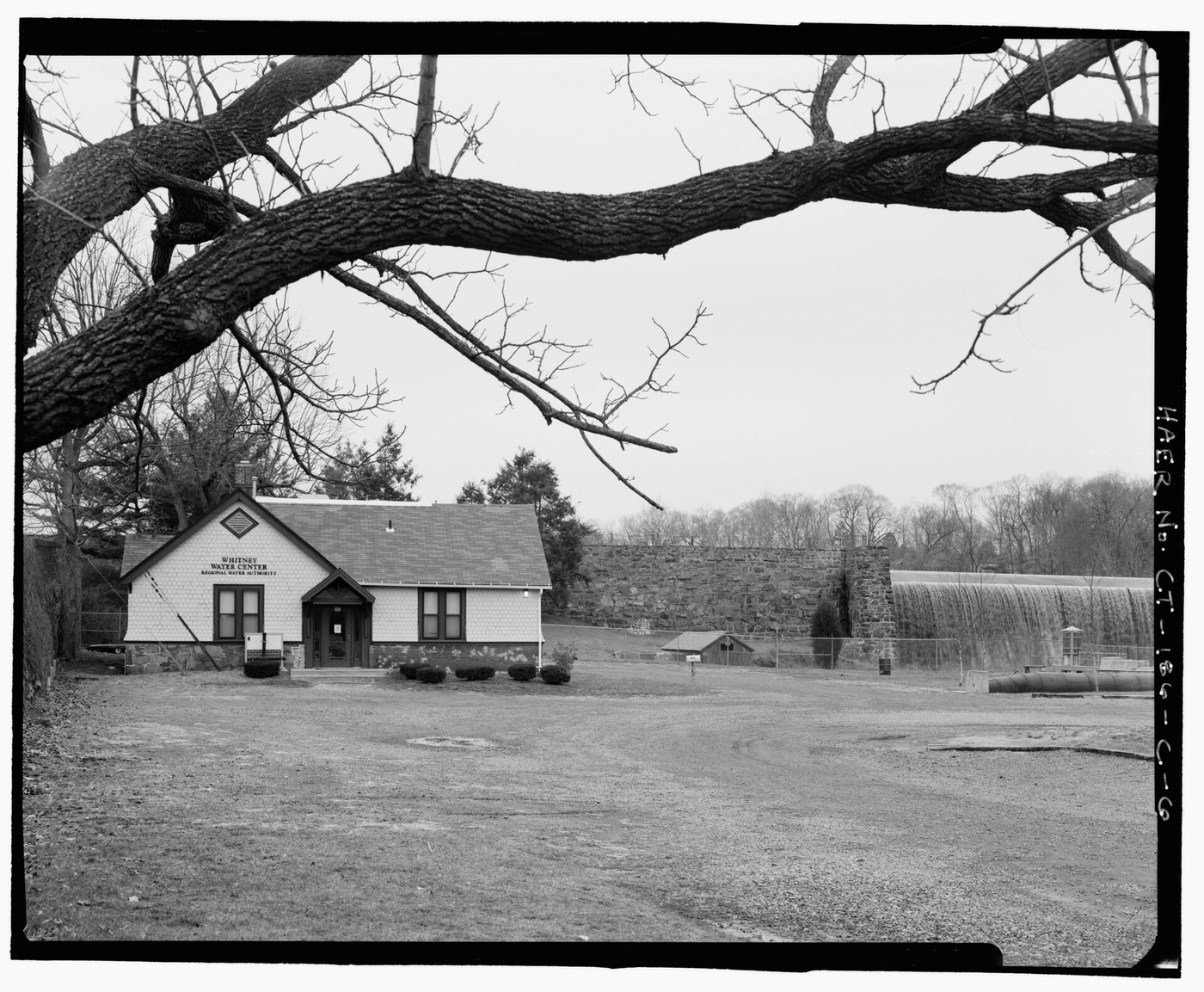
The step change is credited to John Leal, who dosed the Jersey City supply — without permission, and while under legal challenge for doing it.
Imiyalelo
Find the demand before you find the residual
Find the demand before you find the residual
Take three samples of the same water. Dose them with increasing amounts of hypochlorite, wait thirty minutes, then test each for free chlorine.
Expect the first dose to leave nothing measurable, and only the larger doses to leave a reading.
The early chlorine was consumed by organic matter, iron and ammonia in the water. That consumption is the chlorine demand, and it must be satisfied before a single molecule is left over to protect anything.
Dose = demand + residual. Dosing to the demand alone protects the water for exactly as long as it sits in the tank.
Izinto zokwakha zalesi sinyathelo:
 Isixazululo se-sodium hypochlorite100 ml
Amathuluzi adingekayo:
 Amaphepha okuhlola i-chlorine (ekhululekile/iyonke)
Watch the residual decay over distance and time
Watch the residual decay over distance and time
Dose a jug to a clear residual and test it every few hours over a day, keeping one sample in the dark and one in the light.
Expect the residual to fall steadily, and to fall much faster in daylight.
Time in the pipe is the enemy. A distribution network has to be dosed for its worst case — the furthest house, the longest dead-end, the emptiest week — which is why the water at the plant tastes more strongly of chlorine than the water at the edge of town.
Contaminate a protected sample and an unprotected one
Contaminate a protected sample and an unprotected one
Take two samples of clean water: one with a measured free-chlorine residual, one without. Add a small amount of pond water to each. Wait, then test both for residual and observe over several days.
Expect the protected sample to consume some of its residual dealing with the contamination — and to stay clear — while the unprotected one goes cloudy.
This is the whole argument for a residual in one experiment. The protection was already present when the contamination arrived. Nobody had to detect the problem first and respond.
Find the taste-and-safety trade-off
Find the taste-and-safety trade-off
Prepare samples at a range of free-chlorine concentrations and smell each — do not drink them.
Note where you can first detect it. Most people notice chlorine well below the level considered safe to drink.
This is the operator's permanent squeeze: too little residual and the far end of the network is unprotected; too much and every customer complains, and complaints are political.
Note what makes the taste worse: chlorine reacting with organic matter forms chloramines, which are what people usually mean when they say a supply "tastes of chlorine" — the smell is the reaction products, not the disinfectant.
Test the far end of a real network
Test the far end of a real network
With permission, test the free chlorine at a tap close to a treatment works and at one far away, ideally after the far tap has stood unused overnight.
Expect the far, stagnant tap to read lower.
Then run that tap for two minutes and test again. Expect it to rise as fresh water arrives.
You have just measured the difference between the water in the main and the water in the last few metres of pipe — which is exactly where a residual earns its keep, and exactly the stretch no treatment plant can otherwise reach.
History & Context
History & Context
He did it without asking. John Leal dosed the Jersey City water supply with chloride of lime while the city was in litigation over whether its water was adequately pure. He did not run a pilot, did not seek permission, and told almost nobody in advance — partly because he judged that a public debate would take longer than the next outbreak. He then had to defend the decision in court, where the results were examined and accepted. Typhoid rates fell sharply, and the practice spread across the United States within a few years.
What made it enormous was cheapness. Slow sand filtration needs land, capital and decades. Chlorination needs a chemical and a dosing pump, and it can be added to an existing supply in weeks. That is why it reached poor cities and small towns that could never have built filter beds, and why it is credited with one of the largest gains in life expectancy of the twentieth century.
The measurable-proxy idea is the transferable part. Before the residual, proving water was safe meant culturing samples and waiting days — far too slow to act on. After it, a colour change on a test kit answered the question immediately, anywhere, by anyone. Turning a slow biological question into a fast chemical one is what made safe water administrable at national scale, and the same manoeuvre shows up wherever an inspection regime has to be run by ordinary staff.
The honest costs. Chlorine reacts with natural organic matter to form disinfection by-products, some of which are regulated as long-term health risks. So the modern job is a genuine optimisation: enough residual to guarantee microbiological safety, little enough to keep by-products low — and the microbiological risk is immediate and lethal while the by-product risk is small and long-term, which is why the balance is struck where it is. Chlorine is also poor against some resistant parasites, notably Cryptosporidium, which is why filtration was never abandoned and why the two are used together rather than one replacing the other.
Carried forward. Every emergency water response, every household bleach-dosing instruction after a flood, and every swimming pool runs this same arithmetic of demand, residual and contact time. The idea is not "add chlorine" — it is maintain a measurable surplus of protection between the treatment and the mouth.
Izinto
2- Isibambeli
- 5 amalithaIsibambeli
Amathuluzi Adingekayo
4- Isibambeli
- Isibambeli
- Isibambeli
Izinto Zokwakha Ze-Blueprint Exhunyiwe

CC0 Isizinda Somphakathi
Le blueprint ikhishwe ngaphansi kwe-CC0. Ukhululekile ukukopisha, ukuguqula, ukusabalalisa, nokusebenzisa ngaphandle kwemvume.
Sekela uMenzi ngokuthenga imikhiqizo nge-Blueprint yabo IKhomishane Yomenzi kumiswe ngabathengisi, noma dala inguqulo entsha yale Blueprint bese uyifaka njengoxhumaniso ku-Blueprint yakho ukuze wabelane ngemali engenayo.