UBUCIKO
UBUHLE NEMPILO
UBUCIKO BEZANDLA
AMASIKO NOMLANDO
EZOKUZIJABULISA
IMVELO
UKUDLA NEZIPHUZO
REVERSE ENGINEERING
IZAYENSI
EZEMIDLALO
UBUCHWEPHESHE
IZINTO EZIGQOKWAYO



Gel Filtration: Separating by Size Alone
Every separation in this batch so far works because molecules STICK to something — to chalk, to silica, to a grease film — and stick by different amounts. Gel filtration works because they stick to nothing at all.
Per Flodin and Jerker Porath, at Uppsala in 1959, made beads of cross-linked dextran riddled with pores of a controlled size. A small molecule wanders into every pore and takes a long, tortuous route through the column. A molecule too big to enter any pore is swept straight past, through the gaps between the beads only, and comes out FIRST.
That inversion is what makes it unique and slightly counter-intuitive: in gel filtration the biggest thing leaves first, and everything is off the column by the time one column volume has run through. It is also the gentlest separation there is — nothing binds, so nothing is denatured — which is why it is how a protein gets its buffer changed.
Ophakathi
1 day
Imiyalelo
1
1
Swell the medium before it goes anywhere near the column
Swell the medium before it goes anywhere near the column
Stir the dry beads into several volumes of buffer and leave them for the time the supplier states — some grades need hours, some need boiling. Then let the slurry settle and pour off the fines that stay suspended.
Dry beads swell to many times their dry volume. Load them dry and they swell inside the tube, which either jams solid or cracks the bed. Removing the fines matters too: those tiny fragments pack into the spaces between proper beads and choke the flow to nothing, and they are the usual reason a home-packed column runs at a drip an hour.
Izinto zokwakha zalesi sinyathelo:
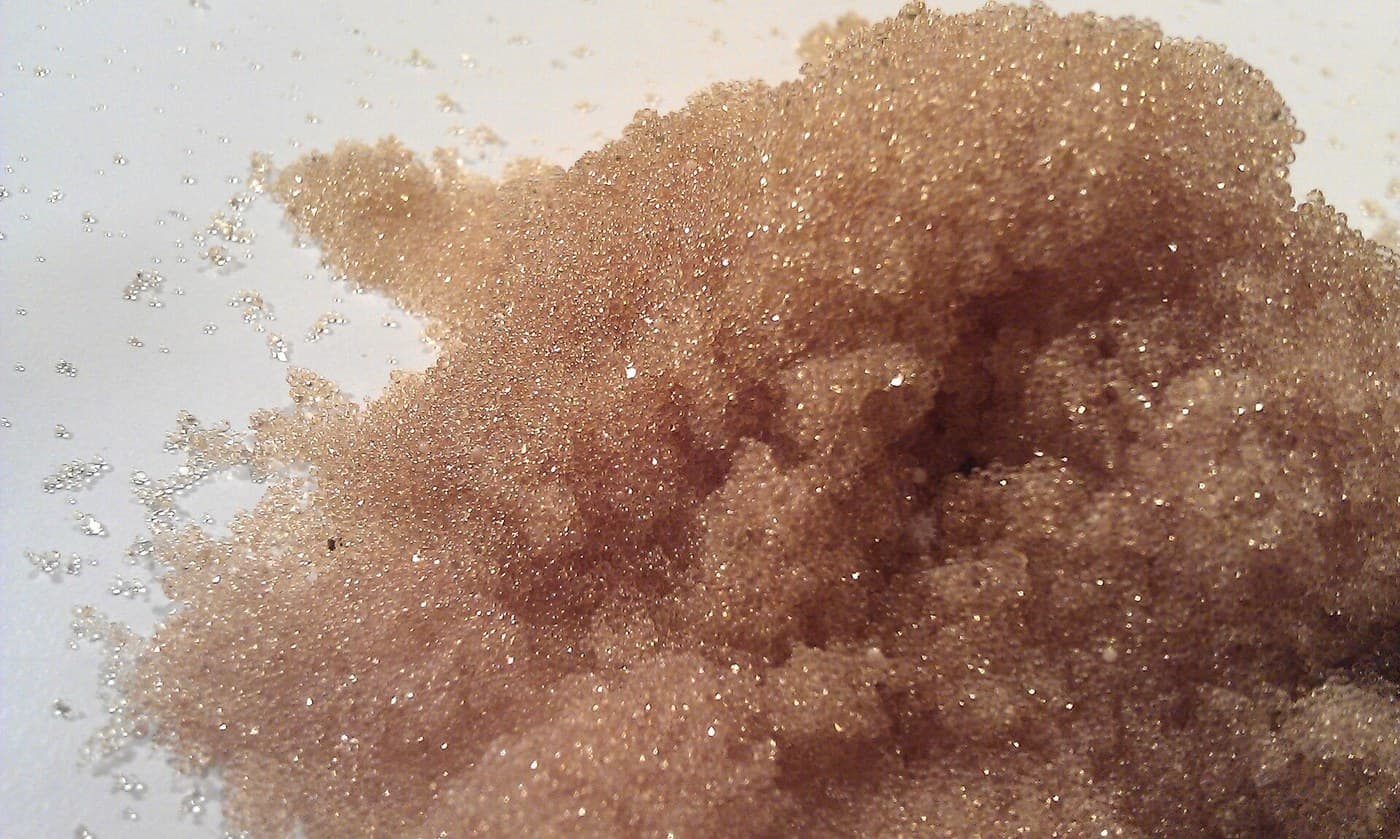
 Insiza ye-chromatography yokuhlukanisa ngosayizi25 g
 I-baking soda5 g
Amathuluzi adingekayo:
 Ibhikha Le-borosilicate
 Isikali Sedijithali
2
2
Pour the bed in ONE go
Pour the bed in ONE go
Plug the outlet, part-fill the tube with buffer, and pour the whole slurry down a glass rod against the wall in a single continuous pour. Let it settle under its own weight with the outlet running slowly.
Pouring in stages is the classic ruin: each new layer settles onto a compacted one and leaves a visible horizontal line, and that line is a discontinuity every band has to cross. Never stir the settled bed to 'even it out' — you will grade the beads by size, fine at the top, which is worse than what you started with.
Amathuluzi adingekayo:
 Isethi yesisetshenziswa se-column chromatography
 Isethi yesitendi nezibambo zelabhoratri
3
3
Find the void volume with something far too big
Find the void volume with something far too big
Run a small load of a very large coloured molecule through and measure the volume of buffer collected before it appears. That is the void volume: the liquid in the gaps BETWEEN the beads.
Nothing can come out earlier than this, because nothing can travel faster than the buffer in the open channels. The void volume is the reference every other measurement on this column is made against, and it is worth measuring properly once rather than estimating it as a third of the bed volume — which is only approximately true and only for a well-packed column.
Amathuluzi adingekayo:
 Ishubhu lokuhlola (i-borosilicate)
 I-pipette enemigqa yokukala (i-Mohr)
4
4
Find the total volume with something tiny
Find the total volume with something tiny
Now run a small, freely diffusing coloured salt — copper sulfate is ideal, since its blue is easy to follow. It enters every pore and comes out last.
The volume at which it emerges is the total liquid volume of the column: the gaps plus all the pore space. Everything you will ever separate on this column emerges between these two numbers, and that is the whole working range. Unlike every other method in this batch, the run has a hard end — there is no 'wait longer and it will come off', because nothing is stuck.
Amathuluzi adingekayo:
Ishubhu lokuhlola (i-borosilicate)I-pipette enemigqa yokukala (i-Mohr)Ibhikha Le-borosilicate I-copper sulfate (izinga lelabhorethri)
5
5
Separate a dye from a salt, and watch the order invert
Separate a dye from a salt, and watch the order invert
Load a mixture of a large dye and copper sulfate together in the smallest volume you can manage, and collect fractions.
The dye leaves first even though it is far heavier — which is the moment the method stops being abstract. Then note the practical rule this demonstrates: load volume must be SMALL, ideally under 2% of the bed. There is no focusing effect here to sharpen a wide band, because nothing binds and re-releases. Whatever width you load, you get back plus some spreading.
Izinto zokwakha zalesi sinyathelo:
 Umbala wokudla1 ibhodlela
Amathuluzi adingekayo:
Ishubhu lokuhlola (i-borosilicate)I-pipette enemigqa yokukala (i-Mohr)I-copper sulfate (izinga lelabhorethri)6
6
Use it the way laboratories actually use it: buffer exchange
Use it the way laboratories actually use it: buffer exchange
Equilibrate the column in the buffer you WANT, load your sample in whatever buffer it is in, and collect the large component as it comes off.
It leaves in the new buffer, and the old salts trail out far behind it. In two column volumes and about twenty minutes you have changed a protein's environment completely without ever binding it to anything — no acid, no salt gradient, no heat. This one application, called desalting, is probably more common in working laboratories than the size measurement the method is named for.
Izinto zokwakha zalesi sinyathelo:
I-baking soda5 gAmathuluzi adingekayo:
Ishubhu lokuhlola (i-borosilicate)Ibhikha Le-borosilicate7
7
Calibrating the column into a molecular ruler
Calibrating the column into a molecular ruler
Ilayisha incwadi ye-Jupyter…
Amathuluzi adingekayo:
I-pipette enemigqa yokukala (i-Mohr)8
8
Regenerate the bed rather than repacking it
Regenerate the bed rather than repacking it
Wash two column volumes of buffer through after every run, and store the column with a preservative or in the refrigerator.
Because nothing binds, a gel filtration column is essentially self-cleaning and will run for years — the medium is the expensive part and it does not wear out. What kills a column is microbial growth in a bed left wet and warm, and air drawn into the top when a reservoir runs dry. Both are avoidable, and both mean repacking, which is the one job on this column nobody enjoys twice.
Amathuluzi adingekayo:
Ibhikha Le-borosilicateIzinto
3- Isibambeli
- Isibambeli
- 1 ibhodlelaIsibambeli
Amathuluzi Adingekayo
7- Isibambeli
- Isibambeli
- Isibambeli
- Isibambeli
- Isibambeli
- Isibambeli
Ama-blueprint ahlobene
Lama-blueprint abelana ngolwazi — amasu, izinto noma izimiso


CC0 Isizinda Somphakathi
Le blueprint ikhishwe ngaphansi kwe-CC0. Ukhululekile ukukopisha, ukuguqula, ukusabalalisa, nokusebenzisa ngaphandle kwemvume.
Sekela uMenzi ngokuthenga imikhiqizo nge-Blueprint yabo IKhomishane Yomenzi kumiswe ngabathengisi, noma dala inguqulo entsha yale Blueprint bese uyifaka njengoxhumaniso ku-Blueprint yakho ukuze wabelane ngemali engenayo.