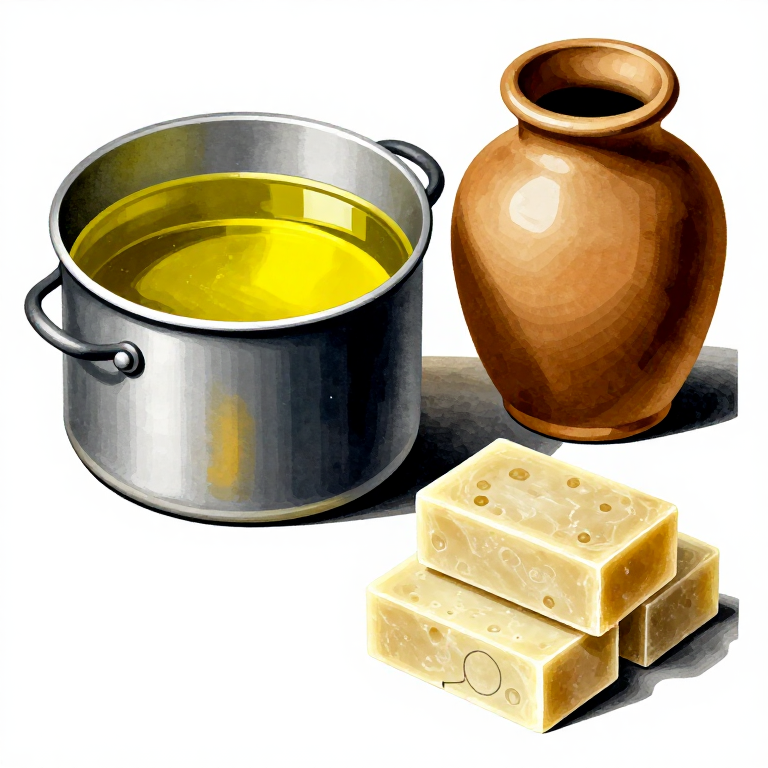


Greek Olive Soap — Making Soap from Olive Oil and Wood Ash
Imiyalelo
Extract Lye from Wood Ash
Extract Lye from Wood Ash
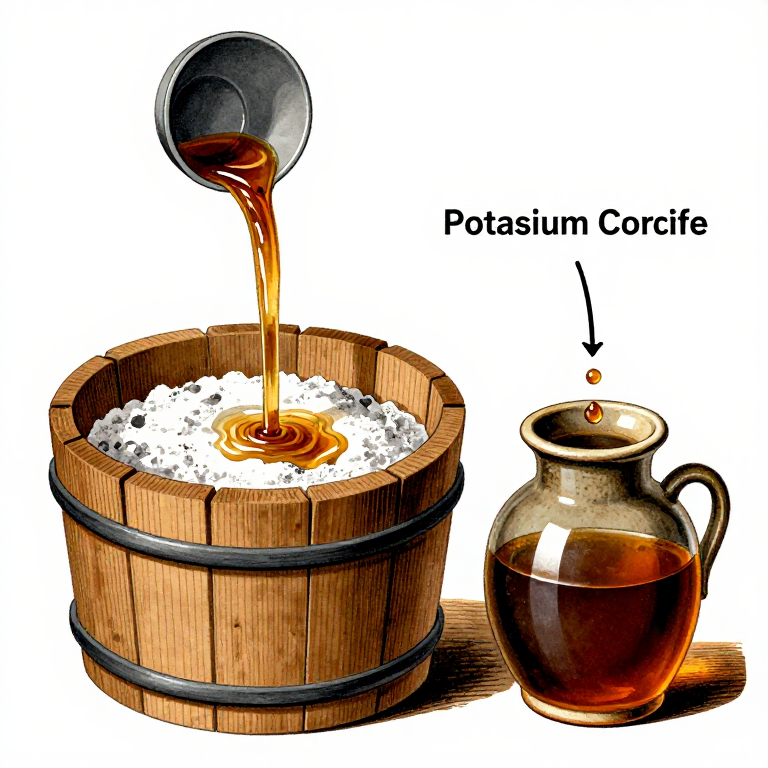
Fill a wooden bucket or ceramic vessel with hardwood ash from oak, beech, or similar dense wood (softwood ash is too weak). Slowly pour rainwater or soft water over the ash and allow it to seep through, collecting the filtered liquid (lye water) from a hole or spout at the bottom of the bucket. The water dissolves potassium carbonate (K2CO3) and potassium hydroxide (KOH) from the ash, creating an alkaline solution. Repeat the leaching process by pouring the collected lye water back through fresh ash 2-3 times to increase concentration. Test the lye strength: traditional tests include floating a feather (a strong lye dissolves the barbs) or floating an egg (strong lye is dense enough to float a fresh egg). SAFETY: Lye is strongly caustic — wear gloves and eye protection.
Izinto zokwakha zalesi sinyathelo:
 Uwoyela We-linseed500 ml ml
 Umlotha Wokhuni Oluqinile1-2 kg kg
 Amanzi2-3 liters ucezu
 Usawoti Wolwandle Ocolekilesmall amount ucezu
Amathuluzi adingekayo:
 Ibhakede lokhuni
 Ibhodwe
 Induku yokhuni yokugovuza
 Isikhunta sensipho (i-silicone)
 Indwangu (Yokuhluza)
Concentrate the Lye Solution
Concentrate the Lye Solution
The raw leachate from the first extraction is usually too dilute for effective saponification. Gently heat the lye water in a non-aluminum pot (aluminum reacts with alkali) to evaporate excess water and concentrate the potassium hydroxide. Simmer until the volume is reduced by approximately half. The concentrated lye should have a slippery, soapy feel when a small amount is rubbed between gloved fingertips — this slipperiness indicates sufficient alkalinity. A solution that feels merely like water needs further concentration. Do not boil vigorously, as this can splash caustic liquid. The resulting concentrated lye is a clear to amber-colored liquid with a pH of approximately 12-14, strongly alkaline and capable of causing chemical burns on unprotected skin.
Combine Lye and Olive Oil
Combine Lye and Olive Oil
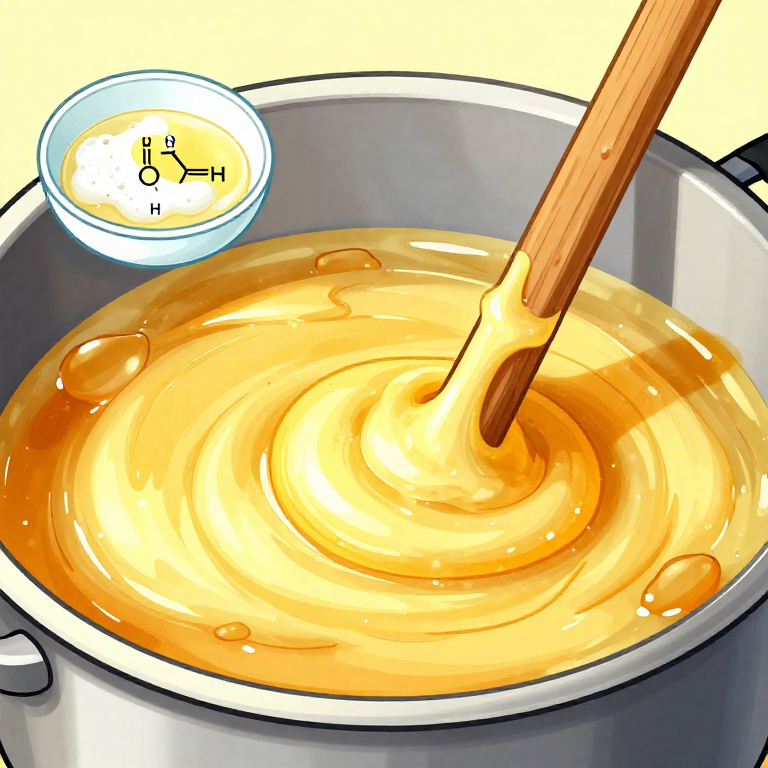
Warm the olive oil to approximately 40-50 degrees Celsius in a large non-aluminum pot. Slowly add the concentrated lye solution to the warm oil while stirring continuously with a wooden stick. The mixture will initially appear separated, then gradually become opaque and thicken as the saponification reaction proceeds. Saponification is the chemical reaction between a fatty acid (in the olive oil) and an alkali (potassium hydroxide), producing soap (potassium oleate, a potassium salt of oleic acid) and glycerol as a byproduct. Continue stirring for 30-60 minutes. The mixture will gradually thicken to the consistency of custard or pudding — this stage is called trace. With wood ash lye, the soap produced is a soft potassium soap rather than the hard sodium soap made with modern sodium hydroxide.
Cook and Test the Soap
Cook and Test the Soap
Continue heating the mixture gently while stirring for an additional 1-2 hours. This extended cooking (hot process method) ensures the saponification reaction reaches completion, converting all the free lye and oil into soap. Test the soap by dissolving a small amount in warm water — it should produce a light lather and feel slippery. If it stings the skin, unreacted lye remains and the mixture needs more cooking time or a small addition of extra oil to neutralize the excess alkali. Properly made olive oil soap has a gentle, moisturizing quality because olive oil is rich in oleic acid, which produces a mild soap with excellent skin-conditioning properties.
Mold and Cure the Soap
Mold and Cure the Soap
Pour the finished soap mixture into molds — wooden boxes lined with cloth, ceramic dishes, or any non-reactive container. Because this is a potassium soap (made with wood ash lye rather than sodium hydroxide), it will be naturally softer than modern bar soap. To produce a harder soap, you can add a handful of salt to the mixture before pouring, which converts some of the potassium soap to sodium soap through ion exchange. Allow the soap to cool and set for 24-48 hours, then remove from the mold. Cure the soap by placing it in a dry, airy location for 4-6 weeks, during which time the remaining moisture evaporates and the soap becomes firmer and milder. Well-cured olive oil soap is gentle, long-lasting, and produces a creamy rather than bubbly lather. The modern Aleppo soap and Castile soap traditions are direct descendants of ancient Mediterranean olive oil soap-making.
Izinto
6- 500 ml mlIsibambeli
- 1-2 kg kgIsibambeli
- 2-3 liters ucezuIsibambeli
- small amount ucezuIsibambeli
- small amount ucezuIsibambeli
- 1 ucezuIsibambeli
Amathuluzi Adingekayo
12- Isibambeli
- Isibambeli
- Protective gloves and eye protection
- Isibambeli
- Isibambeli
- Isibambeli
- Isibambeli
- Isibambeli
- Isibambeli
- Isibambeli
- Isibambeli
CC0 Isizinda Somphakathi
Le blueprint ikhishwe ngaphansi kwe-CC0. Ukhululekile ukukopisha, ukuguqula, ukusabalalisa, nokusebenzisa ngaphandle kwemvume.
Sekela uMenzi ngokuthenga imikhiqizo nge-Blueprint yabo IKhomishane Yomenzi kumiswe ngabathengisi, noma dala inguqulo entsha yale Blueprint bese uyifaka njengoxhumaniso ku-Blueprint yakho ukuze wabelane ngemali engenayo.