UBUCIKO
UBUHLE NEMPILO
UBUCIKO BEZANDLA
AMASIKO NOMLANDO
EZOKUZIJABULISA
IMVELO
UKUDLA NEZIPHUZO
REVERSE ENGINEERING
IZAYENSI
EZEMIDLALO
UBUCHWEPHESHE
IZINTO EZIGQOKWAYO
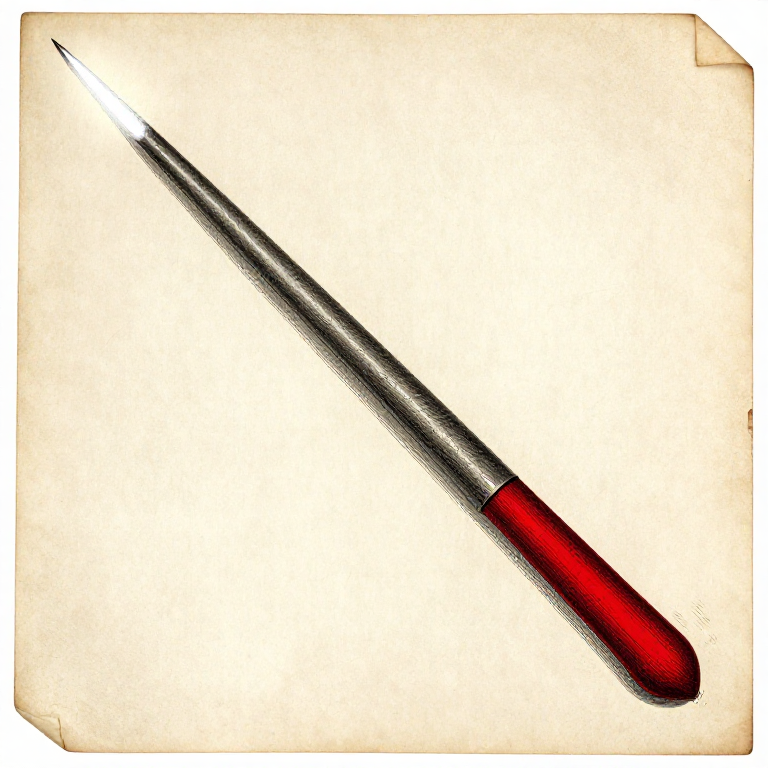


Heating Evenly: Why Thin Bits Burn While Thick Bits Are Still Cold
Put a piece with a thin tip and a thick body into a fire and the tip reaches welding heat while the body is still dull red. Leave it until the body is ready and the tip has burned off.
This is the single most common way work is ruined in a forge, and it is not a technique failure — it is geometry. A thin section has far more surface per unit of mass, so it gains heat much faster.
Every solution is some version of the same idea: shield the thin part, feed the thick part more heat, or change the order so the thin part is made last.
Ophakathi
3 hours
Imiyalelo
1
1
Surface-to-volume is the whole explanation
Surface-to-volume is the whole explanation
Heat enters through the surface and has to warm the whole mass. A thin section has a large surface relative to its mass, so it heats fast; a thick one has little, so it heats slowly.
Halve a bar's thickness and you roughly double its surface-to-volume ratio, so it heats about twice as fast. A point or a thin edge can be several times faster than the body it is attached to, and that ratio is why the tip is already sparking while the middle is barely orange.
The same reasoning runs the other way on cooling, which the last rung takes up: thin sections also cool fastest, and that is why a thin edge hardens and a thick spine does not in the same quench.
Izinto zokwakha zalesi sinyathelo:
 Ibha yensimbi ethambile2 izicucu
Amathuluzi adingekayo:
 Iziko lomkhandi wensimbi
 Udlawu lomkhandi wensimbi
2
2
Bury the thick part, keep the thin part out
Bury the thick part, keep the thin part out
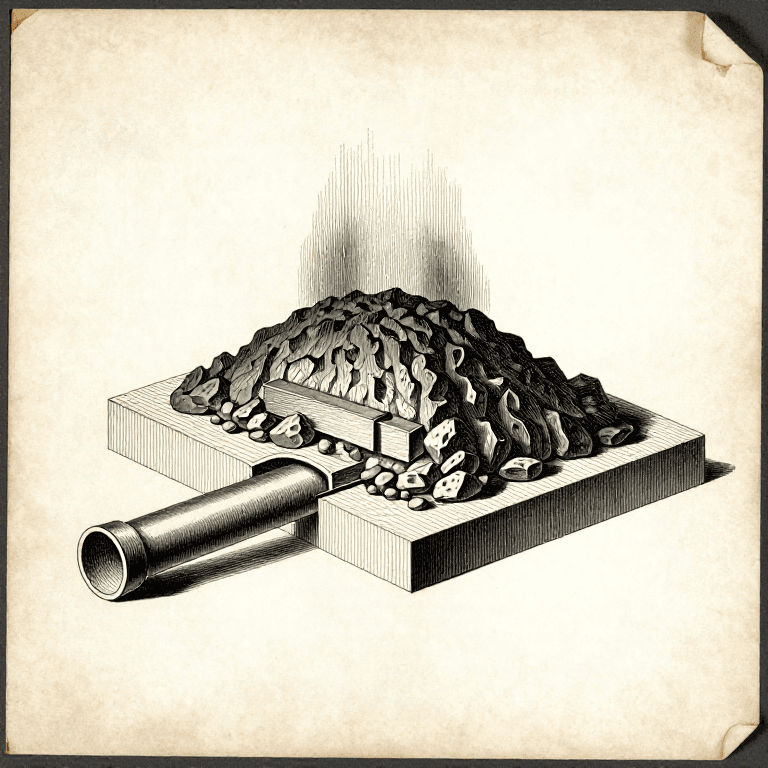
Put the heavy section into the hottest zone and let the thin section sit further out or above, where it is heated by conduction from the body rather than directly by the fire.
Turn and reposition constantly. A piece left still in one place develops a hot side, a cold side and a burnt corner, and the total time in the fire tells you nothing about whether it heated evenly.
For a really awkward piece, heat it in stages: bring the body up first, then move the thin part in for a short time at the end. The order is a tool, and choosing it is usually easier than trying to control the fire finely enough to heat both at once.
Izinto zokwakha zalesi sinyathelo:
Ibha yensimbi ethambile1 ucezu Amalahle2 izicucu
Amathuluzi adingekayo:
Iziko lomkhandi wensimbiUdlawu lomkhandi wensimbi Amagilavu Esikhumba Anemikhono Emide
 Izibuko ezimnyama zokubasa
3
3
Shield it, or sacrifice it
Shield it, or sacrifice it
A firebrick laid between the fire and a thin section shields it while the body heats. Simple, free, and it works well enough for most jobs.
The traditional alternative is to leave extra material — forge the thin feature LAST, out of stock that was thick while it was in the fire. A tapered point drawn at the end of the job never has to survive a long soak, which removes the problem rather than managing it.
Wet clay or a wrap of wet cloth on a section you want kept cool is an old trick and works briefly. Do not rely on it for long: it dries, and once dry it insulates instead, which is the opposite of what you wanted.
Izinto zokwakha zalesi sinyathelo:
Ibha yensimbi ethambile1 ucezuAmathuluzi adingekayo:
 Isitini somliloIziko lomkhandi wensimbiUdlawu lomkhandi wensimbi
4
4
In a kiln: shelves, spacing and the cold corner
In a kiln: shelves, spacing and the cold corner
A kiln is never uniform. There is a hot zone near the elements or the burner and a cold corner, usually low and near the door, and the difference can be enough to under-fire a glaze.
Map it once. Fire cones or small test tiles at several positions and you know your own kiln's pattern permanently, which is worth far more than any general advice about kilns.
Then load for it: leave space around each piece for heat and air to circulate, do not crowd the walls, and put the heaviest, thickest ware where the heat is strongest. This is the same reasoning as the forge fire's sweet spot — the enclosure is big and the useful region inside it is not.
Amathuluzi adingekayo:
 Isithando
 Isithando esishisa kakhulu
 I-thermocouple enesibonisi
Amathuluzi Adingekayo
8- Isibambeli
- Isibambeli
- Isibambeli
- Isibambeli
- Isibambeli
- Isibambeli
- Isibambeli
- Isibambeli
Ama-blueprint ahlobene
Lama-blueprint abelana ngolwazi — amasu, izinto noma izimiso

CC0 Isizinda Somphakathi
Le blueprint ikhishwe ngaphansi kwe-CC0. Ukhululekile ukukopisha, ukuguqula, ukusabalalisa, nokusebenzisa ngaphandle kwemvume.
Sekela uMenzi ngokuthenga imikhiqizo nge-Blueprint yabo IKhomishane Yomenzi kumiswe ngabathengisi, noma dala inguqulo entsha yale Blueprint bese uyifaka njengoxhumaniso ku-Blueprint yakho ukuze wabelane ngemali engenayo.