
Ukusebenzisana
UBUCIKO
UBUHLE NEMPILO
UBUCIKO BEZANDLA
AMASIKO NOMLANDO
EZOKUZIJABULISA
IMVELO
UKUDLA NEZIPHUZO
REVERSE ENGINEERING
IZAYENSI
EZEMIDLALO
UBUCHWEPHESHE
IZINTO EZIGQOKWAYO
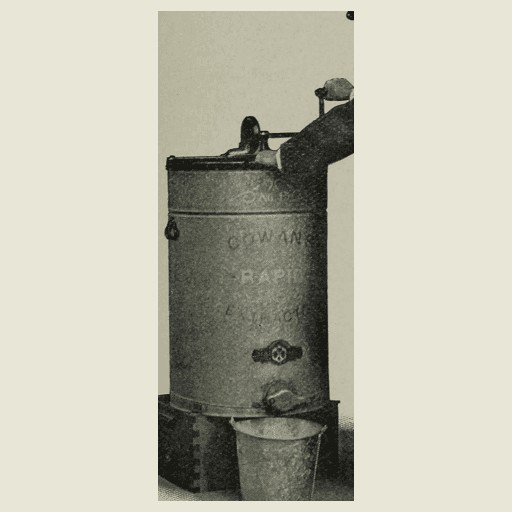
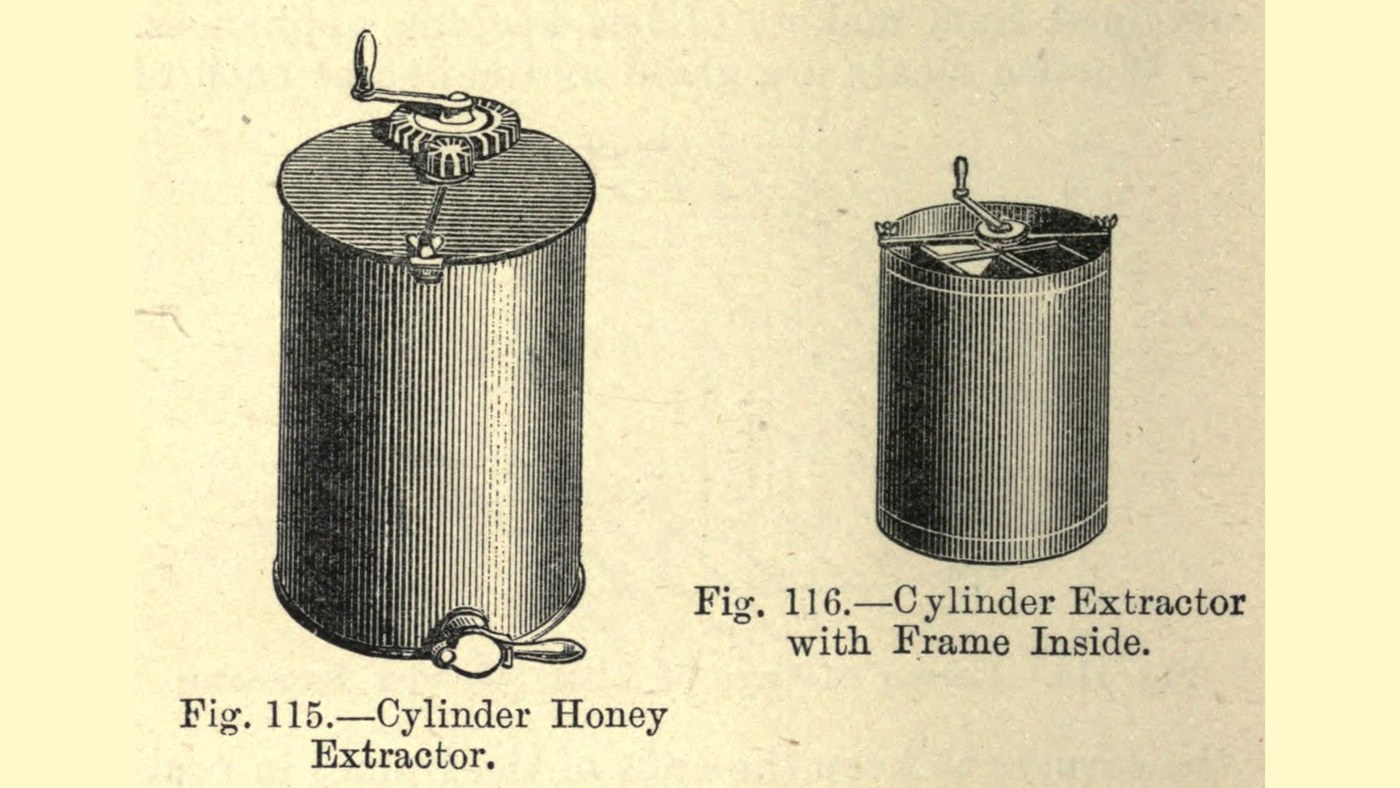
Honey Extractor: a Tinplate Cylinder Extractor (Hasluck, 1905)
Forge

Yenziwe ngu-

Forge

4. uLwezi 2026NO
10
0
0
1
0

Honey Extractor: a Tinplate Cylinder Extractor (Hasluck, 1905)

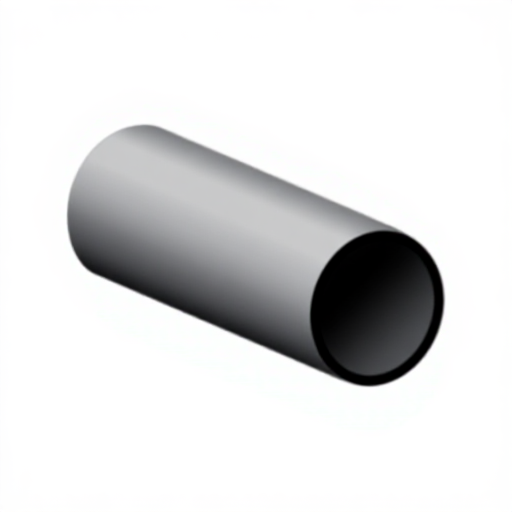
A two-comb honey extractor built by a tinsmith: a soldered tinplate frame carrying two wire-netting comb baskets on a 1/2 in spindle, spun by bought gearing inside a tinplate cylinder with a sloping bottom that drains through a treacle valve. Only the frame and combs revolve, not the can and the honey already thrown out, so it starts and stops easily; a comb that turns lighter tells you its side is empty. Source: P. N. Hasluck, Beehives and Bee Keepers' Appliances (1905), pp. 122-132. Picture: the book's Figs. 115-116.
Osezingeni eliphezulu
Unknown

Imiyalelo

1

Make the two bands

Take three sheets of tinplate 17 in by 12 1/2 in and cut one into six strips 2 in wide; pare the edges straight. Join three strips end to end by turning 1/4 in over at the ends, hooking them together, hammering flat and touching with solder; do the same with the other three. Cut each to 45 in and wire both edges with wire about 1/8 in diameter (about No. 10 gauge), 44 in long: turn the edge over nearly 1/2 in with mallet and stake, lay the wire in, and hammer the tin down round it. Use fine solder with a large proportion of tin throughout. Bend each strip in a wooden vice into a rectangular band 12 in by 10 in, square at the corners and not in winding, wired edge outwards; solder the overlapping inch.

Izinto zokwakha zalesi sinyathelo:

Ipuleti lethiniIpuleti lethini3 17 x 12 1/2 in sheets
Ucingo lwensimbi oludonswe ngepuletiUcingo lwensimbi oludonswe ngepuleti1 about 1/8 in, No. 10

I-solder ye-tin nomthofuI-solder ye-tin nomthofu1 ucezu

Amathuluzi adingekayo:

Isikeli sensimbiIsikeli sensimbi
Isando SokhuniIsando Sokhuni
IsikhonkwaneIsikhonkwane
Insimbi yokushiselaInsimbi yokushisela
Isibambo SebhentshiIsibambo Sebhentshi
2

Fit the bridges

From another sheet cut two pieces 12 in by 3 1/2 in. Wire both edges with wires only 10 in long placed in the middle, leaving 1 in free at each end, and hammer the turned edges flat at the ends. Turn the unwired ends up sharp to make a tin stool 10 in long with legs 1 in high. Fasten one across each band the narrow way, equidistant from the short sides, with solder and small rivets. The bridges carry the spindle.

Izinto zokwakha zalesi sinyathelo:

Ipuleti lethiniIpuleti lethini1 ucezu
Ucingo lwensimbi oludonswe ngepuletiUcingo lwensimbi oludonswe ngepuleti1 ucezu
Izipikili zensimbiIzipikili zensimbi1 ucezu
I-solder ye-tin nomthofuI-solder ye-tin nomthofu1 ucezu

Amathuluzi adingekayo:

Isikeli sensimbiIsikeli sensimbi
Isando SokhuniIsando Sokhuni
IsikhonkwaneIsikhonkwane
Insimbi yokushiselaInsimbi yokushisela
IsandoIsando
3

Make the four slides

Cut four pieces of tinplate 16 1/2 in by 3 1/8 in and cut small rectangles out of the corners. Turn over and hammer down 1/4 in at each long edge and 1/2 in at one short end. Turn the long edges up at right angles and the short end too, making a trough open at one end with the other end twice as high as the sides. Touch the corners with solder, nip off the sharp corners of the projecting end and round them with a file.

Izinto zokwakha zalesi sinyathelo:

Ipuleti lethiniIpuleti lethini1 ucezu
I-solder ye-tin nomthofuI-solder ye-tin nomthofu1 ucezu

Amathuluzi adingekayo:

Isikeli sensimbiIsikeli sensimbi
Isando SokhuniIsando Sokhuni
IsikhonkwaneIsikhonkwane
Insimbi yokushiselaInsimbi yokushisela
Insimbi yokuhlikihla izinsimbiInsimbi yokuhlikihla izinsimbi
4

Assemble the frame

Lay one band on the bench, bridge up. Stand a slide, stopped end down, in a corner with its back against a long side of the band, hold the two with a small cramp and two pieces of wood, check with the square, and run solder between them; do the other three. Put the upper band over the tops of the slides; if a slide is out of true, unsolder and reset it. Both bridges must face upwards so they do not hold honey.

Izinto zokwakha zalesi sinyathelo:

I-solder ye-tin nomthofuI-solder ye-tin nomthofu1 ucezu

Amathuluzi adingekayo:

Isibambo esiyi-CIsibambo esiyi-C
Isikwele esiqinileIsikwele esiqinile
Insimbi yokushiselaInsimbi yokushisela
5

Make the comb baskets

Cut four pieces of wire netting, two 15 in by 9 5/8 in and two 1/4 in narrower. Bind each round with tinplate strips 3/4 in wide overlapping 3/8 in each side, soldering every wire to the tin, then turning the tin over and soldering every wire again. Solder up four strips 41 in by 2 1/4 in, turn the edges over 1/4 in and turn one edge up square, so the section is an L with legs 1 1/2 in and 1/4 in. Cut the narrow rib with a chisel at the bends and bend each strip into the three sides of a half-basket, the short side 9 3/4 in on two and 1/8 in less on the other two. Solder the framed netting against the rib. On the wider pair turn over the 5/8 in that projects with a short wire in it as a pull; on the narrower pair clip some off and turn 1/4 in down. Cut a hole in the end of each half for the frame's top bar. Solder two crossing wires 1/8 in thick over the netting, joined in the middle and bent flat, to stop it bulging.

Izinto zokwakha zalesi sinyathelo:

Insimbi engaziwaInsimbi engaziwa1 wire netting, metal not given (never zinc)
Ipuleti lethiniIpuleti lethini1 ucezu
Ucingo lwensimbi oludonswe ngepuletiUcingo lwensimbi oludonswe ngepuleti1 1/8 in
I-solder ye-tin nomthofuI-solder ye-tin nomthofu1 ucezu

Amathuluzi adingekayo:

Isikeli sensimbiIsikeli sensimbi
Isando SokhuniIsando Sokhuni
IsikhonkwaneIsikhonkwane
Insimbi yokushiselaInsimbi yokushisela
Isisebenzi sensimbi ebandayoIsisebenzi sensimbi ebandayo
6

Make the cylinder

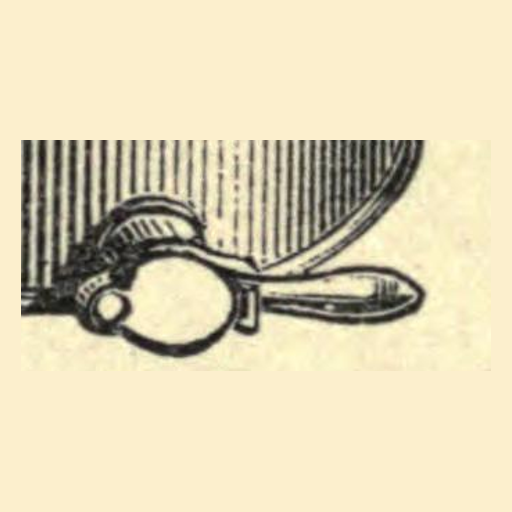
Take a tinplate 55 in by 26 in, wire the top and bottom edges with 1/4 in wire, bend it into a cylinder and solder the joint. Cut a bottom about 1/2 in larger than the cylinder's diameter, turn its edge up 1/4 in, set it in sloping, turn the flange down and solder it firmly to the sides. Fit the treacle valve at the lowest point. Solder a bearing for the spindle at the centre of the bottom, its underside filed to the slope so its top is level. Rivet two bands of hoop iron 1/8 in thick and 1 1/4 in wide under the beads.

Izinto zokwakha zalesi sinyathelo:

Ipuleti lethiniIpuleti lethini1 55 x 26 in
Ucingo lwensimbi oludonswe ngepuletiUcingo lwensimbi oludonswe ngepuleti1 1/4 in
Umpompi wezinyosiUmpompi wezinyosi1 ucezu
Ibha Eyisicaba Yensimbi EthambileIbha Eyisicaba Yensimbi Ethambile1 hoop iron 1/8 x 1 1/4 in
Izipikili zensimbiIzipikili zensimbi1 ucezu
I-solder ye-tin nomthofuI-solder ye-tin nomthofu1 ucezu

Amathuluzi adingekayo:

Isikeli sensimbiIsikeli sensimbi
Isando SokhuniIsando Sokhuni
IsikhonkwaneIsikhonkwane
Insimbi yokushiselaInsimbi yokushisela
Insimbi yokuhlikihla izinsimbiInsimbi yokuhlikihla izinsimbi
Ibhola lesandlaIbhola lesandla
IsandoIsando
7

Fit the spindle

Make the spindle once the can is finished and its length is known: 1/2 in round iron or steel, tinned all over, with the lower end brought to a long cone to run in the bottom bearing. Pass it through the middle of both bridges so the cages run true, with the tops of the cages 2 in below the top of the can, and solder it to the bridges. Strengthen the hold with tin washers 1 1/2 in diameter, beaten saucer-shaped, with holes made a little small and turned out until the spindle passes; solder them to spindle and bridges.

Izinto zokwakha zalesi sinyathelo:

Induku eyindilinga yensimbi ethambileInduku eyindilinga yensimbi ethambile1 1/2 in round
Ipuleti lethiniIpuleti lethini1 ucezu
I-solder ye-tin nomthofuI-solder ye-tin nomthofu1 ucezu

Amathuluzi adingekayo:

Insimbi yokuhlikihla izinsimbiInsimbi yokuhlikihla izinsimbi
Insimbi yokushiselaInsimbi yokushisela
Isikeli sensimbiIsikeli sensimbi
IsandoIsando
8

Fit the cross-bar, gearing and covers

Attach bolts to the top hoop, one of them breaking the joint of the hoop, to hold a cross-bar 1 1/4 in wide, long enough to reach across, drilled for the bolts and the spindle; make it 1/2 in thick when gearing is used, and fasten it with fly nuts or hexagon nuts. Key the pinion to the spindle and run the toothed wheel on a stud riveted to the cross-bar. Rivet a pair of handles to the sides, and make two flat covers, one each side of the cross-bar, with edges turned down to embrace the rim, like a saucepan cover.

Izinto zokwakha zalesi sinyathelo:

Ibha Eyisicaba Yensimbi EthambileIbha Eyisicaba Yensimbi Ethambile1 cross-bar 1 1/4 x 1/2 in
Iqoqo lamabhawoti anezinhlangothi eziyisithuphaIqoqo lamabhawoti anezinhlangothi eziyisithupha1 ucezu
Inathi yamaphikoInathi yamaphiko1 ucezu
IphiniyoniIphiniyoni1 ucezu
Isondo elikhulu lamazinyoIsondo elikhulu lamazinyo1 ucezu
Izipikili zensimbiIzipikili zensimbi1 ucezu
Ipuleti lethiniIpuleti lethini1 ucezu

Amathuluzi adingekayo:

Ibhola lesandlaIbhola lesandla
IsandoIsando
Isikeli sensimbiIsikeli sensimbi
Isando SokhuniIsando Sokhuni

Izinto

12

Amathuluzi Adingekayo

11

CC0 Isizinda Somphakathi

Le blueprint ikhishwe ngaphansi kwe-CC0. Ukhululekile ukukopisha, ukuguqula, ukusabalalisa, nokusebenzisa ngaphandle kwemvume.

Sekela uMenzi ngokuthenga imikhiqizo nge-Blueprint yabo IKhomishane Yomenzi kumiswe ngabathengisi, noma dala inguqulo entsha yale Blueprint bese uyifaka njengoxhumaniso ku-Blueprint yakho ukuze wabelane ngemali engenayo.

Ingxoxo

(0)

Ngena ukuze ujoyine ingxoxo

Kulayishwa amazwana...