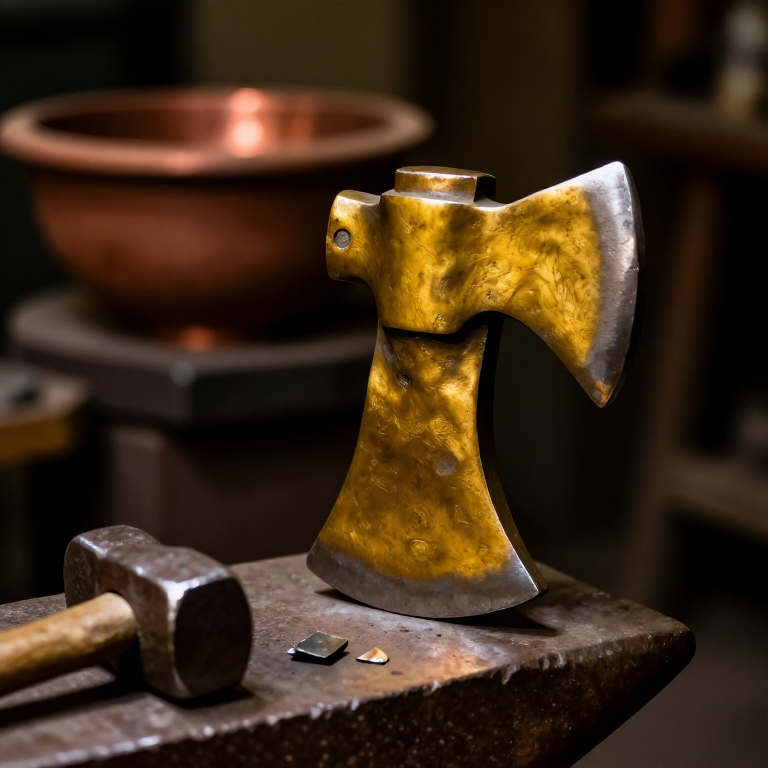
Alloying Bronze (Cu + Sn) — The Bronze Age Begins
Imiyalelo
Prerequisite: Smelting Copper
Prerequisite: Smelting Copper
You need copper ingots — the base metal for bronze alloy.
I-Blueprint Edingekayo Kuqala
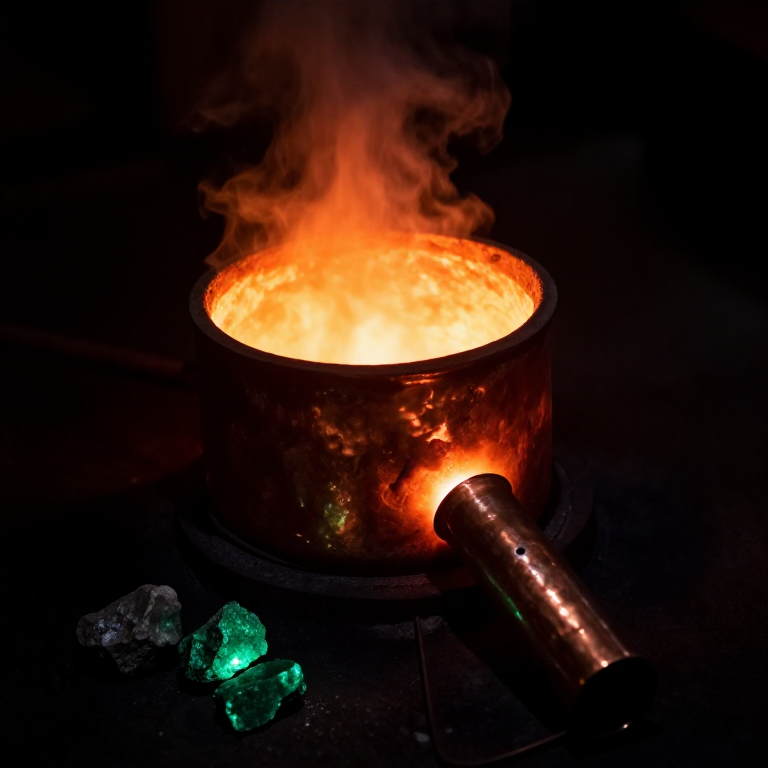
Smelting Copper from Malachite — The Birth of Metallurgy
Izinto zokwakha zalesi sinyathelo:
 Ithusi elibomvu0.9 kg
Amathuluzi adingekayo:
 Isithando
 Umfutho Womoya
 Udlawu Lwesitsha Sokuncibilikisa
 Ibhokisi lesikhunta elilungisekayo
 Insimbi Yokukhandela
 Isando esinekhanda eliyindilinga
Prerequisite: Casting Copper Tools
Prerequisite: Casting Copper Tools
You need casting technique from this blueprint to shape bronze.
I-Blueprint Edingekayo Kuqala
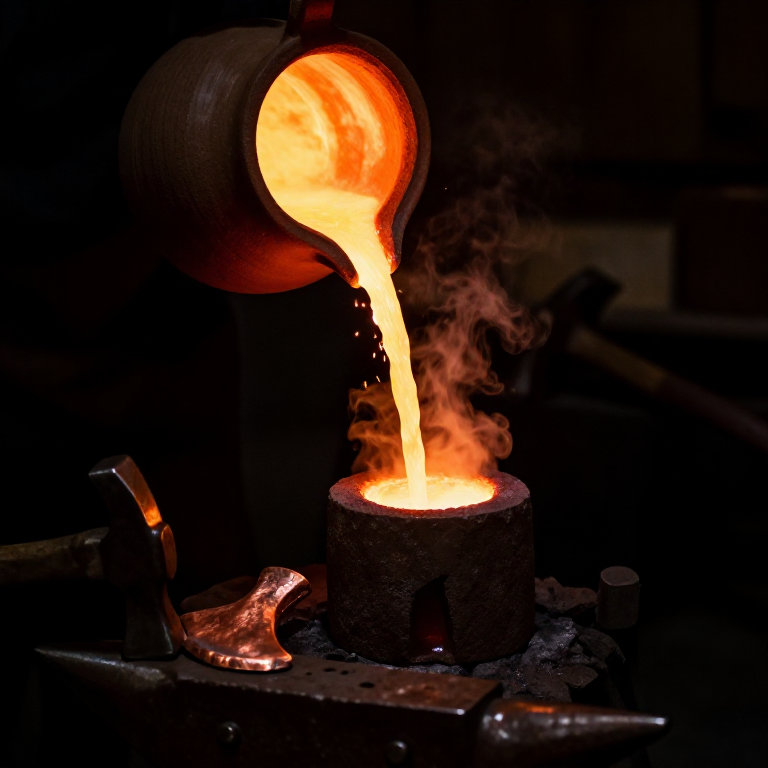
Casting Copper Tools — Shaping the First Metal
Izinto zokwakha zalesi sinyathelo:
 Ingqimba ye-tin100 g
 Ikhithi yokubumba ngengcino elahlekile - ithusi1 ikhithi
Prerequisite: Extracting Tin
Prerequisite: Extracting Tin
You need tin — the critical alloying element. Tin was the strategic resource of the Bronze Age.
I-Blueprint Edingekayo Kuqala
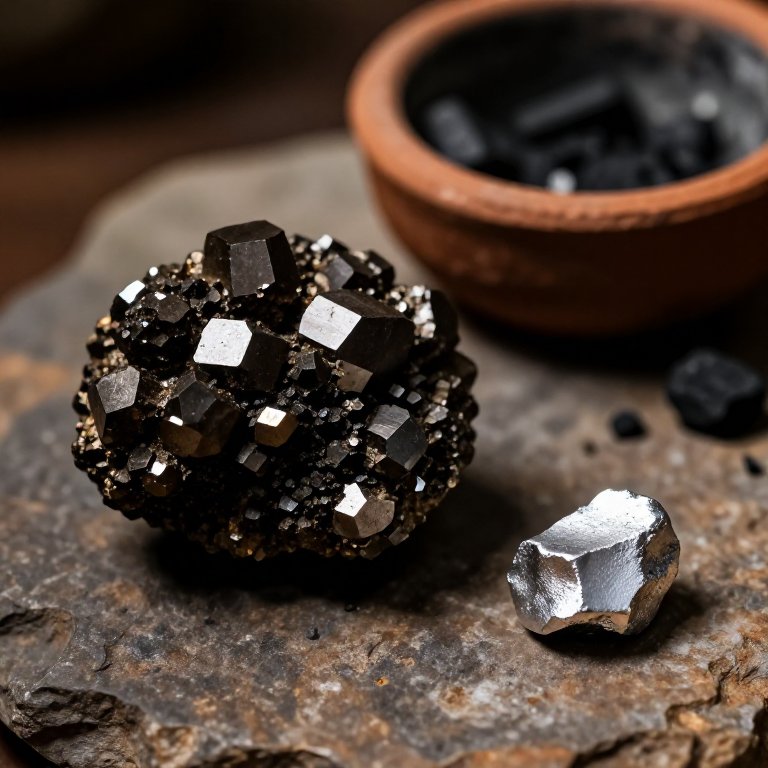
Extracting Tin from Cassiterite — The Missing Ingredient
Izinto zokwakha zalesi sinyathelo:
Ingqimba ye-tin100 gIkhithi yokubumba ngengcino elahlekile - ithusi1 ikhithiMetallurgy of Bronze
Metallurgy of Bronze
Why Bronze is Superior
Bronze is a solid solution alloy — tin atoms dissolve into the copper crystal lattice, distorting it and blocking dislocation movement. Result:
| Property | Copper | Bronze (10% Sn) | Improvement |
|---|---|---|---|
| Vickers Hardness | 40-50 | 70-150 | 2-3× harder |
| Tensile Strength | 210 MPa | 300-500 MPa | 2× stronger |
| Melting Point | 1085°C | ~950°C | Easier to melt! |
| Castability | Poor (gassy) | Excellent (fluid) | Complex shapes |
| Corrosion | Forms green patina | Highly resistant | Lasts millennia |
The Ideal Ratio
Ancient smiths converged on ~10% tin, 90% copper through trial and error:
- <8% tin: Too soft, barely better than copper
- 10-12% tin: Optimal hardness, good castability, golden colour
- 15-20% tin: Very hard but brittle — good for bells and mirrors, bad for tools
- >20% tin: Extremely brittle, shatters on impact
Izinto zokwakha zalesi sinyathelo:
Ucingo lwethusi olungambozwanga 10 AWG0.9 kgIngqimba ye-tin100 gIkhithi yokubumba ngengcino elahlekile - ithusi1 ikhithiThe Alloying Process
The Alloying Process
Preparation
- Weigh your metals: 900g copper + 100g tin for classic 10% bronze.
- Cut copper into small pieces (1-2cm) for faster melting.
- Tin can be in any form — it melts so fast it dissolves almost instantly.
Melting Sequence (CRITICAL)
- Melt the copper first. Load copper into pre-heated crucible in the kiln. Bring to full liquid (1085°C+).
- Add tin LAST. When copper is fully molten, add tin to the surface. Tin melts instantly (232°C) and dissolves into the copper.
- Stir with a pre-heated dry stick or ceramic rod. Ensure uniform mixing — 10 seconds of stirring is enough.
- NEVER add copper to molten tin — the temperature differential causes violent boiling and spatter.
Signs of Good Bronze
- Surface should be bright and mirror-like when fully liquid
- Colour: golden-yellow (not coppery red = too little tin, not silvery = too much tin)
- Flows smoothly when poured — bronze is more fluid than pure copper
Pour
- Skim slag from surface.
- Pour into pre-heated mold in one continuous stream.
- Bronze has excellent castability — it fills fine details that pure copper cannot.
Izinto zokwakha zalesi sinyathelo:
 Imbiza Yokuncibilikisa1 pcUcingo lwethusi olungambozwanga 10 AWG0.9 kgIngqimba ye-tin100 gIkhithi yokubumba ngengcino elahlekile - ithusi1 ikhithi
 Ibha eyindilinga ye-aluminium bronze C954 engu-25 mm1 inkomba
Finishing and the Innovation Leap
Finishing and the Innovation Leap
Post-Casting
- Allow to cool naturally in the mold.
- Remove from mold, break off sprues.
- Cold-work the edges: bronze work-hardens even more effectively than copper.
- Grind and polish the working edge.
Testing Your Bronze
- Ring test: Strike with a stick — good bronze produces a clear, bell-like ring. Dull thud = bad alloy or porosity.
- Edge test: A bronze axe keeps its edge 3-5× longer than copper.
- Colour: Golden-yellow when polished. Develops green patina over time (same as the Statue of Liberty).
The Civilization Impact
Bronze changed everything:
- Agriculture: Bronze ploughshares broke harder soil → more food → larger populations
- Warfare: Bronze swords and armour dominated for 2,000 years
- Art: Bronze casting enabled the first complex sculptures (lost-wax casting)
- Trade: Tin scarcity created the first long-distance trade networks
But bronze has a fatal flaw: tin scarcity. When the Bronze Age trade networks collapsed (~1200 BCE), civilizations that couldn't get tin were forced to master a harder, more abundant metal — iron. See Blueprint 08: Building a Bloomery & Smelting Iron.
Izinto zokwakha zalesi sinyathelo:
Ikhithi yokubumba ngengcino elahlekile - ithusi1 ikhithiUcingo lwethusi olungambozwanga 10 AWG0.9 kgIngqimba ye-tin100 gImbiza Yokuncibilikisa1 pcIbha eyindilinga ye-aluminium bronze C954 engu-25 mm1 inkombaIzinto
7- Isibambeli
- 100 gIsibambeli
- Isibambeli
- 1 ucezuIsibambeli
- Isibambeli
- Isibambeli
- Isibambeli
Amathuluzi Adingekayo
6- Isibambeli
- Isibambeli
- Isibambeli
- Isibambeli
- Isibambeli
- Isibambeli
Izinto Zokwakha Ze-Blueprint Exhunyiwe
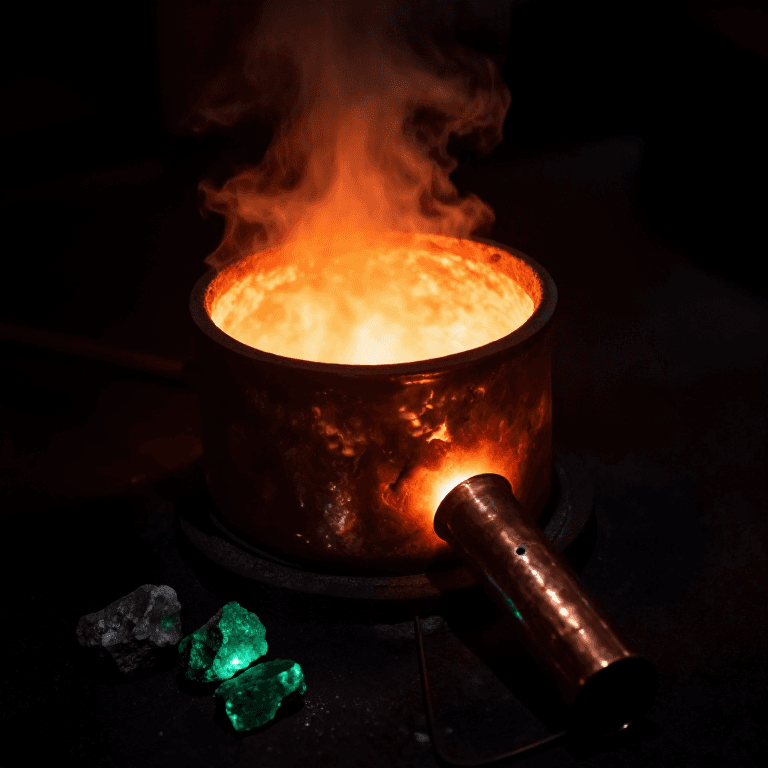
Smelting Copper from Malachite — The Birth of Metallurgy
ngu-Forge
Umsebenzi Wensimbi
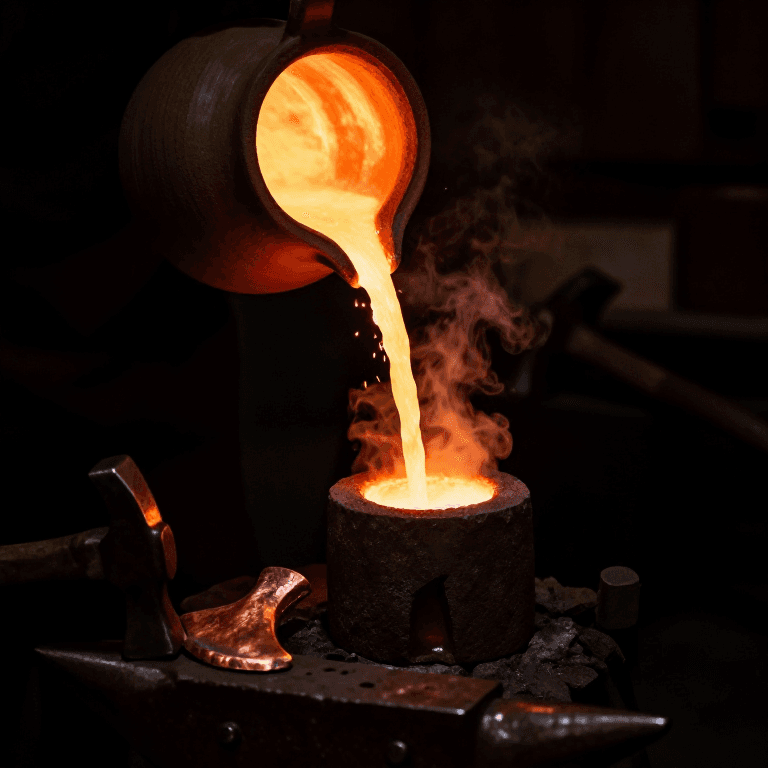
Casting Copper Tools — Shaping the First Metal
ngu-Forge
UBUCIKO BEZANDLA
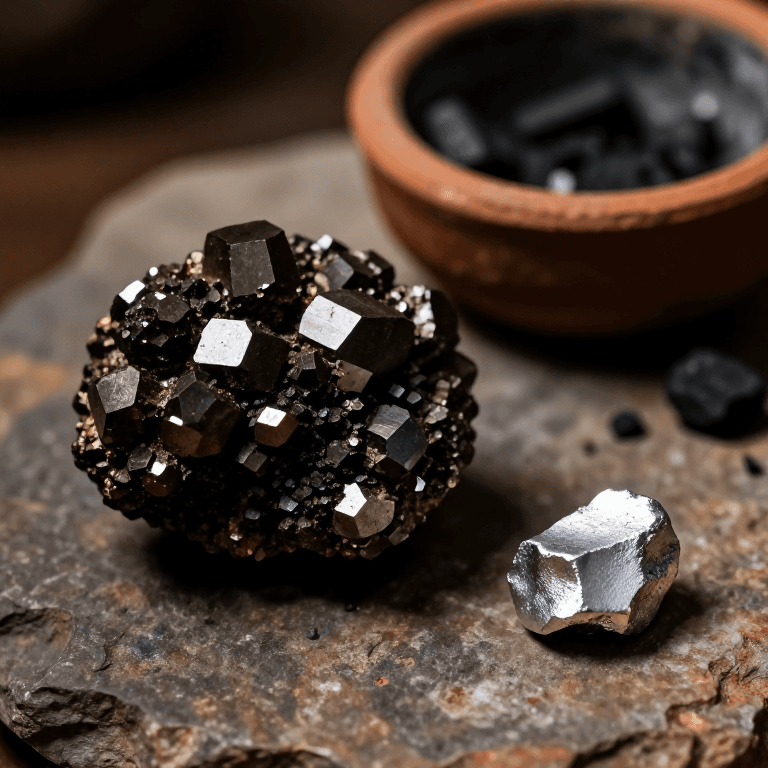
Extracting Tin from Cassiterite — The Missing Ingredient
ngu-Mary
Umsebenzi Wensimbi
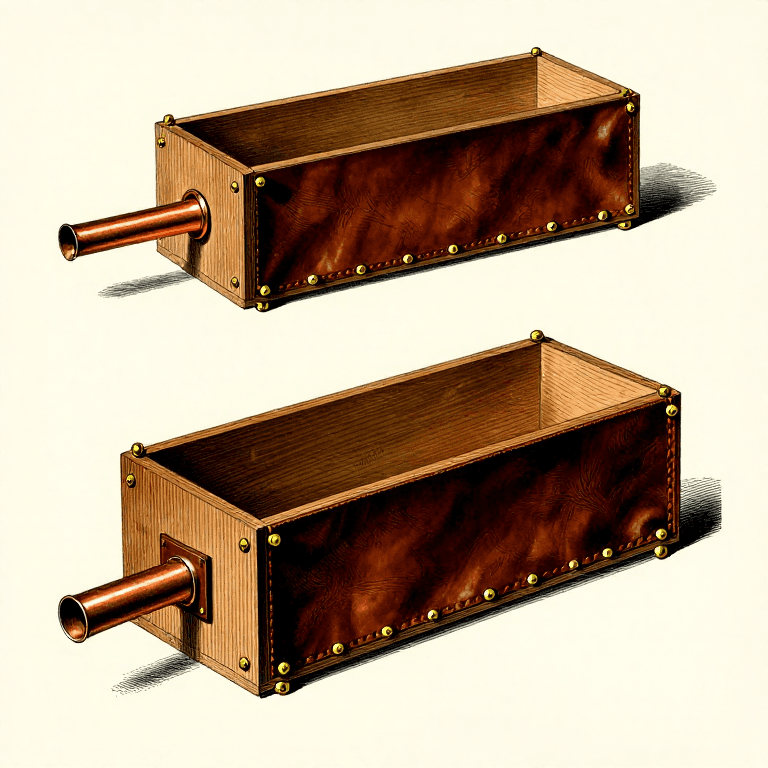
Building a Box Bellows — The Breath That Makes Metal Obey Fire
ngu-Emma
Umsebenzi Wokhuni
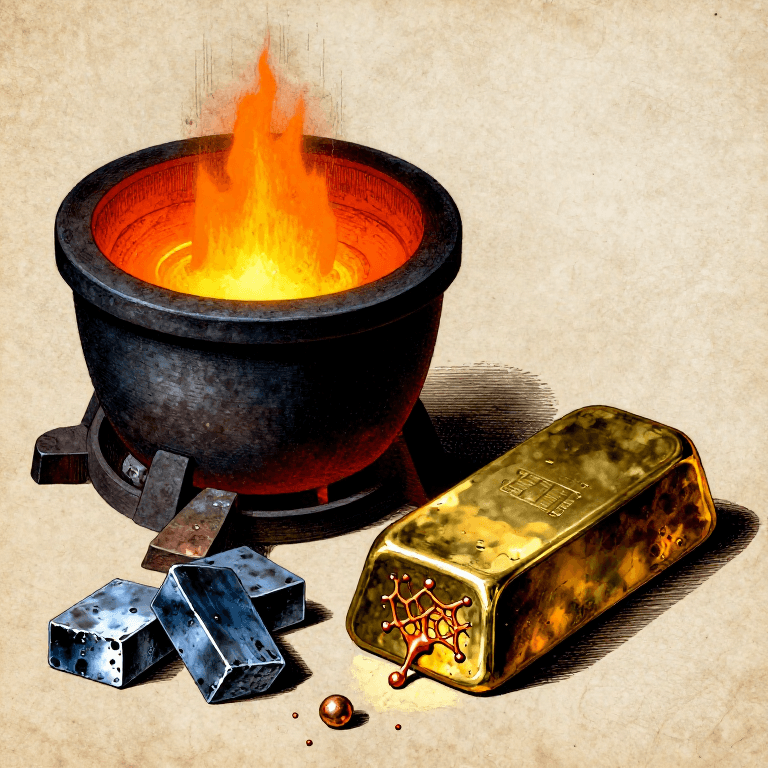
Alloying Brass from Copper and Zinc — The Golden Metal That Is Neither Gold Nor Bronze
ngu-Mary
Umsebenzi Wensimbi
CC0 Isizinda Somphakathi
Le blueprint ikhishwe ngaphansi kwe-CC0. Ukhululekile ukukopisha, ukuguqula, ukusabalalisa, nokusebenzisa ngaphandle kwemvume.
Sekela uMenzi ngokuthenga imikhiqizo nge-Blueprint yabo IKhomishane Yomenzi kumiswe ngabathengisi, noma dala inguqulo entsha yale Blueprint bese uyifaka njengoxhumaniso ku-Blueprint yakho ukuze wabelane ngemali engenayo.