
Ukuhlanganyela Nokucubungula Ikhothoni — Ukulima Ikhothoni KwaGujarat
IGujarati yindawo enkulu kakhulu yokukhiqiza ikhothoni e-India, enomnikelo omjikelezo we-35% yokukhiqiza ikhothoni komhlaba. Lesi sibuyekezo sichaza inqubo ephelele ye-hand-picking ikhothoni (Gossypium) nenginiu yesintu (ukuhlukanisa umusicelo nesinhlanzelo sisebenzisa i-charkhi) e-Gujarat.
E-Gujarat, kukhiqizwa kakhulu i-Gossypium hirsutum (American Upland cotton) kanye ne-Gossypium arboreum (desi cotton). Ikhothoni iphakamiswa ngesikhathi se-kharif (June-July) futhi ama-bolls avuleka kusuka Okthoba kuya Januwari. Ikhothoni yesihlahla eyinkosikazi ibizwa ngokuthi 'kapas'. Le nhlayo ibheke inqubo ngezinyathelo ezingu-12 kusukela ekukhomeni isitshalo kuze kube ekugoqeni ukhuselo.
Imiyalelo
Khomba umabali wekhothoni
Khomba umabali wekhothoni
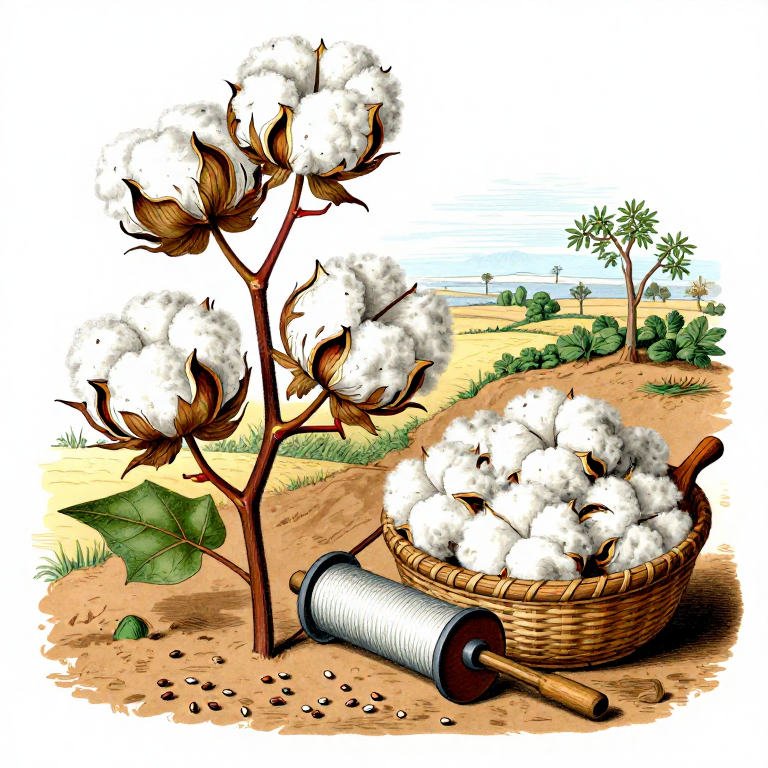
Ikhothoni (Gossypium) yisithathalwazi somndeni we-Malvaceae. Izinhlanga ezimbili eziyinhloko ezikhanyo eGujarati: Gossypium hirsutum (American Upland, enanele ngaphezu kuka-90% wendawo yethofu yase-India) kanye ne-Gossypium arboreum (Desi cotton, enemigubazi emfishi kodwa eqine kakhulu). Isithathalwazi sikhula ukufinyelela ku-1-1.5 meters ubude, amagqabi ane-angled amathathu kuya kwabhlanu, namahlahla ayellow-white owombala abuye aguquke abe yisithelo (boll). Lapho i-boll ilekelekile, ivulekile futhi isithili esiphupha ngaphakathi sivela ngaka ekuseni.
Thola isikhathi esifanele sokuphenya
Thola isikhathi esifanele sokuphenya
E-Gujarat, cotton iphantshwa ngesikhathi se-kharif ngesikhathi se-June-July (ekuqaleni kwe-monsoon). Amabhontshi e-cotton aqala ukuvuleka 150-180 izinsuku ngemuva kokuswa, okungukuthi ngesikhathi se-October kuye ku-January. Akuwona bonke amabhontshi esetshenziswe nomuntu abalumelana ndawonye — ngakho-ke 3-4 okuphenya kufanele kwenziwe ngesikhathi sinye. Ukuphenya kokuqala kuvamile kwenziwe ngo-October-November, nokugcina ngo-January-February. Phenya ngokunye ekuseni emva kokutha kwesikhasi — cotton emhlope iyanda ekubindeni futhi ikhwalithi iyehla.
Thola Izindluzi Zesilevu Ezivulekile
Thola Izindluzi Zesilevu Ezivulekile
Khetha izindluzi zesilevu ezivulekile. Indluzi evulekile ihlukaniswa into tatu kuye kwesihlanu izindluzi futhi isifu eseluhlaza sikhula futhi sivele. Ungazikhiphi izindluzi ezimnyama, ezilunyulelwe noma eziphuzi — lezi azimisiwe futhi ubukhulu besisifu buzokhoza. Cula izindluzi ezigulayo (ezikhakhayi, nezinezimbuthano ezimnyama) — ungaziphathelisane nesisifu esengakho.
Indlela Yesandla Yokukha
Indlela Yesandla Yokukha
Bamba i-lint evela ku-boll evulekile ngesandla sakho bese uyayumsa. I-lint kufanele ikhiphe kalula — ungasebenzisi amandla amaningi. Qaphela ukuthi ungabuzi izingxenye ezomileyo ze-boll (bract, burr) — lesi siphumo sihlangene ne-lint futhi sinciphise isivinini. Sebenzisa izandla zombili: bamba i-stem ngesandla esinye bese unokukha i-lint ngesandla esinye. Umukha onobukhosi angakha i-kg engama-30-40 ye-cotton ngosuku.
Amathuluzi adingekayo:
 Isikhwama sokukha ukotini (esiphangelwa ehlombe)
Qoqa inambuzane eyogulelwe
Qoqa inambuzane eyogulelwe
Gcwalisa inambuzane eyogulelwe isigubhu esizamile emaxaleni. Uma isigubhu sigcwele, siguqulele isigubhu esikhulu sesinxiwa. Ungacindezeleli inambuzane — amaphesha amakhulu ayangqoza imifu. Qinisekisa ukuthi amathente, amagatsha, nothuli angahlanganiswa nenambuzane eyogulelwe. Vigekeza inambuzane emhlaza noma enethezi — inambuzane enamandla inobungozi obuphakaliphakali bokuthuthuka kwe-mold.
Izinto zokwakha zalesi sinyathelo:
 Isaka le-jute lokuqoqa4 izicucu
Amathuluzi adingekayo:
Isikhwama sokukha ukotini (esiphangelwa ehlombe)Oma elangeni
Oma elangeni
Elula u-cotton owedwe emichini emithe kumhlaba okhululekile noma kumathala ephakili. Oma elangeni ngokuqondile okwesikhatshana se-2-3 izinsuku, uphendule 2-3 izikhathi ngosuku ukuze kuome ngolinganayo. Umuntu ophethe amanzi kufanele anciphale kuze kube ngu-8-10%. I-cotton enengi amanzi iyaqhekeza ngesikhathi se-ginning futhi ivela amafungu ezikhushweni. Ifihle ngenkathi yesitheshe noma lapho kukhulekela. Okuoma elangeni ezindaweni ezivulekile zaseGujarat kuyinto evamile — izivuno zingu-1500-2000 kg i-cotton nge-hectare.
Izinto zokwakha zalesi sinyathelo:
 Ishidi lethente1 ucezu
Amathuluzi adingekayo:
 Isigcawu sokomisa
Susa inzuzo ezinhliziyweni zelwandle
Susa inzuzo ezinhliziyweni zelwandle
Ezinhliziyweni zelwandle ezomisiwe, ziqoqe ngesandla amaluzu, amasuntela, izigxobo zomisiwe, nezinye inzuzo. Lolu hlelo lubizwa 'ukuhlanza' noma 'ukususa inzuzo'. Izinhliziyweni zelwandle ezihlanzwe zuthengiswa ngexabiso eliphakeme ngo-5-10% emakethe. Vigabanise izinhliziyweni zelwandle ezinomtaka noma ezigula — zinciphisa igrad.
Amathuluzi adingekayo:
 Itafula lokuhlunga
Ukuginina nge-churki (ukwahlula i-lint ne-seed)
Ukuginina nge-churki (ukwahlula i-lint ne-seed)
I-Cotton (kapas) = lint + seed. Ukungenisa nge-churki kusho ukwahlula i-lint (lint) ku-seed (seed). Endleleni yesiginali ye-Gujarati, kusetshenziswa i-'churki' (churki) — lezi ziyizingatandeka ezimbili zekhuni ezizungeza ngokwehlukene komunye munye. Faka i-cotton phakathi kwezingatandeka ezimbili — i-lint iyaphuma ngaphambilini futhi i-seed ihlala ngemuva. Nge-hand churki, i-5-8 kg ye-cotton ingaginnwa ngosuku. I-modern roller gin isebenza ngomgomo ofanayo.
Izinto zokwakha zalesi sinyathelo:
 I-kapas eyomisiwe (ukotini onembewu)5 kg
Amathuluzi adingekayo:
 Umshini wesandla wokukhipha imbewu kakotini (i-churki)
Faka umongo okufutshana nenkhathathu
Faka umongo okufutshana nenkhathathu
Ngemuva kokuginina, inkhathathu iyacindezelwa futhi iyamanama. Ngokwesiko, i-'dhunai' (bow carding) isetshenziswa — i-bow enkulu enemichini ethathwa endaweni yeqwaba linkhathathu. Ukudlidliza kwe-bow kubalula futhi kufaka umongo okufutshana nefibers. Lo msebenzi ulungiselela i-fibers ukuthi ziqonde okunye, ususa amaqatha, futhi wahlukanisa noma iyiphi imbi eyindilinga esele. Inkhathathu efakwe umongo okufutshana iyobulayo, elubhelu, futhi ilungele i-carding.
Amathuluzi adingekayo:
 Umnsalo we-dhunai (umnsalo wokukama ukotini)
Hlola ikhwalithi ye-fiber
Hlola ikhwalithi ye-fiber
Ubude be-cotton fiber (staple) bunquma ikhwalithi. Short staple: okungemuva kuka-21 millimeters — para sa coarse fabric. Medium staple: 22-25 millimeters — para sa ordinary fabric. Long staple: 26-32 millimeters — para sa high quality fabric. Ukuhlola ubude be-fiber, thatha i-fibers encane futhi uziyezise — i-long fibers ziyezisa kalula futhi zisiqinile. E-Gujarat, cotton enomedium nalong staple ikhulisiwe ikakhulu.
Amathuluzi adingekayo:
 Irula
IrulaBophakamisela ithumbu lokusuka emathuneni
Bophakamisela ithumbu lokusuka emathuneni
Cineza ithumbu lokusuka eliphakamiselwe ngekawe eliluhlaza elinomsoco. Ngokululukezela, ukucindezela ngesandla kwenza amathune angu-20-30 kilograma. Bophakamisela ithune ngalinye ngakho-kho ngentambo noma ngamaphesu awo okusuka. Bhala isisindo, isikhundla (ubude befayibha), kanye nezinsuku kumathune ngalinye. Funda nakho imbewu yokusuka ngokuhlukaniswe — isetshenziswa kokwenza i-cottonseed oil kanye nokudla kwezilwane (oilcake).
Izinto zokwakha zalesi sinyathelo:
 Indwangu yokubopha amabhande kakotini2 izicucu
 Intambo yokubopha enkulu5 amamitha
Istora
Istora
Gcina amakhiwa e-runi aomisiwe endlunkulu eyomileyo, enemioya elula. Gcina amakhiwa aphakeme komunsi — abeka kuzo zibhokisi zezinkuni noma izinkundla. Gcina kude nokunomsumbi — uma ubushubane buphakeme kungo-8-10%, isifo nomubi kuvela. Gcina indlunkulu ihlanzekile ukuze kukunqobe izimpongosikazi nezigilizane. I-runi egcinwe ngendlela efanele igcina ikhwalithi kuzinyanga eziningi. Abaplanthi e-Gujarat bathengisa ikhothane ku-APMC (Agricultural Produce Market Committee) market.
Amathuluzi adingekayo:
 Iplatifomu yokugcina yokhuni
Izinto
5- 4 izicucuIsibambeli
- 1 ucezuIsibambeli
- Isibambeli
- Isibambeli
- 5 amamithaIsibambeli
Amathuluzi Adingekayo
7- Isibambeli
- Isibambeli
- Isibambeli
- Isibambeli
Le blueprint yenza

CC0 Isizinda Somphakathi
Le blueprint ikhishwe ngaphansi kwe-CC0. Ukhululekile ukukopisha, ukuguqula, ukusabalalisa, nokusebenzisa ngaphandle kwemvume.
Sekela uMenzi ngokuthenga imikhiqizo nge-Blueprint yabo IKhomishane Yomenzi kumiswe ngabathengisi, noma dala inguqulo entsha yale Blueprint bese uyifaka njengoxhumaniso ku-Blueprint yakho ukuze wabelane ngemali engenayo.