Ukusebenzisana
UBUCIKO
UBUHLE NEMPILO
UBUCIKO BEZANDLA
AMASIKO NOMLANDO
EZOKUZIJABULISA
IMVELO
UKUDLA NEZIPHUZO
REVERSE ENGINEERING
IZAYENSI
EZEMIDLALO
UBUCHWEPHESHE
IZINTO EZIGQOKWAYO
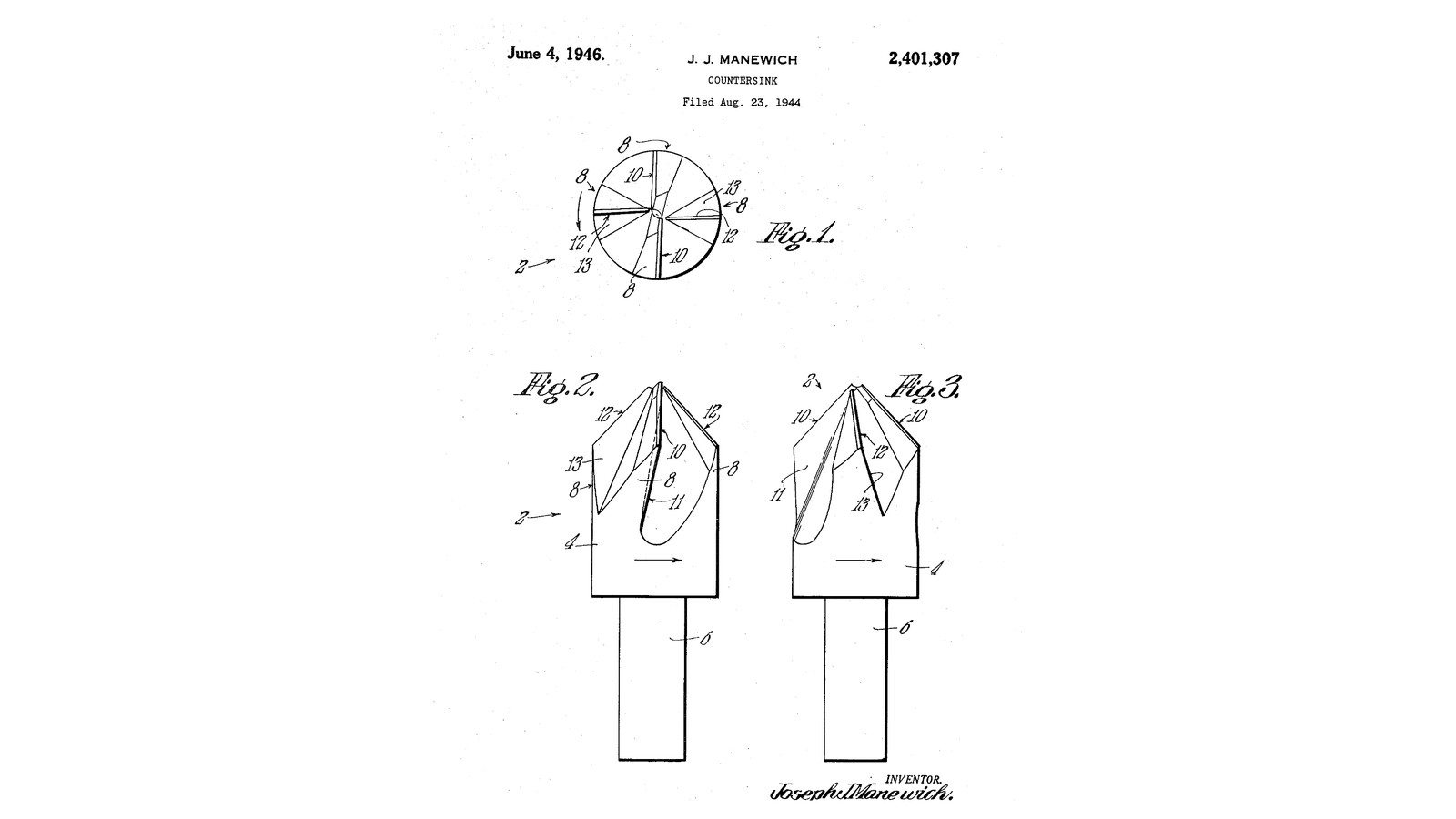


Four-Edge Chatterless Countersinks: Two Pairs of Edges Set Off the Centre Lines, One Raked Each Way (Manewich, 1946)
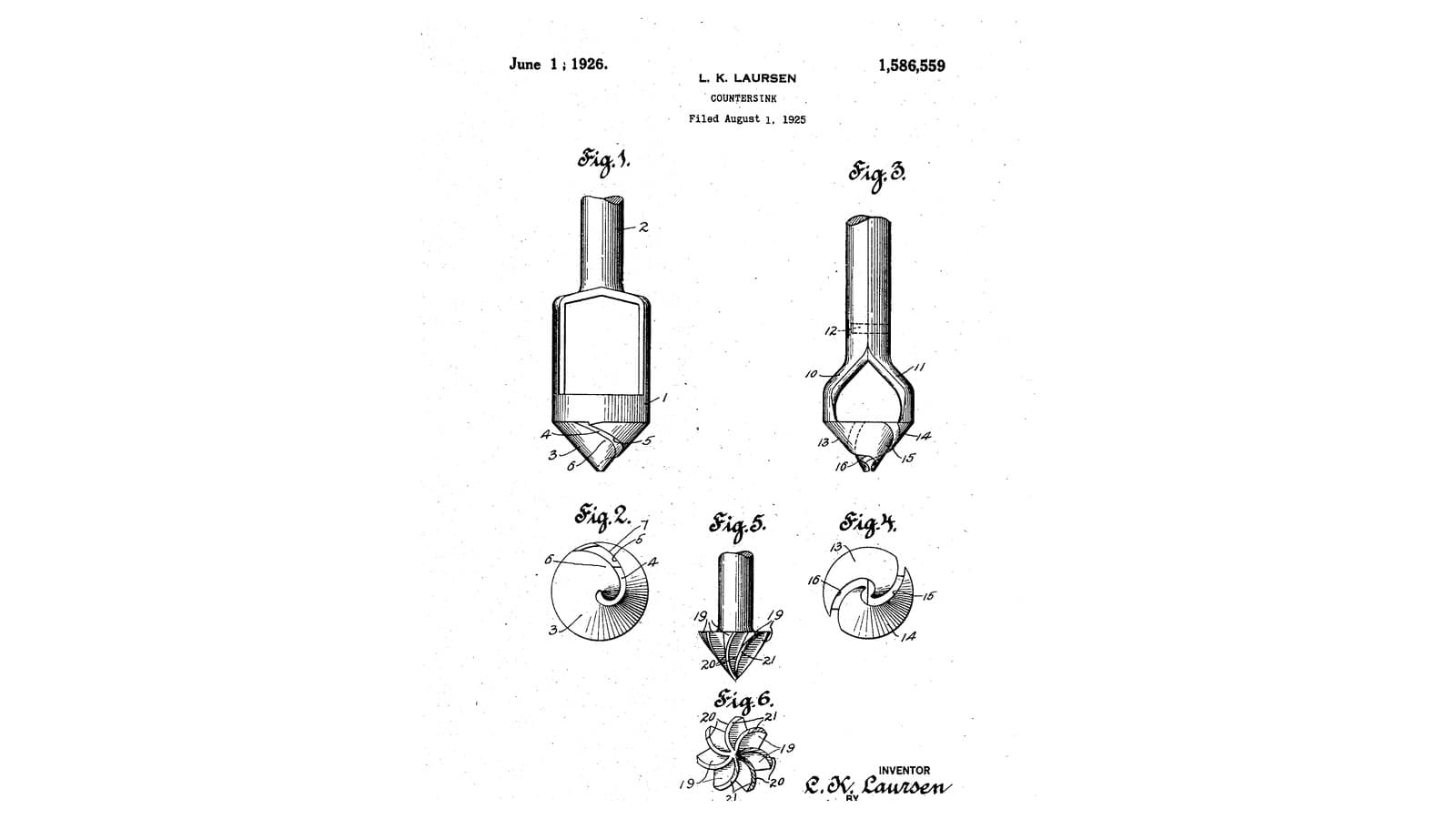
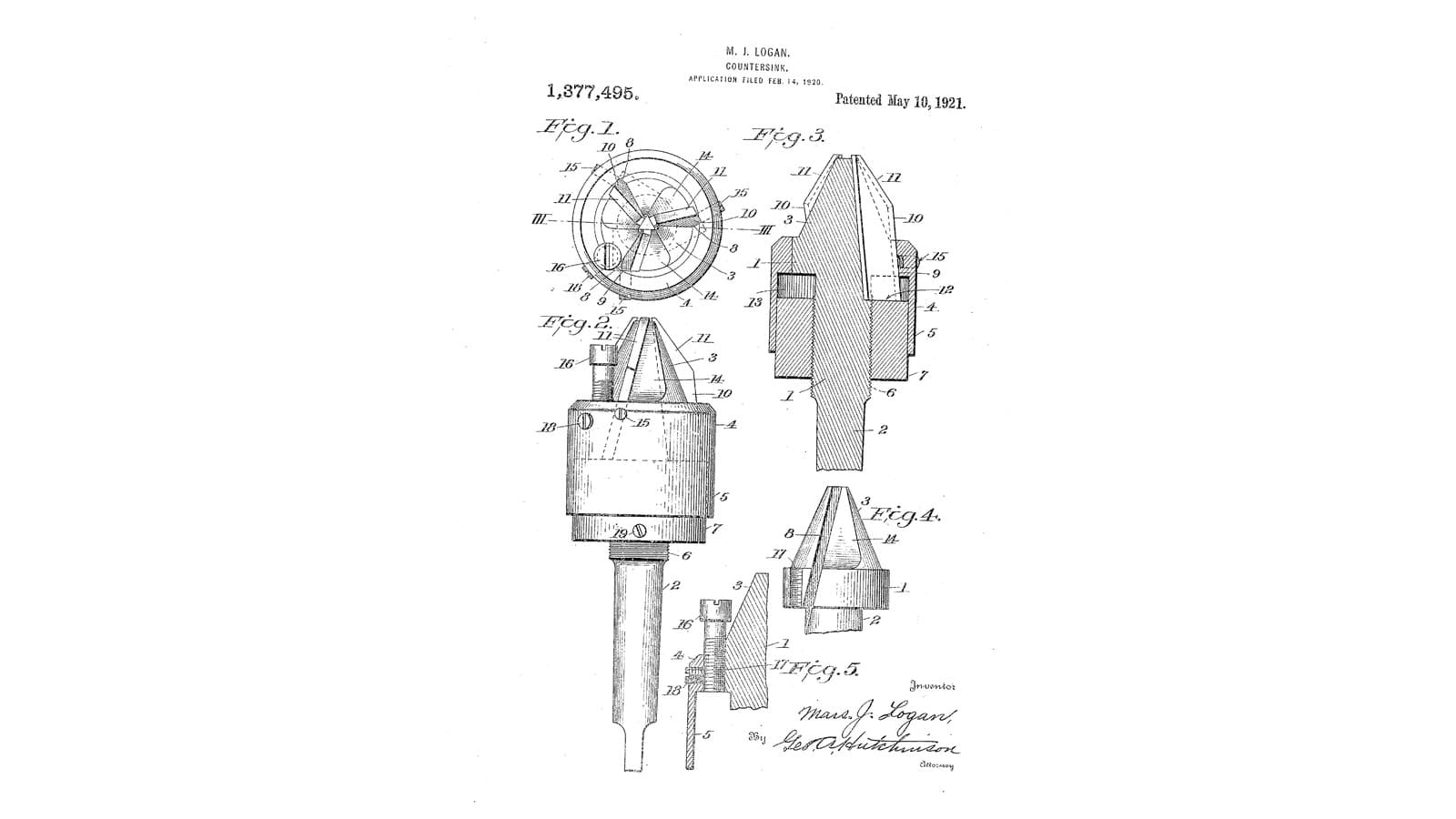
Joseph J. Manewich of Longmeadow, Massachusetts, received US 2,401,307, dated 4 June 1946, for a countersink that does not chatter. Four teeth are gashed in the cone. The inner ends of one pair of edges sit just ahead of a line through the centre, with their faces raked back. The other pair sit just behind a line at right angles, raked forwards. The edges keep changing how they meet the work as the tool goes in, and each steadies the one opposite, so it can run faster and leaves round, smooth countersinks.
We make a set of three in tool steel. The patent gives no sizes or angles; ours are stated.
Osezingeni eliphezulu
About 1 day
Imiyalelo
1
1
Why the edges are set off the centre lines
Why the edges are set off the centre lines
Ilayisha incwadi ye-Jupyter…
2
2
Read US 2,401,307
Read US 2,401,307
"It has been found that the countersink tool by reason of its novel construction and arrangement may be operated at a higher speed than may those of the prior art while at the same time objectionable chatter is eliminated."
3
3
Turn the blanks
Turn the blanks
From octagonal tool steel turn three blanks: a 90 degree cone to a point, 12, 16 and 20 mm across, a short body 4 and an 8 mm shank 6 50 mm long with three filed flats. Heat each to a cherry red and let it cool slowly in the air.
Izinto zokwakha zalesi sinyathelo:
 Induku enezinhlangothi eziyisishiyagalombili yensimbi yamathuluzi2 izicucu
Amathuluzi adingekayo:
 Umshini Wokuphendula Insimbi
 Isibambi somshini wokuphenda esinemilomo emithathu
 Ithuluzi lokusika le-lathe
 Insimbi yokuhlukanisa emshinini wokuphotha
 Iphrothrakta
 I-Caliper Yedijithali Yamayintshi Ayi-6
 Iqoqo Lamafayela
 Iziko Lokukhanda
 Udlawu Lomkhandi
 Izibuko zokuphepha
4
4
Mark and gash the four teeth 8
Mark and gash the four teeth 8
Blue the cone and scribe two diameters across its end at right angles. Mark the positive pair's edges 10 parallel to the first diameter, 0.5 mm ahead of it in the direction of turning, and the negative pair's edges 12 parallel to the second, 0.5 mm behind it. File or grind a gash 11 ahead of each edge, down the cone: for the edges 10 the face raked back about 8 degrees (positive), for the edges 12 raked forward about 5 degrees (negative). Give each edge a little clearance behind it.
Amathuluzi adingekayo:
 Isethi Yamafayela Amancane
 Isibambo SomshiniIqoqo Lamafayela
 Umshini wokugaya wetafulaIphrothrakta
5
5
Harden and temper
Harden and temper
Heat each head to a cherry red, until a magnet no longer sticks, and quench it point first in water, moving it about. Rub it bright with a stone, heat the shank gently 20 mm behind the head, and quench again as soon as a light straw colour reaches the cutting edges.
Amathuluzi adingekayo:
Iziko LokukhandaUdlawu Lomkhandi Uzibuthe Omncane
 Ibhakede lokupholisa
 Amanzi
 Itshe Lokulola
 Amagilavu okushiselaIzibuko zokuphepha
6
6
Hone and test
Hone and test
Hone all four edges lightly with the stone. Countersink holes in hardwood and in a scrap of aluminium at a higher speed than usual: the cone should be round and smooth, with no chatter marks.
Amathuluzi adingekayo:
Itshe Lokulola Ibhola Elingenantambo
 Iqoqo Lamakhanda Ebhola
 Ipulangwe Lokhuni OluqinileIzibuko zokuphepha
7
7
Troubleshooting
Troubleshooting
Four-edge countersink troubleshooting.
Flow
Loading...
8
8
History and honest limits
History and honest limits
**Joseph J. Manewich** of Longmeadow, Massachusetts, US 2,401,307, dated 4 June 1946, filed 23 August 1944. He claimed cutting edges in two pairs, "the innermost portions of the cutting edges of one pair thereof disposed adjacent said longitudinal axis and forwardly" of a plane through it, and those of the other pair "rearwardly" of another plane at right angles. He calls the first positive edges with positive rake and the second negative with negative rake. He gives no sizes, offsets or angles; ours are stated, with the house hardening.
Izinto
1- Isibambeli
Amathuluzi Adingekayo
21- Isibambeli
- Isibambeli
- Isibambeli
- Isibambeli
- Isibambeli
- Isibambeli
- Isibambeli
- Isibambeli
- Isibambeli
- Isibambeli
- Isibambeli
- Isibambeli
- Isibambeli
- Isibambeli
- Isibambeli
- Isibambeli
- 1 vendor sell this, none ship to you yetIsibambeli
- Isibambeli
- Isibambeli
Le blueprint yenza

Ama-blueprint ahlobene
Lama-blueprint abelana ngolwazi — amasu, izinto noma izimiso
CC0 Isizinda Somphakathi
Le blueprint ikhishwe ngaphansi kwe-CC0. Ukhululekile ukukopisha, ukuguqula, ukusabalalisa, nokusebenzisa ngaphandle kwemvume.
Sekela uMenzi ngokuthenga imikhiqizo nge-Blueprint yabo IKhomishane Yomenzi kumiswe ngabathengisi, noma dala inguqulo entsha yale Blueprint bese uyifaka njengoxhumaniso ku-Blueprint yakho ukuze wabelane ngemali engenayo.