Ukusebenzisana
UBUCIKO
UBUHLE NEMPILO
UBUCIKO BEZANDLA
AMASIKO NOMLANDO
EZOKUZIJABULISA
IMVELO
UKUDLA NEZIPHUZO
REVERSE ENGINEERING
IZAYENSI
EZEMIDLALO
UBUCHWEPHESHE
IZINTO EZIGQOKWAYO
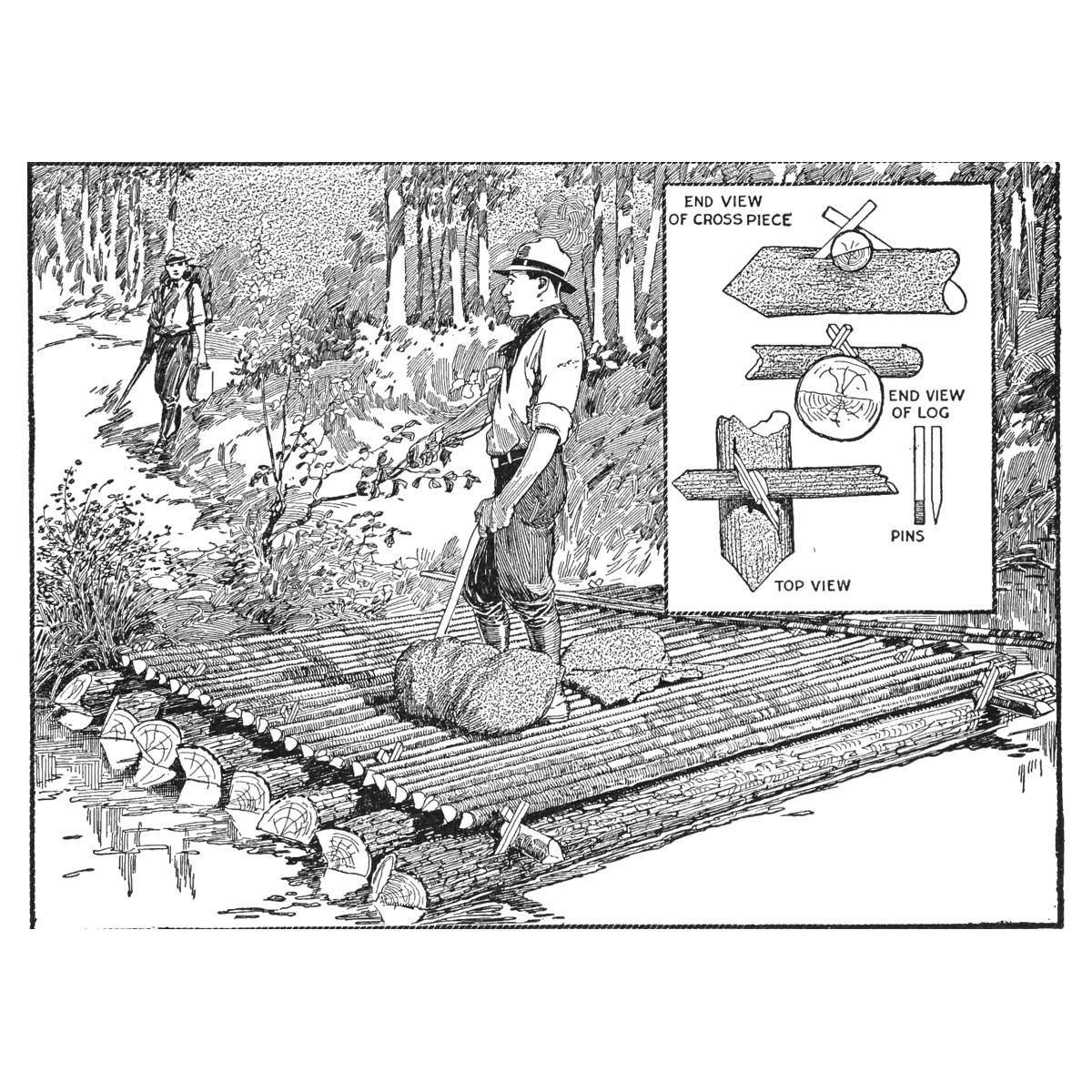


Woodsman's Log Raft: Logs Pinned to Notched Cross Poles With Wooden Spikes, Built With a Hand Ax (Boy Mechanic, 1919)
A. M. Parker's woodsman's raft from The Boy Mechanic, Book 3 (1919), for crossing a stream with only a hand ax: logs rolled into the shallows, cross poles notched into them and held by pairs of hardwood pins driven diagonally so they clamp the poles. For one passenger he uses three logs 9 to 12 in thick and 12 to 16 ft long, spaced to 5 ft.
Ophakathi
About half a day
Imiyalelo
1
1
His sizes, and a rough buoyancy check
His sizes, and a rough buoyancy check
Ilayisha incwadi ye-Jupyter…
2
2
Read The Boy Mechanic, Book 3
Read The Boy Mechanic, Book 3
The woodsman "has only a hand ax as his tool equipment"; the raft is "pinned together firmly with poles and pointed wooden spikes, cut on the spot". Dry logs are better than wet or green ones; green logs need a larger raft for the same load.
3
3
Cut logs, poles and pins
Cut logs, poles and pins
On a shore sloping gently into the water, cut the logs and roll them to the bank, alternating the butts. For one passenger: three logs 9 to 12 in thick, 12 to 16 ft long, to be spaced 5 ft wide (for heavier loads, more logs set closer). Cut poles about 3 in thick, long enough to cross the raft, and a number of hardwood pins 1 ft long, sharpened at one end.
Izinto zokwakha zalesi sinyathelo:
 Isigodo3 izicucu
 Insika yokhuni4 izicucu
 Ipulangwe Lokhuni Oluqinile1 ucezu
Amathuluzi adingekayo:
 Imbazo
 Imbazo Yesandla
4
4
Notch and pin the first log
Notch and pin the first log
Roll the first, one of the largest, into the water until it nearly floats, any bow or hump toward the outer edge. Chop notches 2 in deep in its top about 1-1/2 ft from the ends, squarely across. Lay a pole in a notch, its end just past the log, and cut a double notch in the pole's upper edge so the pins rest diagonally in it. Split rifts in the log with the ax, cutting as if to split off a slab, not toward the centre, and drive two pins in crossed over the pole. Fasten a second pole at the other end.
Amathuluzi adingekayo:
Imbazo Yesandla Isando
5
5
Add the other logs
Add the other logs
Prop up both poles, roll the next log in underneath and notch it before slipping it into place. Only alternate ends of the inner logs need pinning; some can be left loose if held tight between pinned ones. Push the raft out as each log is added; in a strong current, guy it to the bank downstream with a pole. Float the last log, a large one, down and pin it at both ends. Cover with light poles or brush for dry footing.
Izinto zokwakha zalesi sinyathelo:
Insika yokhuni6 izicucuAmathuluzi adingekayo:
Imbazo Yesandla6
6
Troubleshooting
Troubleshooting
Log raft troubleshooting.
Flow
Loading...
7
7
History and honest limits
History and honest limits
From "A Woodsman's Log Raft" by A. M. Parker, in **The Boy Mechanic, Book 3**, Popular Mechanics, 1919 (Project Gutenberg 71856; checked on the archive.org scan boymechanic0003unse, pp. 185-186). The buoyancy figures in the notebook are an example of ours, not his. The metric figures are ours.
Izinto
3- 3 izicucuIsibambeli
- 6 izicucuIsibambeli
- 1 ucezuIsibambeli
Le blueprint yenza
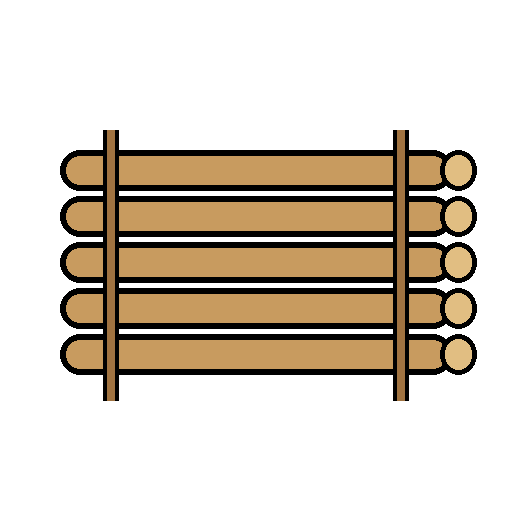
Ama-blueprint ahlobene
Lama-blueprint abelana ngolwazi — amasu, izinto noma izimiso
CC0 Isizinda Somphakathi
Le blueprint ikhishwe ngaphansi kwe-CC0. Ukhululekile ukukopisha, ukuguqula, ukusabalalisa, nokusebenzisa ngaphandle kwemvume.
Sekela uMenzi ngokuthenga imikhiqizo nge-Blueprint yabo IKhomishane Yomenzi kumiswe ngabathengisi, noma dala inguqulo entsha yale Blueprint bese uyifaka njengoxhumaniso ku-Blueprint yakho ukuze wabelane ngemali engenayo.