UBUCIKO
UBUHLE NEMPILO
UBUCIKO BEZANDLA
AMASIKO NOMLANDO
EZOKUZIJABULISA
IMVELO
UKUDLA NEZIPHUZO
REVERSE ENGINEERING
IZAYENSI
EZEMIDLALO
UBUCHWEPHESHE
IZINTO EZIGQOKWAYO
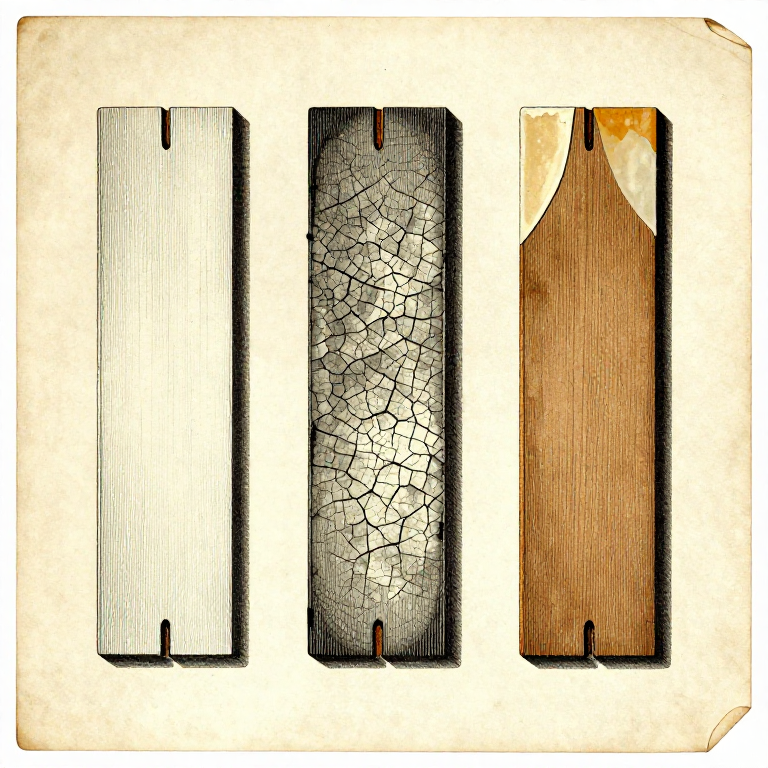


Squeeze-Out, Starvation and Reading a Joint That Failed
A broken joint is evidence. The two faces record exactly what went wrong, and reading them takes a minute and tells you what to change.
Most makers throw the pieces away and try again with more glue and more pressure — which is the wrong response to three of the four common failures, and makes one of them considerably worse.
This rung is the diagnostic table. It pairs with the fault-finding approach used elsewhere on Youblob: look at what the failure actually shows before deciding what to do about it.
Ophakathi
2 hours
Imiyalelo
1
1
Bare wood on both faces: it never bonded
Bare wood on both faces: it never bonded
Two clean surfaces, little or no glue visible, and the parts separated with much less force than they should have needed.
This is an ADHESION failure and the cause is almost always contamination or a sealed surface: oil, old finish, silicone polish, release agent, or an oily timber like teak that was not wiped with solvent. Occasionally it is an adhesive that simply does not bond that material — PVA on metal or on most plastics will do exactly this.
The fix is in the preparation rung, not in the glue bottle. Clean, abrade, and check that the adhesive is rated for both materials.
Izinto zokwakha zalesi sinyathelo:
 Ipulangwe Lokhuni Olubuthaka Olomile2 izicucu
Amathuluzi adingekayo:
 I-Loupe Yokukhulisa
 Utshwala olwenziwe lungaphuzwa
2
2
A thick brittle line: too much glue, or it cured wrong
A thick brittle line: too much glue, or it cured wrong
A visible glue line, glue on both faces, and the break running through the adhesive itself. That is a COHESIVE failure.
For PVA it usually means the film was too thick — it shrank as it dried and cracked internally — or it cured too cold and chalked instead of forming a proper film. Chalky white crumbs along the line are the signature of cold curing, and no amount of extra time fixes it.
For epoxy it means the mix was wrong. Two-part epoxy needs its stated ratio measured, not estimated, and thorough mixing including the sides of the pot. An under-mixed epoxy stays tacky or rubbery and never reaches strength.
Izinto zokwakha zalesi sinyathelo:
 I-epoxy Yezingxenye Ezimbili1 ucezu
 Iglu Lokhuni le-PVA1 ucezu
Amathuluzi adingekayo:
I-Loupe Yokukhulisa3
3
Dry patches in a glued area: starvation
Dry patches in a glued area: starvation
Glue around the edges of the joint and dry, unglued wood in the middle. The joint was STARVED — squeezed so hard that the adhesive was driven out before it cured.
This is the failure that punishes the instinct to clamp harder. It also happens with too little glue, with a joint left unclamped so long that the glue skinned before contact, and on end grain that drank the glue away — which the first rung covers.
The fix is more glue and LESS pressure, which is counter-intuitive enough that people rarely try it. A continuous fine bead of squeeze-out along the whole joint is the target; streams of it running down the work mean you have gone past.
Izinto zokwakha zalesi sinyathelo:
Iglu Lokhuni le-PVA1 ucezu Ipulangwe Lokhuni Oluqinile2 izicucu
Amathuluzi adingekayo:
 Ibhulashi leglu
 Isibambo esiyi-CI-Loupe Yokukhulisa
4
4
Cleaning squeeze-out: wet, leathery, or cured
Cleaning squeeze-out: wet, leathery, or cured
There are three moments to deal with squeeze-out and they call for three different methods.
WET: wipe with a barely damp cloth. Tempting, and the trap is that water spreads thinned glue into the surrounding grain where it seals the wood invisibly — and shows up as a pale patch under the finish. Use as little water as possible, or skip this stage.
LEATHERY, after twenty minutes or so: the best moment. The bead has set enough to lift off in one rubbery piece with a chisel or a scraper, and it takes nothing with it. CURED: it has to be pared or scraped off, and you risk digging into the surface. Masking tape applied before assembly avoids the whole question.
Amathuluzi adingekayo:
 Indwangu YekotiniI-Loupe Yokukhulisa
 Iqoqo lamaphepha okuhlikihla
 Itheyiphu lokumboza
Izinto
4- 2 izicucuIsibambeli
- 1 ucezuIsibambeli
- 2 izicucuIsibambeli
- 2 izicucuIsibambeli
Amathuluzi Adingekayo
7- Isibambeli
- Isibambeli
- Isibambeli
- Isibambeli
- Isibambeli
- Isibambeli
- Isibambeli
Ama-blueprint ahlobene
Lama-blueprint abelana ngolwazi — amasu, izinto noma izimiso



CC0 Isizinda Somphakathi
Le blueprint ikhishwe ngaphansi kwe-CC0. Ukhululekile ukukopisha, ukuguqula, ukusabalalisa, nokusebenzisa ngaphandle kwemvume.
Sekela uMenzi ngokuthenga imikhiqizo nge-Blueprint yabo IKhomishane Yomenzi kumiswe ngabathengisi, noma dala inguqulo entsha yale Blueprint bese uyifaka njengoxhumaniso ku-Blueprint yakho ukuze wabelane ngemali engenayo.