UBUCIKO
UBUHLE NEMPILO
UBUCIKO BEZANDLA
AMASIKO NOMLANDO
EZOKUZIJABULISA
IMVELO
UKUDLA NEZIPHUZO
REVERSE ENGINEERING
IZAYENSI
EZEMIDLALO
UBUCHWEPHESHE
IZINTO EZIGQOKWAYO
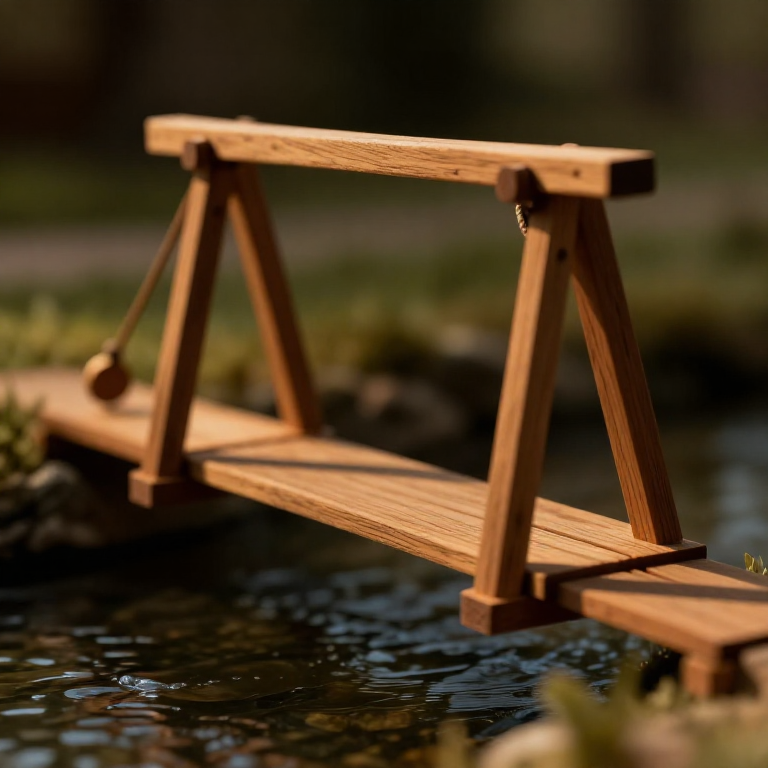


Building Leonardo da Vinci's Revolving Bridge — The Swing Bridge for a Marching Army
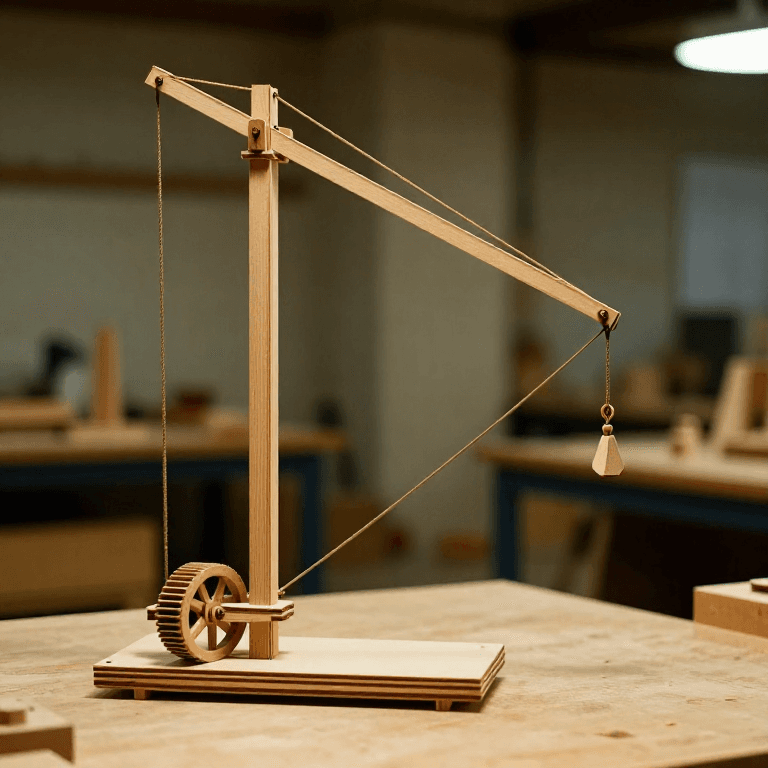
Around 1487 Leonardo da Vinci designed a bridge that swings. Meant for armies on the move, it pivots on a single point on one bank, sweeps across the river in one rigid span, and drops onto the far side — then swings back in moments to leave the river uncrossable behind. Light enough for a handful of soldiers to work with rope, pulley and counterweight, yet strong enough to carry men and light artillery, it is the same swing-bridge principle used today where a bridge must open for passing boats. This blueprint reconstructs Leonardo's revolving bridge as a working model.
Osezingeni eliphezulu
24
Imiyalelo
1
1
Understand the design
Understand the design
Leonardo's bridge crosses a river in a single rigid span that pivots horizontally on one bank. An army can swing it out to cross, then swing it back to stop the enemy following — quick to deploy and quick to withdraw, unlike a fixed bridge.
2
2
Build the span
Build the span
Build a light but stiff timber truss as long as the crossing. It must be rigid enough to carry marching men and light guns, yet light enough that a small crew can swing it — a classic strength-to-weight problem Leonardo solved with a trussed frame.
Izinto zokwakha zalesi sinyathelo:
 Amapulangwe e-beech6 izicucu
Amathuluzi adingekayo:
 Isaha Sesandla
3
3
Set the pivot
Set the pivot
Anchor a strong vertical pivot pin on the near bank and seat one end of the span on it, so the whole bridge can rotate freely in the horizontal plane about that single point.
Izinto zokwakha zalesi sinyathelo:
 Izinduku Zokhuni1 ucezu
Amathuluzi adingekayo:
 Isibhoboza Sesandla
4
4
Rig the ropes and counterweight
Rig the ropes and counterweight
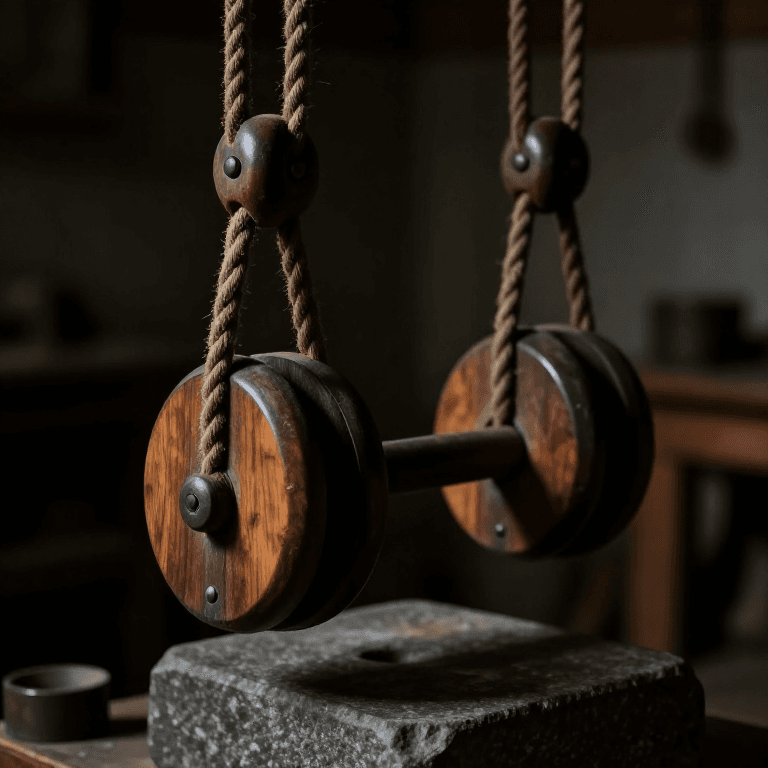
Run ropes from the free end of the span through pulleys back to a counterweight, so the counterweight balances most of the bridge's weight. Now a few people hauling the ropes can move a very heavy span with ease.
Izinto zokwakha zalesi sinyathelo:
 Intambo yokubopha enkulu40 amamitha
Amathuluzi adingekayo:
 Ummese
5
5
Fit a roller at the free end
Fit a roller at the free end
Mount a wheel or roller under the swinging end so that, as the bridge comes across, it rolls smoothly up onto the far bank rather than dragging or dropping short.
Izinto zokwakha zalesi sinyathelo:
Amapulangwe e-beech1 ucezuAmathuluzi adingekayo:
Isibhoboza Sesandla6
6
Swing it across
Swing it across
Haul on the ropes. With the counterweight carrying the load, the span pivots out over the water and lands its rolling end on the opposite bank — a full river crossing thrown down in minutes.
7
7
Cross and retract
Cross and retract
Send the troops over, then swing the bridge straight back to the near bank. In moments the crossing is gone and the river is a barrier again — the tactical point of a bridge that moves.
8
8
See the engineering
See the engineering
A single pivot, rope-and-pulley mechanical advantage, and a counterweight turn a massive span into something a small crew can swing quickly and safely. The same principle runs every modern swing bridge that opens to let ships pass.
Izinto
3- 7 izicucuIsibambeli
- 1 ucezuIsibambeli
- 40 amamithaIsibambeli
Ama-blueprint ahlobene
Lama-blueprint abelana ngolwazi — amasu, izinto noma izimiso


CC0 Isizinda Somphakathi
Le blueprint ikhishwe ngaphansi kwe-CC0. Ukhululekile ukukopisha, ukuguqula, ukusabalalisa, nokusebenzisa ngaphandle kwemvume.
Sekela uMenzi ngokuthenga imikhiqizo nge-Blueprint yabo IKhomishane Yomenzi kumiswe ngabathengisi, noma dala inguqulo entsha yale Blueprint bese uyifaka njengoxhumaniso ku-Blueprint yakho ukuze wabelane ngemali engenayo.