UBUCIKO
UBUHLE NEMPILO
UBUCIKO BEZANDLA
AMASIKO NOMLANDO
EZOKUZIJABULISA
IMVELO
UKUDLA NEZIPHUZO
REVERSE ENGINEERING
IZAYENSI
EZEMIDLALO
UBUCHWEPHESHE
IZINTO EZIGQOKWAYO
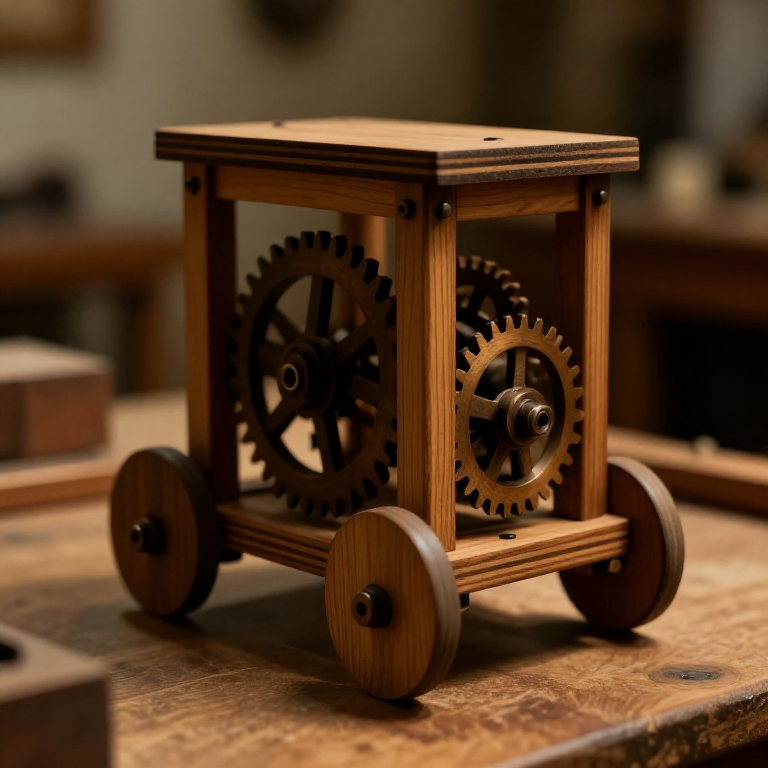


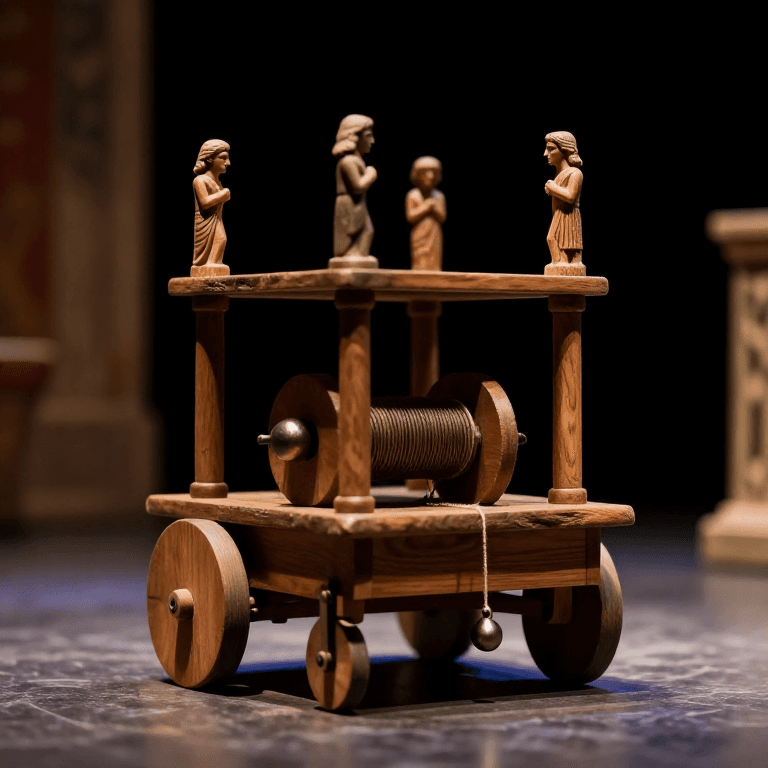
Building Leonardo da Vinci's Self-Propelled Cart — The First Programmable Robot
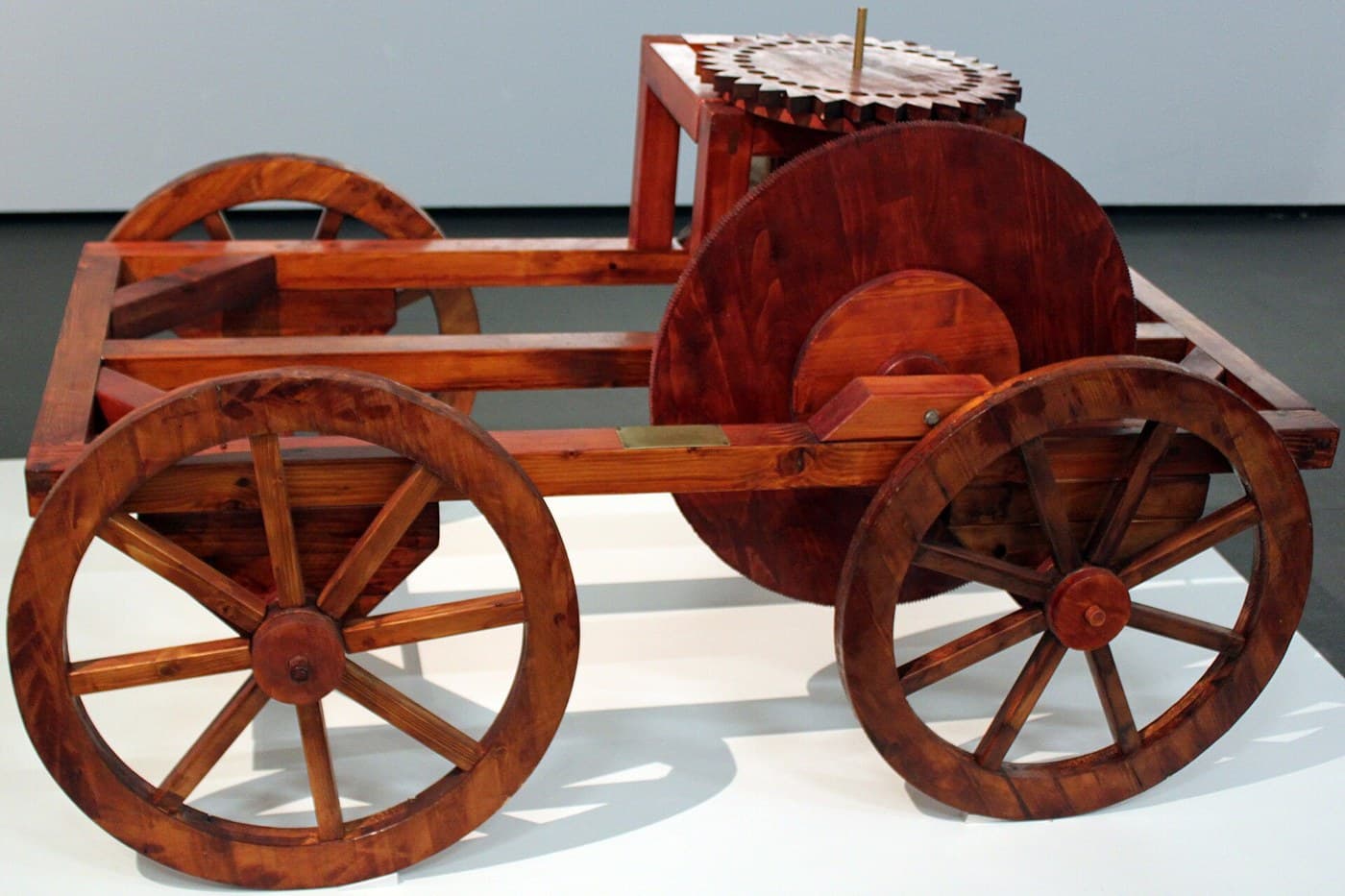
Around 1478 Leonardo da Vinci designed a cart that drives itself: no ox, no push, no rider. Coiled springs store the power, wooden gears carry it to the wheels, an escapement doles it out evenly, and pegs set into a control wheel steer the cart along a route decided in advance. It is spring power, gear reduction, escapement timing and programmable control in one machine — an ancestor of both the automobile and the robot. In 2004 a museum in Florence built it to his drawings and it ran exactly as designed. This blueprint reconstructs that remarkable machine.
Osezingeni eliphezulu
30
Imiyalelo
1
1
Understand the machine
Understand the machine
Leonardo's cart carries its own power source and steers itself. Wound springs drive it, gears set the speed, an escapement keeps it steady, and pegs on a control wheel turn it left or right on cue. Often called the first robot, it was reconstructed in Florence in 2004 and ran just as he drew it.
2
2
Build the frame and wheels
Build the frame and wheels
Build a low, sturdy wooden frame carrying an axle front and rear. Cut round wheels and mount them so they turn freely, and bore the axle bearings cleanly so there is little friction to waste the spring's energy.
Izinto zokwakha zalesi sinyathelo:
 Amapulangwe e-beech3 izicucu
Amathuluzi adingekayo:
 Isaha Sesandla
 Isibhoboza Sesandla
3
3
Make the coiled springs
Make the coiled springs
The power comes from two coiled leaf springs set in drums beneath the frame. Winding them stores energy; as they slowly unwind they turn the drive. This clockwork-style spring drive — not a falling weight — is Leonardo's key idea.
Izinto zokwakha zalesi sinyathelo:
 I-spring yamaqweqwe2 izicucu
Amathuluzi adingekayo:
 Isando Sokhuni
4
4
Cut and fit the wooden gears
Cut and fit the wooden gears
Cut cogged wooden gearwheels that take the drive from the spring drums and gear it down to the road wheels, so the stored energy is delivered at a slow, steady, useful speed instead of one violent burst.
Izinto zokwakha zalesi sinyathelo:
 Igiya lokhuni4 izicucu
Amathuluzi adingekayo:
 Isikweletho Esigobile
 Ummese
5
5
Add the escapement
Add the escapement
Fit an escapement — the same regulating trick used in clocks — between the springs and the gears. It releases the spring's energy in small, even steps, keeping the cart's speed controlled rather than letting it bolt and stop.
Izinto zokwakha zalesi sinyathelo:
Igiya lokhuni1 ucezuAmathuluzi adingekayo:
Ummese6
6
Build the programmable steering
Build the programmable steering
Set removable pegs into a horizontal control wheel geared to the drive. As that wheel turns, each peg nudges the steering to a preset angle, so the cart follows a path you program in advance by where you place the pegs — turn the pegs, change the route.
Izinto zokwakha zalesi sinyathelo:
Amapulangwe e-beech1 ucezu Intambo yokubopha enkulu5 amamitha
Amathuluzi adingekayo:
Isibhoboza Sesandla7
7
Wind, set down, release
Wind, set down, release
Wind the springs to store energy, place the cart on the floor, and release the catch. It rolls away under its own power and steers itself left and right exactly as the pegs command, with no one touching it.
8
8
See why it was centuries ahead
See why it was centuries ahead
Spring power, gear reduction, escapement regulation and programmable control together in one device — roughly 400 years before the automobile and the programmable machine. The 2004 Florence reconstruction proved these were not fantasies: Leonardo's cart genuinely works.
Izinto
4- 4 izicucuIsibambeli
- 2 izicucuIsibambeli
- 5 izicucuIsibambeli
- 5 amamithaIsibambeli
Amathuluzi Adingekayo
5- Isibambeli
- Isibambeli
- Isibambeli
- Isibambeli
- Isibambeli
Izinto Zokwakha Ze-Blueprint Exhunyiwe

Ama-blueprint ahlobene
Lama-blueprint abelana ngolwazi — amasu, izinto noma izimiso
CC0 Isizinda Somphakathi
Le blueprint ikhishwe ngaphansi kwe-CC0. Ukhululekile ukukopisha, ukuguqula, ukusabalalisa, nokusebenzisa ngaphandle kwemvume.
Sekela uMenzi ngokuthenga imikhiqizo nge-Blueprint yabo IKhomishane Yomenzi kumiswe ngabathengisi, noma dala inguqulo entsha yale Blueprint bese uyifaka njengoxhumaniso ku-Blueprint yakho ukuze wabelane ngemali engenayo.