UBUCIKO
UBUHLE NEMPILO
UBUCIKO BEZANDLA
AMASIKO NOMLANDO
EZOKUZIJABULISA
IMVELO
UKUDLA NEZIPHUZO
REVERSE ENGINEERING
IZAYENSI
EZEMIDLALO
UBUCHWEPHESHE
IZINTO EZIGQOKWAYO
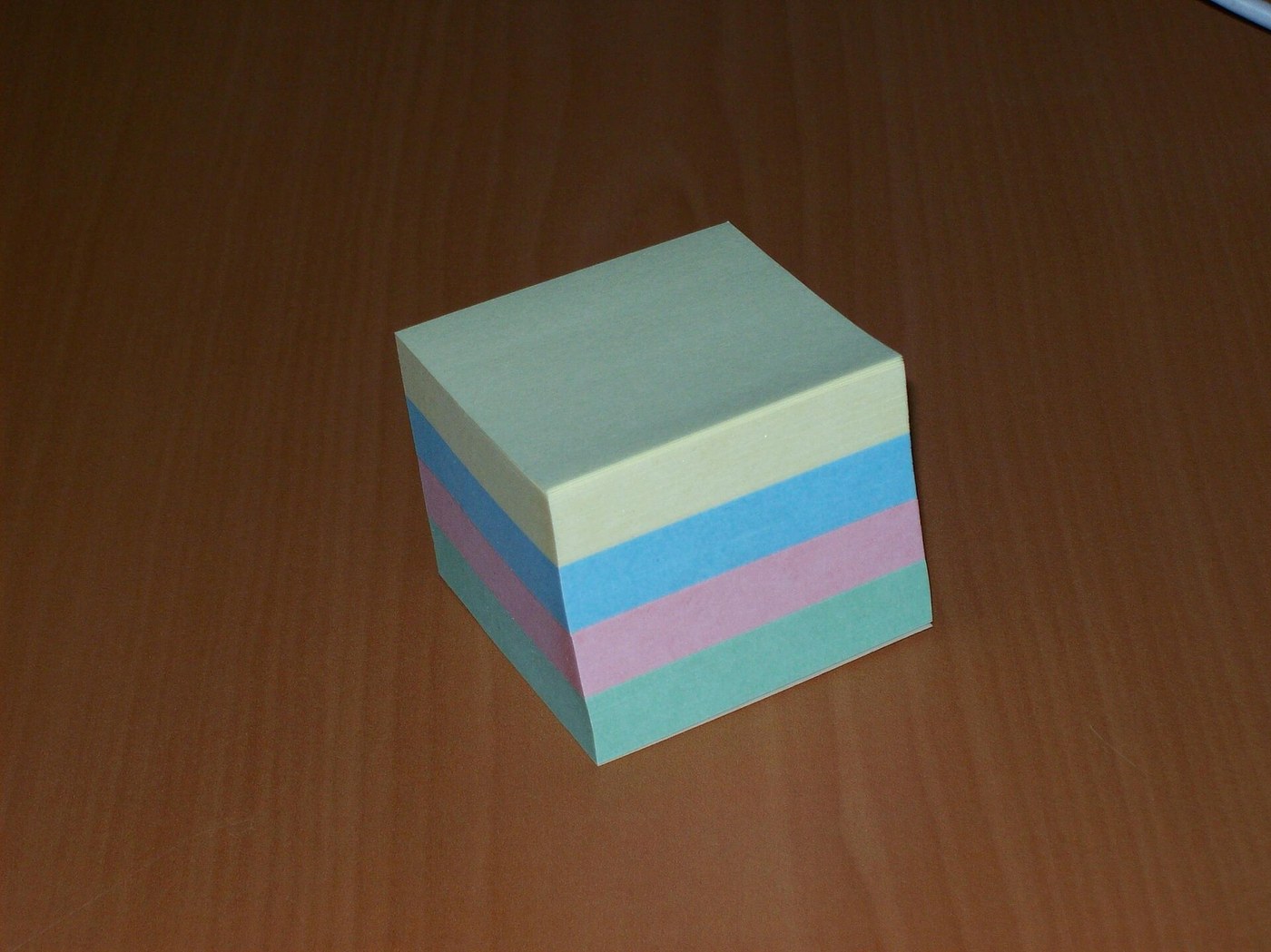


Repositionable Microsphere Adhesive
In 1968 Spencer Silver at 3M, trying to make a very strong adhesive, made the opposite: an acrylate that formed tiny tacky spheres and held only lightly. For years it had no product. In 1974 his colleague Art Fry coated it on bookmarks for his church hymnal so they would stay put without tearing the pages; the sticky note reached shops in 1980.
**US 3,691,140**, "Acrylate copolymer microspheres", Silver, filed 9. March 1970, granted 12. September 1972: "inherently tacky", elastomeric microspheres of an acrylate ester such as iso-octyl acrylate with a small share of an ionic monomer.
**You measure what makes it different from tape**: the peel force over twenty re-sticks, side by side with masking tape, and the spheres themselves under a microscope.
Oqalayo
1 hour
Imiyalelo
1
1
Look at the stripe
Look at the stripe
Put a sticky note's adhesive stripe under the digital microscope at high magnification. Beside it, a strip of masking tape. Capture both; measure the bead size and spacing on the note.
Amathuluzi adingekayo:
 Isibonakhulu Sedijithali
 Itheyiphu lokumboza
 Amaphepha amanothi anamathelayo angabuye anamathiselwe
2
2
Clean the glass
Clean the glass
Wipe a glass sheet with isopropyl alcohol and let it dry. Cut the masking tape to the same 25 mm width and 75 mm length as the note's sticky area.
Amathuluzi adingekayo:
 Ushidi wengilazi
 Isikelo
 Irula
Irula Ithawula lephepha
 Utshwala Be-isopropyl 99 %
3
3
Peel at 90 degrees
Peel at 90 degrees
Press the note and the tape onto the glass with one firm thumb stroke each. Clip a paper clip to each free end, hook the spring scale, and peel straight up, slowly. Record the steady force.
Izinto zokwakha zalesi sinyathelo:
 Amaklipsi ephepha2 izicucu
Amathuluzi adingekayo:
 Isilinganiso Samandla (Isikali Sensimbi Esontekile)
4
4
Re-stick and repeat
Re-stick and repeat
Stick the same pieces down again in the same place and peel again. Record peel 1, 2, 5, 10 and 20.
Amathuluzi adingekayo:
Isilinganiso Samandla (Isikali Sensimbi Esontekile)5
5
Peel ladder and contact area
Peel ladder and contact area
Ilayisha incwadi ye-Jupyter…
6
6
History & Context
History & Context
**What the patent specifies:** inherently tacky, elastomeric, solvent-insoluble acrylate copolymer microspheres made by suspension polymerisation with an ionic comonomer. **Modern build (derived):** a commercial sticky-note pad, tested.
The same idea now holds repositionable labels, wall graphics and removable flags. Its limits: a weak grip by design, fading tack as dust and fibre collect on the spheres, and poor hold on rough or damp surfaces.
Izinto
1- 2 izicucuIsibambeli
Amathuluzi Adingekayo
9- Isibambeli
- Isibambeli
- Isibambeli
- Isibambeli
- Isibambeli
- Isibambeli
- Isibambeli
Ama-blueprint ahlobene
Lama-blueprint abelana ngolwazi — amasu, izinto noma izimiso


CC0 Isizinda Somphakathi
Le blueprint ikhishwe ngaphansi kwe-CC0. Ukhululekile ukukopisha, ukuguqula, ukusabalalisa, nokusebenzisa ngaphandle kwemvume.
Sekela uMenzi ngokuthenga imikhiqizo nge-Blueprint yabo IKhomishane Yomenzi kumiswe ngabathengisi, noma dala inguqulo entsha yale Blueprint bese uyifaka njengoxhumaniso ku-Blueprint yakho ukuze wabelane ngemali engenayo.