Ukusebenzisana
UBUCIKO
UBUHLE NEMPILO
UBUCIKO BEZANDLA
AMASIKO NOMLANDO
EZOKUZIJABULISA
IMVELO
UKUDLA NEZIPHUZO
REVERSE ENGINEERING
IZAYENSI
EZEMIDLALO
UBUCHWEPHESHE
IZINTO EZIGQOKWAYO
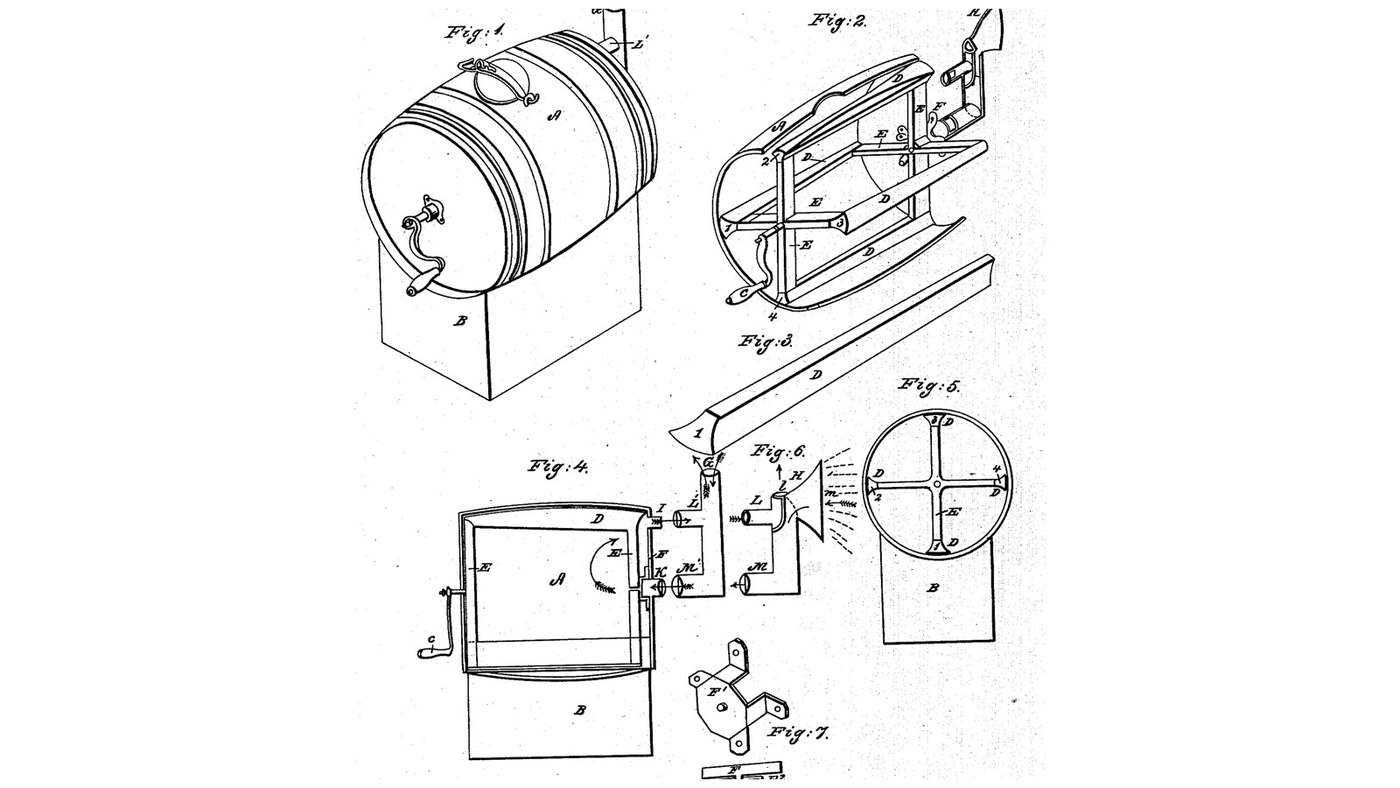

Atmospheric Barrel Churn: Reversed Concave Dashers Close to the Staves, Fresh or Warmed Air Piped to the Middle
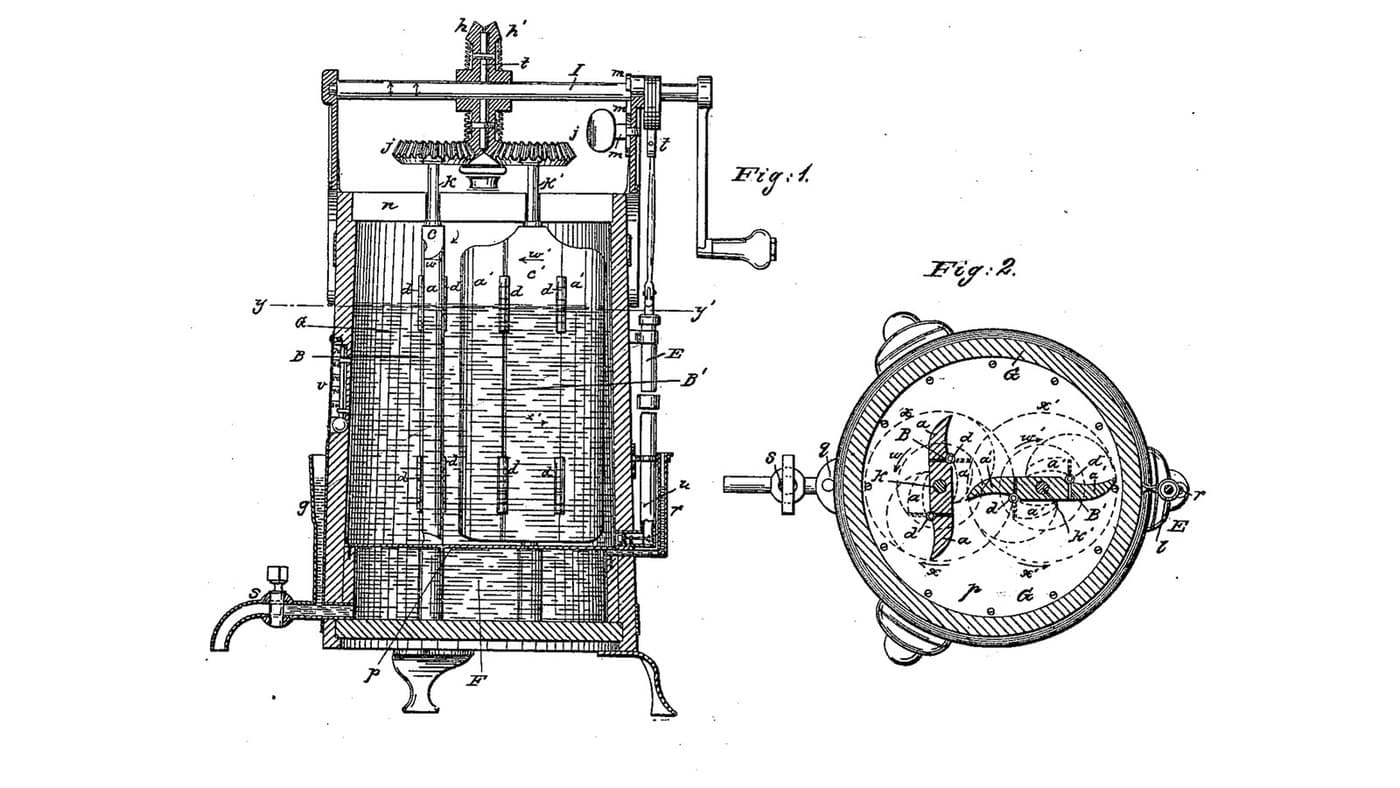
Henry Rohrer of Strasburg township, Pennsylvania, received US 26,377, dated 6 December 1859, for improvements to the common barrel churn, which he named the "Champion atmospheric churn". Four concave, tapering dashers run close to the staves with their wide and narrow ends alternating, so they rub as well as beat. Two tubes through the rear head let fresh air into the middle and steam and musty air out; in winter a funnel-mouthed pipe set near a hot stove brings warm air instead.
The patent gives no sizes; every size here is ours.
Ophakathi
About 2 days, plus printing
Imiyalelo
1
1
Rohrer's temperatures, and the dashers' sweep
Rohrer's temperatures, and the dashers' sweep
Ilayisha incwadi ye-Jupyter…
2
2
Air into the cream, three weeks before
Air into the cream, three weeks before
Clow pumped air in at the bottom. Rohrer lets it in by pipes alone, warmed from the stove when needed.
3
3
Read US 26,377
Read US 26,377
"The concaved, tapering sides of the dashers with the wide end of the one followed by the narrow end of the other in its revolutions, produces side eddies as well as being beaten and partially retained by the concaved side; thus a thorough mixing is produced, while a constant supply of fresh air is admitted through the pipe G to the center of the churn"
4
4
Print the step F
Print the step F
A raised open step 80 x 80 mm and 55 mm deep, open at the sides, with a 17 mm socket for the rear pivot. PETG, 0.2 mm layers, 40 % infill, 4 walls.
5
5
Barrel A, base B and hatch
Barrel A, base B and hatch
Use a wooden barrel about 450 mm long inside, 320 mm across at the heads. Cut a 120 mm hatch in the bilge with a hardwood lid. Bore the front head 17 mm in its centre for the shaft. Bore the rear head 21 mm in its centre for tube K and 21 mm 120 mm above it for tube I. Make a cradle of two shaped hardwood saddles on a base board so the barrel lies level. Fill the barrel with water overnight so it swells tight, then empty it.
Izinto zokwakha zalesi sinyathelo:
 Umgqomo wokhuni1 ucezu
 Ipulangwe Lokhuni Oluqinile2 izicucu
 Iglu Lokhuni1 ucezu
 Izikulufu zokhuni12 izicucu
Amathuluzi adingekayo:
 Isaha Le-jigsaw
 Ikhompasi
 Ibhola Elingenantambo
 Isethi yezingqamuzana ezinjengefosholo
 Isaha letafula
 Isibambo sensika
 Ithephu Lokulinganisa
 Amanzi
6
6
Dashers D and crosses E
Dashers D and crosses E
Shave four hardwood dashers 400 mm long, tapering from 70 to 35 mm wide, with a 20 mm deep concave face on the inner side and the outer edge left straight. Make two crosses of hardwood 15 x 24 mm, 290 mm across, and screw the dashers to their ends, outer edges 150 mm from the centre, the wide ends alternately at the front and the rear. Fix the front cross on a 16 mm stainless shaft through the front head with a crank C outside, and a 16 mm pivot on the rear cross's centre.
Izinto zokwakha zalesi sinyathelo:
Ipulangwe Lokhuni Oluqinile2 izicucuIzikulufu zokhuni16 izicucu Insimbi engagqwali eyindukwana1 ucezu
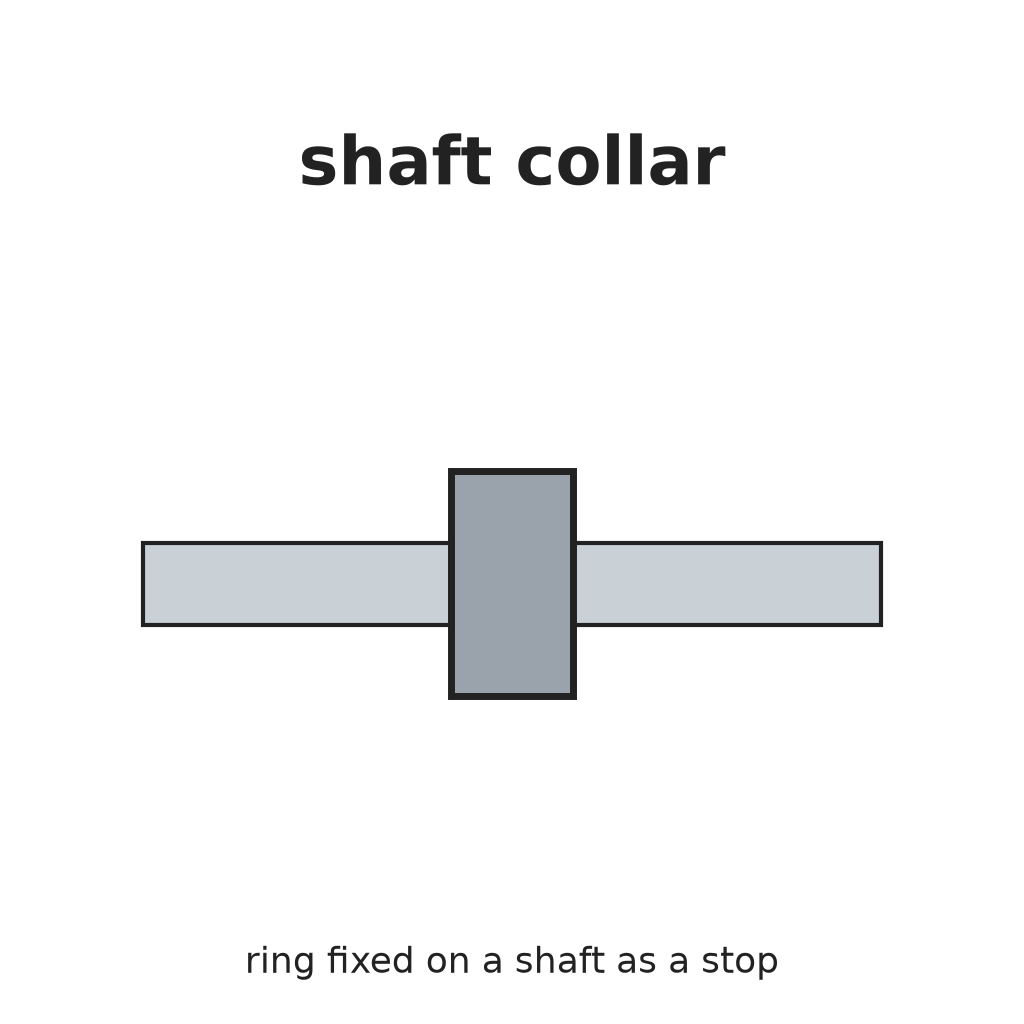 Shaft Collar2 izicucu
 Izikhonkwane zokhuni oluqinile1 ucezuIglu Lokhuni1 ucezu
Amathuluzi adingekayo:
 Ipuleni elinezibambo ezimbiliIsaha letafulaIbhola Elingenantambo
 Iqoqo Lamakhanda Ebhola
 Isaha Sensimbi
 Izinsimbi zokuhlikihla (ezesandla)
 Isethi yezikulufudrayiva
 Iphepha LokugayaIthephu Lokulinganisa
7
7
Step F, tubes I and K, pipes G and H
Step F, tubes I and K, pipes G and H
Screw the printed step over the rear head's centre hole, its socket on the axis. Seal two 20 mm stainless tubes, 70 mm long, through the rear head: K in the centre under the step, I above it. Make the atmospheric pipe G: an upright stainless tube open at its top, joined to I and K by short tubes and elbows. For winter make pipe H: a stainless funnel, mouth m, on a tube to K, with a tee on the tube from I open as the vent l; set the funnel near a warm stove, never on it, and use silicone tube for the joints.
Izinto zokwakha zalesi sinyathelo:
 Ishubhu lensimbi engagqwali2 izicucu
 Ipayipi Le-silicone1 ucezu
 I-funnel yensimbi engagqwali1 ucezu
 Isivalo Se-silicone1 ucezuIzikulufu zokhuni4 izicucu
 Ifilamenti ye-PETG1 ucezu
Amathuluzi adingekayo:
 Iphrinta ye-3D yentambo (i-FDM)Isaha SensimbiIzinsimbi zokuhlikihla (ezesandla)
 Isibani Se-propane
 Isibambo Sebhentshi
 Amagilavu Amelana NokushisaIsethi yezikulufudrayiva
8
8
The build in 3D
The build in 3D
FreeCAD model of this build, the barrel, heads and cradle cut through the middle: the four alternately reversed dashers on their two crosses, the shaft and crank, the step F on the rear head over tube K, tube I, and the atmospheric pipe G outside. The frame was turned through a quarter turn.
9
9
Churn
Churn
Fill the barrel about half full with heavy cream, about 15 litres. Bring it to 15-18 °C, checked with the thermometer; in winter put pipe H on with its funnel near the warm stove, otherwise pipe G. Close the hatch and turn the crank steadily, timing it. When the butter comes, open the hatch, take out the butter, drain the buttermilk, wash the butter in cold water until it runs clear, salt and weigh it.
Izinto zokwakha zalesi sinyathelo:
 Ukhilimu ojiyile15 l
 Usawoti Wolwandle Omkhulu1 ucezuAmanzi1 ucezu
Amathuluzi adingekayo:
 Ithemomitha enenaliti eshiywa ngaphakathi
 Iwashi Lokumisa Isikhathi
 Isikali Sedijithali Sasekhishini
 Isitsha esikhulu sokuxuba sensimbi engagqwali
10
10
Troubleshooting
Troubleshooting
Atmospheric barrel churn troubleshooting.
Flow
Loading...
11
11
History and honest limits
History and honest limits
**Henry Rohrer** of Strasburg township, Lancaster County, Pennsylvania, US 26,377, 6 December 1859, "Churn". He knew of other ways of bringing air to cream, and claimed the tubes I, K in the rear head with the pipes G and H, mouth m, partition l and tubes L, M, with the dashers D on an open step F. He says he "tested in my own buttery to my entire satisfaction". The patent gives no sizes; every size here is ours. His temperatures, 60 to 65 °F, are 15.6 to 18.3 °C.
Izinto
15- 1 ucezuIsibambeli
- 2 izicucuIsibambeli
- 2 izicucuIsibambeli
- 32 izicucuIsibambeli
- Isibambeli
- 2 izicucuIsibambeli
- Isibambeli
- 2 izicucuIsibambeli
- 1 ucezuIsibambeli
- 1 ucezuIsibambeli
- 1 ucezuIsibambeli
- 1 ucezuIsibambeli
- 15 lIsibambeli
- 1 ucezuIsibambeli
- 1 ucezuIsibambeli
Amathuluzi Adingekayo
22- 1 vendor sell this, none ship to you yetIsibambeli
- Isibambeli
- 1 vendor sell this, none ship to you yetIsibambeli
- Isibambeli
- 1 vendor sell this, none ship to you yetIsibambeli
- Isibambeli
- 1 vendor sell this, none ship to you yetIsibambeli
- Isibambeli
- Isibambeli
- Isibambeli
- Isibambeli
- Isibambeli
- Isibambeli
- Isibambeli
- Isibambeli
- Isibambeli
- Isibambeli
- Isibambeli
- Isibambeli
- Isibambeli
Amafayela omklamo
2Le blueprint yenza

Ama-blueprint ahlobene
Lama-blueprint abelana ngolwazi — amasu, izinto noma izimiso
Contrary Hinged-Dasher Air-Pump Churn: Two Crossing Dashers Fold to Gather, a Pump Blows Air Through the Cream
ngu-Buttercup
UKUDLA NEZIPHUZO
0
0
0
0
0
0
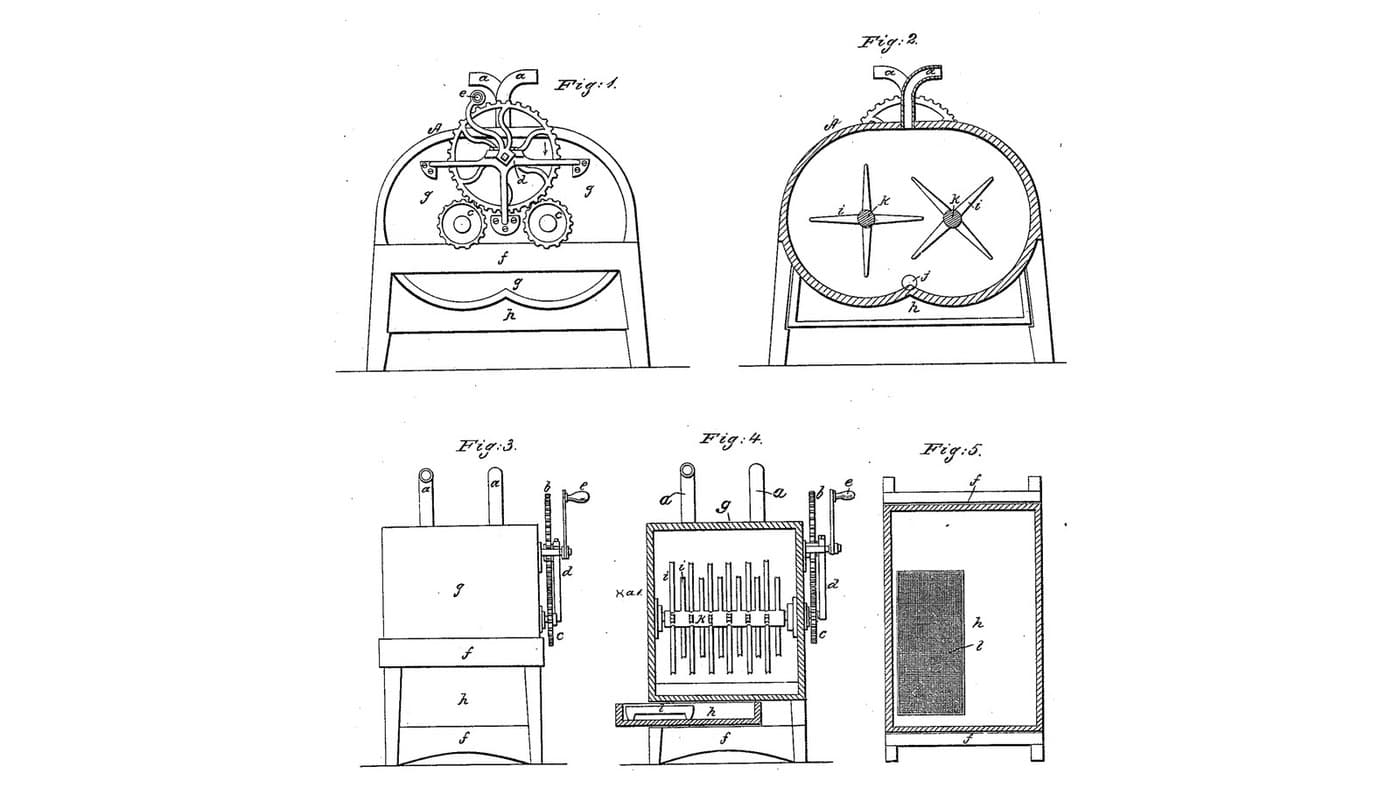
Double Rotary Crag Churn: Two Shafts of Four-Edged Arms Turn Through Each Other in Twin Half-Cylinders
ngu-Buttercup
Umsebenzi Wokhuni
3
0
0
0
0
0

Churning Butter from Cream — The 5,000-Year-Old Fat Separation
ngu-TheChef
UBUCIKO BEZANDLA
60
0
0
0
0
0
CC0 Isizinda Somphakathi
Le blueprint ikhishwe ngaphansi kwe-CC0. Ukhululekile ukukopisha, ukuguqula, ukusabalalisa, nokusebenzisa ngaphandle kwemvume.
Sekela uMenzi ngokuthenga imikhiqizo nge-Blueprint yabo IKhomishane Yomenzi kumiswe ngabathengisi, noma dala inguqulo entsha yale Blueprint bese uyifaka njengoxhumaniso ku-Blueprint yakho ukuze wabelane ngemali engenayo.