Ukusebenzisana
UBUCIKO
UBUHLE NEMPILO
UBUCIKO BEZANDLA
AMASIKO NOMLANDO
EZOKUZIJABULISA
IMVELO
UKUDLA NEZIPHUZO
REVERSE ENGINEERING
IZAYENSI
EZEMIDLALO
UBUCHWEPHESHE
IZINTO EZIGQOKWAYO
Balance-Wheel Churn Frame: A Weighted Wheel Drives the Dash Up and Down and Its Pitched Blades Make It Revolve
Buttercup

Yenziwe ngu-

Buttercup

11. uLwezi 2026IE
0
0
0
0
0

Balance-Wheel Churn Frame: A Weighted Wheel Drives the Dash Up and Down and Its Pitched Blades Make It Revolve

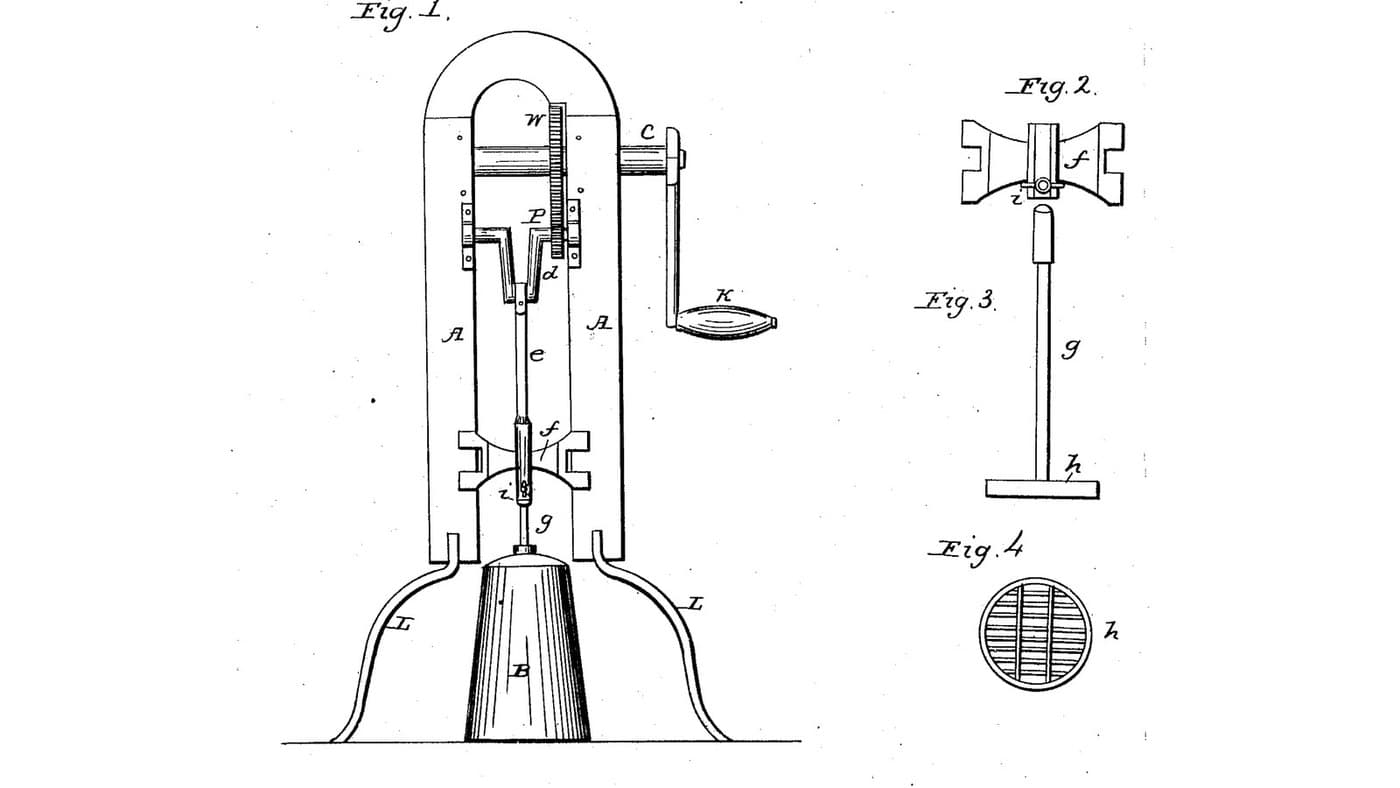
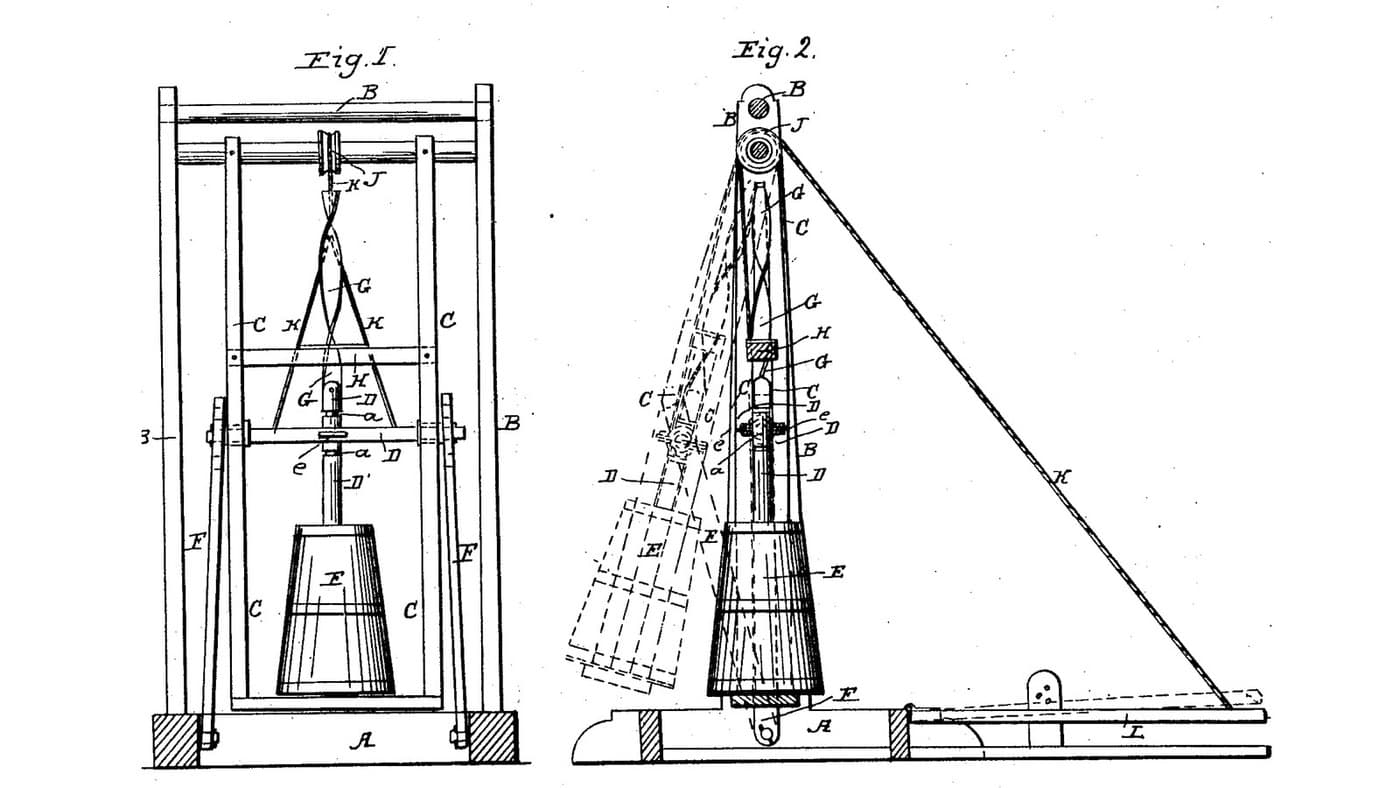
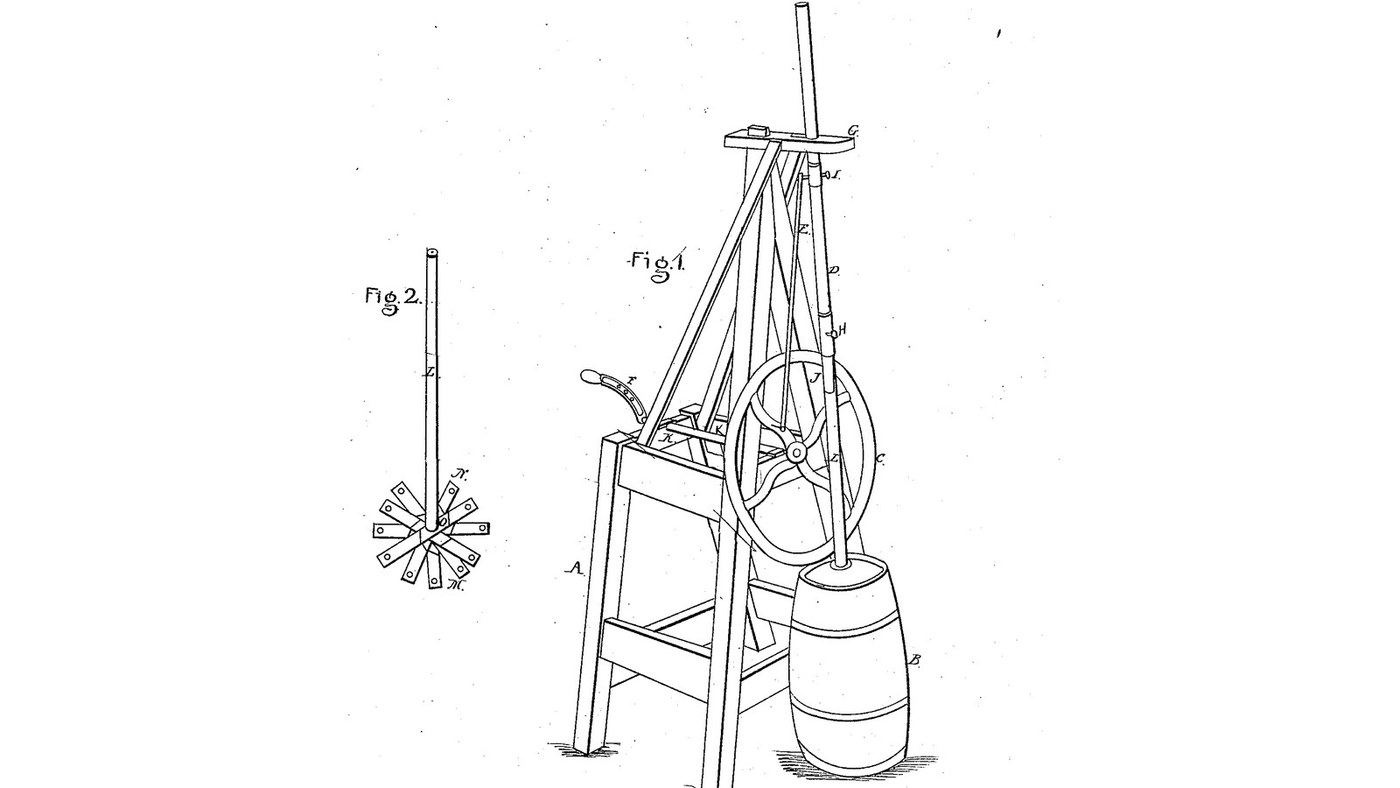
Nathan D. Ross of Braintrim, Pennsylvania, received US 28,607, dated 5 June 1860, for a churn. A tall timber frame carries a shaft with a heavy balance wheel at one end and a crank at the other; a rod from an adjustable wrist on the wheel drives the dash staff up and down through a guide. The staff joins the churn handle by a swivel, and the dashers' blades all stand at one angle, so the dash turns right and left as it is driven through the cream. The frame's, shaft's, wheel's and dasher pieces' sizes are the patent's own, given as "about"; all others are ours.
Osezingeni eliphezulu
About 3 days

Imiyalelo

1

The patent's sizes, and a wheel of about 30 pounds

Ilayisha incwadi ye-Jupyter…
2

A crank frame over an ordinary churn, one week before

Evans gears his crank up. Ross gives his a heavy balance wheel and an adjustable stroke.
3

Read US 28,607

"The nature of my invention consists in lengthening or shortening the stroke and lowering and raising the dash so as to give it the right position in the churn at the same time giving the dash an independent revolving motion to the right and left and giving the operator power over the work to be done."
4

Frame A, cap G and braces

From 51 mm square timber (the patent's two inches) cut two front posts about 1.83 m long and two back posts about 0.91 m. Set the feet about 0.91 m apart; lean the front posts in so they meet at the top, and the back posts at the same angle. Join front and back posts on each side with two side cross pieces about 0.81 m between shoulders, at 300 and 860 mm up, and front and back with cross pieces at the same heights, cut to the bevel. On the top of the long posts fix a cap G reaching 410 mm forward, bored 32 mm near its end for the staff, and brace it with two timbers down to near the tops of the short posts.

Izinto zokwakha zalesi sinyathelo:

Amapulangwe omphayiniAmapulangwe omphayini6 izicucu
Iglu LokhuniIglu Lokhuni1 ucezu
Izikulufu zokhuniIzikulufu zokhuni40 izicucu
Ibhawoti elinekhanda eliyindilingaIbhawoti elinekhanda eliyindilinga8 izicucu

Inati Yokukhiya EnenayiloniInati Yokukhiya Enenayiloni8 izicucu

Amathuluzi adingekayo:
Isaha letafulaIsaha letafula
Isethi yezisebenzi zokhuniIsethi yezisebenzi zokhuni
IphrothraktaIphrothrakta
Ibhola ElingenantamboIbhola Elingenantambo
Iqoqo Lamakhanda EbholaIqoqo Lamakhanda Ebhola
Isethi yezingqamuzana ezinjengefosholoIsethi yezingqamuzana ezinjengefosholo
Isibambo sensikaIsibambo sensika
Isipanela esilungisekayoIsipanela esilungisekayo
Ithephu LokulinganisaIthephu Lokulinganisa
5

Shaft K, balance wheel C and slide crank F

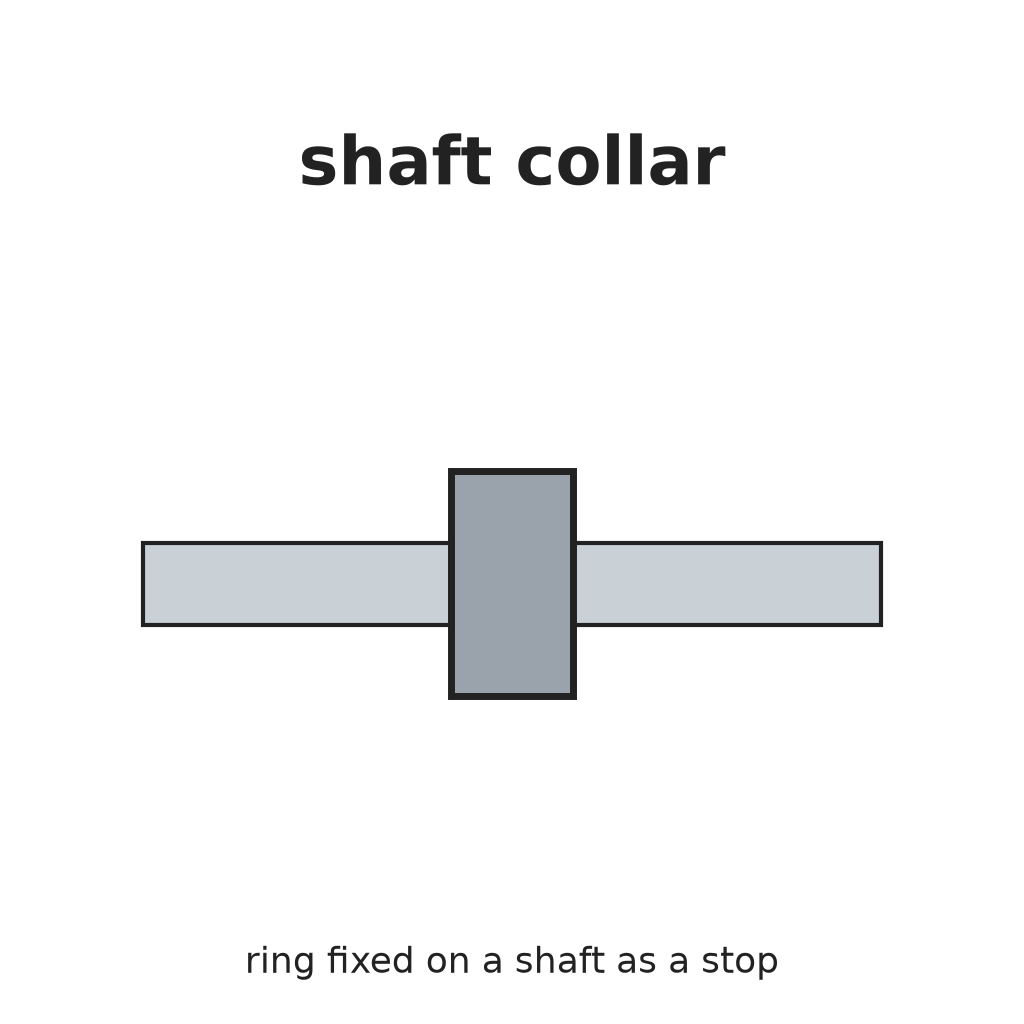
Bolt a hardwood bearing block bored 26 mm to the middle of each top front and back cross piece, and pass a 25 mm mild steel shaft K through them (the patent's about one inch). Glue two 18 mm plywood discs into a wheel 600 mm across with a rim 50 mm wide and four arms, and screw a ring of 60 x 12 mm mild steel flat bar round it so it weighs about 14 kg, near the patent's 30 pounds. Cut a slot 13 mm wide from 60 to 140 mm out along one arm for the wrist, a 16 mm bolt with a nut. Fix the wheel on the shaft's front end. On the back end fix a crank F of flat bar with three holes for the handle, so it can be lengthened or shortened.

Izinto zokwakha zalesi sinyathelo:

Ipulangwe Lokhuni OluqinileIpulangwe Lokhuni Oluqinile1 ucezu
Induku eyindilinga yensimbi ethambileInduku eyindilinga yensimbi ethambile1 ucezu

Ishidi le-plywoodIshidi le-plywood1 ucezu
Iglu LokhuniIglu Lokhuni1 ucezu
Ibha Eyisicaba Yensimbi EthambileIbha Eyisicaba Yensimbi Ethambile2 izicucu
Izikulufu zokhuniIzikulufu zokhuni24 izicucu
Ibhawoti elinekhanda eliyindilingaIbhawoti elinekhanda eliyindilinga4 izicucu
Inati Yokukhiya EnenayiloniInati Yokukhiya Enenayiloni4 izicucu
Shaft CollarShaft Collar2 izicucu
Izikhonkwane zokhuni oluqinileIzikhonkwane zokhuni oluqinile1 ucezu

Amathuluzi adingekayo:

Isaha Le-jigsawIsaha Le-jigsaw
Isibambo sensikaIsibambo sensika
Ibhola ElingenantamboIbhola Elingenantambo
Iqoqo Lamakhanda EbholaIqoqo Lamakhanda Ebhola
Isaha SensimbiIsaha Sensimbi
Isibambo SebhentshiIsibambo Sebhentshi
Izinsimbi zokuhlikihla (ezesandla)Izinsimbi zokuhlikihla (ezesandla)
Isipanela esilungisekayoIsipanela esilungisekayo
6

Rod E, staff D, socket I, socket H and swivel J

Cut a 32 mm hardwood staff D about 1.25 m long and pass it up through the cap. Make a hardwood socket I to slide on it, with a lug for the rod and a thumb screw (threaded rod, nut and wing nut) to fix it. Cut a hardwood rod E 730 mm between holes, from the wrist to the lug. Fit a hardwood socket H on the staff's foot, bored 16.5 mm, with a thumb screw through its side; turn the top of the churn handle L down to a 16 mm pin with a groove, so the thumb screw rides in the groove and the handle turns freely: the swivel J.

Izinto zokwakha zalesi sinyathelo:

Izikhonkwane zokhuni oluqinileIzikhonkwane zokhuni oluqinile2 izicucu
Ipulangwe Lokhuni OluqinileIpulangwe Lokhuni Oluqinile1 ucezu
Insika enemicu yesikulufuInsika enemicu yesikulufu1 ucezu
Inathi Yezinhlangothi EziyisithuphaInathi Yezinhlangothi Eziyisithupha2 izicucu
Inathi yamaphikoInathi yamaphiko2 izicucu
Ibhawoti elinekhanda eliyindilingaIbhawoti elinekhanda eliyindilinga2 izicucu
Inati Yokukhiya EnenayiloniInati Yokukhiya Enenayiloni2 izicucu
Iglu LokhuniIglu Lokhuni1 ucezu

Amathuluzi adingekayo:

Isaha letafulaIsaha letafula
Ibhola ElingenantamboIbhola Elingenantambo
Iqoqo Lamakhanda EbholaIqoqo Lamakhanda Ebhola
Isethi yezingqamuzana ezinjengefosholoIsethi yezingqamuzana ezinjengefosholo
Isaha SensimbiIsaha Sensimbi
Izinsimbi zokuhlikihla (ezesandla)Izinsimbi zokuhlikihla (ezesandla)
Isipanela esilungisekayoIsipanela esilungisekayo
7

Handle L and dashers M

Cut a 28 mm hardwood handle 420 mm long. For each dasher halve together two hardwood pieces 38 x 19 mm (the patent's 1 1/2 x 3/4 inch), 260 long, at right angles, and plane each blade on both sides down to about 6 mm at its edges, every blade bevelled the same way so they all stand on one angle, about 30 degrees. Fix two such dashers on the handle's foot, 60 mm apart.

Izinto zokwakha zalesi sinyathelo:

Izikhonkwane zokhuni oluqinileIzikhonkwane zokhuni oluqinile1 ucezu
Ipulangwe Lokhuni OluqinileIpulangwe Lokhuni Oluqinile1 ucezu
Iglu LokhuniIglu Lokhuni1 ucezu
Insimbi engagqwali eyindukwanaInsimbi engagqwali eyindukwana1 ucezu
Iphini elinemilenze emibiliIphini elinemilenze emibili2 izicucu

Amathuluzi adingekayo:

Isaha letafulaIsaha letafula
Isethi yezisebenzi zokhuniIsethi yezisebenzi zokhuni
Ipuleni yesandlaIpuleni yesandla
IphrothraktaIphrothrakta
Ibhola ElingenantamboIbhola Elingenantambo
Iqoqo Lamakhanda EbholaIqoqo Lamakhanda Ebhola
8

The build in 3D

FreeCAD model of this build: the frame with its leaning posts, cap G and braces, the shaft K on its bearings with the balance wheel and slide crank, the rod E from the wrist to the socket I on the staff, the swivel and handle with two pitched dashers in the bucket, cut open.
Ifayela LomklamoBLENDCC0 - Free
9

Churn

Pour about 10 litres of heavy cream at about 15 °C, checked with the thermometer, into the bucket, stand it under the staff with the handle through its lid, and join handle and staff at the swivel. Set the socket I on the staff so the dash just clears the bottom at the low point, and the wrist for the stroke you want. Turn the crank F, timing it; the wheel carries the stroke round and the dash turns as it goes. When the butter comes, loosen the swivel's thumb screw, lift the handle out, take out the butter, pour the buttermilk into a bowl, wash the butter in cold water until it runs clear, salt and weigh it.

Izinto zokwakha zalesi sinyathelo:

Ukhilimu ojiyileUkhilimu ojiyile10 l
Usawoti Wolwandle OmkhuluUsawoti Wolwandle Omkhulu1 ucezu
AmanziAmanzi1 ucezu
Ibhakede Lamalitha Angu-20Ibhakede Lamalitha Angu-201 ucezu

Amathuluzi adingekayo:

Ithemomitha enenaliti eshiywa ngaphakathiIthemomitha enenaliti eshiywa ngaphakathi

Iwashi Lokumisa IsikhathiIwashi Lokumisa Isikhathi
Isikali Sedijithali SasekhishiniIsikali Sedijithali Sasekhishini
Isitsha esikhulu sokuxuba sensimbi engagqwaliIsitsha esikhulu sokuxuba sensimbi engagqwali
10

Troubleshooting

Balance-wheel churn troubleshooting.

Flow

Loading...
11

History and honest limits

**Nathan D. Ross** of Braintrim, Wyoming County, Pennsylvania, US 28,607, 5 June 1860, "Churn". He did not claim the up-and-down motion of dasher and handle, but the revolving of the dashers and handle by the series of dashers and blades. The frame, shaft, wheel and dasher-piece sizes are his, given as "about"; he gives the wheel's size and weight but not its material; ours is plywood with a steel ring; the bucket, stroke, rod and blade angle are ours.

Izinto

20

Amathuluzi Adingekayo

18

Amafayela omklamo

1

CC0 Isizinda Somphakathi

Le blueprint ikhishwe ngaphansi kwe-CC0. Ukhululekile ukukopisha, ukuguqula, ukusabalalisa, nokusebenzisa ngaphandle kwemvume.

Sekela uMenzi ngokuthenga imikhiqizo nge-Blueprint yabo IKhomishane Yomenzi kumiswe ngabathengisi, noma dala inguqulo entsha yale Blueprint bese uyifaka njengoxhumaniso ku-Blueprint yakho ukuze wabelane ngemali engenayo.

Ingxoxo

(0)

Ngena ukuze ujoyine ingxoxo

Kulayishwa amazwana...